For global buyers, choosing Electric Scooter Accessories is not simply a matter of adding more equipment. A useful accessory should solve a real riding problem, fit the scooter correctly, and remain dependable in changing conditions. A front light may improve visibility on a dark street. A sturdy phone holder can support navigation, but only when its clamp matches the handlebar. Small differences matter.
Micromobility analyst Horace Dediu describes the field this way: “Micromobility is the movement of people and goods over short distances in small vehicles.” That perspective helps buyers judge accessories by practical value, not appearance. A weather-resistant storage bag may protect groceries during a sudden shower. Reflective strips can make a rider easier to notice at a junction. A certified helmet, reliable bell, and properly fitted lock deserve more attention than decorative parts.
Compatibility remains the difficult part. Scooter stem sizes, battery systems, charging ports, and mounting spaces vary between brands. Regional traffic rules also differ. An accessory accepted in one market may require different installation or use elsewhere. Check the manufacturer’s specifications before ordering.
Keep it simple.
The best setup is often compact, visible, and easy to maintain. Still, no accessory can remove every riding risk. Some products look durable but loosen after repeated vibration. Others promise universal fit, yet need extra adapters. That is where buyers must remain skeptical. This guide compares practical Electric Scooter Accessories for commuting, storage, visibility, comfort, and everyday protection, while recognizing that product quality and local requirements can change.
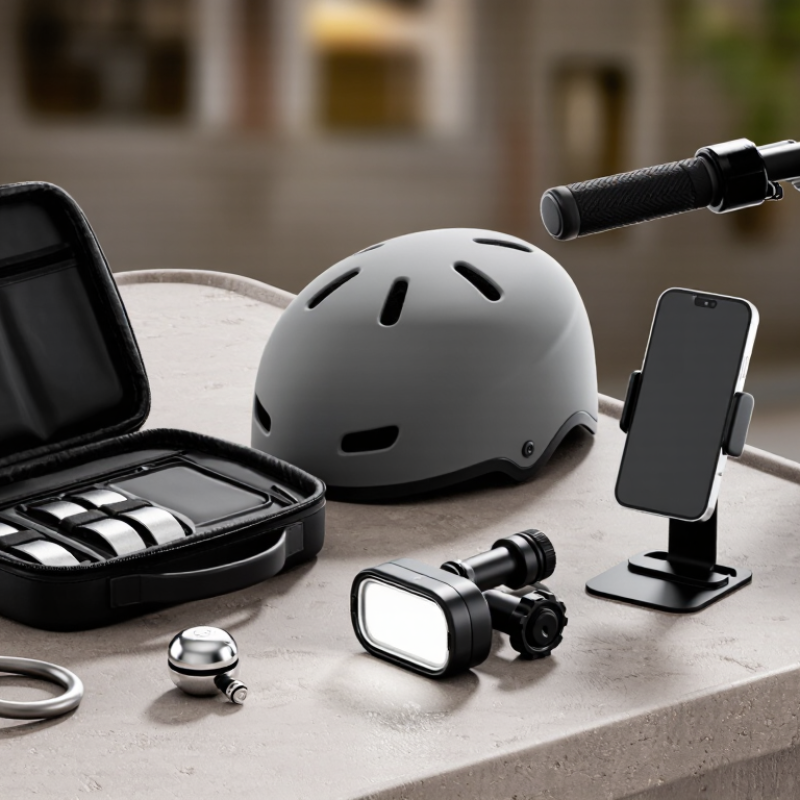
For global electric scooter buyers, safety accessories deserve more attention than storage gadgets. The U.S. Consumer Product Safety Commission reported about 233 deaths and 360,800 injuries involving e-scooters, e-bikes, and hoverboards from 2017 to 2021. The figures cover several device types, but they show a clear risk pattern.
Start with a properly fitted helmet meeting a recognized local safety standard. The World Health Organization reports that helmets can reduce fatality risk by about 42% and head injury risk by 69%. Fit matters. A loose helmet can shift during a crash.
Add full-finger gloves, knee pads, and elbow protection, especially for commuting on uneven streets. I have found that riders often buy pads after their first fall. That is late, but common.
Visibility needs practical details. Use a white front light, a red rear light, and reflective elements on the rider or scooter, following local requirements. A bright jacket helps at dusk, while reflective ankle bands make leg movement easier for drivers to notice.
Keep lights charged before every trip. Small rear-view mirrors can improve awareness, though they do not replace shoulder checks. The CPSC data also suggests avoiding crowded roads and excessive speed. Protection reduces injury severity; it cannot correct poor judgment.
One uncomfortable thought remains: many accessories are purchased for appearance, not tested for real riding conditions. Check fasteners, cracks, and battery condition regularly.
Daily electric scooter travel becomes easier when storage accessories match real riding habits. A compact handlebar bag keeps keys, transit cards, and a phone within reach. Choose a secure closure and a reflective surface for low-light visibility. Avoid placing heavy items on the steering column. Extra weight can make turning feel slow and awkward.
A rear rack with a fitted basket works well for groceries or a work bag. Check the scooter’s stated load limit before installation. Keep heavier items low and centered, rather than hanging them from one side. A padded shoulder strap can help when carrying a folded scooter upstairs. It should not interfere with the folding latch or brake controls. Some carrying straps look convenient, but weak stitching becomes a problem quickly.
For apartment storage, a rubber-coated wall hook can protect the deck and reduce floor clutter. A simple cable organizer also prevents charger wires from becoming a tripping hazard. Keep the charging area dry and free from heat sources. I once used a soft basket that shifted during a turn; the contents stayed inside, but the scooter felt unstable. That mistake changed my preference for rigid, well-secured storage. Accessories should be tested with an empty ride first, then with a light load. Fit matters more than appearance. One useful accessory may still be the wrong choice.
Practical storage and carrying accessories for daily travel, measured by typical usable storage capacity.
The chart shows the midpoint of typical capacity ranges found across non-branded scooter accessory specifications: handlebar bags (2–5 L), stem bags (1–4 L), rear rack bags (10–15 L), foldable baskets (15–25 L), and rear top cases (20–35 L). Smaller bags suit phones, chargers, and daily essentials, while larger options are better for groceries or commuting equipment.
Power accessories are the foundation of a dependable electric scooter setup. The International Energy Agency reported that global electric car sales exceeded 14 million in 2023, showing how quickly charging habits are changing. Scooter buyers should choose a charger with over-voltage, over-current, and thermal protection. Check its output voltage carefully. A matching charging cable also matters, especially when insulation becomes stiff after winter use. For international purchases, confirm plug type, input voltage, frequency, and local electrical certification before ordering.
Charging location affects battery life more than many buyers expect. Avoid wet balconies, sealed boxes, and direct sunlight. The U.S. Consumer Product Safety Commission has repeatedly warned that incompatible chargers can cause lithium-ion battery fires. A timer, wall-mounted cable holder, and visible charging indicator can reduce simple mistakes. Do not charge a hot battery immediately after a long ride. Let it cool first. This small habit is easy to ignore.
Battery-support accessories should include a basic voltage monitor, a protective storage case, and a replacement fuse that matches the scooter’s specification. The International Energy Agency notes that battery durability depends heavily on temperature and charging conditions. In practice, cold weather can reduce usable range, while heavy loads increase energy consumption. Tire pressure matters too. A compact pressure gauge may support range better than an expensive gadget. One imperfect assumption deserves attention: a larger battery does not automatically mean better ownership. It can add weight, cost, and longer charging time. Check real commuting distance, service access, and battery replacement rules before buying.
In wet coastal climates, a fitted scooter cover helps protect controls, connectors, and the seat during parking. Choose breathable, water-resistant fabric, because trapped moisture can encourage corrosion. A small handlebar cover also reduces rain exposure, but it may affect visibility if poorly fitted. Check the scooter’s official water-resistance guidance before riding through puddles. Water resistance is not waterproofing.
Cold regions need insulated handgrips and wind-resistant gloves with reliable brake control. A thermal leg cover can reduce discomfort on long rides, especially below 10°C. Cold weather also lowers battery performance, so keep the battery indoors when practical. Avoid charging a cold battery immediately. Let it warm naturally first. This detail is easy to miss.
Hot and humid climates require breathable seat covers, ventilated helmets, and moisture-resistant storage pouches. A clear display shield may reduce sun glare, although some films create reflections at night. Test it before relying on it. In dusty areas, sealed storage and a soft cleaning brush are useful accessories. Do not use high-pressure water around electrical parts. I once underestimated dust buildup near a folding joint; the mechanism became stiff within days. Regular inspection matters more than buying every accessory. Check fasteners, grip condition, tire pressure, and signs of moisture after demanding rides. Comfort accessories should improve control, not distract from it.
Global scooter accessories must match the vehicle, not just the rider. Start with the electrical label: voltage, maximum current, connector shape, and polarity. A charger with the wrong output can damage the battery or controller. Cable length also matters. A short lead may strain the port near a folding hinge.
The International Energy Agency reported that electric two- and three-wheelers remained the largest electrified road-transport segment by sales in 2023. In China, electric models represented nearly 60% of two- and three-wheeler sales that year, according to the IEA’s Global EV Outlook 2024. This scale increases accessory variety, but not universal compatibility. Buyers should check whether a bag, phone mount, or suspension part fits the deck width and stem diameter. “Universal” often means “fits many models,” not all models.
Safety documentation deserves close attention. IEC 62133-2 covers safety requirements for portable rechargeable lithium batteries, while UN 38.3 testing supports battery transport compliance. EN 17128 addresses personal light electric vehicles in several European markets. These references do not automatically certify every accessory or guarantee local acceptance. Water resistance is another common trap: an IP rating applies under test conditions, not necessarily after a cracked seal or careless installation. I would inspect the connector cover, cable routing, and fasteners after the first wet ride. That extra check is easy to skip. It is also where many buying assumptions fail.
Choose breathable, water-resistant fabric for the seat and controls. Trapped moisture may encourage corrosion. Water-resistant is not waterproof.
Check the scooter’s official water-resistance guidance first. A loose handlebar cover may also reduce visibility. Fit matters.
Insulated handgrips, wind-resistant gloves, and a thermal leg cover can reduce discomfort. Gloves must preserve reliable brake control.
Keep it indoors when practical. Let a cold battery warm naturally before charging. Do not rush this step.
Use a breathable seat cover, ventilated helmet, and moisture-resistant storage pouch. Sealed storage helps limit dust exposure.
Use a soft brush near connectors and folding joints. Avoid high-pressure water around electrical components. I once underestimated dust buildup.
Measure deck width, stem diameter, connector shape, and cable length. “Universal” usually means it fits many models, not every model.
Match voltage, maximum current, connector shape, and polarity. The wrong output may damage the battery or controller. Check twice.
No. Battery and vehicle standards support safety guidance, but they do not guarantee every accessory fits or meets local requirements.
Check fasteners, grips, tire pressure, cable routing, connector covers, and moisture signs. Comfort accessories should improve control, not distract from it.
Choosing the right Electric Scooter Accessories can improve safety, convenience, and riding comfort for users in different regions. Essential items include certified helmets, reflective clothing, lights, mirrors, bells, gloves, and protective pads to increase visibility and reduce riding risks. Practical storage solutions, such as baskets, handlebar bags, and secure carrying straps, help daily commuters transport personal belongings more easily.
Power-related accessories should match the scooter’s voltage, charging requirements, and battery specifications. Spare charging cables, portable power solutions, and battery care tools can support reliable travel when selected carefully. Weatherproof covers, waterproof storage, phone holders, and comfort-focused additions are also useful in rainy, cold, or hot climates. Global buyers should check dimensions, connector types, safety standards, local regulations, and compatibility before purchasing. Selecting durable, properly fitted accessories ensures better performance while supporting responsible and comfortable riding.

