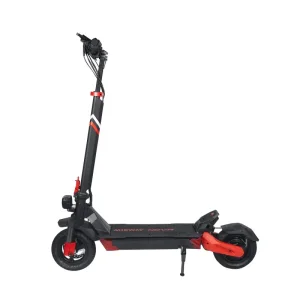
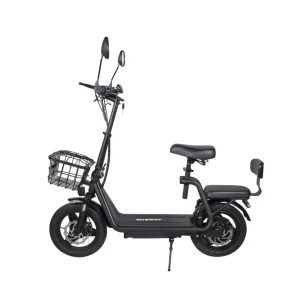
Direct factory-engineered mobility solutions for commercial fleets, wholesale importers, and brand distributors globally.
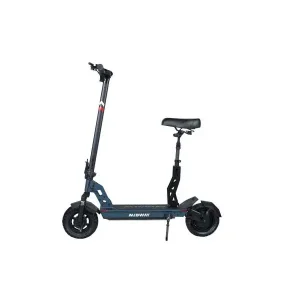
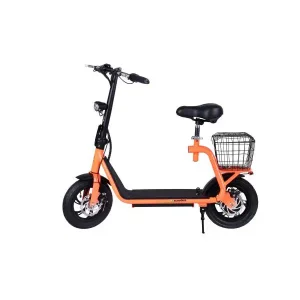
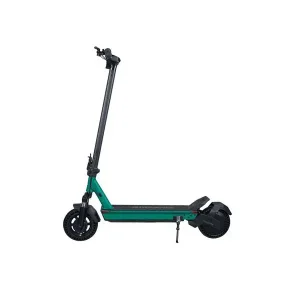
The structural shift toward zero-emission urban micro-mobility has elevated electric scooters from recreational consumer gadgets to mission-critical infrastructure components worldwide.
As urban density increases and regional transit authorities push for decarbonization, personal light electric vehicles (PLEVs) represent the fastest-growing sector within last-mile logistics and urban transport. Commercial operations—ranging from shared micro-mobility fleets to enterprise delivery setups—demand unprecedented durability, modular repairability, and intelligent energy management.
Selecting the right electric scooter supplier & factory is no longer merely a pricing transactional exercise; it is an enterprise supply chain alignment decision. Modern importers must evaluate manufacturing plants based on their structural engineering capabilities, advanced battery management system (BMS) integration, international compliance profiles (CE, RoHS, EN17128, UL2272, UN38.3), and long-term OEM/ODM customization flexibility.
Understanding the industrial cluster dynamics in Zhejiang, China, and how tier-1 electric scooter factories engineer long-term value for global B2B buyers.
Headquartered in TongQin Hardware Industrial Zone, Wuyi City, Zhejiang, WuYi YueMa Leisure Articles Co., Ltd. leverages a world-class metallurgical and hardware ecosystem. Access to high-grade aviation aluminum alloys (6061-T6) and precision automated robotic welding allows for chassis structural integrity that withstands severe operational fatigue.
From raw tubing extrusion and CNC machining to Surface Mount Technology (SMT) for controller mainboards and automated battery pack assembling, top-tier factories eliminate intermediary markups. Vertical integration ensures 100% trace-ability for every batch of BLDC motors and lithium cells.
Industrial-grade manufacturing requires standardized testing: dynamic salt spray testing for corrosion resistance, simulated vibration testing, IPX5/IPX7 waterproof submersion testing for battery enclosures, and 100,000-cycle folding mechanism endurance testing.
The technological convergence of IoT telemetry, solid-state battery chemistry, and intelligent power electronics in next-generation electric scooters.
The hardware paradigm for electric scooters is undergoing rapid technical evolution. Modern buyers, fleet operators, and distributors must evaluate suppliers against a forward-looking engineering roadmap. Key focus areas include:
Transitioning from legacy UART communication protocols to robust Controller Area Network (CAN-bus) architecture allows centralized communication between the display, battery BMS, motor controller, and smartphone apps. Real-time diagnostic telemetry, remote firmware over-the-air (FOTA) updates, and GPS/GPRS tracking enable predictive maintenance for commercial operators.
Sine-wave Field-Oriented Control (FOC) algorithms replace harsh square-wave controllers. FOC provides smooth acceleration curves, reduces motor heat generation by up to 22%, increases energy conversion efficiency to >90%, and extends thermal dissipation thresholds during heavy incline climbs.
Integration of automotive-grade 18650 and 21700 lithium-ion cells with multi-layer thermal barriers, nickel-plated busbars, and intelligent BMS boards providing protection against over-charge, over-discharge, short-circuit, and thermal runaway. Next-gen prototypes are testing semi-solid-state cells for increased energy density (Wh/kg).
Kinetic Energy Recovery Systems (KERS) recapture energy during braking phases, feeding current back into the battery pack while mitigating physical brake pad wear by up to 40%. Combined with dual hydraulic disc brakes or E-ABS electronic anti-lock systems, braking distances are reduced significantly.
Tailoring electric scooter configurations to distinct geographic, regulatory, and operational environments.
Target Market: European and North American metropolitan centers with micro-mobility lanes.
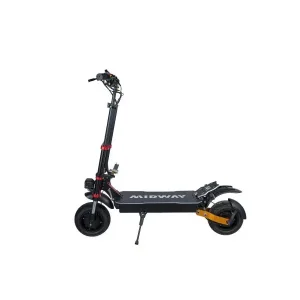
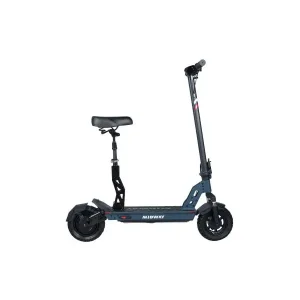
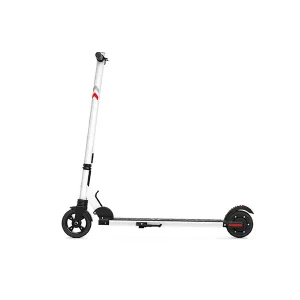
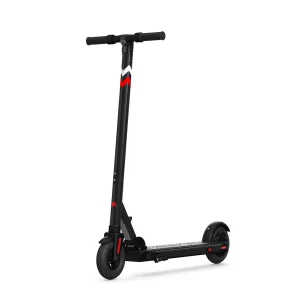
Key Features: Lightweight aluminum frames (12-18kg), 8.5-inch or 10-inch pneumatic/honeycomb tires, integrated app lock features, compliance speed governors (25 km/h limit per EN17128), and quick-fold mechanisms for multi-modal public transit integration.
Target Market: Couriers, food delivery fleets, and logistics providers in high-density urban zones.
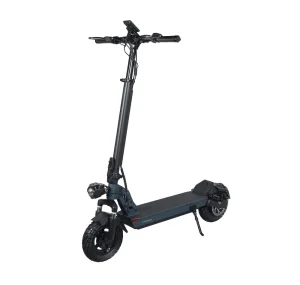
Key Features: Heavy-duty rear cargo racks, dual 48V 15Ah–24Ah high-capacity removable batteries for hot-swapping, solid puncture-proof tires, reinforced dual suspension, and high-brightness LED perimeter lighting for 24/7 operations.
Target Market: Golf courses, eco-resorts, large industrial factory campuses, and rugged rural transport.
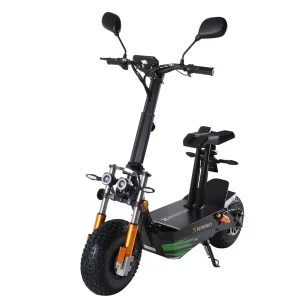
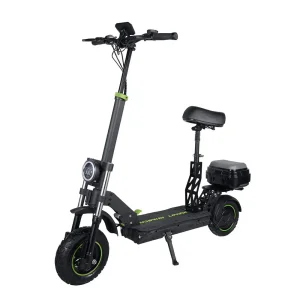
Key Features: Ultra-wide fat tires (18x9.5-inch), high torque 60V/72V brushless hub motors, hydraulic shock absorbers, payload capacities exceeding 200kg, and wide ergonomic seating setups.
How direct manufacturer relationship models protect brand equity, reduce total cost of ownership (TCO), and guarantee international compliance.
For B2B importers, brand owners, and wholesale distributors, establishing a reliable direct-factory relationship is essential. A comprehensive Quality Management System (QMS) spans three vital operational phases:
Comprehensive engineering parameter baseline for B2B procurement decision-making.
| Category / Specification | Entry Commuter | Mid-Tier Urban | Heavy Commercial / Long-Range | All-Terrain / Citycoco |
|---|---|---|---|---|
| Motor Power (W) | 150W – 350W BLDC Hub | 500W – 600W BLDC Hub | 600W – 1200W Dual Motor | 1500W – 3000W Fat Tire Hub |
| Nominal Voltage (V) | 21.6V / 36V | 36V / 48V | 48V / 52V | 60V / 72V |
| Battery Capacity (Ah) | 5.2Ah – 7.8Ah Lithium | 10Ah – 15Ah Lithium | 15Ah – 24Ah Lithium | 20Ah – 30Ah Lithium |
| Max Range Per Charge | 15 – 25 km | 35 – 50 km | 65 – 90 km | 60 – 80 km |
| Tire Size & Type | 8.5-inch Solid / Pneumatic | 10-inch Tubeless Pneumatic | 10-inch Off-Road Tubeless | 18x9.5-inch Wide Vacuum Tire |
| Braking Architecture | E-ABS + Rear Disc | Dual Disc Brakes | Dual Hydraulic Disc + KERS | Front & Rear Hydraulic Disc |
| Target Certifications | CE, RoHS, EN17128 | CE, RoHS, EN17128, UL2272 | CE, UL2272, UN38.3, FCC | EEC, COC, CE, DOT (Select) |
Key criteria for auditing an OEM electric scooter factory in China to eliminate supply chain risks.
Ensure the factory holds legitimate ISO9001 certification. Verify that battery packs carry valid UN38.3 transport safety documentation and MSDS reports required for ocean freight and customs clearance.
Determine if the factory offers private-label silk-screen branding, custom color anodization, custom packaging design, software app branding, and proprietary frame design tooling.
Inquire about SKUs and spare parts support policies. Leading factories provide 1%-2% free wearing spare parts (brake pads, levers, tires, controllers) alongside container orders and offer 12-month structural warranties.
Evaluate packaging box dimensions against standard 20GP, 40GP, and 40HQ container volumes. Ergonomically designed packaging maximizes unit load count per container, directly lowering per-unit ocean freight costs.
Expert answers addressing critical technical, logistical, and compliance questions in the electric scooter industry.
Explore high-wattage, extended-range, and specialty mobility solutions manufactured directly by Yuema.