Choosing the right Electric Scooter Battery affects range, safety, charging time, and long-term ownership costs. A suitable battery must match the scooter’s motor, controller, frame, and daily riding conditions. Capacity alone does not determine performance. Voltage, cell quality, battery management, and thermal protection matter equally.
Recent industry data shows why battery selection deserves careful attention. The International Energy Agency’s Global EV Outlook 2024 identifies electric two- and three-wheelers as a major part of global electrification. BloombergNEF’s 2023 Lithium-Ion Battery Pack Price Survey reported an average pack price of 139 dollars per kilowatt-hour. However, scooter batteries can cost more because they require compact packaging, protective electronics, and lower-volume manufacturing. That assumption can fail.
Real-world use reveals practical differences. A 48-volt, 15-ampere-hour pack stores about 720 watt-hours before operating losses. Range depends on rider weight, tire pressure, hills, wind, temperature, and acceleration habits. Cold weather reduces usable performance. Short trips can also be misleading. A battery that feels powerful on flat pavement may struggle on steep roads. Professional buyers should check rated capacity, continuous current, cycle-life testing, charger specifications, and replacement availability. IEC 62133-2 provides a recognized framework for portable rechargeable battery safety testing. A reputable manufacturer should also provide traceable cells, clear test documentation, and protection against overcharge, overheating, and deep discharge. Still, paperwork is not everything. Inspect the connector, enclosure, welds, and charging behavior. The best choice balances verified safety, realistic range, service support, and total cost. Expect compromises. Battery technology continues improving, but marketing claims still require careful questioning.
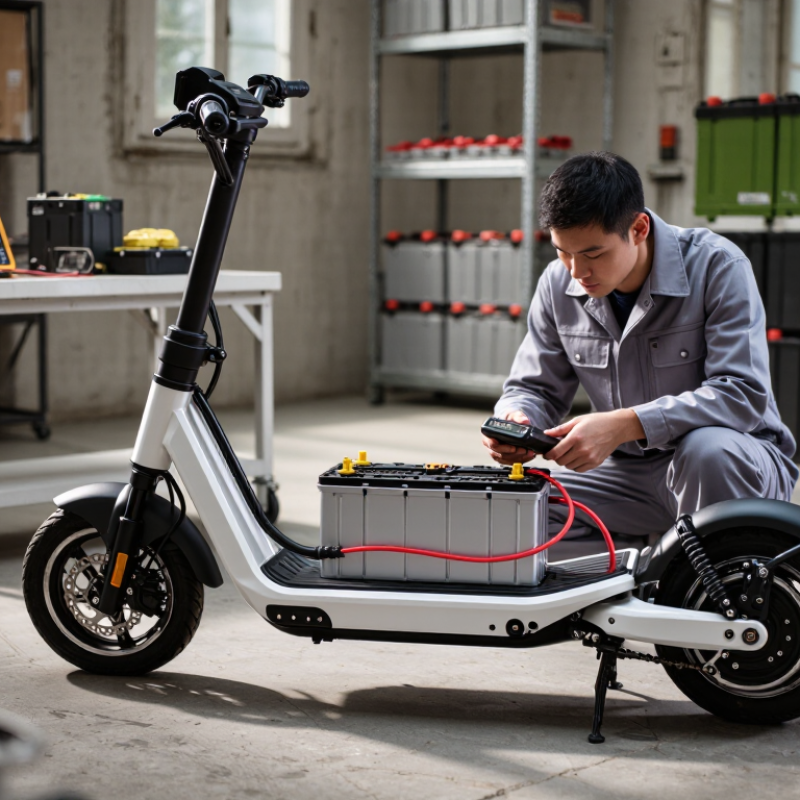
Choosing an electric scooter battery starts with chemistry, not just voltage. Most current scooters use lithium-ion cells, including nickel-manganese-cobalt (NMC) and lithium iron phosphate (LFP). NMC usually stores more energy in less weight, which helps with hill climbing and longer range. LFP generally offers stronger thermal stability and a longer service life, but its battery pack can be heavier. The International Energy Agency reported that LFP batteries reached about 40% of the global electric-car market in 2023, showing their growing technical acceptance.
Lead-acid batteries remain inexpensive, but they are bulky and provide less usable energy per kilogram. They suit low-cost, short-distance scooters, though repeated deep discharges can shorten their life. Battery University’s technical guidance notes that lithium-ion cells commonly deliver several hundred to over 1,000 cycles, depending on chemistry, temperature, and charging habits. That figure is not a promise. Real use is messier. A scooter stored in a hot garage may age faster.
Check the battery management system, or BMS. It should control overcharge, over-discharge, temperature, and cell balance. The U.S. Department of Energy identifies thermal management and battery monitoring as important factors in lithium battery durability and safety. Also compare watt-hours, calculated as volts multiplied by amp-hours. Higher watt-hours usually mean longer range, but rider weight, tire pressure, hills, and cold weather can reduce it sharply. I would not choose chemistry alone; connector quality and replacement support deserve equal attention.
How to Choose the Right Electric Scooter Battery
Matching Battery Voltage and Capacity to Your Scooter
Battery voltage must match your scooter’s original specification. A 36-volt scooter needs a 36-volt battery system. Using a higher voltage pack can damage the controller, display, and motor. It may also create dangerous heat. Check the label near the battery compartment or inside the user manual. Do not rely on appearance alone. Two packs can look identical while using different electrical ratings.
Capacity is measured in amp-hours, or Ah. A higher Ah rating usually provides longer range, but it also adds weight, size, and charging time. For example, replacing a 10 Ah battery with a 15 Ah battery may extend a commute. However, the new pack must fit the compartment and connect correctly. The charger should also match the battery’s voltage and charging requirements. Never force a connector.
From hands-on checks, I measure the compartment before ordering. I also inspect cable clearance, mounting points, and the battery management system. Small details matter. I once focused only on capacity and overlooked the pack’s width. It did not fit securely, so the choice was poor despite its stronger range. That mistake showed me that compatibility is more important than impressive numbers. Consider your route, rider weight, hills, weather, and stopping frequency. Range estimates can be optimistic. A battery used on steep streets may deliver less distance than its specification suggests. Choose a compatible pack with verified safety documentation and a suitable charger.
Choosing an electric scooter battery starts with real range, not the largest advertised number. The International Energy Agency’s Global EV Outlook 2024 reports that electric two- and three-wheelers remain major drivers of electrification worldwide. However, scooter range changes sharply with rider weight, hills, temperature, tire pressure, and stop-start traffic. A 500 Wh battery may deliver 25 kilometers in demanding conditions, rather than its laboratory estimate. Measure your usual route before choosing capacity.
Charging speed also needs careful judgment. A higher charging rate saves time, but it can create more heat and accelerate battery wear. The U.S. Department of Energy notes that temperature strongly affects lithium-ion battery performance and aging. Charge indoors when possible, avoid direct sunlight, and use the supplied charger. Faster is not always better. Realistically, a three-hour charge may suit daily commuting better than a one-hour charge.
Tips: Compare usable watt-hours, not only battery voltage. Ask whether the range figure includes hills and cold weather. Keep charging between roughly 20% and 80% for routine use, when practical. Avoid storing a fully depleted pack. Industry battery-lifetime research often measures hundreds of cycles, but actual lifespan varies widely. That uncertainty matters. A cautious rider may gain several years, while frequent deep discharges and heat can shorten service life considerably. Check charging temperature, record monthly range, and treat unusual heating as a warning.
How to Choose the Right Electric Scooter Battery
Battery compatibility comes before capacity. Match the battery’s nominal voltage, connector, dimensions, mounting points, and communication protocol. A 36-volt system should not receive a 48-volt pack. That mistake can damage the controller or create a fire risk. Check the charger’s output voltage and current, too. Battery energy equals voltage multiplied by amp-hours, but higher capacity does not always mean longer range. Rider weight, hills, temperature, and tire pressure also matter.
Safety features deserve close inspection. Look for a battery management system that controls overcharge, over-discharge, short circuits, and temperature. UL 2271 addresses batteries used in personal e-mobility devices, while IEC 62133-2 covers rechargeable lithium cells and batteries. Certification markings should be verifiable, not simply printed on a label. The U.S. Consumer Product Safety Commission reported an estimated 233,600 injuries involving micromobility products from 2017 through 2022. The figure is sobering. It also reminds me that certification alone cannot replace careful charging habits.
Tips: Inspect seams, welds, cable insulation, and the enclosure for gaps. A real IP rating is useful, but water resistance can weaken after crashes or repeated opening. Avoid swollen packs, loose connectors, or strong chemical smells. Ask for test documentation and a clear warranty. I would also photograph the original wiring before replacement. Small details are easy to forget. A cheaper pack may look identical, yet use weaker cells or thinner nickel strips. That difference stays hidden until heat builds inside the case.
Battery price is only one part of replacement cost. BloombergNEF’s 2023 survey placed average lithium-ion pack prices at 139 dollars per kilowatt-hour, down 14% year over year. A small scooter battery can still cost more at retail. Assembly, testing, shipping, labor, and the battery-management system add expense. Ask for labor separately. Confirm whether the charger is included. Do not compare watt-hours alone. Connector design and enclosure quality matter.
Warranty language deserves equal attention. An industry warranty may specify 12 months, a mileage limit, or minimum capacity retention. Those terms differ widely. Ask whether labor, diagnosis, shipping, or water damage is excluded. Get the capacity threshold in writing. The International Energy Agency’s Global EV Outlook 2024 recorded more than 750 gigawatt-hours of electric-vehicle battery demand in 2023. That scale supports stronger supply chains, but it does not guarantee scooter compatibility.
Maintenance affects warranty claims. Store the scooter in a dry place, away from intense heat, and avoid leaving the battery fully empty. Inspect the case for swelling, cracks, or unusual warmth before charging. Stop using a damaged pack. Keep service records, including dates and mileage. This feels excessive, sometimes. Yet missing records can weaken a legitimate claim. Replacement decisions should also consider safety testing, such as compliance with IEC 62133-2, rather than relying on capacity figures alone.
Lithium-ion batteries are common and relatively light. NMC offers high energy density, while LFP usually provides better thermal stability and service life. Neither choice is perfect.
NMC packs usually store more energy with less weight. LFP packs are often heavier but can tolerate heat better. Your route and carrying needs matter.
They can suit short trips and low-cost scooters. However, they are bulky and provide less usable energy per kilogram. Frequent deep discharges may shorten their life.
Match the original voltage exactly. A 36-volt scooter needs a 36-volt battery system. Higher voltage may damage the controller, display, or motor.
Usually, higher Ah means more stored capacity and longer range. It can also increase weight, size, and charging time. Bigger is not always better.
Measure the compartment’s length, width, and height. Check mounting points, cable clearance, and connector orientation. A pack can have excellent capacity and still not fit securely.
Rider weight, hills, tire pressure, cold weather, and frequent stops reduce range. A steep street can consume energy quickly. Range figures are often optimistic.
Look for a battery management system, or BMS. It should manage overcharging, deep discharge, temperature, and cell balance. Also use a compatible charger. Do not force connectors.
Choosing the right Electric Scooter Battery requires more than selecting the highest capacity available. Start by understanding common battery types and chemistry, since each option affects weight, performance, charging behavior, and expected lifespan. Confirm that the battery’s voltage matches your scooter’s electrical system, while its capacity suits your daily travel needs without adding unnecessary weight. Consider the practical balance between riding range, charging speed, and long-term durability.
Compatibility and safety are equally important. Check the battery’s dimensions, connectors, mounting method, charging requirements, and built-in protections against overheating, overcharging, and short circuits. Strong construction and reliable quality control can improve both performance and safety. Finally, compare replacement prices, warranty coverage, and maintenance requirements before making a decision. A slightly more expensive battery may provide better value if it offers dependable operation, longer service life, clearer support, and lower maintenance costs over time.

