Choosing the best Electric Scooter Dual Motor is not simply a race for the highest advertised speed. It is a practical decision involving traction, battery capacity, braking confidence, rider weight, and daily terrain. A scooter may look powerful on a product page, yet struggle on wet pavement or steep streets. Real performance is more complicated.
Horace Dediu, a respected micromobility industry analyst, offers a useful principle: “Micromobility works best when it solves a real transportation problem.” That idea should guide every comparison. A dual-motor scooter can deliver stronger hill climbing and smoother acceleration, especially when both tires maintain contact with loose gravel or uneven asphalt. However, extra power usually means greater weight, higher energy use, and more demanding maintenance. Sometimes, less is better.
Look closely at the motor’s continuous output, not only its peak wattage. Check the battery’s watt-hours, controller quality, tire width, suspension design, and certified braking system. Test the riding position if possible. Your wrists notice poor ergonomics quickly. Range claims also deserve caution, because temperature, rider weight, wind, and speed can reduce them sharply.
A reliable choice should feel controlled rather than aggressive. It should start smoothly, stop predictably, and remain stable during ordinary commutes. Waterproofing matters too, although no rating removes the need for sensible weather care. I would also question dramatic marketing language. Numbers can impress. They do not replace experience. The best model is the one that fits your roads, charging routine, storage space, and willingness to maintain it. That answer may be less exciting, but it is usually more honest.
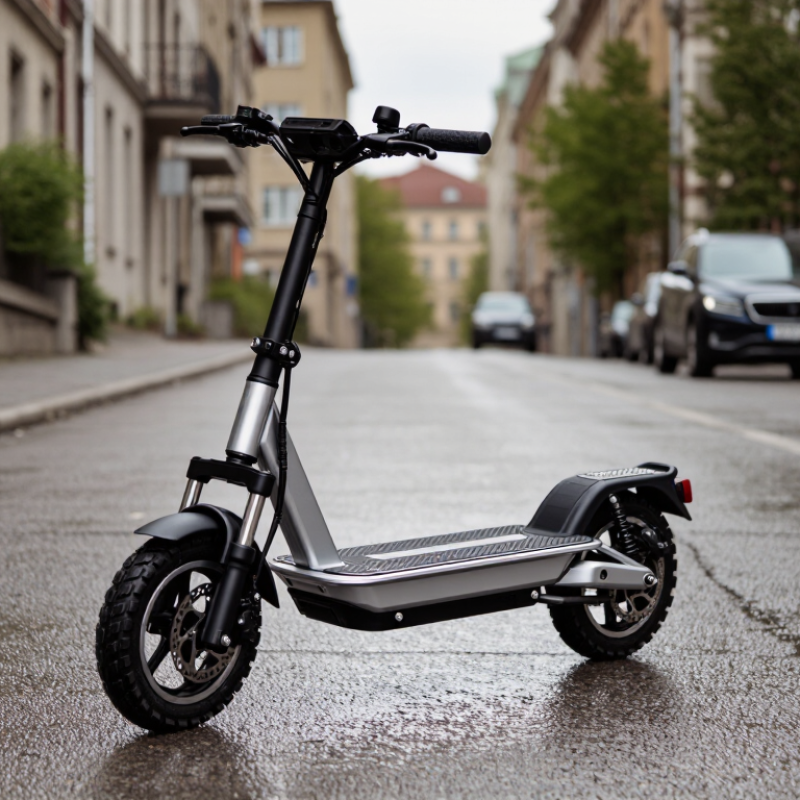
How to Choose the Best Dual Motor Electric Scooter?
A dual-motor scooter uses two electric motors, usually one in each wheel. Common configurations range from 2×500 watts to 2×2000 watts. Together, they provide stronger acceleration and all-wheel drive traction. This matters on steep roads, loose gravel, and wet pavement. However, motor wattage alone does not define real performance. Controller limits, battery voltage, rider weight, and tire design also affect output.
Check whether the listed power is nominal or peak. Nominal power describes sustained performance, while peak power describes short bursts. A 2×1000-watt setup may feel balanced for commuting and moderate hills. Larger 2×2000-watt systems can climb more confidently, but they often add weight and consume energy faster. More power is not always better. Range can shrink quickly under aggressive acceleration.
I once focused too much on wattage. That was a mistake. During a test ride, smooth throttle control felt more useful than raw speed. Look for adjustable drive modes, progressive braking, and independent motor control. All-wheel drive can improve stability, but it may also spin the front tire on slippery surfaces. Choose wide pneumatic or well-designed tubeless tires for uneven streets. Confirm the scooter’s payload rating, battery capacity, charging time, and tested braking distance. Manufacturer claims deserve verification through manuals, independent tests, and a careful ride on familiar ground.
A 52 V dual-motor scooter gives designers more electrical headroom than lower-voltage systems. Voltage matters because power equals voltage multiplied by current. At the same output, higher voltage can reduce current and limit cable heating.
Battery capacity deserves closer attention. A 1,000 Wh pack at 52 V stores roughly 19.2 Ah. A 3,000 Wh pack stores about 57.7 Ah. That difference is substantial. The smaller battery may suit short commutes, while the larger unit can support longer routes, hills, and heavier loads. However, extra cells add weight, charging time, and replacement cost. Real range is always lower than the label suggests. Wind, cold weather, tire pressure, rider mass, and repeated acceleration all matter.
The International Energy Agency’s Global EV Outlook 2024 reported average lithium-ion battery prices near 115 dollars per kWh in 2024. Scooter packs may cost more per kWh because of smaller production volumes and protection hardware. UL Solutions also emphasizes battery management, thermal control, and tested charging systems for micromobility products. Check the pack’s continuous discharge rating, not only its Wh figure. A 3,000 Wh battery with weak current delivery can feel disappointing. I have seen range estimates fail on steep roads. That is worth remembering. A 52 V system with 1,500–2,000 Wh may offer a more practical balance than an oversized pack.
Choosing a dual motor electric scooter requires more than reading its advertised top speed. The 0–60 km/h figure shows acceleration, but testing conditions matter. A lightweight rider on flat asphalt may reach it quickly. A heavier rider, cold battery, or strong headwind can change the result. Check whether the number comes from a rolling start or a complete stop. That detail matters.
Hill grade reveals practical performance. A scooter rated for a steep climb may slow sharply on loose gravel or wet pavement. Controller amps also deserve attention. Higher current can deliver stronger acceleration and better climbing, but it may increase heat and battery stress. Look for continuous and peak amp ratings, not one impressive figure. I once focused too heavily on peak power and underestimated thermal limits. That was a poor comparison.
Tips: Test acceleration on a closed, legal surface. Record rider weight, battery charge, temperature, and incline. Compare scooters under identical conditions. Watch for speed fade after repeated climbs. A short test is not enough. Also inspect braking control near 60 km/h, because fast acceleration has little value without predictable stopping. If specifications seem vague, ask for measured test data and controller details before buying.
Choosing a dual motor electric scooter starts with safety, not peak speed. Look for genuine UL 2272 certification covering the complete electrical system. Check the certification record or printed identification, rather than trusting a sales sentence. This standard helps address battery, charger, wiring, and fire-related risks. It does not guarantee safe riding or perfect construction. Inspect the deck, folding joint, cables, and battery housing before every trip.
Tips: Test both hydraulic brake levers in a quiet area. They should slow the scooter smoothly without pulling sideways. Ask about fluid leaks, worn pads, and replacement parts. Hydraulic brakes feel powerful, but neglected systems can fail quietly. Keep tire pressure within the maker’s stated range. It affects braking distance and cornering stability.
An IP54 rating offers protection from dust and water splashes. It is not waterproof for deep puddles or heavy storms. IPX6 handles strong water jets, but it still does not mean immersion protection. Ratings can differ between the battery compartment, display, and charging port. Cover the port before riding in rain, then let the scooter dry fully. A common mistake is treating the highest rating as permission to ride through flooding. It is not. Dual motors add traction on slopes, yet they also demand careful acceleration on wet pavement. Check certification details and inspect real sealing points; labels alone can be incomplete.
| Evaluation Dimension | Verified Technical Reference | Recommended Selection Target | How to Verify Before Purchase | Safety or Performance Relevance |
|---|---|---|---|---|
| Electrical Safety Certification | UL 2272 is a safety standard for the electrical systems of personal e-mobility devices, including battery, charger, wiring, protection circuits, and related components. | Complete UL 2272 certification | Request a current certificate or certification record covering the exact model and configuration. Do not rely only on a marketing statement or an unrelated charger certificate. | Helps confirm that the complete electrical system has been evaluated for hazards such as electric shock, abnormal operation, and fire-related risks. |
| Drive System | A dual-motor scooter uses two independently powered motors, normally one at the front and one at the rear. | Two matched motors with clearly stated continuous and peak power ratings. | Check the technical specification sheet and confirm that both motors are active in the selected riding mode. Compare continuous power rather than peak power alone. | Two motors can improve hill climbing, traction, and acceleration control, but they also increase energy consumption, heat output, and braking requirements. |
| Hydraulic Brakes | Hydraulic disc brakes transmit lever force through fluid in a sealed line. They generally provide consistent modulation with less manual cable adjustment than mechanical cable brakes. | Hydraulic disc brakes on both wheels | Confirm that the specification identifies hydraulic disc brakes, not only “disc brakes.” Check rotor condition, lever firmness, hose routing, and the availability of replacement pads and seals. | Strong braking hardware is particularly important on heavier dual-motor scooters, where total mass and speed can increase stopping distance. |
| Brake Redundancy | Separate front and rear braking circuits can provide more balanced deceleration than relying on a single brake. | Independent front and rear brakes plus electronic braking that can be adjusted or disabled. | Test braking progressively in a safe, dry area. Confirm that the electronic brake does not cause abrupt lock-up and that both mechanical brakes engage smoothly. | Redundancy improves control if one braking system loses effectiveness, but it does not replace regular inspection and adjustment. |
| Ingress Protection Rating | IP54 means limited dust ingress protection and protection against water splashes from any direction. IPX6 means protection against powerful water jets; the “X” indicates that a solid-particle rating was not specified. | At least IP54 for general commuting IPX6 or higher for frequent wet conditions |
Look for the exact IP code in official technical documentation. Verify whether the rating applies to the complete scooter or only a specific enclosure or component. | Ingress protection reduces, but does not eliminate, water-related risks. It does not mean the scooter is safe for immersion, flooding, or pressure washing unless the documentation explicitly states so. |
| Battery Protection | A battery management system should monitor cell voltage, temperature, current, and charging conditions. | Overcharge, over-discharge, over-current, short-circuit, and temperature protection. | Confirm the battery chemistry, rated voltage, capacity in watt-hours, charger output, and whether the battery pack has documented protection features. | Proper battery protection helps limit electrical and thermal stress during charging, acceleration, storage, and low-temperature operation. |
| Charger Compatibility | The charger’s output voltage and connector must match the battery system. Charging current affects charging time and thermal load. | Original or approved charger with matching voltage, connector, polarity, and current rating. | Compare the charger label with the scooter manual. Stop using a charger with damaged cables, unusual heat, odor, swelling, or visible damage. | Using an incompatible or uncertified charger can increase the risk of battery damage, overheating, or fire. |
| Tire and Wheel Setup | Pneumatic tires can provide better shock absorption and traction than solid tires, while solid tires reduce puncture risk but may transmit more vibration. | Appropriate tire type, adequate tread, and load-rated wheels for the intended surface. | Check tire size, pressure range, tread depth, sidewall condition, wheel bearings, and clearance from the deck and fenders. | Correct tire condition and pressure support steering stability, braking traction, and resistance to uneven surfaces. |
| Maximum Load | The manufacturer’s maximum load normally includes the rider and carried equipment, not only body weight. | Rated load at least 15–20% above the combined rider and cargo weight. | Add rider weight, backpack, locks, and other equipment. Confirm whether the stated limit changes with slopes, speed modes, or wet conditions. | Operating close to or above the limit can reduce acceleration, range, suspension performance, tire life, and braking control. |
| Lighting and Visibility | Front and rear lights improve visibility but do not guarantee that other road users will see the scooter. | Front headlight, rear light, brake light, reflectors, and a clearly visible riding position. | Check light operation in all modes and confirm that the brake light activates when either brake control is used, if specified. | Visibility equipment is essential for low-light riding, but riders should still use suitable protective equipment and follow local traffic rules. |
| Thermal and Environmental Limits | Battery performance and charging safety can change with ambient temperature, direct sunlight, moisture, and storage conditions. | Documented operating and charging temperature ranges. | Read the manual for minimum and maximum charging temperatures. Do not charge a wet, hot, frozen, damaged, or swollen battery. | Following environmental limits reduces capacity loss, unexpected shutdowns, and thermal stress on the battery system. |
| Maintenance Access | Hydraulic systems, tires, bearings, fasteners, electrical connectors, and suspension components require periodic inspection. | Readily available consumable parts and clear maintenance procedures. | Check access to brake pads, rotors, tires, suspension hardware, and battery connectors. Confirm that service parts can be obtained in the intended market. | Good serviceability helps preserve braking performance, water resistance, and structural integrity over time. |
Note: Certification marks, IP ratings, load limits, and performance specifications should be verified for the exact model and production version. Local laws may impose separate requirements for speed, lighting, helmets, registration, and where electric scooters may be ridden.
A dual motor electric scooter should earn its performance claims on ordinary roads, not only in laboratory conditions. Begin with the manufacturer’s tested range, then compare it with your daily route. Test it at your expected speed, with lights on, and through several inclines. Record battery percentage, distance, temperature, and rider weight. Real range varies.
A scooter rated for 60 kilometers may deliver far less in strong wind or cold weather. I once judged a model too quickly after testing it on flat pavement. A later hill route reduced its range noticeably. That mistake changed my method. Test at least twice, and leave a safety margin of 20 to 30 percent. Check whether the stated payload includes the rider, luggage, and accessories. A heavier load can affect braking, climbing, tire wear, and battery output.
Warranty coverage deserves the same practical attention. Read the written terms before paying, especially the coverage period for the battery, motors, controller, charger, and frame. Ask whether labor, shipping, diagnostics, and replacement parts are included. Some policies exclude water exposure, normal battery aging, or unauthorized repairs. Those details matter more than a generous headline warranty. Confirm how service requests are handled and whether replacement parts remain available. Online support may sound convenient, but delayed repairs can leave an expensive scooter unused. I would also keep purchase records, maintenance notes, and test results, even if that feels excessive.
Higher voltage can reduce current at the same power output. This may limit cable heating and improve electrical efficiency. It does not guarantee better range.
A 1,000 Wh pack stores roughly 19.2 Ah at 52 V. A 3,000 Wh pack stores about 57.7 Ah. More capacity usually means more range, weight, charging time, and replacement cost.
Advertised range is only a reference. Wind, cold air, low tire pressure, rider weight, hills, and repeated acceleration reduce distance. Leave a 20–30 percent safety margin.
Not necessarily. A 1,500–2,000 Wh battery may balance range, weight, and charging time better. A huge pack can feel unnecessary on short daily routes. I once overvalued capacity.
Check whether testing began from a complete stop or a rolling start. Record rider weight, battery charge, temperature, and road incline. Numbers without conditions can mislead.
Higher current can improve acceleration and hill climbing. It can also increase heat and battery stress. Compare continuous and peak ratings, not only the largest number.
Use the same incline, rider, tire pressure, and battery level each time. Watch for speed loss after repeated climbs. A short hill test is not enough.
Confirm whether the payload includes the rider, luggage, and accessories. Extra weight can reduce braking control, climbing ability, tire life, and battery output. Small details matter.
Read coverage for the battery, motors, controller, charger, and frame. Check labor, shipping, diagnostics, water exposure, battery aging, and replacement parts. Keep receipts and service records.
Test braking on a closed, legal surface before high-speed riding. Confirm predictable stopping, stable tires, and secure cables. Fast acceleration has little value without controlled braking.
Choosing the best Electric Scooter Dual Motor requires more than focusing on top speed. Start by understanding the dual-motor design, typically using two 500–2000 W motors with all-wheel drive for stronger acceleration, improved traction, and better hill climbing. Next, compare battery systems, especially 52 V architectures and capacities between 1000 and 3000 Wh, while considering charging time and expected riding conditions. Performance should be evaluated through realistic 0–60 km/h acceleration, controller amperage, and the scooter’s ability to handle different hill grades.
Safety and everyday practicality are equally important. Look for recognized UL 2272 certification, reliable hydraulic brakes, and water-resistance ratings from IP54 to IPX6. Finally, review independently tested range rather than relying only on advertised figures, and check payload limits, suspension quality, maintenance needs, and warranty coverage. The ideal model balances power, battery capacity, control, safety, durability, and long-term value for your specific commuting or recreational needs.

