Explore our premium factory-direct models engineered for urban commute efficiency, commercial fleets, and long-range durability.
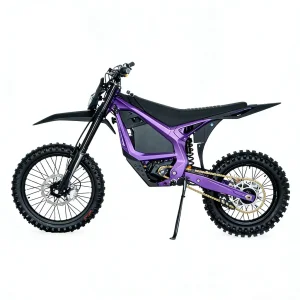
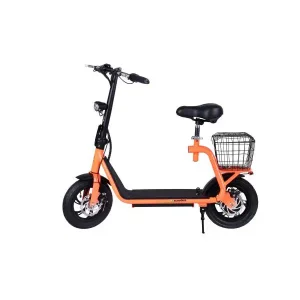
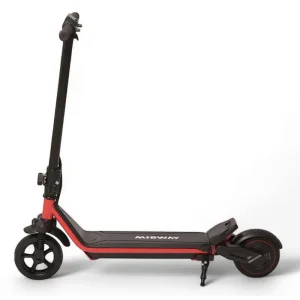
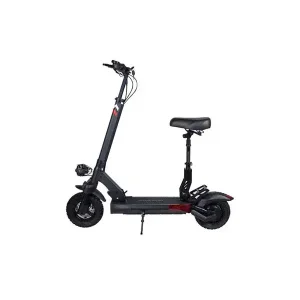
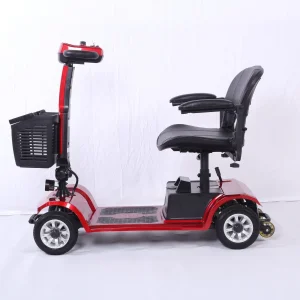
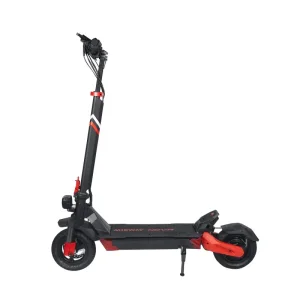
Why 20 Mph (32 km/h) represents the golden regulatory threshold for global B2B electric scooter procurement.
In the rapidly evolving global micro-mobility ecosystem, the query "China 20 Mph Electric Scooter s Factory & Factories" reflects a highly specific commercial search intent. Overseas procurement directors, fleet operators, regional distributors, and e-commerce brand owners are actively seeking verified OEM/ODM manufacturing partners in China capable of mass-producing light electric vehicles (LEVs) that meet the strict 20 miles per hour (approx. 32 km/h) speed threshold.
The 20 Mph ceiling is not an arbitrary metric; it represents the precise legal boundary across major international jurisdictions. In North America, under the Consumer Product Safety Act (CPSC) and Class 2 e-bike / e-scooter classifications, 20 Mph allows vehicles to operate in bike lanes without requiring motor vehicle registration, driver licensing, or specialized license plates. Similarly, in European markets adhering to EN 17128:2020 and UK micro-mobility trial frameworks, programmable speed governors capping output at 20 Mph (or 25 km/h depending on local firmware presets) ensure effortless market access and compliance.
How Zhejiang and Jiangsu industrial clusters deliver unmatched economies of scale, component precision, and OEM cost efficiency.
Located in key industrial zones such as Wuyi, Yongkang, and Jinhua, our production ecosystem aggregates raw material processing, die-casting, CNC machining, and motor winding within a 30-mile radius, drastically cutting lead times.
Modern China 20 Mph electric scooter factories utilize automated Surface Mount Technology (SMT) for controller board manufacturing, robotic frame welding, and automated battery cell sorting for absolute consistency.
From Incoming Quality Control (IQC) of Samsung/EVE battery cells to 100% finished product dyno testing, IPX5 water spray chambers, and vibration stress rigs, quality assurance is embedded into every assembly stage.
| Manufacturing Dimension | Standard Assembly Workshop | China Factory 4.0 Advanced Facility (Yuema Standard) |
|---|---|---|
| Frame Material & Welding | Manual TIG welded low-grade steel frames | Robotic-welded 6061-T6 Aviation Aluminum Alloy with hydro-formed reinforcement |
| Battery Management (BMS) | Basic over-charge protection board | Smart CAN-bus BMS with cell balancing, dual thermal sensors, and short-circuit auto-cutoff |
| Motor Control Architecture | Square-wave controllers (noisy, inefficient) | Sine-wave FOC (Field Oriented Control) for silent acceleration, 92% efficiency, and smooth 20 Mph capping |
| Waterproof Rating | IPX4 (Basic splash resistance) | IPX5 full body, IPX7 sealed battery module and quick-connect harness cabling |
A deep dive into powertrain engineering, battery thermal management, and structural chassis dynamics.
To sustain a continuous 20 Mph speed across varying rider weights (up to 120kg/265lbs) and terrain gradients, factories utilize direct-drive brushless DC (BLDC) outer-rotor hub motors. Copper fill ratios are maximized to 85% with H-grade (180°C) heat-resistant magnet wire to prevent thermal degradation during prolonged high-speed cruising.
Modern 20 Mph models utilize 48V or 52V battery architectures paired with Grade-A 18650 or 21700 lithium-ion cells. Pack design features nickel-plated copper busbars, flame-retardant cell holders, and structural thermal epoxy potting to ensure UN38.3 transport safety compliance and long cycle life (800+ cycles to 80% capacity).
Maintaining safety at 20 Mph demands superior kinetic energy dissipation. Advanced factory designs incorporate dual mechanical disc brakes or hydraulic disc brakes coupled with electronic regenerative braking (E-ABS). Suspension systems employ front hydraulic forks and rear dual-spring shock absorbers to isolate chassis vibration.
Tailored OEM/ODM manufacturing strategies serving diverse commercial revenue channels.
Fleet operators require heavy-duty chassis designs, non-folding reinforced stems, hidden cable routing, swap-ready battery compartments, and integrated IoT hardware supporting MQTT protocols for real-time GPS tracking and remote lock/unlock commands.
Retail importers prioritize aesthetically polished CMF options, quick 3-second folding mechanisms, ultra-lightweight frame geometry, customized multi-color LED displays, and custom-branded retail packaging designed to withstand ISTA 3A drop testing.
Delivery fleets demand high-payload rear racks, dual battery configurations delivering 80+ miles of range per charge, puncture-resistant 10-inch tubeless tires, and heavy-duty center kickstands for stable loading.
Ensuring frictionless customs clearance and long-term brand equity protection in overseas destination markets.
Navigating global regulatory landscapes requires a China factory partner with established certification assets. Sourcing non-compliant electric scooters risks customs seizures, punitive fines, or catastrophic product recalls. A tier-1 China 20 Mph electric scooter manufacturer maintains a complete portfolio of international test reports and certificates verified by accredited third-party labs such as TÜV Rheinland, SGS, and Intertek.
UL 2272 Standard: Full electrical drive system safety testing covering battery packs, chargers, and controllers.
FCC Part 15 Class B: Electromagnetic interference protection.
CPSC Compliance: Mechanical frame strain and stem latch safety validation.
EN 17128:2020: Specific safety requirements and test methods for personal light electric vehicles.
CE / Machinery Directive 2006/42/EC: Essential health and safety requirements.
RoHS & REACH: Hazardous substance limitations across all plastic and metallic components.
UN 38.3 Certification: Lithium battery transport testing (thermal shock, vibration, altitude, external short circuit).
MSDS & Safety Data Sheets: Full maritime (IMDG) and air freight (IATA) documentation pre-issued for expedited customs clearance.
Emerging innovations reshaping the next generation of China-manufactured electric scooters.
To reduce dependence on lithium supply chains and enhance sub-zero winter performance, leading factories are pioneering Sodium-ion battery packs that retain 85% capacity at -20°C with lower raw material costs.
Next-gen 20 Mph scooters are integrating front facing camera modules and ultrasonic sensors running edge AI algorithms to detect sidewalk riding, alert riders of blind-spot collisions, and automatically enforce zone-based speed limits.
Standardized unified battery pack designs allowing cross-compatibility between electric scooters, e-bikes, and light delivery mopeds, optimizing fleet management efficiency and battery recycling life cycles.
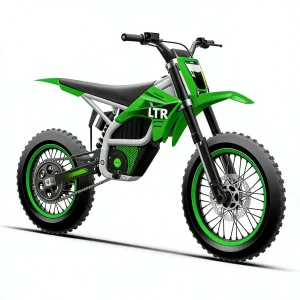
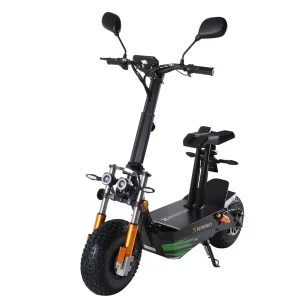
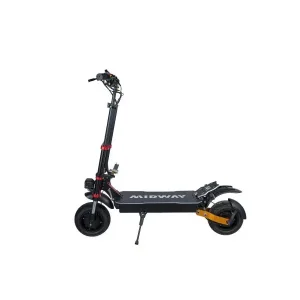
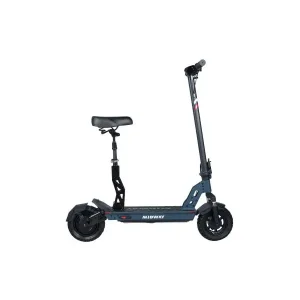
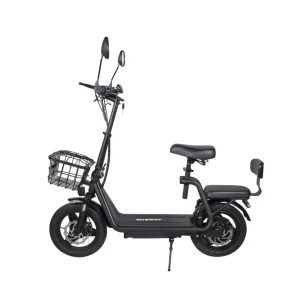
Explore our extended series of electric scooters, Citycoco fat-tire cruisers, and off-road mobility units built for wholesale distribution.
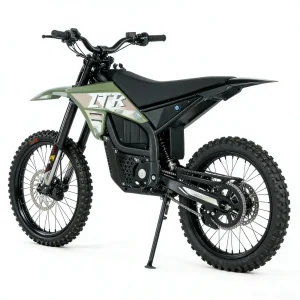
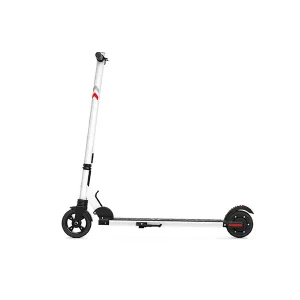
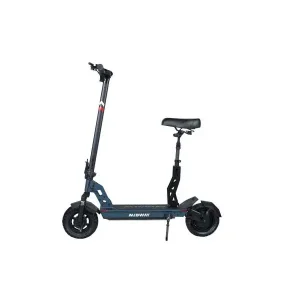
Essential steps to verify manufacturing capability, quality systems, and financial stability before placing bulk orders.
Verify ISO 9001:2015 Quality Management System certification. Ensure the factory owns in-house frame welding lines, automated painting/powder coating, and dedicated assembly lines rather than operating purely as a trading intermediary.
Confirm the facility possesses dynamic chassis fatigue testers, saltwater spray corrosion testing chambers, battery pack vibration tables, and computerized dyno roll benches for speed/torque calibration.
Ensure full barcode traceability for key safety components including battery cells, BMS IC chips, MOSFETs in controllers, and brake calipers to guarantee swift root-cause resolution in warranty events.
Technical and commercial answers to help importers streamline their sourcing workflow with China manufacturers.
Standard OEM customization (custom branding, colors, packaging) starts at 50 to 100 units. For fully customized frame tooling or custom BMS firmware protocols, MOQ typically ranges between 200 and 500 units depending on component lead times.
Speed regulation is governed at the FOC controller level via microcode firmware. It reads RPM pulses directly from the hub motor's Hall sensors and adjusts Pulse-Width Modulation (PWM) duty cycles to cap speed at exactly 20 Mph without sacrificing climbing torque.
Yes. All factory battery packs undergo mandatory UN38.3 testing, including thermal shock, altitude simulation, and vibration. Importers receive full UN38.3 test summaries, MSDS, and 1.2m drop test documentation for sea (IMDG) or air (IATA) transport.
We provide a 12-month limited warranty on core powertrain components (motor, controller, frame, lithium battery pack) and 6 months on wearable items. Additionally, factories include 1% to 2% free spare parts provision with container shipments for local RMA support.
Absolutely. Modern factory assembly lines can pre-install IoT modules operating on 4G/LTE-M networks with BLE fallbacks, communicating via MQTT/HTTP protocols directly to your proprietary cloud management software.
After pre-production sample approval and deposit confirmation, mass production generally takes 25 to 35 calendar days. Peak manufacturing seasons (Q3 before holiday retail peaks) may extend lead time to 40 days.
