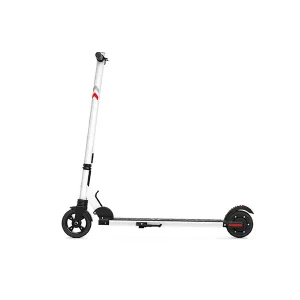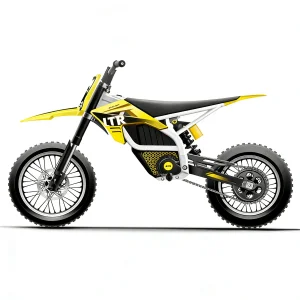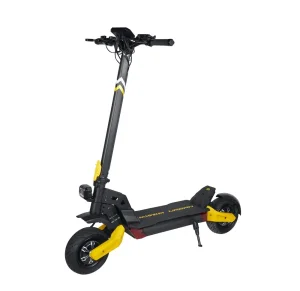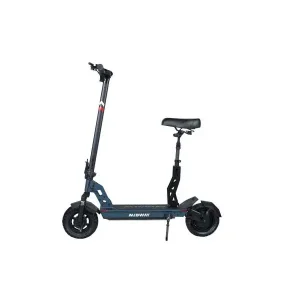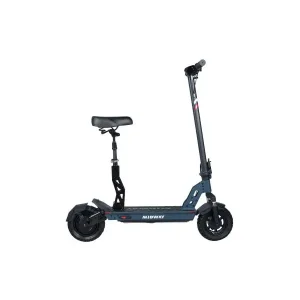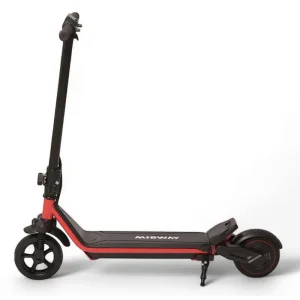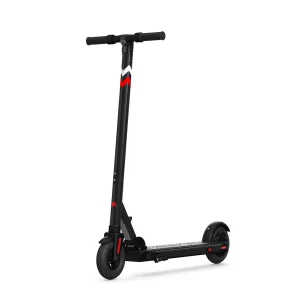
In the global urban transportation infrastructure, the 20mph (32km/h) electric scooter segment has emerged as the definitive benchmark for legal compliance, rider safety, and commercial utility. Unlike low-speed 12-15mph entry-level models that struggle with gradeability (inclines over 10 degrees) or high-speed 35mph+ hyper-scooters that face stringent mopeds registration laws, 20mph vehicles sit squarely within the optimal regulatory threshold across North America, Europe, LATAM, and Asia-Pacific.
From an engineering perspective, achieving a sustainable 20mph cruising speed requires exact synchronization between motor wattage, controller current (amperage limits), and lithium-ion discharge rates. Chinese electric scooter manufacturers have refined this architecture into a standardized, highly scalable powertrain—typically pairing 36V 350W or 48V 500W-600W brushless DC (BLDC) hub motors with smart sine-wave controllers. This ensures rapid torque delivery for hilly urban terrain while preventing thermal throttling during prolonged operational cycles.
For B2B buyers, sourcing directly from verified Chinese factories offers significant strategic advantages: unmatched economy of scale, rapid OEM/ODM prototyping, robust supply chain resilience, and comprehensive international certification support (CE, UL 2272, EN 17128, UN 38.3). This whitepaper provides procurement directors, brand owners, and fleet managers with the definitive technical framework required to evaluate and partner with top-tier Chinese 20mph electric scooter manufacturers.
Situated in the heart of China's hardware capital, factories leverage immediate proximity to premium aluminum alloy extrusion mills, precision tooling shops, and automated stamping facilities. This geographical density reduces raw material transit lead times by up to 60%, allowing rapid turnaround on custom frame molds and chassis designs.
Leading factories maintain in-house SMT (Surface Mount Technology) lines for PCB controller production, automated motor winding machinery, and laser frame welding robots. Direct control over component manufacturing eliminates third-party component markups while ensuring zero-defect quality control across every production batch.
By producing tens of thousands of units monthly for international distributors, Chinese OEMs achieve unparalleled volume pricing on lithium cells (LG, Samsung, CATL, and tier-1 domestic cells) and electronic assemblies. This unit-cost efficiency allows global brand partners to capture healthy 30%-50% gross profit margins.
| Specification Parameter | Commuter Standard (350W) | Pro Commuter (500W-600W) | Commercial Fleet (1000W Peak) |
|---|---|---|---|
| Top Cruise Speed | 18.6 - 20 mph (30-32 km/h) | 20 - 22 mph (32-35 km/h) | 20 mph (Electronically Capped) |
| Motor Powertrain | 36V 350W Brushless Front/Rear Hub | 48V 500W/600W High-Torque Hub | 48V 1000W Dual Motor / Rear Hub |
| Battery Pack Architecture | 36V 10.4Ah (3744Wh) Lithium-ion | 48V 13Ah - 15Ah (624Wh-720Wh) | 48V 20Ah Swappable Pack (960Wh) |
| Braking Architecture | Front E-ABS + Rear Disc Brake | Dual Mechanical Disc Brakes | Dual Hydraulic Disc + EBS Braking |
| Maximum Payload | 100 kg (220 lbs) | 120 kg (265 lbs) | 150 kg (330 lbs) |
| Gradeability / Incline | 12 - 15 Degrees | 18 - 22 Degrees | 25+ Degrees |
| Tire Configuration | 8.5" Pneumatic / Solid Honeycomb | 10" Tubeless Pneumatic Tires | 10" Heavy-Duty Self-Healing Gel |
| Waterproof Rating | IPX4 Overall Body | IPX5 Body / IPX7 Battery Compartment | IPX7 Fully Sealed Electronics |
The core heart of any 20mph electric scooter is its Battery Management System (BMS). Tier-1 Chinese manufacturers incorporate intelligent BMS microcontrollers featuring 10 layers of active protection: over-charge, over-discharge, short-circuit, over-current, passive balancing, dual thermal cut-off sensors, and cell-level fused disconnects. Premium configurations utilize grade-A 18650 or 21700 cylindrical cells certified to UN 38.3 standards, maintaining over 80% capacity retention after 800 charge cycles.
To safely sustain 20mph impact force over rough city streets, frames are constructed using high-tensile Aviation-Grade 6061-T6 Aluminum Alloy or magnesium-steel composites. Robotically TIG-welded chassis undergo 100,000-cycle dynamic stress testing under a 150kg load rating. Folding mechanisms feature reinforced double-locking levers engineered to eliminate stem wobble and material fatigue over years of daily folding.
Define target market specifications including motor wattage (350W vs 600W), battery voltage, max speed locks (e.g., 20mph for USA vs 25km/h speed limit caps for EU), handle grip branding, LED display UI customization, and custom paint color codes (Pantone matching).
Execute rigorous factory audits evaluating ISO 9001 compliance, SMT production lines, dynamic test tracks, and IQC incoming material inspections. Request pre-production golden samples for localized road testing, battery thermal imaging, and salt-spray corrosion analysis.
Establish clear Incoterms (FOB Ningbo/Shanghai, CIF, or DDP), formalize quality threshold agreements (<0.5% warranty target), and contract a mandatory 2-3% spare parts reserve buffer (controllers, throttles, motors, chargers, tires) alongside bulk order shipments.
For entry into the United States and Canadian retail markets, electric scooters must comply with UL 2272 certification, which evaluates electrical drive train safety, battery thermal stability, and charger safety under severe environmental stress. Chargers require UL 1310 / UL 60950 authorization, and electronic controllers must carry FCC Part 15 Class B electromagnetic compatibility certification.
Importers bringing scooters into the EU must adhere to EN 17128:2020 (personal light electric vehicles standards). Key mandates include dual independent braking systems, mandatory reflector layout, maximum speed limiting features, and full compliance with CE Machinery Directive 2006/42/EC, RoHS environmental restrictions, and WEEE recycling registration.
Modern 20mph scooters are increasingly integrated with Bluetooth/4G IoT modules, allowing remote diagnostics, cellular geo-fencing, automatic theft locking, and real-time battery cell degradation telemetry pushed directly to smartphone applications (iOS/Android) and fleet management platforms.
While NMC cells remain popular, factories are rapidly adopting LiFePO4 (Lithium Iron Phosphate) and emerging Sodium-ion battery packs. These alternative chemistries deliver superior thermal stability, zero fire risk under puncture, lower manufacturing costs, and over 2,000 to 3,000 functional charge cycles.
Maintenance overhead is the single largest operating cost for rental fleets and commercial users. Chinese factories are standardizing 10-inch tubeless pneumatic tires filled with internal viscous jelly sealant that instantly seals punctures up to 6mm, paired with hydraulic fork shock absorbers for maximum comfort.
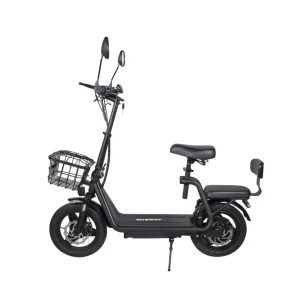
In densely populated metropolitan areas, 20mph electric scooters outfitted with front cargo baskets, heavy-duty rear luggage racks, and dual swappable battery packs allow delivery couriers to bypass gridlock traffic, park effortlessly on sidewalks, and complete last-mile food and parcel delivery at 40% lower operating costs than gasoline mopeds.
Large enterprise facilities, luxury holiday resorts, and university campuses utilize geofenced 20mph scooters to provide eco-friendly intra-facility mobility for employees, security staff, and visitors. Built-in speed throttling features allow administrators to limit speeds to 10-12mph in pedestrian-dense zones while retaining full 20mph speed on open paths.