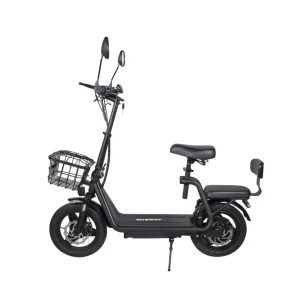
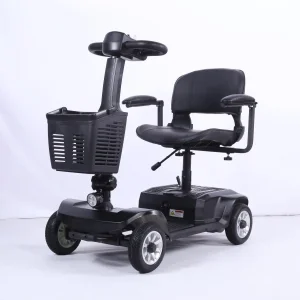
Factory-direct electric motorcycles, heavy-duty mobility vehicles, and high-speed urban scooters manufactured under ISO9001 and CE compliance standards.
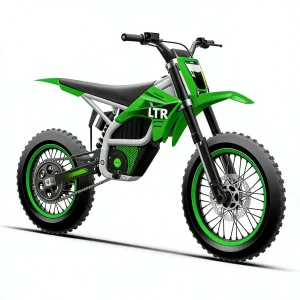
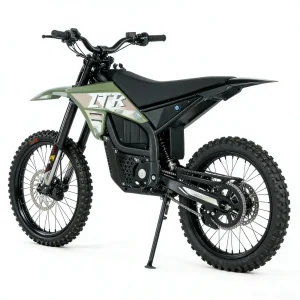
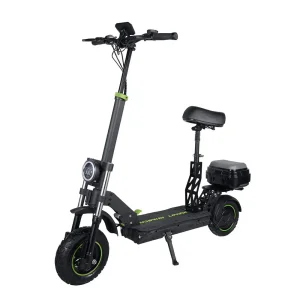
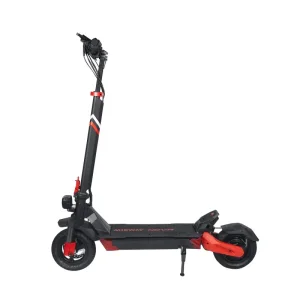
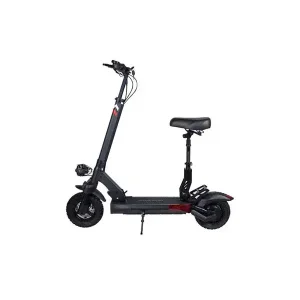
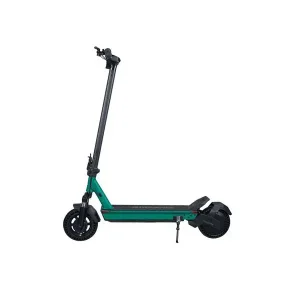
Analyzing why the 25 Mph velocity threshold has become the strategic sweet spot for urban commuters, commercial last-mile fleets, and regional regulatory compliance frameworks across North America and Europe.
25 Mph allows riders to seamlessly flow with suburban arterial traffic, minimizing dangerous speed differentials between light electric vehicles (LEVs) and automobiles while staying under heavy motor-vehicle licensing mandates.
Achieving sustained 25 Mph performance requires 500W to 1000W nominal power motors (48V/60V architecture), balancing rapid acceleration on 15° inclines without inducing thermal runaway or rapid battery cell degradation.
Factory-configured speed governors allow seamless adaptation to local road laws—such as US Class 2/3 classification, European EN 17128 compliance, and Australian personal mobility vehicle standards.
From raw material synthesis to high-precision SMT circuit assembly, China's centralized manufacturing clusters offer unmatched cost-to-performance ratios, rapid prototyping, and vertical integration.
Global procurement directors and enterprise importers seeking China 25 Mph Electric Scooters Manufacturers & Factories benefit from a deeply integrated industrial ecosystem unmatched anywhere else in the world. China's electric vehicle manufacturing sector has evolved beyond simple assembly; it represents a vertically integrated ecosystem encompassing advanced metallurgy, battery chemistry innovation, automated motor winding, and algorithmic controller optimization.
The supply chain strength for 25 Mph electric scooters is concentrated across three primary industrial zones, each providing critical technological specialization:
Specializing in high-tensile 6061-T6 aviation-grade aluminum alloy forging, robotic TIG welding, and frame load-bearing structural dynamics. Ensures scooter frames withstand over 1,000,000 stress vibration cycles.
The global epicenter for brushless DC (BLDC) hub motor production and sine-wave vector field-oriented controllers (FOC). Guarantees motor efficiency ratings exceeding 88% under continuous 25 Mph loads.
Pioneers in high-density Lithium-ion (NMC and LiFePO4) pack assembly, automotive-grade Smart BMS software architecture, IoT telematics integration, and strict UN 38.3 transport safety compliance.
By leveraging China's mature component standardization, top-tier factories achieve up to 35% lower bill-of-materials (BOM) costs compared to European assembly plants. This allows factory partners to re-invest into higher grade components—such as E-ABS regenerative braking, hydraulic shock absorbers, and smart app telematics—without exceeding target price points.
Examining the core hardware architecture required to maintain steady-state 25 Mph cruising speeds with maximum safety, structural rigidity, and thermal durability.
| Subsystem Component | Technical Benchmark Specs | Engineering Impact on 25 Mph Performance | Quality Verification Test |
|---|---|---|---|
| Brushless Motor (BLDC) | 500W - 1200W Nominal / 1800W Peak, Hall Sensorized | Provides continuous torque to maintain 25 Mph under 120kg payload on 15° inclines. | Dynamometer Load Testing & 150°C Thermal Demagnetization Resistance Test. |
| Lithium Battery Pack | 48V 15Ah - 21Ah (720Wh - 1008Wh) 18650 / 21700 Cells | Delivers 35-50 miles (56-80 km) range per charge at full 25 Mph cruise velocity. | UN 38.3, IEC 62133 Cell Vibration, Overcharge & Thermal Shock Chamber Test. |
| Smart BMS Controller | 48V 25A Sine-Wave FOC Controller with CAN-bus / UART | Ensures smooth linear acceleration, suppresses current spikes, and optimizes energy efficiency by 12%. | 100% SMT Automated Optical Inspection (AOI) & Burn-in Chamber Testing. |
| Braking System | Dual Hydraulic Disc Brakes + E-ABS Electronic Assist | Achieves short dry braking distance of < 3.2 meters from 25 Mph to complete standstill. | 50,000-cycle Brake Pressure Fatigue Test & Wet Surface Friction Assessment. |
| Chassis & Stem Frame | 6061-T6 Heat-Treated Aluminum Alloy / TIG Welded | Prevents stem wobble, structural metal fatigue, and frame snapping at high speeds. | 100,000-cycle Vertical Frame Impact Test (EN 17128 Standard). |
| Tire & Suspension System | 10-Inch Puncture-Resistant Tubeless Tires + Dual Hydraulic Shocks | Absorbs high-frequency road vibrations and maintains cornering traction at 25 Mph. | High-Velocity Cornering Slip Test & Puncture Resistance Gel Penetration Test. |
When sourcing 25 Mph electric scooters from Chinese factories, specifying a Field-Oriented Control (FOC) Sine-Wave Controller is critical for premium market positioning. Unlike lower-cost square-wave controllers that exhibit harsh motor noise and jerky low-speed throttle response, FOC controllers continuously calculate stator current vectors. This results in silent motor operation, 15% higher energy recovery during regenerative braking, and superior thermal dissipation across long 25 Mph rides.
How leading Chinese OEM/ODM factories engineer customized 25 Mph scooter platforms tailored to diverse global market requirements.
Tailored for suburban commuters replacing secondary car trips. Featuring quick 3-second folding mechanisms, dual lights for night safety, and lightweight frames compatible with public transit trunk space.
Heavy-duty commercial variants equipped with reinforced rear cargo racks, dual swappable battery bays for 24/7 uptime, anti-theft GPS tracking, and heavy-payload dual shock absorbers.
Custom IoT hardware integration (4G/LTE, Bluetooth, geofencing), tamper-proof internal cable routing, concealed battery compartments, and remote diagnostic firmware management.
For large-scale international importers, choosing between SKD (Semi-Knocked Down) and CKD (Completely Knocked Down) shipping formats directly impacts import tariff structures, logistics efficiency, and local assembly margins:
Navigating certification requirements to ensure zero customs seizures and full legal road approval in target import markets.
Always demand full lab test reports (SGS, TUV, Intertek) matching the exact battery pack model and factory ISO9001 certification before placing 30% initial production deposits. Ensure UN 38.3 test summaries are provided for sea/air freight battery clearance.
Essential technical and commercial insights for sourcing 25 Mph electric scooters directly from Chinese manufacturers.
To consistently reach and sustain 25 Mph (40 km/h) with an adult rider (up to 100 kg) on flat and mildly inclined terrain, a minimum of 500W continuous / nominal power (or 800W peak) is required on a 48V platform. For steeper terrains (15°+ incline), a 600W-1000W nominal motor paired with a 48V or 60V power bus is recommended to prevent voltage sag and overheating.
Standard factory MOQ for private-label branding (custom logo laser-etching, custom paint colors, branded grip tape, and user manual printing) is typically 50 to 100 units per model. For deep ODM design modifications—such as custom frame die-casting, bespoke battery enclosure molds, or custom IoT integration—MOQs usually start at 300 to 500 units.
Reputable OEM factories supply UN 38.3 battery testing reports, MSDS (Material Safety Data Sheets), and Dangerous Goods (DG) sea transport certificates. Battery packs utilize Smart BMS protection circuits against overcharging, short-circuiting, and thermal runaway, paired with certified 18650 or 21700 lithium cells (EVE, BAK, LG, or Panasonic).
Yes. Factory controllers feature programmable firmware speed limits. For example, a 25 Mph scooter can be electronically capped at 15.5 Mph (25 km/h) via display settings or dedicated mobile app switches to satisfy European EN 17128 or local municipal speed restrictions without altering hardware component configurations.
Leading Chinese manufacturers typically provide a 12-month warranty on critical components—including the frame, BLDC motor, lithium battery pack, and main controller. Factories also supply 1% to 2% complimentary spare parts (brake pads, levers, tubes, display screens, throttles) with bulk container shipments for rapid local customer support.
Standard production lead time for initial OEM orders is 30 to 45 days following sample approval and deposit confirmation. Repeat orders with finalized artwork and components are typically completed within 20 to 25 days, plus sea freight transit time (14-35 days depending on target destination port).
High-durability electric mobility platforms engineered for global B2B supply chains, retail brands, and commercial fleet deployments.