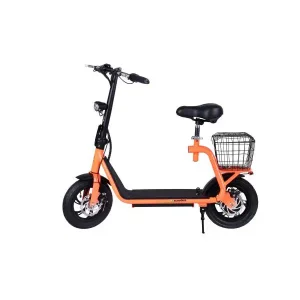
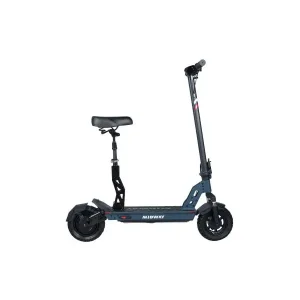
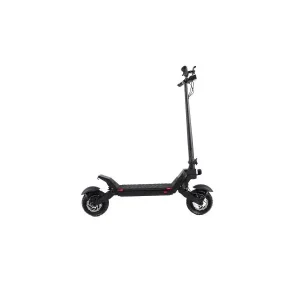
Direct-from-factory high-performance electric motorcycles, mobility scooters, and urban commuting platforms engineered to ISO 9001 quality benchmarks.
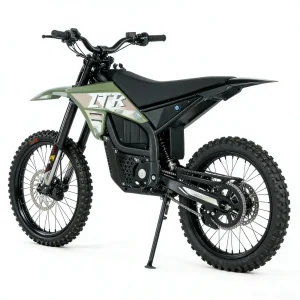
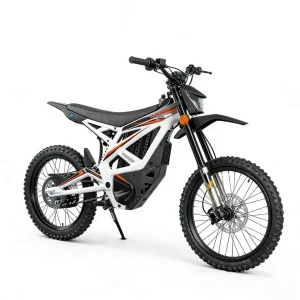
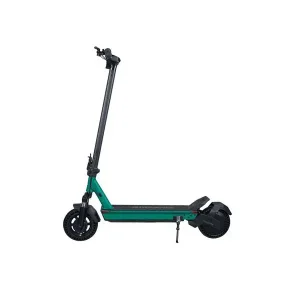
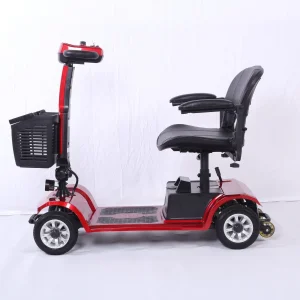
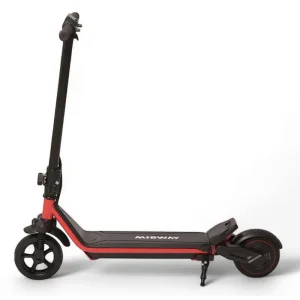
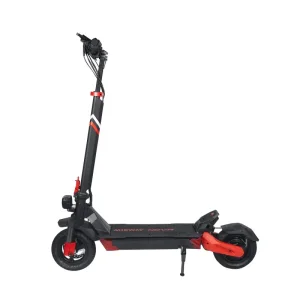
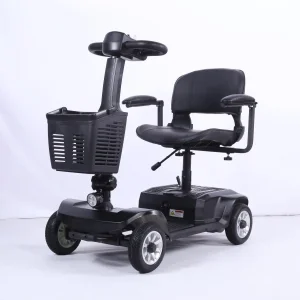
Analyzing the operational shift from low-speed last-mile platforms to high-velocity 35 Mph (56 km/h) multi-purpose light electric vehicles (LEVs).
Executive Industry Takeaway: The global demand for 35 Mph electric scooters represents a convergence between traditional low-speed urban kick-scooters (15–20 mph) and highway-legal light motorcycles (50+ mph). Operating at 35 Mph requires dual-motor vector control, enhanced structural chassis design, real-time thermal throttling, and specialized 60V–72V battery architecture to safely navigate mixed-traffic urban corridors.
Over the past five years, urban transport networks have evolved rapidly. Metropolitan commuters, suburban delivery fleets, and rental platforms are increasingly rejecting low-powered 250W–500W electric scooters due to their inability to keep pace with urban vehicle traffic (which typically moves between 30 to 40 Mph on arterial roads). Standard kick scooters create dangerous speed differentials on public roads, forcing riders into shoulder zones or unsafe overtaking scenarios. The 35 Mph electric scooter framework fills this critical gap, empowering riders to smoothly merge into urban traffic flows without obstructing municipal bus routes or vehicular lanes.
From a B2B procurement standpoint, sourcing 35 Mph models directly from accredited China manufacturers like WuYi YueMa Leisure Articles Co., Ltd. offers global distributors unmatched cost-to-performance ratios. Manufacturing high-speed e-scooters requires rigorous chassis stress testing, precision SMT surface-mount controller assembly, automated cell-matching algorithms, and strict ISO-compliant quality control systems. China's industrial hardware hubs—particularly within the Zhejiang mobility cluster—provide an end-to-end supply chain advantage that lowers production costs while dramatically elevating safety and reliability.
A deep dive into powertrain engineering, high-discharge battery management systems, thermal dynamics, and structural chassis integrity.
Transitioning from traditional 36V/48V consumer platforms to 60V and 72V bus voltages drastically reduces current draw (Amperage) for equivalent power output. Lower current reduces I²R thermal energy losses, preventing wire harness overheating and expanding battery cycle life up to 1,200+ discharge cycles.
Modern 35 Mph scooters utilize Field-Oriented Control (FOC) vector controllers with 12 to 18 SiC (Silicon Carbide) MOSFETs. FOC technology generates smooth sinusoidal current waves, reducing acoustic motor noise to under 50 dB while delivering up to 98% motor conversion efficiency under full-throttle load.
Engineers balance dual-hub BLDC motors (e.g., 2 x 1000W) against central mid-drive belt transmissions. Dual-hub setups offer traction control via independent front/rear torque vectoring, allowing high-speed stability on wet asphalt and hill-climbing capabilities up to 35% grades.
Battery Management Systems (BMS) integrate active cell balancing, optical thermal sensors across individual modules, over-current cutoff, and real-time CAN-bus or RS485 communication protocols. This allows hardware telemetry diagnostic reporting for fleet management operators.
At 35 Mph, road vibrations and frame fatigue increase exponentially. Modern factory designs utilize forged 6061-T6 aluminum alloys and high-tensile steel folding mechanisms, subjected to finite element analysis (FEA) and 300,000-cycle dynamic load fatigue testing prior to mass production.
Stopping distance from 35 Mph requires dual-piston or four-piston hydraulic disc brakes combined with electronic anti-lock braking systems (E-ABS). Dynamic regenerative braking recovers up to 12% of kinetic energy back into the lithium pack while preserving friction brake pads.
| Engineering Specification | Standard Commuter Scooter | 35 Mph High-Performance Scooter | Enterprise OEM Factory Benchmark |
|---|---|---|---|
| System Voltage (Nominal) | 36V / 48V Direct Current | 60V / 72V High Bus Voltage | 72V Architecture with CAN Telemetry |
| Motor Configuration | Single Rear BLDC 250W–500W | Dual BLDC Hub Motors (2x1000W – 2x1500W) | Dual Split-Phase FOC Vector Motors |
| Controller Inverter Type | Square-Wave Block Commutator | Sine-Wave FOC 12-18 MOSFET | SiC High-Thermal Dissipation Vector Inverter |
| Braking System | Mechanical Cable / Single Disc | Dual Hydraulic Disc Brakes (140-160mm) | Hydraulic 4-Piston + Regenerative E-ABS |
| Battery Cell Chemistry | Standard Li-ion 18650 (NMC) | High-Discharge 21700 NMC / LiFePO4 | Automotive-Grade Grade-A 21700 Cells (LG/Samsung) |
| Frame Stress Rating | 100 kg Dynamic Load | 150 kg Static / 120 kg Dynamic | 180 kg Load Rating with FEA Certification |
Custom commercial hardware frameworks for last-mile logistics, shared rental platforms, campus mobility, and white-label enterprise distributors.
For courier companies and food delivery enterprises, 35 Mph electric scooters provide fast transit across urban density zones without traffic congestion delays. Integrated thermal delivery boxes, heavy-duty rear racks rated for 50 kg payloads, and dual swappable battery systems ensure 24/7 fleet uptime.
Large university campuses, industrial parks, airports, and private security forces utilize high-speed 35 Mph platforms equipped with emergency siren mounts, LED flashing beacons, extra-wide pneumatic tires, and IP67 weather-sealed electrical enclosures for year-round operation.
Global B2B importers can leverage OEM/ODM programs to brand high-speed e-scooters with custom color schemes, laser-etched alloy frames, customized digital LCD displays, localized user manuals, and regional regulatory compliance certificates ready for retail distribution.
How Wuyi YueMa Leisure Articles Co., Ltd. combines advanced robotics, vertical integration, and stringent QA/QC protocols to lead global production.
Our 34,000 m² facility features automated robotic TIG welding cells for aluminum and carbon-steel frames. CNC-controlled welding eliminates human variance, delivering 100% consistent structural weld penetration and frame geometry precise to 0.1 mm tolerances.
Lithium battery cells undergo automated internal resistance (IR) and voltage matching before nickel-strip spot welding. Advanced SMT lines manufacture internal BMS boards with built-in thermal sensors, short-circuit protection relays, and waterproof potting compound coatings.
Every production batch undergoes 100% operational testing, including 50 km simulated dyno-bench runs, dynamic hill-climbing tests, salt-spray anti-corrosion cabinet exposure, dynamic waterproof shower testing (IPX5/IPX7), and thermal chamber stress cycling (-20°C to 60°C).
Geographic Supply Chain Advantage: Located in Wuyi, Zhejiang Province, our manufacturing headquarters is embedded in China’s premier hardware and mobility industrial cluster. Raw materials, die-casting foundries, CNC machining centers, lithium cell suppliers, and shipping ports (Ningbo and Shanghai) are situated within a 150 km radius. This vertical integration reduces component lead times by 35% compared to non-specialized global manufacturing hubs.
Comprehensive regulatory support to ensure seamless international customs clearance, road homologation, and market entry for B2B buyers.
Importing 35 Mph high-speed electric scooters requires navigating complex regional transport regulations and electrical safety certifications. Operating at speeds above 25 km/h often transitions an e-scooter from a consumer toy classification into light motor vehicle categories (such as L1e-B or L3e mopeds in the European Union, or limited-speed motorcycles under US DOT regulations).
| Target Region | Applicable Standards & Certifications | Vehicle Homologation Classification | Factory Compliance Documentation Provided |
|---|---|---|---|
| European Union (EU) | EN 17128:2020, CE-MD (Machinery Directive), EMC Directive, RoHS 2.0 | Classified under L1e-B / L3e Light Moped Framework (requires CoC certificate) | Full CE Test Reports, Certificate of Conformity (CoC), Technical Construction File (TCF) |
| North America (US & Canada) | UL 2272 (Electrical System Safety), UL 2271 (Lithium Batteries), DOT / EPA Register | Varies by state (Low-Speed Electric Vehicle / Moped / E-Motorcycle) | UL Test Documentation, UN38.3 Lithium Battery Safety File, MSDS, OSHA Compliance |
| Australia / New Zealand | AS/NZS 60335.1, ADR (Australian Design Rules) for Light Vehicles | Speed-limited or Off-Road / Private Property / Road Registered Moped | Electrical Safety Reports, Battery Transport Safety Certification |
| Global Transportation Safety | UN 38.3 (Lithium Battery Transport), Drop-Test Approved Packaging, MSDS | Class 9 Dangerous Goods Hazardous Cargo Shipping Authorization | UN 38.3 Test Summary, Air/Sea Freight MSDS, DG Packaging Certificates |
A structured, risk-mitigated procurement framework tailored for high-volume distributors, fleet operators, and global brands.
Collaborate with our in-house industrial designers and CAD engineers. Modify frame dimensions, select custom battery capacities (e.g., 60V 20Ah to 72V 50Ah), configure custom controller firmware maps (torque curves, speed caps), and prototype within 21 business days.
Full white-label custom options: screen-printed or laser-engraved brand logos, customized digital TFT dashboard startup screens, bespoke color-matched powder coatings, branded lithium battery enclosures, and custom outer shipping cartons.
We accommodate both trial initial orders and full container load (FCL) shipments. Flexible Minimum Order Quantities (MOQs start from 20-50 units for standard models, 100-300 units for deep OEM customization), backed by FOB, CIF, or DDP logistics support.
Addressing core engineering, regulatory, shipping, and customization questions from global enterprise buyers.
Complete product catalog featuring commercial mobility platforms, high-power dual-motor units, and urban commuter models available for OEM/ODM customization.