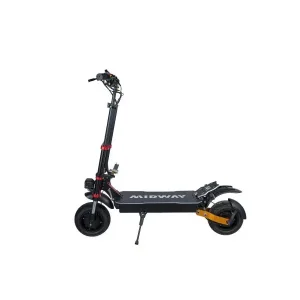
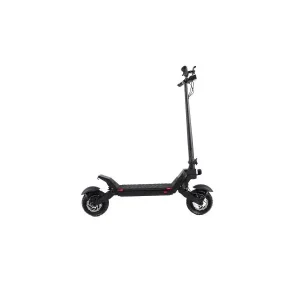
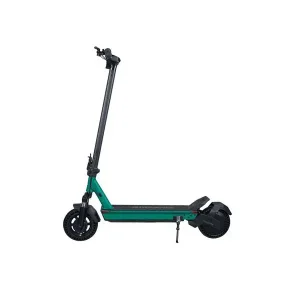
The global light electric vehicle (LEV) industry is experiencing a profound paradigm shift. Where urban micro-mobility was once dominated by low-speed 15-to-25 mph kick scooters intended strictly for last-mile feeder trips, commercial buyers, logistics operators, and power-sports enthusiasts are now demanding heavy-duty, high-velocity platforms. The 55 Mph Electric Scooter category (roughly 88 km/h to 90 km/h top speeds) represents the apex of this engineering evolution—bridging the functional gap between lightweight stand-up mobility and full-sized electric motorcycles.
Driven by expanding suburban boundaries, highway-adjacent commuting needs, and demand for rapid acceleration in dense vehicular traffic, top-tier B2B importers across North America, Europe, Australia, and Latin America are increasingly turning to China's specialized OEM/ODM manufacturing hubs. Chinese factories in Zhejiang (such as Wuyi and Jinhua) and Jiangsu have systematically solved the extreme thermal, structural, and electrical challenges associated with sustained 55 MPH speeds.
A scooter marketed as "55 MPH" must be evaluated under strict SAE test protocols. Maximum speed claimed under zero-load free-spinning bench tests often drops by 20-30% on actual asphalt. Premium China factories design for true GPS-verified 55 MPH under 90kg payload conditions by optimizing motor phase currents and field-weakening algorithms.
Sustaining 55 MPH requires overcoming significant aerodynamic drag forces that scale quadratically with speed. Standard single 350W or 500W motors are incapable of maintaining these velocities. Modern Chinese manufacturers deploy dual BLDC hub motors (either split 2000W x 2 or 3000W x 2 nominal output). These motors feature ultra-thin 0.35mm silicon steel laminations to reduce eddy current losses, combined with high-grade N45SH neodymium magnets rated for operating temperatures up to 150°C without demagnetization.
Kinetic energy at 55 MPH is nearly 9 times greater than at 18 MPH. Stopping safely within reasonable distances demands heavy-duty braking systems. Top factories integrate hydraulic dual-disc braking assemblies featuring 4-piston calipers, heat-dissipating floating rotors (140mm to 160mm), and mineral oil fluid lines. Electronically assisted braking systems (EABS) regenerate battery energy while preventing wheel lockups on slick pavements.
| Specification Parameter | Standard Urban Scooter (15-25 MPH) | 55 MPH Hyper-Electric Scooter | Industrial Advantage / Engineering Notes |
|---|---|---|---|
| System Voltage | 36V - 48V Architecture | 60V - 72V High-Voltage System | Reduces current draw (amps) for lower resistive heat loss ($I^2R$). |
| Motor Power Rating | 250W - 600W Hub Motor | 4,000W - 10,000W Peak Dual Motor | Sustains rapid acceleration (0-50 mph under 6 seconds). |
| Battery Cell Type | 18650 Standard Lithium Cells | 21700 High-Discharge Rate (10C-15C) | Provides high continuous continuous discharge without voltage sag. |
| Frame Material | Standard Aluminum Alloy / Steel | Aviation-Grade 6061-T6 Aluminum CNC | High tensile strength to resist torsion and vibration fatigue. |
| Suspension Architecture | Single Spring / Mechanical Shock | Dual Hydraulic Coil & Air Dampers | Adjustable rebound damping for high-speed road stability. |
| Tire Technology | 8.5" - 10" Solid / Tube Tires | 11" - 13" Tubeless Vacuum Off-Road/Street | Self-healing anti-puncture jelly layer for high-velocity durability. |
A common misconception is that 55 MPH electric scooters are designed solely for extreme sports or thrill-seeking. In practice, commercial intent mining reveals distinct localized operational scenarios across North America, Europe, Australia, and the Middle East:
Importing 55 MPH electric scooters requires meticulous attention to international safety standards and destination-country vehicle classifications. Because speeds exceed 25 km/h (15.5 mph), many jurisdictions categorize these platforms under light motorcycle or moped regulations (e.g., L1e / L3e in the European Union, or limited-speed motor driven cycles in the US).
The next decade of high-performance electric scooter manufacturing in China will be defined by continuous material science breaking through existing weight and energy limits. Industry trends indicate major R&D investments in the following core technologies: