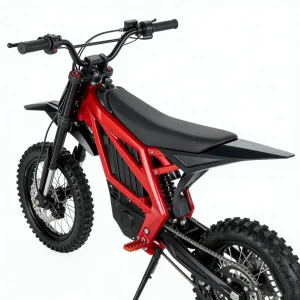
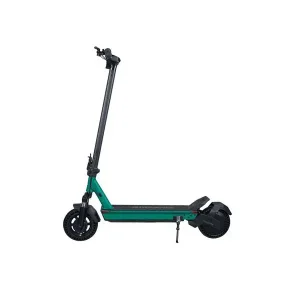
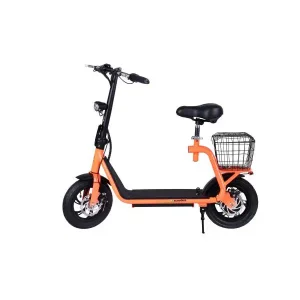
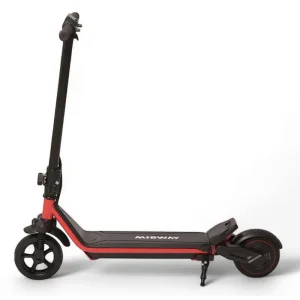
Factory-direct models engineered for high load capacity, long-range urban commuting, and robust commercial application.
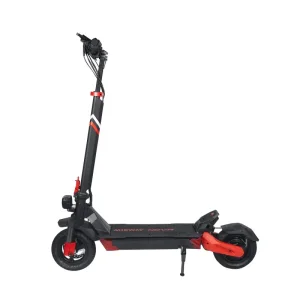
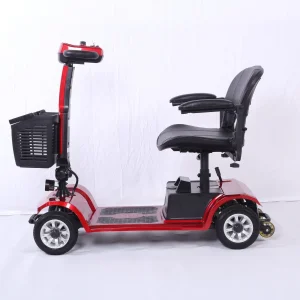
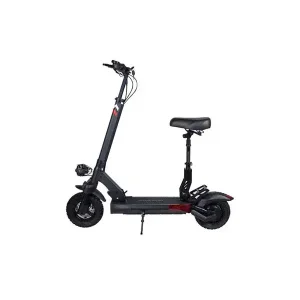
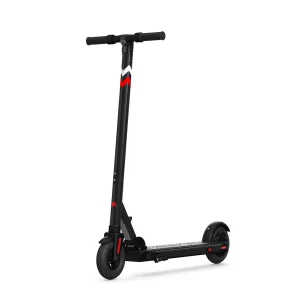
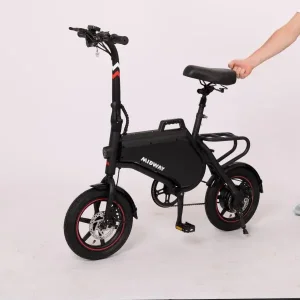
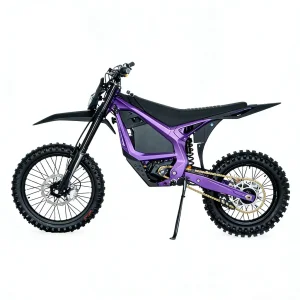
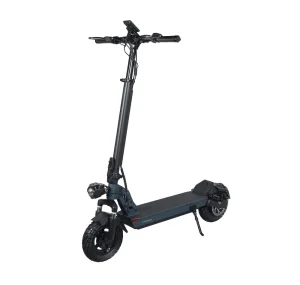
Analysis of changing buyer demographics, commercial last-mile stresses, and engineering adjustments required for high-load adult electric scooters.
The global personal electric vehicle (PEV) market has experienced a fundamental structural shift over recent years. Historically, urban kick scooters and entry-level electric scooters were engineered for average rider weights between 150 lbs to 220 lbs (68 kg to 100 kg). However, global consumer demographics—particularly in North America, Western Europe, and Australasia—along with expanding commercial delivery applications, have created a massive market demand for adult electric scooters rated for 300 lbs (136 kg) capacity and above.
Sourcing an authentic 300 lbs capacity scooter requires far more than placing a heavier label on a standard chassis. When subjected to dynamic real-world stresses (such as curb impacts, pothole strikes, and steep incline climbs), a 300 lbs payload exerts up to 3.5 times its static weight in kinetic shock onto the scooter frame, stem mechanism, folding latch, and suspension linkages. Consequently, global importers and B2B buyers must partner with specialized China adult electric scooter 300 lbs manufacturers and suppliers who possess the advanced metallurgy, structural engineering capability, and manufacturing infrastructure required to guarantee user safety and long-term product durability.
Why off-the-shelf lightweight scooters fail under heavy loads, and how specialized Chinese OEM factories engineer structural resilience.
Standard 1.5mm thin-wall aluminum frames deform rapidly under 300 lbs dynamic force. Leading Chinese factories utilize extruded 6061-T6 aerospace-grade aluminum alloy or high-tensile carbon steel chasses. Critical stress points—such as the stem-to-deck neck joint—are reinforced with forged gussets, robotic TIG welding, and enlarged steel hinge pins to eliminate structural shearing risk.
A heavy payload increases rolling resistance and gradient friction exponentially. A standard 250W or 350W motor will experience severe voltage sag, thermal throttling, or stator burnout on a 15-degree incline under 300 lbs load. Heavy-duty scooters require 48V–60V powertrains rated from 600W to 5000W dual brushless hub motors with high-turn copper windings and neodymium permanent magnets.
Spring-only shock absorbers bottom out almost immediately under heavy riders, transferring impact energy directly into the frame and rider's joints. Professional 300 lbs rated models integrate dual front hydraulic fork suspension coupled with rear dual-coil oil shocks, providing 80mm–120mm of travel to absorb high kinetic energy without structural compression fatigue.
Carrying a 300 lbs continuous payload causes the motor controller to draw maximum continuous amperage from the lithium-ion battery pack. Under prolonged high-amperage discharge, low-tier battery cells suffer from internal impedance buildup, excessive heat generation, and dramatic cell degradation. OEM manufacturers in China address this via three core engineering strategies:
| Engineering Parameter | Standard Urban Scooter (220 lbs Max) | Heavy-Duty Adult Scooter (300+ lbs Rated) |
|---|---|---|
| Chassis Material | Standard Die-Cast Aluminum (1.2mm - 1.8mm) | Extruded Aerospace 6061-T6 / High-Carbon Steel (2.5mm - 4.0mm) |
| Motor Configuration | Single 250W - 350W Front/Rear Hub | Single 600W / Dual 1000W - 2500W High-Torque Motors |
| System Voltage & Controller | 36V System / 15A Square Wave Controller | 48V - 60V System / 25A - 50A Heavy-Duty Sine Wave Controller |
| Suspension Architecture | Single Spring or Rigid Fork | Dual Front Hydraulic Fork + Dual Rear Oil-Damped Shocks |
| Braking System | Single Mechanical Rear Disc / E-ABS | Dual Hydraulic Disc Brakes (140mm/160mm) + EBS Regenerative |
| Deck Width & Thickness | 14cm - 16cm Width / Standard Grip Tape | 20cm - 26cm Ultra-Wide Deck / Steel Underbody Protection Plate |
How China's micro-mobility manufacturing ecosystem delivers unmatched cost efficiency, custom OEM flexibility, and rigorous Quality Control.
China’s primary hardware and electric vehicle hubs—located in regions like Zhejiang (Wuyi, Yongkang) and Jiangsu—house concentrated ecosystems of frame fabricators, lithium battery pack assemblers, brushless motor winding plants, and SMT controller facilities within a 50km radius. This geographic concentration reduces component transport lead times, optimizes raw material sourcing costs, and enables rapid iteration of custom frame tooling.
Top-tier Chinese manufacturers operate in-house testing laboratories certified under ISO 9001 standards. Every 300 lbs rated model undergoes extensive stress simulation before bulk production, including 100,000-cycle stem fatigue vibration testing, 300 kg static load drop tests, salt-spray anti-corrosion chamber testing, and waterproof ingress testing (IPX5 for chassis, IPX7 for electrical connectors).
For international brands, regional distributors, and fleet operators, Chinese factories offer end-to-end customization to differentiate products in competitive markets:
Technological innovations redefining safety standards, battery energy density, and IoT fleet connectivity across global markets.
Modern heavy-duty scooters are evolving into connected smart devices. Integrated 4G/5G IoT modules enable mobile application connectivity, real-time GPS tracking, remote diagnostics, geofencing lockouts, and over-the-air (OTA) firmware updates for motor controller curves.
While NCM and LiFePO4 cells dominate the current market, Chinese research facilities are commercializing Sodium-Ion battery packs. These offer superior low-temperature performance (-20°C retention above 85%), enhanced thermal safety, and lower raw material costs for heavy-duty commercial fleets.
Regulatory bodies in Europe and North America are mandating stringent electrical, thermal, and mechanical safety standards. China's top manufacturers now engineer all 300 lbs rated models to comply fully with EN 17128 mechanical tests, UL 2272 battery safety protocols, and CE directives.
How 300 lbs capacity electric scooters serve diverse global sectors, from heavy adult commuting to commercial micro-logistics.
In markets like North America and Australia, a significant percentage of adult commuters exceed 200 lbs, often carrying heavy backpacks or cargo. A 300 lbs rated scooter provides the structural safety margin, extra deck standing room, and hill-climbing torque needed to navigate hilly city environments comfortably without motor strain.
Food delivery drivers and courier services require micro-mobility vehicles capable of continuous 8-to-12 hour daily operations while supporting thermal delivery boxes weighing 40–80 lbs. Dual-battery, heavy-duty 300 lbs capacity scooters equipped with rear cargo plates have become the standard low-cost alternative to gas mopeds.
Large-scale industrial sites, manufacturing plants, airports, and agricultural facilities utilize reinforced adult electric scooters for security patrols, maintenance personnel, and rapid site navigation across rugged surfaces and unpaved terrain.
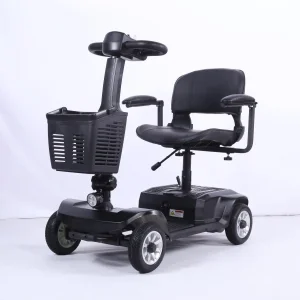
High-payload three-wheel and four-wheel seated electric mobility scooters provide stable, comfortable transport for seniors and individuals requiring mobility assistance. Equipped with wide pneumatic tires and low step-through frames, these models combine 300+ lbs stability with effortless operation.
A step-by-step framework for global buyers to evaluate suppliers, audit factory capability, and ensure market compliance.
Expert answers to standard technical, commercial, and regulatory queries from global importers.
A true 300 lbs capacity scooter requires a reinforced aluminum or steel alloy chassis with a wall thickness of at least 2.5mm, forged folding mechanism latches, an enlarged steering stem pin, heavy-duty front dual hydraulic suspension, and high-torque motors (minimum 500W to 1000W output). Standard consumer scooters claiming 300 lbs ratings without these reinforcements often suffer from catastrophic stem fatigue or premature motor failure.
Carrying a 300 lbs load increases energy consumption by approximately 35% to 50% compared to a 160 lbs load. To maintain an acceptable real-world travel range of 40 km (25 miles), the scooter must be equipped with at least a 48V 15Ah or 52V 20Ah lithium battery pack (720Wh–1040Wh). Furthermore, motor wattage should be paired with a high-current sine wave controller to deliver sustained hill-climbing torque without thermal cutout.
For European Union imports, scooters must comply with CE directives, Machinery Directive (2006/42/EC), RoHS, Low Voltage Directive (LVD), and standard EN 17128. For North America, UL 2272 certification (electrical system safety) is strongly required by major retailers and insurance underwriters, alongside UN38.3 compliance for lithium battery sea/air transportation.
For standard production models with custom branding logos and packaging, typical MOQs range from 50 to 100 units. For full OEM modifications involving unique frame colors or battery pack configurations, MOQs are generally 200 to 500 units. Production lead times average 25 to 35 days post-sample approval.
Explore our full catalog of high-performance electric mobility vehicles available for global export and OEM manufacturing.