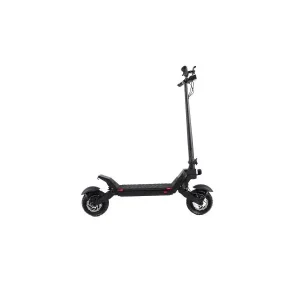
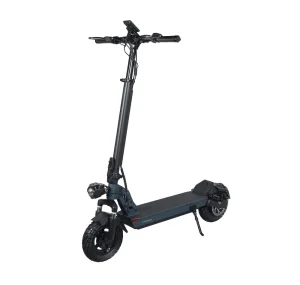
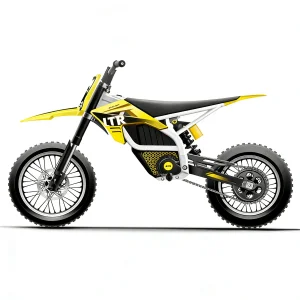
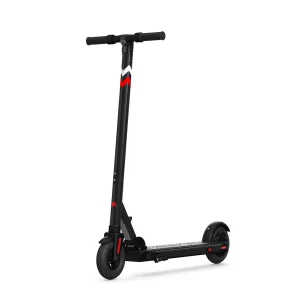
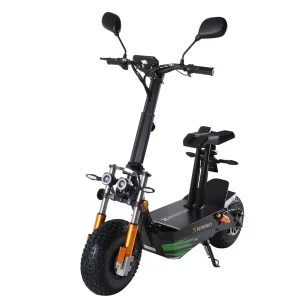
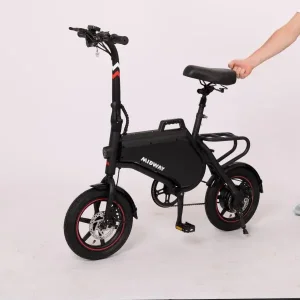
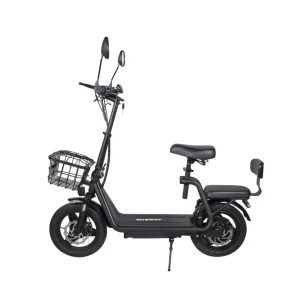
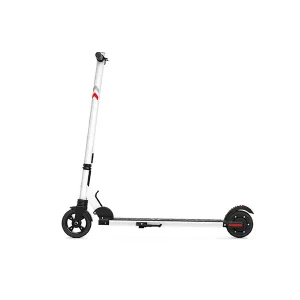
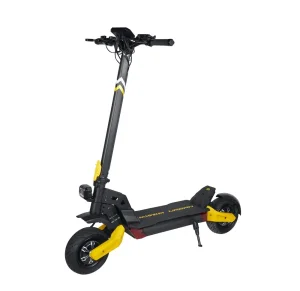
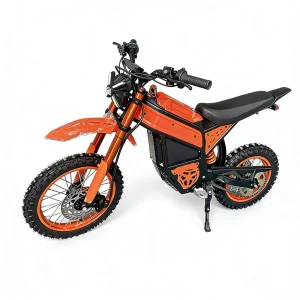
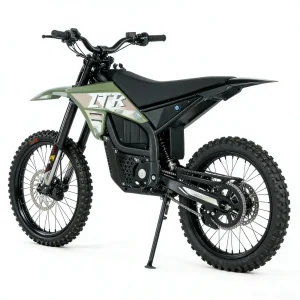
Direct factory supply featuring heavy-duty brushless hub motors, high-capacity lithium battery configurations, and military-grade chassis designs.
The global personal light electric vehicle (PLEV) market has experienced a radical structural transition over the past half-decade. Among various form factors, Big Wheel Electric Scooters—encompassing platforms with wheel diameters ranging from 10-inch reinforced urban pneumatics to 18-inch ultra-wide fat tires (popularized by the Citycoco ecosystem)—have emerged as the dominant class for heavy-duty commercial deployment, last-mile logistics, and premium commuter fleets.
Traditional small-wheeled scooters (6.5 inches to 8 inches) suffer from critical structural physics constraints: high rotational vulnerability to road irregularities, elevated vibration metrics accelerating electronic component fatigue, and restricted payload capacities. In contrast, big-wheel architecture drastically lowers rolling resistance while providing superior gyroscopic stability, superior ground clearance (ranging from 150mm to 220mm), and enhanced thermal dissipation capabilities across the hub motor perimeter.
| Engineering Attribute | Standard Small-Wheel (8-inch) | Big Wheel Urban (10-12 inch) | Citycoco Fat Tire (18x9.5 inch) |
|---|---|---|---|
| Gyroscopic Stability Index | Baseline (1.0x) | Enhanced (2.4x) | Maximum (5.8x) |
| Obstacle Clearance Height | < 30 mm | 50 mm - 80 mm | 120 mm - 180 mm |
| Chassis Load Rating | 100 kg - 120 kg | 120 kg - 150 kg | 200 kg - 250 kg |
| Thermal Dissipation Area | Standard Surface | +45% Surface Area | +120% Surface Area |
| Terrain Compatibility | Smooth Asphalt Only | Urban Asphalt & Cobblestone | All-Terrain, Sand, Mud, Gravel |
China’s electric vehicle manufacturing clusters deliver unmatched economies of scale, supply chain vertical integration, and rapid OEM/ODM design iteration.
Located in the heart of Zhejiang’s hardware industrial zone, our manufacturing cluster houses raw material casting, high-precision CNC machining, automated SMT PCB assembly, and motor winding facilities within a 30-kilometer radius, slashing production lead times by up to 40%.
Our proprietary brushless DC (BLDC) hub motors integrate high-grade N45/N52 neodymium permanent magnets and ultra-thin silicon steel laminations, achieving energy conversion efficiencies exceeding 88% while delivering peak power outputs up to 13.5KW.
Integrated Battery Management Systems feature real-time cell balancing, dual-stage thermal monitoring, over-current cutoff, and short-circuit auto-isolation. Lithium battery packs utilize tier-1 18650 and 21700 cylindrical cells (such as LG/Samsung/CATL Grade A).
Full-spectrum custom manufacturing flexibility: from chassis geometry re-engineering, custom color anodization, and branded LCD dashboard interfaces to CAN-bus telematics protocol integration for commercial fleet operators.
Every platform strictly complies with target market regulatory frameworks, holding comprehensive testing documentation for CE, RoHS, EN17128, EEC/COC road legal approval, UL2272 electrical safety, and UN38.3 battery transport compliance.
Equipped with modern semi-automated assembly lines, automated robot welding arms for high-tensile carbon steel/6061 aluminum alloy frames, and dynamic multi-stage dyno testing bays capable of producing over 50,000 units annually.
The industry is rapidly phasing out primitive square-wave controllers in favor of advanced 32-bit Field-Oriented Control (FOC) vector controllers. FOC controllers dynamically process phase current signals to match motor load requirements in real-time. This technological shift yields an 18% improvement in battery range efficiency, eliminates motor electromagnetic noise during startup, and delivers smooth, step-less acceleration essential for rider safety on high-torque 3000W to 13500W platforms.
Modern global buyers demand smart mobility infrastructure. Chinese manufacturers are pioneering factory-installed IoT hardware featuring 4G LTE/5G cellular modules, GPS/GLONASS dual-mode positioning, remote CAN-bus diagnostics, over-the-air (OTA) firmware updates, and automated geofencing controls. These capabilities allow B2B importers to deploy commercial rental or delivery fleets straight out of the shipping container.
To minimize fleet downtime, big wheel electric scooters are moving from fixed internal battery bays to dual modular swappable lithium-ion battery drawers. Operating at high system voltages (60V to 72V), these packs feature automotive-grade quick-release connectors, IP67 waterproof casing, and integrated handle ergonomics, enabling non-stop commercial utilization.
Precise current management reducing heat dissipation in the motor stator while boosting climbing torque by up to 25% on steep gradients.
Dual-channel electronic anti-lock braking coupled with hydraulic disk brakes, recovering kinetic energy back into the battery bank while preventing wheel lockup.
T6 heat-treated aluminum alloy frame architecture reducing structural curb weight while maintaining structural fatigue endurance under heavy vibration.
Engineered to excel across diverse geographic, commercial, and urban environments worldwide.
Navigating historical European city centers with ancient cobblestone roads, high curb thresholds, and strict speed regulations. Our EEC/COC homologated 25km/h and 45km/h big-wheel scooters provide plush suspension absorption and full street-legal road compliance.
Equipped with heavy-duty rear cargo racks, thermal delivery boxes, and dual high-capacity 72V 40Ah battery systems, big wheel scooters serve as eco-friendly delivery vehicles for gig-economy couriers across Latin America, Asia, and North America.
Citycoco fat-tire models (18x9.5-inch wide pneumatic profile) excel on low-traction surfaces such as sand dunes, resort trails, coastal promenades, and unpaved national park paths, offering eco-tourists smooth, zero-emission mobility.
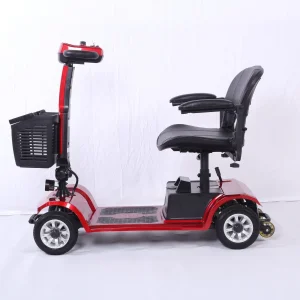
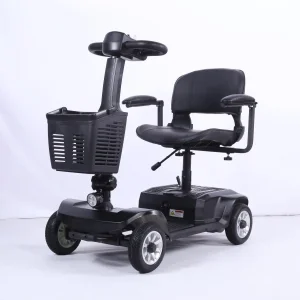
Three-wheel and four-wheel low-speed big wheel mobility scooters cater to aging demographics across North America and Europe, providing independent mobility, ultra-stable cornering geometry, and ergonomic controls.
For global B2B buyers, importing electric scooters from China requires evaluating total supply chain value rather than focusing solely on initial FOB unit price. Establishing a sustainable distribution or brand model requires assessing technical risk, compliance safeguards, and aftermarket supply chain continuity.
Verify whether the manufacturer holds valid ISO9001 quality management system certifications and conducts 100% dynamic load testing, battery burn-in cycles, and waterproof chamber checks prior to container packing.
Ensure modular replacement architecture. Standardization of controllers, throttle assemblies, wiring harnesses, and brake calipers reduces spare part SKU complexity and lowers warranty support overhead for importers.
Lithium battery freight requires stringent Class 9 dangerous goods (DG) logistics handling. Ensure your factory partner provides complete UN38.3, MSDS, and drop-test documentation for hassle-free customs clearance.
Expert responses addressing procurement, technical engineering, OEM customization, and international compliance inquiries.
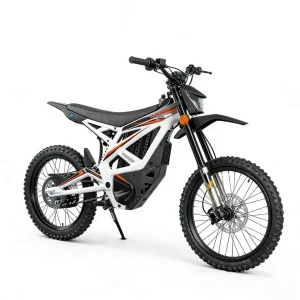
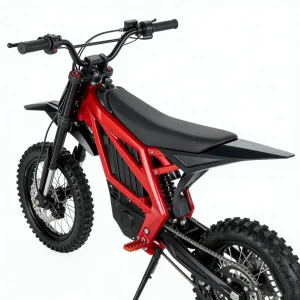
From folding senior mobility scooters to heavy-duty off-road electric motorcycles — engineered for reliability and long service life.