Verified OEM/ODM Flagship Models Direct from Tier-1 Chinese Manufacturing Hubs
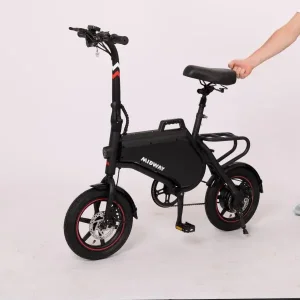
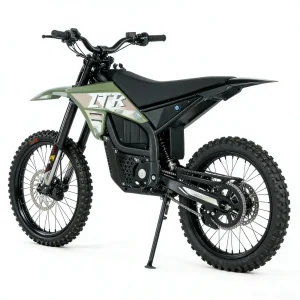
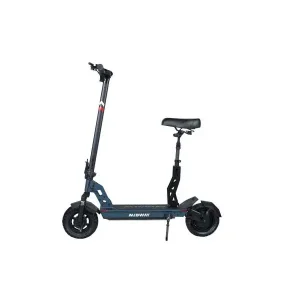
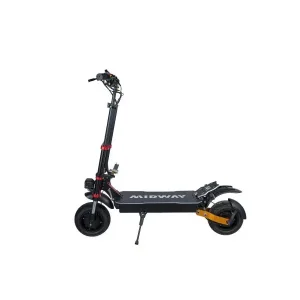
Quantitative Insights into China's Dominance in Fat-Tire Electric Mobility Manufacturing
The global micro-mobility ecosystem has undergone a profound paradigm shift over the past decade. Among the various electric vehicle form-factors, the Citycoco bike—characterized by its signature ultra-wide fat tires, low center of gravity, minimalist tubular steel chassis, and powerful direct-drive hub motor—has emerged as a dominant force across urban commuting, tourism rentals, and commercial last-mile logistics. Originating as a niche design movement, the Citycoco category is now a multi-billion-dollar global market segment engineered almost exclusively within specialized industrial clusters in China.
Global procurement directors, fleet operators, and regional distributors evaluating China Citycoco Bike's Suppliers & Factories are operating in an increasingly sophisticated regulatory and technical environment. Sourcing standard off-the-shelf models is no longer sufficient to guarantee commercial success. Winning in mature markets such as North America, the European Union, and the GCC region requires an enterprise-level understanding of supply chain integration, battery chemistry standards, homologation pathways, and total cost of ownership (TCO) optimization.
Transitioning from early 800W configurations to ultra-efficient 1500W, 2000W, 3000W, and up to 13.5kW brushless DC (BLDC) hub motors delivering instant torque for incline climbing and heavy load handling.
Evolution from legacy lead-acid batteries to high-energy-density NMC and LiFePO4 removable battery packs equipped with smart CAN-bus Battery Management Systems (BMS).
Factory integration of EEC / CoC (European Economic Community Certificate of Conformity) L1e/L3e certifications, DOT vehicle compliance, and UL2272 electrical safety verification.
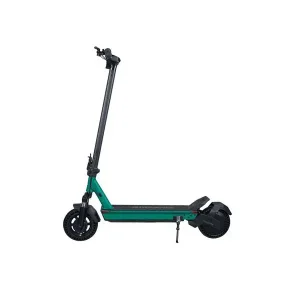
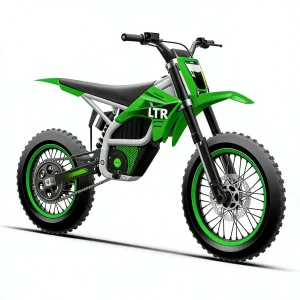
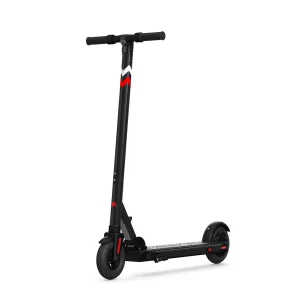
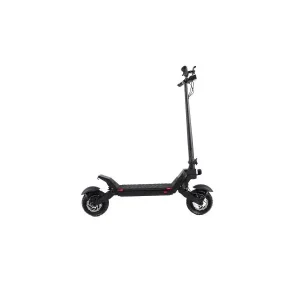
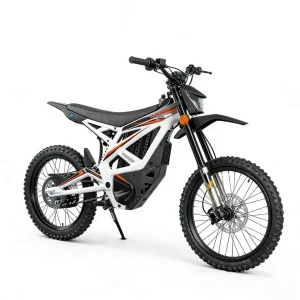
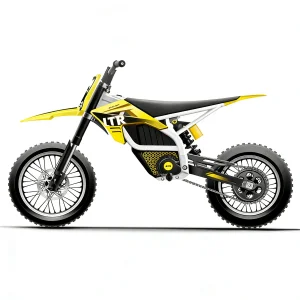
To assist enterprise buyers in positioning their product portfolios, the following matrix illustrates the operational and engineering trade-offs between standard urban kick scooters, high-power Citycoco electric bikes, and light electric motorcycles:
| Performance Vector | Standard E-Scooter (Kick Type) | China Citycoco Fat-Tire Bike | High-Power E-Motorcycle |
|---|---|---|---|
| Nominal Motor Power | 250W – 600W | 1000W – 4000W (Up to 12kW peak) | 5kW – 15kW+ |
| Tire Geometry & Contact Patch | 8.5" to 10" (Narrow Profile) | 18x9.5-8 to 225/55-8 Wide Pneumatic | 17" to 19" Standard Motorcycle Tires |
| Payload Capacity | 100 kg – 120 kg | 180 kg – 220 kg (Heavy Duty) | 150 kg – 200 kg |
| Terrain Adaptability | Smooth Paved Asphalt Only | All-Terrain (Sand, Gravel, Cobblestone, Snow) | On-Road / Off-Road Dedicated |
| Primary B2B Use Case | Personal Commute & Shared Micro-Fleet | Resort Rentals, Urban Cruising, Last-Mile Cargo | Highway Commute & Motorsports |
| Regulatory Classification | PLEV / E-Bike Framework | L1e-B / L3e Moped & Light Motorcycle | L3e Heavy Motorcycle / DOT Approved |
Why does China maintain an overwhelming competitive moat in the manufacturing and export of Citycoco bikes? The answer lies in structural manufacturing advantages, localized supply chain density, continuous manufacturing automation, and massive economies of scale centered around specialized industrial clusters in Zhejiang and Jiangsu provinces.
In hardware manufacturing hubs like Wuyi, Yongkang, Taizhou, and Wuxi, over 95% of a Citycoco bike's bill of materials (BOM)—including robotic-welded high-tensile steel frames, CNC hydraulic brakes, brushless hub motors, wiring harnesses, and molded ABS fairings—is sourced within a 50-kilometer radius. This extreme proximity dramatically slashes procurement lead times, logistics overhead, and component prototyping iterations.
Leading Chinese suppliers operate full-scale R&D departments equipped with 3D CAD/CAM design software, finite element analysis (FEA) for frame load testing, and automated rapid prototyping. Whether an enterprise importer requires custom frame geometries, specialized dual-battery compartments, customized Bluetooth app integration, or private-label branding, Chinese factories execute modifications with unmatched speed.
By leveraging fully automated assembly lines, high-throughput automated welding robots, and massive raw material purchasing power (steel, aluminum, lithium cells), Chinese manufacturers achieve a cost structure that cannot be replicated elsewhere. Overseas buyers benefit from high gross margins (30% to 55%) when retailing or leasing Citycoco units in Western markets.
Top-tier manufacturers maintain dedicated compliance teams fluent in international regulatory standards. They provide complete documentation packages including EEC/CoC papers for European road registration, VIN (Vehicle Identification Number) generation, UN38.3 lithium battery transport test reports, MSDS certifications, and CE/UL compliance certificates essential for customs clearance.
To assist technical procurement officers and product managers in drafting request-for-proposal (RFP) documentation, this section provides an authoritative technical breakdown of modern high-performance Citycoco platforms built by premium Chinese factories.
The core drive mechanism of a high-spec Citycoco bike is an outer-rotor brushless direct-current (BLDC) hub motor integrated directly into the rear wheel rim. Modern tier-1 Chinese factories utilize stator laminations made from high-grade silicon steel combined with N35H or N45H neodymium permanent magnets (NdFeB) rated for temperatures up to 150°C without demagnetization.
Battery reliability is the single most critical factor determining product lifespan and brand reputation. Modern Chinese Citycoco factories have transitioned away from fixed lead-acid setups to modular, removable 60V and 72V Lithium-Ion battery packs utilizing 18650 or 21700 cylindrical cells (sourced from tier-1 cell makers such as CATL, EVE, LG, or Samsung) or high-capacity pouch cells.
High-end Citycoco models feature dual battery bays—one concealed inside the lower deck floorboard and a second removable unit beneath the seat. This dual 60V 20Ah / 30Ah setup yields a combined energy capacity of up to 3.6kWh, pushing practical real-world driving range past 120 kilometers to 150 kilometers on a single charge.
Integrated Battery Management Systems monitor cell balance, over-charge, over-discharge, short-circuit protection, and thermal runaway limits. Advanced models include Bluetooth dynamic diagnostic apps allowing users and fleet managers to check cell voltages, state-of-health (SoH), and cycle counts in real time.
The characteristic wide stance of the Citycoco requires reinforced chassis engineering to absorb lateral stress and maintain high-speed directional stability:
The versatility of the Citycoco bike platform has unlocked diverse commercial monetization strategies for global business buyers. Below are key operational deployment models engineered by leading Chinese suppliers for international markets:
Coastal resorts, island rental operations, and eco-tourism parks utilize Citycoco fleets due to their eye-catching aesthetic, ease of balance (ideal for novice riders), low maintenance requirements, and zero tailpipe emissions.
In traffic-congested European and Latin American metropolitan hubs, EEC-homologated 25km/h and 45km/h Citycoco mopeds provide an affordable, stylish alternative to cars and public transit, bypassing low-emission zone restrictions.
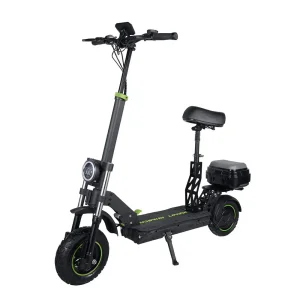
Customized cargo variants outfitted with heavy-duty rear insulated boxes, extended tail racks, and dual high-capacity lithium batteries serve food delivery platforms and express couriers requiring high payload capability (up to 200kg).
Executing a successful B2B sourcing order for Citycoco electric vehicles requires a structured risk mitigation strategy. Professional buyers should adhere to the following four-stage factory qualification and quality assurance protocol:
Verify that the target supplier is a true manufacturing enterprise rather than a trading middleman. Confirm valid ISO 9001 (Quality Management) certification, verify factory physical acreage (>15,000 m² recommended), check automated frame-welding workshops, and inspect environmental compliance documentation for paint spraying lines.
Before issuing a production deposit, request sample units for rigorous destructive and stress testing. Subject the frame to maximum load hill climbs, test water resistance (IP65 motor rating check under high-pressure spray), perform brake distance measurements, and verify real-world battery discharge curves using calibrated electronic load testers.
Mandate strict quality checkpoints during mass production. Ensure 100% of battery packs undergo automated aging and cell-balancing tests. Require dyno testing for every assembled vehicle to check top speed, current draw, wiring harness insulation, and hydraulic brake fluid pressure prior to packaging.
Citycoco bikes contain high-capacity lithium-ion batteries classified as Class 9 Dangerous Goods (UN3480 / UN3481). Ensure the factory packages products in 7-ply honeycomb export cartons with custom-molded EPS foam inserts, passes UN38.3 vibration/drop tests, and provides dangerous goods (DG) declaration forms for ocean freight container loading.
Expert Answers to Critical Operational, Regulatory, and Commercial Sourcing Questions
Explore Our Expanded Lineup of Mobility Solutions & Heavy-Duty Electric Vehicles