Direct factory line supply designed for urban commuting, commercial fleets, and heavy-duty micro-mobility distributors worldwide.
Urban congestion, escalating fuel expenditures, and stringent corporate decarbonization mandates are driving an unprecedented surge in global commuting electric scooter adoption.
As global municipalities redesign urban transit infrastructure to prioritize lightweight, zero-emission personal electric vehicles (PEVs), international B2B importers, mobility distributors, and fleet operators are looking toward established manufacturing clusters in China. Modern China commuting electric scooters manufacturers represent over 85% of global production output, serving as the foundational engine for worldwide micro-mobility deployment.
This whitepaper provides an exhaustive technical and strategic evaluation of Chinese electric scooter manufacturing ecosystems, exploring Industry 4.0 production capabilities, battery management advancements, regulatory compliance frameworks (CE, UL, EN 17128), and total cost of ownership (TCO) optimization for global enterprise buyers.
Core Takeaway for B2B Procurement: Partnering directly with tier-1 Chinese manufacturers grants access to vertically integrated component supply chains—reducing unit BOM costs by up to 35% while securing custom firmware, IoT module integration, and certified battery safety assemblies.
The micro-mobility landscape is evolving from low-cost consumer gadgets into highly engineered, intelligent urban transit systems. Chinese manufacturers are pioneering these structural technological pivots.
Transitioning from traditional NMC 18650 cells to advanced Lithium Iron Phosphate (LiFePO4) and semi-solid-state pouch cells. LFP architecture delivers superior thermal stability (combustion threshold exceeding 500°C) and quadruples lifecycle retention, enduring over 2,000 deep discharge cycles.
Modern commuting scooters feature integrated Controller Area Network (CAN-bus) systems connected to 4G/5G IoT telematics. This empowers commercial fleet managers with real-time remote diagnostics, geofencing speed limiters, automated OTA firmware upgrades, and predictive maintenance algorithms.
Replacing outdated square-wave motor controllers with high-efficiency Sine-Wave FOC controllers. FOC tech calculates real-time magnetic flux, delivering whisper-quiet motor operation, up to 92% energy efficiency, smoother acceleration curves, and enhanced regenerative braking dynamic energy recovery (E-ABS).
To survive demanding municipal transit conditions, frame engineering has shifted from stamped steel to 6061-T6 aviation aluminum alloy and die-cast magnesium. These materials yield structural tensile strengths over 310 MPa while keeping vehicle curb weight optimized for multi-modal public transit integration.
Sourcing commuting electric scooters at scale requires rigorous alignment between overseas enterprise buyers and Chinese manufacturing capabilities. Strategic purchasing goes far beyond baseline unit pricing.
Global markets enforce distinct, strict safety benchmarks. For European importers, compliance with EN 17128:2020 (personal light electric vehicles) and Machine Directive 2006/42/EC is mandatory. North American markets demand UL 2272 certification covering the entire electrical powertrain system. Furthermore, lithium battery transportation requires UN38.3 test reports and MSDS documentation for ocean and air logistics clearance.
Enterprise buyers operating commercial rental fleets or corporate mobility programs evaluate scooters based on life-cycle maintenance costs. Leading Chinese OEMs now design vehicles with modular wiring harnesses, quick-swap battery bays, and standardized 10-inch tubeless pneumatic or honeycomb solid tires to reduce field repair downtime to under 15 minutes.
Verify in-house CNC machining, automated frame stress testing, and IPX7 water-immersion testing chambers.
Ensure battery cells are sourced directly from tier-1 manufacturers (EVE, CATL, LG, Samsung) with verified batch certificates.
Confirm OEM capabilities for custom Bluetooth/Cellular IoT protocols, white-label smartphone apps, and server API integration.
China's electric vehicle manufacturing superiority is built upon industrial clustering, continuous automation investments, and unrivaled component supply chain density.
Key production centers located in Zhejiang (Wuyi, Yongkang, Taizhou) and Jiangsu (Wuxi) create ultra-dense supply networks where frame stamping, brushless hub motor winding, controller SMT assembly, and lithium pack spot-welding occur within a 50-kilometer radius. This hyper-proximity cuts component procurement lead times down to hours.
Modern Chinese factories employ robotic welding arms to eliminate human fatigue variances in frame joints. Automated end-of-line (EOL) testing rigs execute 100% dynamic load testing, dyno power curve verification, IP67 waterproof enclosure pressurization checks, and high-voltage insulation barrier tests before packaging.
Leveraging advanced 3D CAD modeling, structural finite element analysis (FEA), and rapid aluminum die-casting tooling, top-tier Chinese manufacturers can turn around custom structural frame prototypes within 21 business days, accelerating time-to-market for international brands launching new mobility lines.
Electric commuting scooters serve diverse operational environments across global urban ecosystems. Vehicle configurations vary significantly based on localized deployment demands.
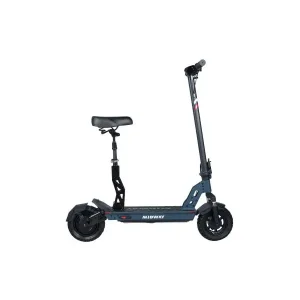
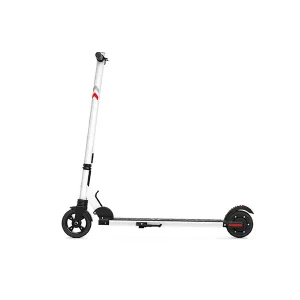
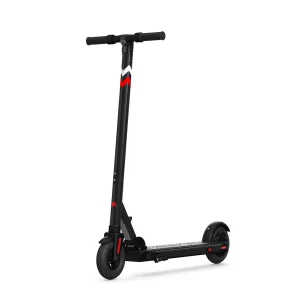
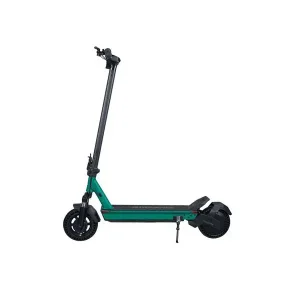
Targeted at daily city commuters combining scooter rides with subways, buses, or personal cars. Priority features include compact one-second quick-folding mechanisms, lightweight frames (14kg–18kg), 350W–600W brushless hub motors, and 36V/48V lithium batteries offering 30km–45km practical range per charge.
Utilized by food delivery drivers, courier services, and urban logistics platforms. Vehicles are outfitted with heavy-duty rear cargo racks, dual-battery swap configurations (60V/72V), high-torque 1000W+ hub motors, dynamic hydraulic disc brakes, and puncture-resistant solid honeycomb tires.
Deployed across large tech campuses, manufacturing complexes, and university grounds to facilitate eco-friendly internal transport. Fleet vehicles utilize speed-governed controllers (capped at 20 km/h), integrated IoT geofencing, ruggedized aluminum chasses, and centralized docking charging stations.
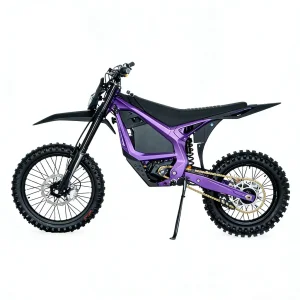
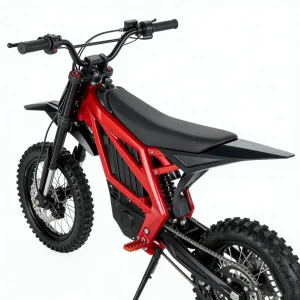
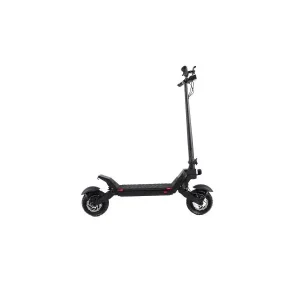
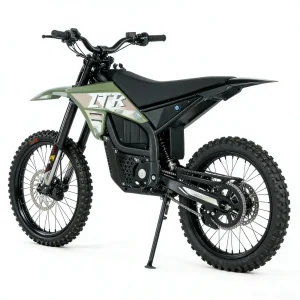
Engineered for suburban environments featuring steep gradients, unpaved terrain, or long-distance travel. Equipped with dual-motor setups (2000W–5000W cumulative output), 60V–96V high-capacity battery packs, full hydraulic suspension systems, and off-road pneumatic tires for maximum stability.
Understanding the engineering underpinnings of high-grade commuting electric scooters is vital for making informed enterprise procurement decisions. Component choices directly impact performance reliability and safety metrics.
Modern commuting scooters utilize outer-rotor Brushless Direct Current (BLDC) hub motors. By utilizing rare-earth Neodymium (NdFeB) permanent magnets with high temperature resistance (N45H grades or higher), these motors achieve energy efficiency ratings above 90% while delivering high torque density without mechanical gear wear.
The lithium battery pack represents 35% to 50% of the total vehicle bill of materials (BOM). Premium Chinese factories construct packs housed in extruded aluminum cases sealed to IP67 standards. Integrated Smart BMS boards monitor individual cell voltages, balance charging currents, provide over-current protection, and trigger automatic thermal shutoffs if temperatures exceed 60°C.
| Subsystem | Standard Spec | Enterprise Heavy-Duty |
|---|---|---|
| Motor Power | 350W – 600W Single | 1000W – 5000W Dual |
| Battery Voltage | 36V / 48V Lithium | 60V / 72V / 96V LFP |
| Braking System | Mechanical Disc + E-ABS | Dual Hydraulic Disc + EBS |
| Tire Engineering | 8.5" - 10" Pneumatic | 10" - 11" Puncture-Proof |
| Water Rating | IPX4 Frame / IPX6 Motor | IPX7 Full Vehicle Seal |
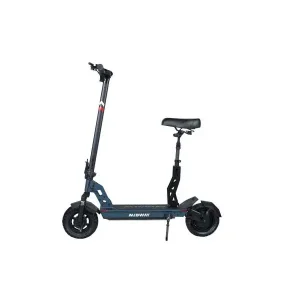
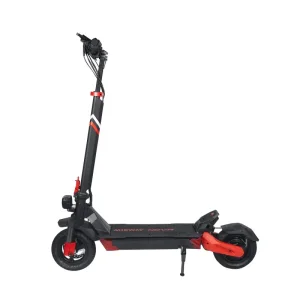
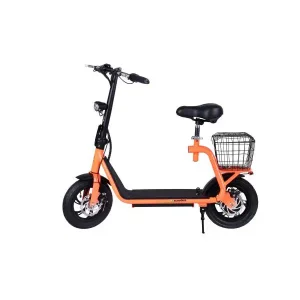
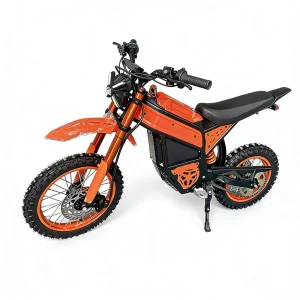
Direct factory sourcing across diverse power configurations, battery capacities, and frame geometries.
Expert answers to common engineering, regulatory compliance, factory auditing, and international shipping questions encountered during OEM/ODM sourcing.
