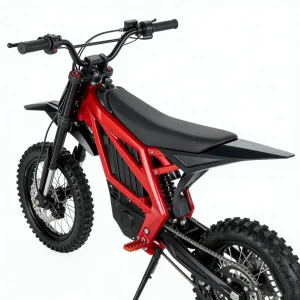
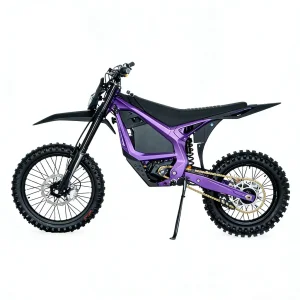
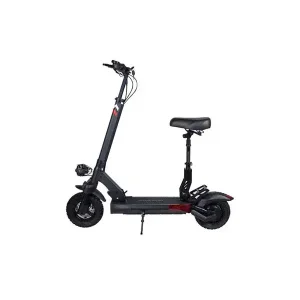
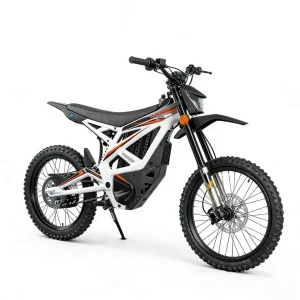
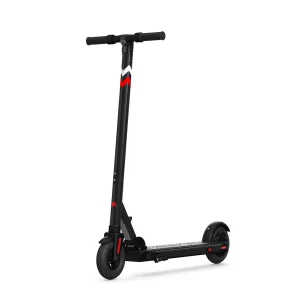
Factory-direct electric scooters, folding mobility units, and high-performance electric motorcycles designed for global commercial distribution.
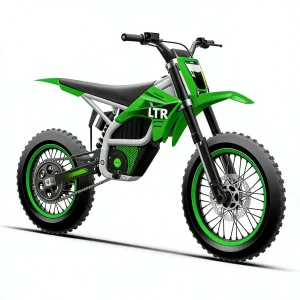
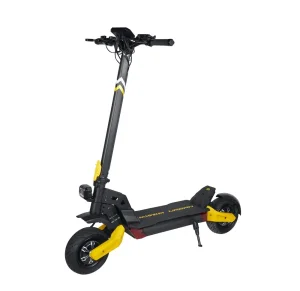
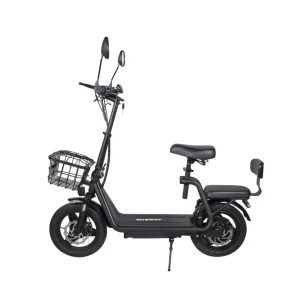
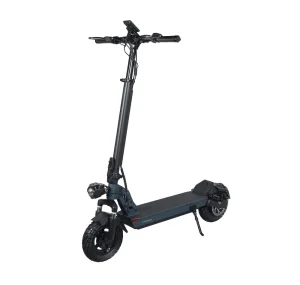
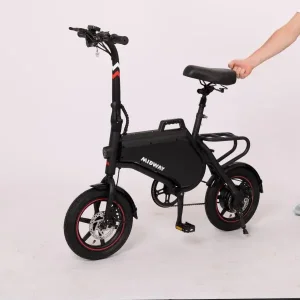
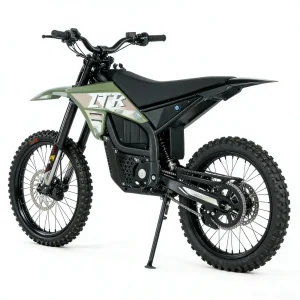
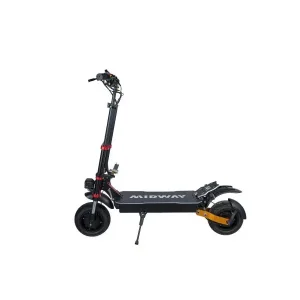
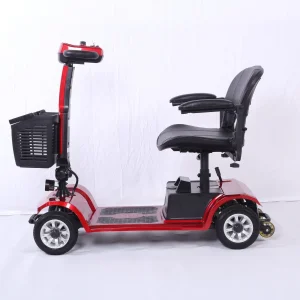
The global light electric vehicle (LEV) sector has experienced a paradigm shift over the past five years. What once operated as a niche consumer hobbyist market has matured into a multi-billion-dollar global industry spanning urban last-mile micro-mobility, commercial logistics, resort transit, and specialized medical assistance. Searches for keywords such as "China E Wheels Electric Scooter s Manufacturers & Supplier" reflect a targeted commercial query pattern executed by B2B importers, regional brand owners, procurement agencies, and fleet operators.
According to industry intelligence data, the global electric scooter market is projected to expand at a compound annual growth rate (CAGR) exceeding 8.5% through 2032. This structural expansion is propelled by strict municipal carbon-neutrality mandates across Europe and North America, escalating urban congestion, and exponential technological gains in lithium-ion battery energy density and brushless hub motor efficiency.
Gig-economy delivery, urban courier logistics, and municipal sharing schemes demand heavy-duty 48V to 72V platforms built for continuous, high-wear daily cycles.
Lightweight, fast-folding 350W-1000W models serve multi-modal commuters bridging suburban rail lines with urban office corridors.
Regulated 24V 250W folding mobility scooters catering to aging demographics seeking independent lifestyle solutions under stringent safety standards.
China accounts for more than 85% of global electric scooter production capacity. This concentration is not merely driven by cost efficiencies, but by an unmatchable industrial cluster effect located primarily in Zhejiang (e.g., Wuyi, Jinhua, Yongkang) and Jiangsu industrial zones. This dense supply chain ecosystem enables Chinese manufacturers to innovate, prototype, and scale advanced e-mobility products at speeds unmatched by western facilities.
| Supply Chain Dimension | Western Regional Assembly | China Ecosystem (Wuyi Cluster Hub) | Commercial Impact for Importers |
|---|---|---|---|
| Component Procurement Lead Time | 6 – 12 Weeks (Import dependent) | 24 – 48 Hours (Localized supply network) | Accelerated time-to-market and flexible stock replenishment. |
| Tooling & Molding Overhead | High Cost ($50k–$150k per chassis) | Optimized ($10k–$30k via shared infrastructure) | Significantly reduced initial capital requirement for custom OEM projects. |
| BMS & Motor Integration | Third-party vendor dependency | In-house R&D + Joint lab integration | Seamless firmware tuning, thermal management, and power curve calibration. |
| Scalability & Factory Capacity | Constrained batch runs (500–1000 units) | High-throughput lines (10,000+ units/month) | Ability to handle sudden seasonal spikes and enterprise contracts. |
Leading Chinese manufacturing hubs possess vertical integration capabilities. Frame fabrication utilizes automated robotic TIG welding for aircraft-grade 6061-T6 aluminum alloys or reinforced carbon steel chassis. In-house surface coating facilities execute multi-stage powder spraying and UV curing to withstand harsh environmental oxidation. Simultaneously, direct engineering ties with top-tier battery cell suppliers (Gotion, EVE, BAK) ensure reliable energy management systems.
Evaluating e-scooters requires a meticulous analysis of core powertrain, energy storage, and structural engineering components. Importers must align product specifications with their specific market conditions.
Ranging from 250W city commuter hubs up to dual 5000W / 35kW peak performance motors with hall sensors, high magnetic flux efficiency (>88%), and IP67 waterproof sealing.
Advanced battery packs utilizing 18650 or 21700 Grade-A lithium cells with automated over-charge, deep-discharge, thermal cutoff, and passive balance protection circuits.
Dual hydraulic disc brakes coupled with Electronic Braking Systems (EBS) featuring regenerative power feeding back into the battery array during deceleration.
Successful distributors align factory production parameters with regional market regulations and geographical requirements.
Focuses strictly on EN17128 safety specifications, CE certification, 250W nominal motor power limits, integrated turn signals, and dual braking redundancy for street legitimacy.
Higher demand for powerful 500W-1200W motors, UL2272 electrical system safety certification, wide anti-slip decks, and rugged 10-inch pneumatic off-road tires.
Demands stable 3-wheel and 4-wheel folding structures, electromagnetic automatic braking systems, ergonomic swivel seats, and simplified control panels.
Requires heavy-duty rear cargo racks, swappable dual-battery bays, IoT GPS tracking integration, and reinforced suspensions for heavy payload capacity.
Navigating customs regulations and ensuring consumer safety requires full compliance documentation. Partnering with certified Chinese manufacturers eliminates import delays and legal risks.
| Certification Standard | Target Region | Technical Scope & Testing Requirements | Importer Necessity |
|---|---|---|---|
| CE / MD (Machinery Directive) | European Union | Electrical safety, mechanical structural integrity, and low voltage directive compliance. | Mandatory for legal customs clearance in EU ports. |
| EN 17128:2020 | Europe / UK | Specific standard for personal light electric vehicles (PLEV). Speed, brake distance, and structural testing. | Crucial for retail distribution compliance. |
| UL 2272 | United States / Canada | Full electrical system evaluation: thermal shock, overcharge safety, short circuit, and impact testing. | Required by insurance and major retail marketplaces (Amazon, Target). |
| UN 38.3 & MSDS | Global Logistics | Lithium battery transport safety standards including altitude simulation, thermal test, and vibration. | Mandatory for sea freight (IMDG code) and air transport. |
| RoHS & REACH | Global / EU | Restriction of hazardous substances in electronic frames, wiring, plastics, and soldering. | Environmental safety compliance. |
A premier manufacturing facility implements strict Quality Management Systems (QMS) across all production stages:
The light electric vehicle industry is rapidly adopting next-generation technological innovations. B2B buyers seeking long-term competitive advantages should consider these emerging engineering trends:
CAN-bus connected scooter controllers paired with smartphone apps enable real-time diagnostic reporting, OTA firmware updates, dynamic GPS tracking, and remote geofencing.
Transition from standard NMC lithium cells to higher safety LiFePO4 (LFP) chemistry and early-stage Solid-State batteries offering 2000+ charge cycles and superior thermal stability.
Modular component designs allowing instant replacement of worn parts, coupled with recyclable aluminum-magnesium alloys to lower lifetime carbon footprints.
Expert responses to critical questions on OEM customization, production lead times, logistics safety, and compliance requirements.
High-demand commercial units, mobility scooters, and heavy-duty electric motorbikes for international procurement.