Direct export configurations engineered in Zhejiang hardware industrial clusters for global distributors and commercial buyers.
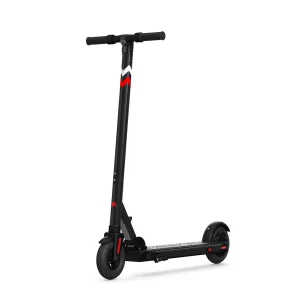
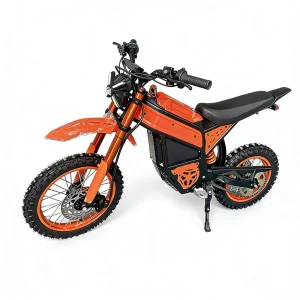
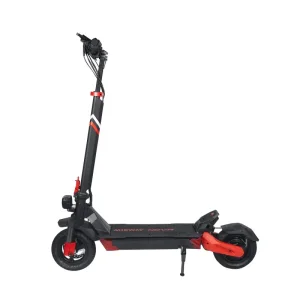
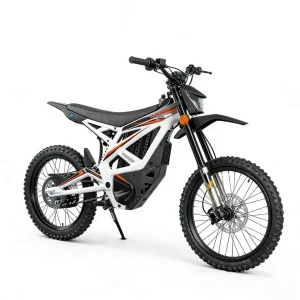
A granular analysis of OEM/ODM production scalability, engineering evolutions, and global supply chain dynamics for B2B buyers.
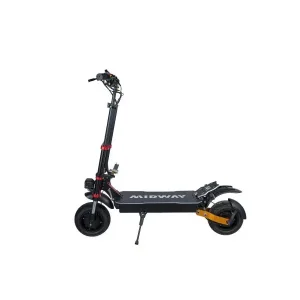
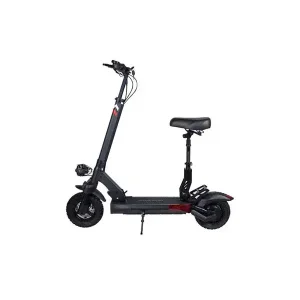
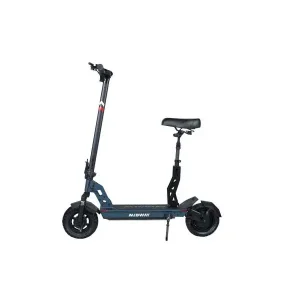
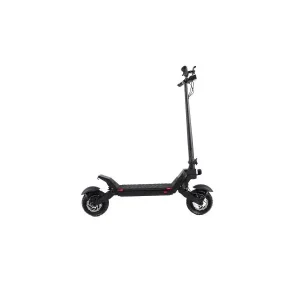
The global micro-mobility ecosystem has undergone a radical structural shift. The China E300 Razor electric scooter factory sector represents the cornerstone of modern mid-power personal light electric vehicle (PLEV) manufacturing. Originating from classic 24V lead-acid, chain-driven architectures popularized in consumer retail, contemporary Chinese OEMs have transformed this iconic design into heavy-duty, lithium-powered, brushless direct-drive hub platforms suitable for commercial fleets, private-label branding, and international distribution.
For international procurement directors, fleet operators, and brand owners, navigating China’s scooter manufacturing landscape requires an in-depth understanding of production economics, component metallurgy, battery system safety, and international regulatory frameworks. China’s primary hardware hubs—specifically centered in Wuyi, Yongkang, and Jinhua within Zhejiang Province—account for over 70% of global electric kick-scooter exports. This geographical consolidation creates unmatched supply chain density, allowing factories to source raw tubular steel, CNC machined components, custom SMT controller boards, and battery packs within a 50-kilometer radius.
While retail off-the-shelf E300 models traditionally employ 250W brushed motors with dual 12V sealed lead-acid (SLA) batteries, modern Chinese B2B factories offer upgraded industrial variants featuring 36V/48V BLDC motors, integrated smart BMS lithium-ion NMC/LiFePO4 modules, pneumatic 9-inch to 10-inch puncture-resistant tires, and reinforced high-tensile steel frames engineered for 120 kg (265 lbs) commercial payloads.
Technical baseline comparison between legacy retail consumer builds and industrial-grade OEM factory configurations.
| Engineering Parameter | Legacy Consumer Retail (Standard E300) | Industrial OEM Upgrade (Factory Direct B2B) | Commercial Advantage / Information Gain |
|---|---|---|---|
| Drive Architecture | Brushed Chain-Drive (24V 250W) | Brushless DC Direct-Drive Hub Motor (36V/48V 350W–1000W) | Eliminates chain tension maintenance; reduces mechanical friction losses by 22%; noise output < 55dB. |
| Battery Chemistry | Sealed Lead-Acid (SLA) 2x12V 7Ah | Ternary Lithium NMC (18650/21700) or LiFePO4 36V/48V 10.4Ah–24Ah | Triples operational cycle life (up to 1,000–2,000 cycles); reduces battery pack weight by 65%. |
| Chassis Structure | Standard Tubular Carbon Steel (1.5mm wall) | Robot-Welded High-Tensile Steel or T6 6061 Aviation Aluminum (2.2mm wall) | Elevates frame yield strength to > 350 MPa; dynamic fatigue tested to 100,000 vibration cycles under 130kg load. |
| Braking Subsystem | Hand-operated Rear Band/Drum Brake | Dual-Circuit Mechanical/Hydraulic Rear Disc + Front Electronic E-ABS | Reduces dry stopping distance from 25 km/h by 40% (under 3.2 meters); regenerates kinetic braking energy back to BMS. |
| Thermal & IP Rating | IPX4 / Passive Thermal Venting | IP65 Dust/Water Ingress Protection with Aluminium Heat-Sink Controller Coating | Ensures all-weather operational uptime in heavy rain conditions and high ambient temperature regions (up to 50°C). |
Modern China factory lines replace noisy belt/chain systems with rare-earth permanent magnet hub motors. High-purity copper windings ensure magnetic saturation resistance up to 130°C thermal cut-offs.
Integrated microcontrollers provide cell-level voltage monitoring, passive cell balancing, short-circuit protection, thermal runaway cutoff, and over-current protection under UN38.3 transport safety mandates.
Full 3D CAD stress simulations optimize stress distribution around the steering neck and folding joint mechanism. Steel decks are phosphatized and electro-coated (ED) to withstand 500-hour salt-spray corrosion tests.
Why sourcing direct from Wuyi and Yongkang electric scooter factories guarantees superior TCO and engineering flexibility.
The manufacturing ecosystem for China E300 Razor electric scooters is concentrated within Zhejiang Province, specifically the industrial corridor spanning Wuyi, Yongkang, and Jinhua. Known globally as the "Hardware Capital of China," this region offers an unmatched industrial cluster effect. Rather than relying on multi-tiered international supply chains, factories operating in Wuyi benefit from localized tier-1 component vendors located within minutes of assembly plants.
Top-tier China factories enforce rigid multi-stage testing before container loading: Rain Chamber Simulation (IPX5 testing for 30 minutes), Rolling Road Dyno Endurance (testing motor thermals under load), Frame Drop Testing (5,000 cycles with 150kg weight payload), and High-Voltage Insulation Leakage Checks.
By leveraging localized component ecosystems, direct factory procurement cuts middleman markups by 25% to 35%. Importers benefit from reduced lead times (20–30 days for 40ft HQ containers) and modular spare part kit bundling (3% free-of-charge wear parts including brake pads, inner tubes, and throttle assemblies).
Tailored manufacturing programs designed to match brand requirements, regional demographics, and fleet specs.
Custom Pantone color matching on powder-coated chassis, customized laser-etched logo branding on steering stems, die-cut high-grip silicone deck pads, and bespoke retail box artwork design.
Custom controller firmware flashing for localized speed compliance (e.g., locked 25 km/h for EU EN17128, 20 mph for US market), kick-start or zero-start throttle safety modes, and dual-profile eco/sport modes.
Flexible assembly options: Semi-Knocked-Down (SKD 85% pre-assembled) for rapid distributor turnarounds, or Completely-Knocked-Down (CKD 100% loose parts) to optimize shipping container density and reduce local import duties.
A comprehensive legal and technical breakdown for importing electric scooters into North American, European, and Asia-Pacific markets.
Importing electric scooters from China into regulated international jurisdictions requires stringent compliance documentation. Non-compliant shipments risk customs impoundment, heavy fines, or recall liabilities. Professional China factories maintain pre-certified baseline models that adhere to global micro-mobility mandates:
For entry into EU member states, electric scooters fall under EN 17128:2020 (Personal Light Electric Vehicles). Core compliance requirements include dual independent braking systems, mechanical speed limitation capped at 25 km/h, audible warning devices (bell/horn), and permanent front (white) and rear (red) lighting. Electrical safety mandates compliance with the Low Voltage Directive (LVD 2014/35/EU) and EMC Directive (2014/30/EU).
In the United States and Canada, lithium-battery electric scooters are subject to ANSI/CAN/UL 2272 (Standard for Electrical Systems for Personal E-Mobility Devices). This rigorous evaluation tests the electrical drive train, battery pack, BMS, and charger system against single-component thermal runaway, electrical overcharge, short circuits, and mechanical drop impacts. Additionally, motor controllers must pass FCC Part 15 Class B electromagnetic interference limits.
Air and sea freight forwarding of electric scooters requires a certified UN 38.3 Test Report, along with Material Safety Data Sheets (MSDS) and 1.2-Meter Drop Test Compliance. These tests ensure lithium cell stability under extreme pressure, altitude simulation, thermal shock (from -40°C to +72°C), external short circuiting, and heavy impact.
Analyzing real-world deployment channels and total cost of ownership (TCO) across diverse business environments.
Ideal for consumer retail brands, regional e-commerce stores, and high-street mobility shops seeking reliable, high-volume consumer kick-scooters for daily last-mile commuting and urban transportation.
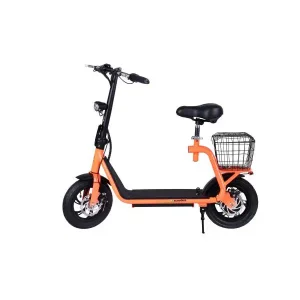
Heavy-duty E300 variants with front/rear cargo baskets and solid puncture-proof tires are widely deployed across logistics fulfillment centers, industrial parks, and university campuses for quick staff transport.
Equipped with IoT tracking modules, geofencing controllers, and heavy-duty folding locks, customized E300 platforms serve eco-resorts, tour operators, and localized rental rental fleet operators.
Industrial BLDC hub-motor E300 platforms lower ongoing maintenance costs by up to 60% compared to chain-driven models. Eliminating chain lubrication, sprocket wear, and brush replacement yields an estimated operational saving of $180 per unit annually in commercial fleet environments.
Strategic technological innovations shaping the next generation of China electric scooter manufacturing.
Future E300 factory platforms are integrating CAN-bus protocol architectures, replacing standard analog wiring. This enables real-time mobile app diagnostics, over-the-air (OTA) firmware updates, remote GPS locking, and cloud-based battery health tracking for enterprise fleet management.
Driven by sustainability mandates and supply chain cost optimization, factories are rapidly transitioning from traditional Ternary Lithium NMC cells to Lithium Iron Phosphate (LiFePO4). LFP offers superior thermal stability (no thermal runaway up to 600°C), zero cobalt usage, and 2,500+ charge cycles.
To comply with emerging global "Right to Repair" legislation, top Chinese OEMs are redesigning chassis layouts with plug-and-play IP67 waterproof quick-disconnect cable harnesses, modular swappable battery trays, and quick-release split-rim hub motors for fast tire changes.
Advanced vector sine-wave controllers (FOC) incorporate intelligent kinetic energy recovery systems (KERS) that automatically adjust electronic braking torque based on incline sensors, recovering up to 12% of battery energy during urban stop-and-go riding.
Direct answers to critical procurement, manufacturing quality, and shipping logistics questions.
Explore our complete manufacturing portfolio of high-performance electric scooters, motorcycles, and mobility platforms.