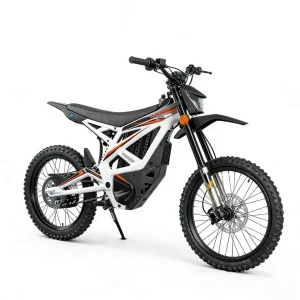
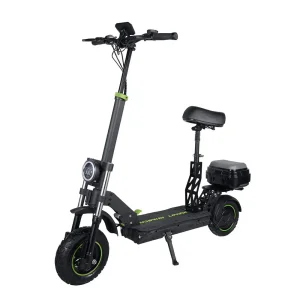
In the global micro-mobility market, the 20 Mph (approx. 32 km/h) velocity threshold represents the ultimate operational sweet spot for personal transport devices, fleet sharing networks, and commercial delivery vehicles. This speed bracket allows commuters to seamlessly match the pace of municipal traffic in bike lanes and secondary roads while conforming to major international low-speed electric vehicle (LSEV) regulatory classifications—such as the US Class 2 E-bike framework and European EN 17128 guidelines.
Achieving a consistent, reliable 20 Mph under varying payload weights (up to 120 kg/265 lbs) and grade angles (up to 15–20 degrees) demands rigorous drivetrain engineering. Leading Chinese original equipment manufacturers (OEMs) have shifted from legacy brushed DC motors to advanced Brushless Direct Current (BLDC) outer-rotor hub motors paired with Field Oriented Control (FOC) vector sine-wave controllers.
When global sourcing managers evaluate 20 Mph electric scooters from Chinese factories, nominal motor wattage alone does not dictate real-world performance. Torque output (measured in Newton-meters, Nm), thermal dissipation capabilities, and controller amperage play decisive roles.
| Specification Parameter | Light Commuter (500W–600W) | Heavy Commuter (800W–1000W) | High-Performance / All-Terrain (1500W+) |
|---|---|---|---|
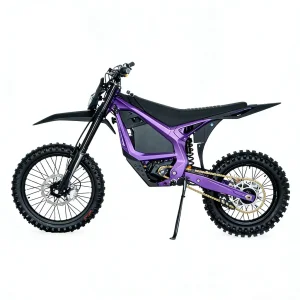
| Top Cruise Speed | 20 Mph (32 km/h) capped | 20–25 Mph (32–40 km/h) | 35–60 Mph (56–96 km/h) | Peak Motor Torque | 18–25 Nm | 30–42 Nm | 70–120+ Nm |
| Battery Pack Architecture | 48V 10Ah / 15Ah Li-ion (NMC) | 48V 18Ah / 60V 20Ah Li-ion | 72V 40Ah / 96V 60Ah LiFePO4 / NMC |
| BMS Protection Protocol | Overcharge, Thermal Cutoff, Short Circuit | Smart BMS with CANbus / Bluetooth Telematics | Dual-BMS High Current Balancer |
| Typical Range @ 20 Mph | 25–40 km (15–25 miles) | 45–70 km (28–44 miles) | 80–140 km (50–87 miles) |
| Primary B2B Target Application | Last-mile urban retail & rental | Suburban commuting & delivery fleets | Off-road sport & heavy commercial mobility |
China produces over 85% of the world's electric two-wheelers. The concentration of component vendors, automated aluminum-alloy frame welding facilities, surface treatment plants, and battery pack integrators within Zhejiang (Wuyi/Yongkang/Taizhou) creates unmatched logistical and manufacturing synergies.
Factories in Wuyi leverage direct aluminum extrusion line access (6061-T6 and 6063 aviation grade). Automated robotic TIG welding ensures frame structural fatigue testing exceeds 200,000 stress cycles without micro-cracking, crucial for maintaining frame integrity at 20 Mph speeds over rough asphalt.
Direct strategic partnerships with top-tier battery cell manufacturers (CATL, Eve, EVE, Samsung 21700/18650 cells) allow Chinese suppliers to offer custom 36V, 48V, 60V, and 72V packs equipped with automated spot-welding nickel strips, silicone thermal pads, and flame-retardant ABS enclosures.
The acceleration profile of a 20 Mph vehicle dictates user safety. In-house firmware developers calibrate soft-start electronic throttling, dynamic regenerative braking (E-ABS), and thermal current throttling algorithms directly onto 6-MOSFET to 18-MOSFET logic boards.
Importing electric scooters operating at 20 Mph requires stringent adherence to international safety directives. Sourcing non-compliant units risks customs impoundment, massive product recalls, or severe insurance liability. Below is the authoritative compliance roadmap verified by global inspection bodies (SGS, TÜV, Intertek):
• UL 2272 (Standard for Electrical Systems for Personal E-Mobility Devices): Mandatory in major US jurisdictions (including NYC). Evaluates full system electrical safety, battery pack drop test resistance, short-circuit protection, and thermal runaway containment.
• UL 2271 (Batteries for Use in Light Electric Vehicle Applications): Focuses specifically on battery cell stability, over-voltage protection, and moisture ingress protection.
• FCC Part 15 Class B: Mandatory EMC compliance to ensure the motor controller does not interfere with wireless telemetry, cellular signals, or Bluetooth communications.
• EN 17128:2020: The definitive European standard for Personal Light Electric Vehicles (PLEV). Dictates mechanical strength, brake system deceleration rates (minimum 2.5 m/s²), speed limiting mechanism tamper-resistance, and lighting intensity.
• CE Machinery Directive (2006/42/EC) & Low Voltage Directive (LVD): Verifies overall structural integrity, electrical safety, and user operational safeguards.
• RoHS 2.0 & REACH: Ensures zero toxic heavy metals (lead, cadmium, hexavalent chromium) in wiring harnesses, rubber grips, pneumatic tires, and plastic chassis components.
All 20 Mph e-scooters equipped with high-capacity lithium-ion batteries are classified as Dangerous Goods (DG Class 9) for ocean and air shipping. Certified suppliers must provide valid UN 38.3 Test Reports (covering altitude simulation, thermal shock, vibration, impact, and forced discharge), MSDS (Material Safety Data Sheet), and 1.2M Drop Test Certification.
Established distributors, shared micro-mobility fleet managers, and regional brand owners rarely buy off-the-shelf catalog models. Tier-1 Chinese suppliers offer end-to-end OEM (Original Equipment Manufacturing) and ODM (Original Design Manufacturing) services designed to establish strong competitive differentiation.
Custom MCU firmware flash allowing regional speed caps (e.g., 20 Mph for US, 25 km/h for EU, 20 km/h for Germany eKFV compliance) accessible via hidden dealer menus or locked factory settings.
Seamless integration of 4G/LTE IoT modules supporting GPS/GLONASS real-time tracking, remote CAN-bus diagnostics, geofencing, app-based keyless start, and battery state-of-health (SoH) monitoring.
Custom pantone powder coating, laser-etched aluminum logos, branded silicone deck pads, custom headlight lens geometry, and ergonomic stem handlebar configurations.
To maintain zero-defect export delivery, high-gain Chinese manufacturers implement a strict 4-stage Quality Assurance funnel:
1. Incoming Quality Control (IQC): Ultrasonic flaw detection on cast alloy forks, battery cell internal resistance matching (< 5 mΩ variance per pack), and wiring harness tension testing.
2. In-Process Quality Control (IPQC): Automated torque-driver frame assembly monitoring, waterproof seal testing on controller enclosures (IPX5 - IPX7 rated).
3. Out-of-Line Dynamic Testing (OQC): 100% of finished scooters undergo a 3 km simulated roller-bench load test to verify top speed (20 Mph), braking distance (< 4.2 meters from 20 Mph), thermal rise under load, and headlight lux output.
4. Vibration & Drop Testing: Random batch samples undergo 48 hours of simulated rough-road multi-axis vibration testing and 1-meter deck drops.
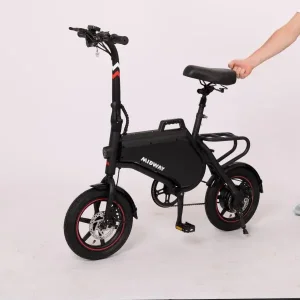
Delivery gig workers require sustained 20 Mph cruising to meet delivery SLAs. Equipping scooters with heavy-duty rear cargo racks (up to 40 kg capacity), dual quick-swap 48V 15Ah lithium batteries, and puncture-resistant tubeless solid-honeycomb 10-inch tires eliminates fleet downtime.
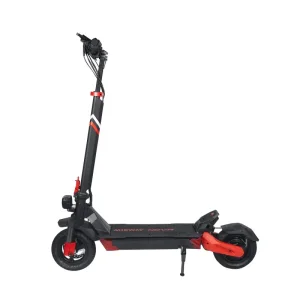
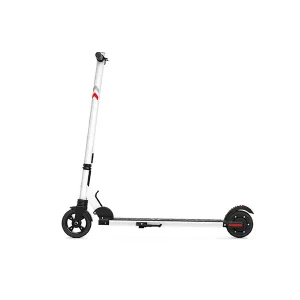
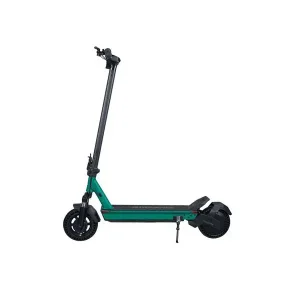
University campuses, corporate tech parks, and master-planned suburban communities rely on 20 Mph folding electric scooters as a primary car-alternative. Features such as integrated stem locking mechanisms, bright 5W LED headlights, and IP67 waterproof dashboards ensure 365-day usability.
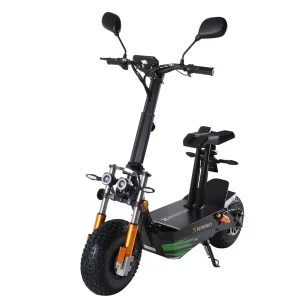
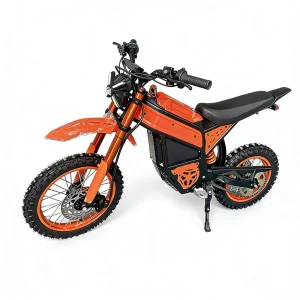
Fat-tire Citycoco scooters (1000W to 3000W) capable of 20–35 Mph speeds excel in beachfront resorts and scenic tourist parks. Broad pneumatic fat tires (18x9.5-8 inch) provide exceptional stability over sand, gravel, and unpaved tourist paths.
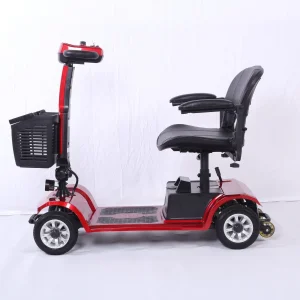
Low-speed 3-wheel and 4-wheel mobility scooters (governed to 8–15 Mph / 15–25 km/h) engineered with ultra-stable electromagnetic differential gearboxes, captain swivel chairs, and front basket enclosures empower senior independence while guaranteeing anti-rollover safety.
• Transition to Semi-Solid-State Batteries: Next-generation 20 Mph scooters are beginning to integrate semi-solid-state lithium chemistry, increasing volumetric energy density by 30% while drastically reducing thermal runaway fire risks at high ambient temperatures.
• CAN-Bus Vehicle Network Architecture: Moving away from legacy point-to-point analog wiring, modular CAN-bus system wiring reduces harness weight by 40% while providing precise real-time fault diagnostics to dealership service software.
• Advanced Regenerative Energy Recovery Systems (E-ABS 2.0): Dual-direction vector controllers now convert up to 15% of braking kinetic energy back into battery charge during city stop-and-go commuting, extending operational range without expanding battery pack size.
• Circular Lifecycle Component Standardization: Modular chassis designs allow rapid swapping of worn motors, control units, and stems, supporting European right-to-repair mandates and lowering total cost of ownership (TCO).