Explore our certified 48V, 60V, and 72V factory-direct configurations engineered for global distribution and commercial compliance.
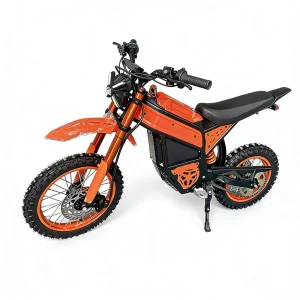
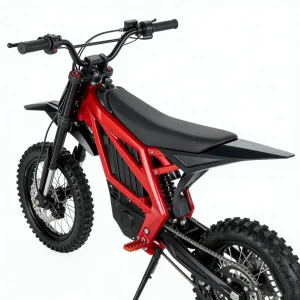
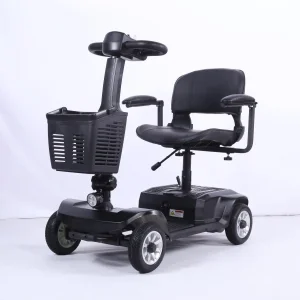
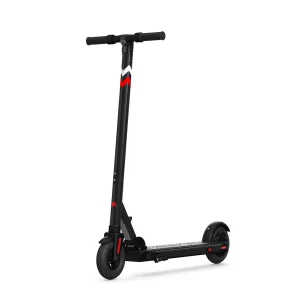
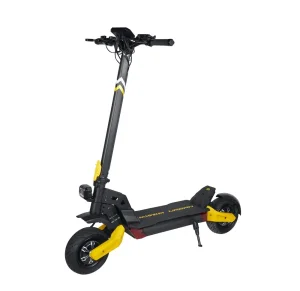
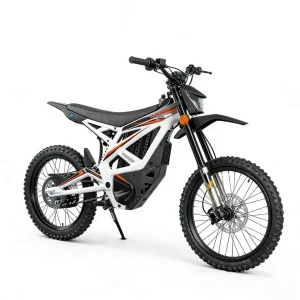
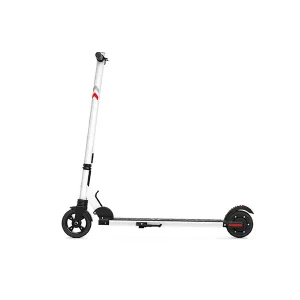
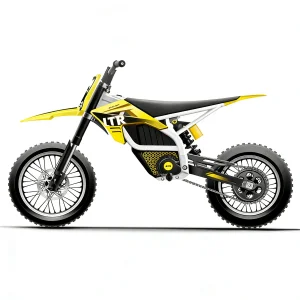
Analyzing why the 25mph (40.2 km/h) threshold has become the strategic sweet spot for international B2B buyers, municipal transit operators, and retail distributors.
In the global personal electric vehicle (PEV) market, speed classifications dictate commercial viability. Entry-level 15mph (25km/h) kick-scooters often fail to keep pace with suburban traffic flow, causing unsafe overtaking maneuvers by motor vehicles. Conversely, high-speed scooters exceeding 35mph (56km/h) enter stringent motor vehicle registration, compulsory insurance, and driver licensing categories in North America and Europe.
The 25mph (40km/h) electric scooter represents the exact engineering sweet spot. It provides adequate velocity for commuters to occupy full bike lanes and low-speed suburban thoroughfares safely, while retaining lightweight, foldable structural characteristics suitable for multimodal transit integration.
China accounts for over 85% of global e-mobility manufacturing output. Industrial clusters in Wuyi, Zhejiang and Wuxi, Jiangsu bring together localized supply chains for BLDC hub motors, sine-wave controllers, structural aluminum casting, and lithium battery assembly—enabling tier-1 factories to deliver custom OEM/ODM solutions at unmatched cost-to-performance ratios.
Global procurement teams must evaluate Chinese suppliers not merely on FOB unit pricing, but on component provenance, metallurgical heat-treatment quality, and international compliance certification frameworks such as UL 2272, EN 17128, CE-MD, and UN 38.3.
A comprehensive technical deep-dive into the hardware engineering required to sustain 25mph continuous speeds under demanding commercial conditions.
Modern 25mph scooters utilize 48V/60V 25A–35A Sine-Wave FOC controllers. Compared to obsolete square-wave controllers, FOC algorithms calculate magnetic flux in real-time, reducing motor noise by 12dB, decreasing thermal losses by 15%, and providing smooth, linear throttle modulation without aggressive torque spikes.
Operating continuously at 25mph demands 500W to 1000W rated motors (peaking at 1500W). Battery packs utilize Grade-A 18650 or 21700 lithium-ion cells (NMC or LiFePO4 chemistry) configured in 13S5P or 16S4P matrices. Integrated Smart BMS features dual thermal sensors, active cell balancing, and over-current protection.
Kinetic energy scales quadratically with velocity ($E_k = \frac{1}{2}mv^2$). At 25mph, frame stress quadruples compared to 12mph devices. Tier-1 Chinese factories employ robotic TIG-welded 6061-T6 aluminum tubing subjected to T6 artificial aging heat treatment, ensuring structural yield strength exceeding 240 MPa.
| Engineering Subsystem | Standard Specification (25mph / 40km/h Class) | Enterprise Fleet Upgrade Option | Validation Standard |
|---|---|---|---|
| Motor Topology | 48V 750W Direct Drive Brushless Hub Motor | 60V 1000W Dual-Motor Hub System | CE / EN 60335-1 |
| Controller Array | 12-MOSFET 48V 25A Sine-Wave FOC Controller | 18-MOSFET 60V 35A Dual Controller CAN-Bus | EMC Directive 2014/30/EU |
| Battery Configuration | 48V 15Ah (720Wh) 21700 Lithium-ion (13S3P) | 48V 20Ah / 60V 25Ah Swap-Ready Battery Pack | UL 2271 / UN 38.3 / IEC 62133 |
| Braking System | Front & Rear Mechanical Disc Brakes + E-ABS | Full Hydraulic Dual-Piston Disc Brakes (160mm Rotors) | ISO 4210 Dynamic Braking Test |
| Suspension Architecture | Front Dual Hydraulic Fork + Rear Spring Dampers | Four-Arm Adjustable Hydraulic Suspension | 100,000 Cycle Fatigue Test |
| Tire Metallurgy & Rubber | 10" x 2.75" Tubeless Pneumatic Street Tires | 10" x 3.0" Self-Healing Gel Anti-Puncture Tires | REACH / RoHS Rubber Testing |
Importing 25mph electric scooters requires absolute adherence to regional safety standards. Non-compliant shipments risk customs seizures, severe product liability claims, and mandatory market recalls.
In the United States and Canada, electrical system safety is governed by UL 2272 (Standard for Electrical Systems for Personal E-Mobility Devices). This covers strict evaluation of battery packs, wiring harnesses, charging ports, and thermal runaway prevention.
The European market differentiates personal light electric vehicles (PLEVs) via strict mechanical and electrical boundaries under EN 17128:2020.
A tier-1 OEM manufacturing methodology ensures every unit produced matches pre-production sample specifications under rigorous ISO 9001 quality management control.
Rigorous screening of sub-assemblies. Battery cells undergo 100% capacity grading and internal resistance sorting ($\le 15\text{m}\Omega$). Structural aluminum frames undergo ultrasonic flaw detection to ensure zero void defects in critical welds.
Automated assembly line checks including SMT controller soldering inspection, automated torque-wrench bolt tightening with real-time logging, and high-voltage insulation dielectric testing across wiring harnesses.
Every single completed 25mph scooter undergoes a dynamic chassis dynamometer run: verifying top speed (40km/h ± 1.5km/h), braking efficiency on a 20% simulated incline, hill-climbing torque, and IPX5 water spray chamber testing.
Pre-shipment packaging verification adhering to ISTA 3A drop standards. Heavy-duty 7-ply corrugated cartons with custom-molded high-density EPE foam protection prevent transit damage across long-haul ocean freight routes.
From last-mile delivery fleets to suburban commuter networks, 25mph electric scooters adapt seamlessly to modern micro-mobility ecosystems.
In metropolitan areas with expanding bike infrastructure, 25mph scooters allow commuters to bypass urban traffic congestion while covering 15 to 25 miles per single charge—reducing personal carbon footprints and eliminating parking costs.
Gig-economy delivery drivers (food, courier, and quick-commerce) rely on robust 48V/60V 25mph scooters equipped with rear cargo racks and dual hot-swappable battery packs to maximize daily operating hours without charging downtime.
Large manufacturing plants, university campuses, and resort complexes deploy customized 25mph scooter fleets for rapid staff transportation, maintenance patrol, and eco-friendly guest mobility across sprawling private facilities.
Key technological shifts reshaping the design, manufacturing, and connectivity of mid-speed electric scooters over the coming decade.
While Lithium Nickel Manganese Cobalt (NMC) remains dominant, sodium-ion chemistry is entering commercial trials for budget 25mph platforms. Sodium-ion offers superior cold-weather discharge performance (-20°C retention > 85%) and significantly lower raw material costs, insulating distributors from lithium price volatility.
Future 25mph fleet scooters integrate embedded 4G/5G IoT telematics connected directly to the controller's CAN-bus. Centralized fleet management dashboards analyze motor thermal curves, cell voltage imbalances, and brake pad wear in real-time, scheduling preventive maintenance before component failure occurs.
To satisfy municipal safety mandates, modern scooters incorporate multi-constellation GPS/GNSS chips. Automated geofencing dynamically caps top speeds from 25mph on open suburban roads down to 10mph when entering densely populated pedestrian zones or school districts.
Transitioning from pure aluminum alloys to carbon-fiber reinforced polymer (CFRP) steering columns and magnesium alloy deck castings reduces overall vehicle weight by 20% while increasing structural rigidity—directly improving acceleration response and battery range per charge.
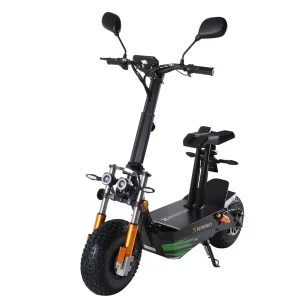
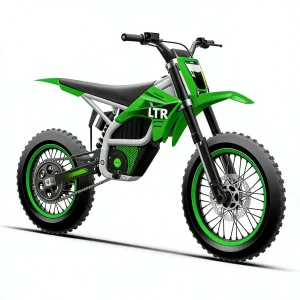
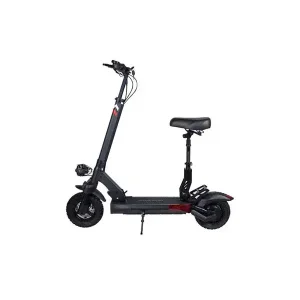
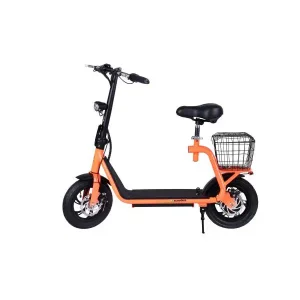
Expand your product line with high-torque, long-range factory-direct models engineered for global markets.
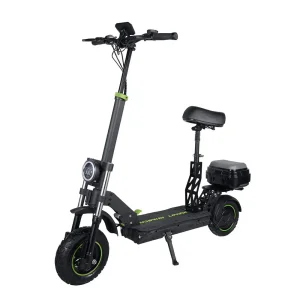
Essential guidance on factory minimum order quantities, OEM customization, tariff classification, battery shipping regulations, and warranty policies.
