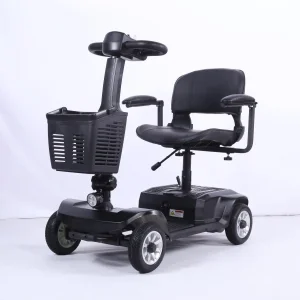
Direct factory sourcing portfolio featuring high-capacity lithium battery packs, brushless hub motors, and heavy-duty chassis engineering built for global distribution standards.
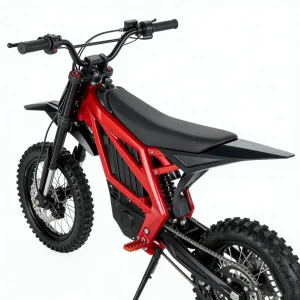
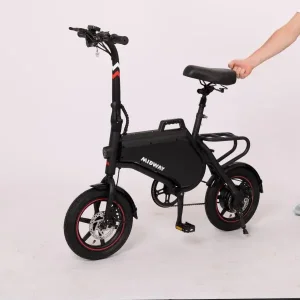
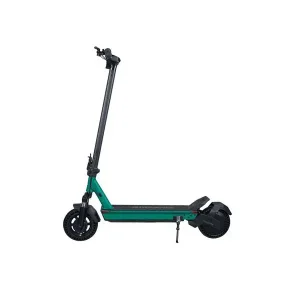
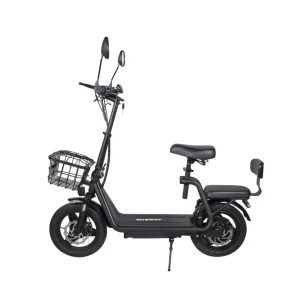
The global light electric vehicle (LEV) industry is undergoing an unprecedented technological inflection point. Driven by stringent zero-emission mandates in metropolitan areas across Europe, North America, and Southeast Asia, electric scooters, mobility vehicles, and light electric motorcycles are rapidly replacing fossil-fuel two-wheelers. At the core of this transition is the advancement of China's electric scooter batteries manufacturing ecosystem, which accounts for over 78% of the global lithium pack supply chain.
Traditional 18650 lithium-ion cells are systematically being phased out in favor of 21700 and 4680 cylindrical cell form factors. By increasing volumetric energy density by 30-35%, Chinese factories are enabling sleeker deck designs, reduced overall vehicle weight, and extended single-charge ranges exceeding 80 kilometers.
While Nickel Manganese Cobalt (NMC) remains popular for extreme high-speed electric motorcycles requiring maximum power-to-weight ratios, LiFePO4 (LFP) chemistry has emerged as the preferred solution for commercial rental fleets and urban mobility scooters due to its thermal stability, non-combustible profile, and superior 2,000 to 3,500 cycle lifespan.
Modern lithium battery packs manufactured in China are no longer passive power storage units. Integrated Smart Battery Management Systems (BMS) with CAN-bus, UART, and Bluetooth protocols stream real-time State of Charge (SOC), State of Health (SOH), cell temperature profiles, and voltage balancing data directly to smartphone apps and fleet management dashboards.
Understanding the organizational structure of leading Chinese battery assembly plants and vehicle manufacturing complexes is essential for overseas B2B buyers. The industrial clusters localized in Zhejiang, Jiangsu, and Guangdong provinces offer unmatched supply chain consolidation—bringing cell manufacturing, nickel tab laser welding, BMS SMT assembly, and automated aging test racks into single unified facilities.
Top-tier factories utilize automated 5-channel cell sorting machines to grade Grade-A lithium cells based on exact internal resistance (IR delta < 2mΩ) and capacity variance (delta < 10mAh). Packs are subsequently assembled using multi-point CNC laser spot welders with 0.15mm-0.2mm pure nickel busbars, eliminating high-resistance cold solder joints and guaranteeing high continuous discharge C-rates.
To guarantee reliability across extreme operating environments (from -20°C Scandinavian winters to +55°C Middle Eastern summers), advanced Chinese battery factories enforce strict aging test cycles. 100% of finished battery packs undergo full charge-discharge cycling inside environmental chambers alongside IP67 immersion tests, vibration resistance testing, and drop test validations.
Selecting the optimal energy storage specification requires balancing voltage architecture, chemistry profile, thermal dissipation, and cost per cycle. The technical matrix below breaks down standard industrial parameters used across factory-direct electric scooter and motorcycle platforms.
| Battery Specification Parameter | Lithium Iron Phosphate (LiFePO4) | Nickel Manganese Cobalt (NCM 811) | Sodium-Ion (Next-Gen Emerging) |
|---|---|---|---|
| Nominal Cell Voltage | 3.2V per cell | 3.6V - 3.7V per cell | 3.0V - 3.1V per cell |
| Gravimetric Energy Density | 140 - 170 Wh/kg | 210 - 250 Wh/kg | 110 - 130 Wh/kg |
| Cycle Life (80% Capacity Retention) | 2,000 - 3,500 Cycles | 800 - 1,200 Cycles | 1,500 - 2,500 Cycles |
| Thermal Runaway Breakdown Temp | > 270°C (Extremely Safe) | ~ 210°C (Requires Active Cooling) | > 260°C (High Thermal Stability) |
| Low Temp Discharge (-20°C) Capacity | 60% - 70% Nominal Capacity | 80% - 85% Nominal Capacity | 88% - 92% (Superior Cold Performance) |
| Primary Target Application | Mobility scooters, sharing fleets, standard 48V/60V commuters | High-speed 72V/13.5KW electric motorcycles, ultra-lightweight folding scooters | Budget-tier entry commuters, low-temperature region fleets |
Direct procurement from Chinese electric scooter and battery manufacturers provides significant unit-cost efficiency. However, mitigating supply chain risk requires establishing rigorous auditing protocols during supplier onboarding.
Importers must verify that battery manufacturers utilize tier-1 A-grade cells (e.g., CATL, EVE, BYD, Lishen, or Panasonic) with certified QR code batch tracking stamped directly on cell casings. Avoid unbranded or reclaimed second-life cells that cause premature capacity fade and unbalancing.
Ensure the smart BMS features independent hardware dual-protection ICs for overvoltage cut-off (typically 4.25V for NCM, 3.65V for LFP), undervoltage cutoff (2.5V), overcurrent discharge shutoff, short-circuit protection with auto-recovery, and dual thermal sensors monitoring ambient and MOSFET junction temperatures.
Inspect the physical battery casing engineering. Premium electric scooter battery factories use flame-retardant ABS+PC alloy plastic or extruded aluminum enclosures filled with thermal conductive silicone sealant (silicone potting) to achieve IP67 waterproof standards while absorbing road vibrations.
Because lithium batteries are classified as Class 9 Dangerous Goods under international maritime (IMDG) and air (IATA) codes, factories must provide up-to-date UN38.3 test summaries, MSDS documents, drop-test reports, and original UN-approved cardboard packaging prior to container loading.
Tailoring electric scooter power configurations to specific user segments requires exact matching between battery voltage, continuous discharge amperage, and motor hub power ratings.
Engineered for lightweight adult mobility scooters and compact folding 180W-350W kick scooters. Focuses on low weight, removable pack designs, simple 10S2P or 10S3P cell configurations, and ultra-safe lower operating voltages.
The global standard for 500W to 1000W urban electric scooters. Utilizes 13S or 14S lithium configurations offering high torque efficiency for hill climbing, continuous 20A-30A discharge, and ranges spanning 40km to 65km per charge.
Designed for heavy-duty electric motorcycles, Citycoco fat-tire cruisers, and 4000W-13.5KW high-speed commuter platforms. Requires high-capacity 20Ah to 40Ah packs with forced cooling and heavy-gauge copper terminal connectors.
Navigating international regulatory frameworks is imperative for legal market entry across target commercial destinations. Certified Chinese electric scooter factories provide full compliance dossiers for seamless customs clearance.
North American safety standards covering electrical systems, cell structural integrity, and environmental exposure for personal mobility devices and electric scooter battery packs.
European standards governing personal light electric vehicles (PLEV), validating mechanical strength, electrical safety, water ingress prevention, and electromagnetic compatibility (EMC).
Mandatory European compliance dictating carbon footprint disclosure, recycled lithium content thresholds, removable battery design requirements, and digital battery passport tracking.
Leading research institutes and factory R&D centers in China are accelerating the deployment of next-generation energy storage technologies designed to revolutionize personal electric mobility over the coming decade.
Transitioning from liquid electrolyte chemistry to semi-solid-state gel polymer matrixes boosts energy density beyond 300 Wh/kg while virtually eliminating thermal runaway risk from localized cell punctures or internal short circuits.
Eliminating intermediate cell module housings and integrating cylindrical cells directly into the structural battery box increases volumetric pack utilization from 60% to 75%, allowing higher capacity without increasing physical vehicle dimensions.
Cloud-connected BMS units leverage machine learning algorithms to model individual cell degradation patterns, dynamically optimize active balancing routines during operation, and issue pre-emptive maintenance warnings prior to cell failures.
Technical answers to common questions asked by electric scooter importers, distributors, and fleet procurement buyers when sourcing from factories in China.
For custom-designed battery packs featuring specialized dimensions, custom BMS firmware, or private-label outer casings, the standard factory MOQ generally ranges from 50 to 100 units. For off-the-shelf standard battery pack configurations (such as standard 36V 10Ah or 48V 15Ah packs using stock molds), MOQs can be as low as 10 to 20 units for initial sample evaluations.
High-quality factories implement strict two-stage balancing protocols. First, pre-assembly cell matching sorts cells so that internal resistance delta is within 2mΩ and open-circuit voltage delta is under 5mV. Second, the smart BMS includes active or passive cell balancing circuitry that bleed off excess voltage during charging cycles, maintaining cell delta below 20mV throughout the pack's operational lifecycle.
Grade-A cells are pristine cells direct from Tier-1 manufacturers (like CATL, EVE, Lishen) that meet 100% of nominal capacity, internal resistance, and aesthetic standards during first-pass inspection. Grade-B cells have minor capacity deviations or cosmetic flaws. Repurposed or second-life cells are salvaged from decommissioned automotive or storage packs. Reputable Chinese factories exclusively supply Grade-A cells backed by factory warranty test reports.
To legally import lithium-ion or LiFePO4 battery packs via sea freight or air freight, the manufacturer must provide a UN38.3 Test Summary report, MSDS (Material Safety Data Sheet), 1.2-Meter Drop Test Report, and an Official Dangerous Goods (DG) Packaging Certificate issued by Chinese inspection authorities.
Yes, qualified OEM factories offer customizable Smart BMS firmware supporting CAN 2.0B, RS485, and UART communication protocols. This allows seamless integration with proprietary IoT hardware, enabling fleet operators to monitor real-time battery percentage, temperature alerts, cell fault diagnostic codes, and remote kill switch controls.
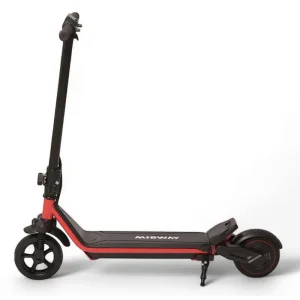
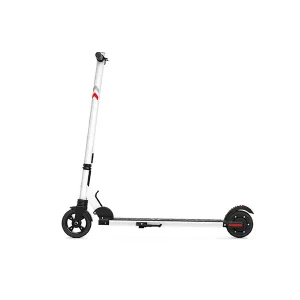
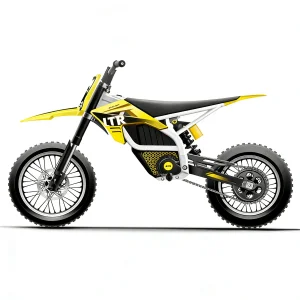
Explore our full line of commercial-grade electric vehicles, featuring smart APP control, high-torque brushless hub motors, and factory-direct wholesale pricing.
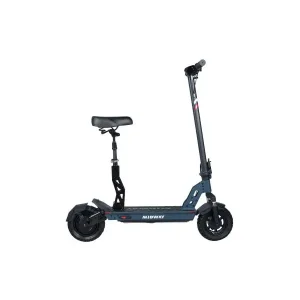
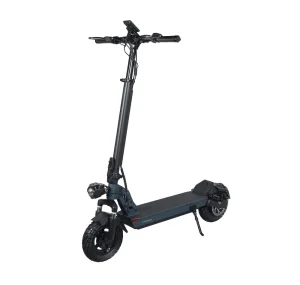
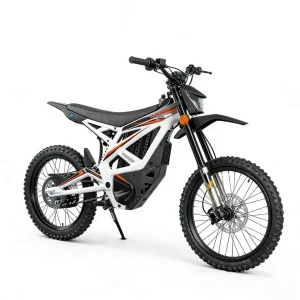
Looking for reliable OEM/ODM manufacturing, custom battery pack integration, or bulk wholesale pricing? Connect directly with our engineering team to request technical catalogs, cell specification sheets, and factory audit documentation.
Request Factory Direct Quote