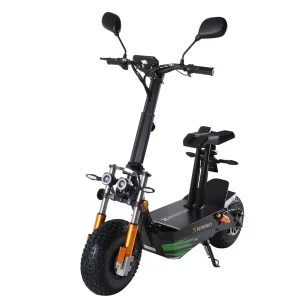
Factory-engineered electric scooters, high-power electric motorcycles, and mobility solutions powered by state-of-the-art lithium battery architecture.
Understanding the paradigm shift in Light Electric Vehicle (LEV) energy storage, battery chemistry evolution, and China's dominance in global B2B manufacturing.
The rapid global expansion of electric scooters, e-mobility fleet platforms, and commercial delivery vehicles has placed battery pack technology at the core of urban transportation infrastructure. In 2025, global demand for high-density, safe, and long-cycle electric scooter battery packs is reaching unprecedented highs. B2B importers, brands, and fleet operators are migrating away from legacy lead-acid systems toward advanced Lithium-ion chemistries (specifically NMC and LiFePO4), driven by strict EU regulatory frameworks (such as EN17128 and the new EU Battery Regulation) and North American safety guidelines (UL 2271 / UL 2272).
As the world’s primary epicenter for battery manufacturing, China accounts for over 70% of global light electric vehicle power pack production. The industrial concentration in Zhejiang and surrounding manufacturing hubs has created an integrated supply chain ecosystem that combines raw material refining, cell manufacturing, smart BMS firmware design, and automated pack assembly into a seamless production framework.
For B2B buyers—ranging from regional distributors and OEM brand owners to shared micro-mobility operators—evaluating an electric scooter battery manufacturer requires going beyond simple capacity (Ah) and voltage (V) figures. True competitive advantage relies on evaluating structural thermal safety, continuous discharge rate capability (C-rate), Battery Management System (BMS) communication protocols (CAN-bus / RS485), and long-term cell degradation curves under heavy usage cycles.
This technical whitepaper outlines the structural parameters of modern China-manufactured electric scooter batteries, providing purchasing directors and engineering teams with verified insights into cell tiering, quality assurance standards, supply chain dynamics, and compliance protocols required for seamless global market entry.
From NMC high energy density cells to ultra-safe LiFePO4 and next-generation Sodium-ion batteries: A comprehensive analysis of battery pack design and smart BMS integration.
Choice of cell chemistry dictates the functional boundaries of electric scooters:
Modern electric scooter batteries are complex electronic systems controlled by smart Battery Management Systems (BMS):
Robust physical packaging protects internal cell matrix against shock, vibration, and environmental moisture ingress:
| System Voltage | Typical Chemistry | Capacity Range | Peak Discharge (C-Rate) | Target Application | Expected Cycle Life |
|---|---|---|---|---|---|
| 36V System (10S) | NCM / NMC 18650 | 7.8Ah - 15Ah | 2C - 3C (15A - 30A) | Urban Light Commuter Scooters (250W - 350W) | 600 - 800 Cycles |
| 48V System (13S) | NCM 21700 / LiFePO4 | 10Ah - 20Ah | 3C - 5C (30A - 50A) | Mid-Range & Off-Road Scooters (500W - 1000W) | 800 - 1,500 Cycles |
| 60V System (16S) | High-Rate NCM / LiFePO4 | 20Ah - 30Ah | 5C - 8C (60A - 100A) | High-Performance Citycoco & Cargo Fleet | 1,000 - 2,000 Cycles |
| 72V System (20S) | Grade-A Automotive NCM | 20Ah - 40Ah+ | 8C - 10C (100A - 200A) | Hyperspeed Electric Motorcycles (3000W - 5000W+) | 1,200 - 2,500 Cycles |
Customizing power delivery and environmental resistance to match regional geography, rider habits, and commercial operations.
In dense European and North American metropolitan areas (e.g., Paris, Berlin, New York), urban scooters require compact, lightweight 36V or 48V battery packs integrated directly into the deck frame. Priority is given to lightweight aluminum housing, fast 3-to-4-hour charging capability, and strict compliance with EN 17128 street-legal regulations.
For courier and food delivery operations across Southeast Asia and Latin America, battery packs endure continuous 10-to-14-hour daily cycles. China factories engineer hot-swappable 48V/60V dual-battery systems equipped with heavy-duty LiFePO4 cells, reinforced copper busbars, and robust plug-and-play connectors capable of 5,000+ insertion cycles.
Deployments in Northern Europe, Canada, or high-altitude regions require self-heating BMS circuitry. When ambient temperatures drop below 0°C, the BMS redirects initial charge current into internal heating films, raising cell temperatures to optimal charging levels (15°C) before initiating main charge cycles to prevent lithium plating.
Unpacking the structural, cost, and technological benefits of sourcing electric scooter batteries directly from Zhejiang's industrial hardware cluster.
The manufacturing cluster centered around Wuyi and Yongkang in Zhejiang Province provides an unmatched industrial advantage. Within a 30-kilometer radius, battery factories have direct access to raw material processing, precision die-cast aluminum enclosure fabricators, custom BMS PCB assembly lines, and high-frequency automated spot-welding machine manufacturers.
This extreme vertical concentration minimizes component transit times, lowers logistics overhead, and enables rapid prototyping of custom battery pack shapes (e.g., under-deck, removable trunk-mounted, or dual-pack configurations) within 7 to 10 days from initial CAD sign-off.
Leading Chinese factories utilize automated MES (Manufacturing Execution Systems) that log individual cell barcode data at every stage of assembly. Key automated quality checkpoints include:
Navigating global customs regulations, dangerous goods shipping protocols, and international electrical safety certifications for B2B importers.
All lithium-ion batteries are classified as Class 9 Dangerous Goods for international sea and air freight. Exporting from China requires full UN38.3 test reports—including altitude simulation, thermal test, vibration test, shock test, external short-circuit test, impact, overcharge, and forced discharge verification—alongside valid MSDS (Material Safety Data Sheet) and UN-certified hazardous packaging certification.
To sell legally in North America and Europe, electric scooter battery systems must satisfy rigorous electrical standard frameworks. UL 2271 governs light electric vehicle battery packs, testing crush resistance, flame exposure, and water immersion. EN 17128 ensures total system safety across European consumer markets. Factory-direct OEM customization allows full alignment with these standards.
B2B buyer reliability depends on post-purchase warranty support. Top-tier China manufacturers provide unique laser-etched QR codes on each battery pack, enabling distributors to trace cell batch numbers, weld station logs, BMS firmware revisions, and factory inspection timestamps. Localized spare parts programs guarantee seamless supply of replacement BMS boards, wiring harnesses, and battery shells.
Expert technical responses to critical questions asked by electric scooter importers, distributors, and fleet operators when sourcing batteries from China.
Direct factory sourcing with full OEM customization, custom voltage configurations, and worldwide compliance certification.