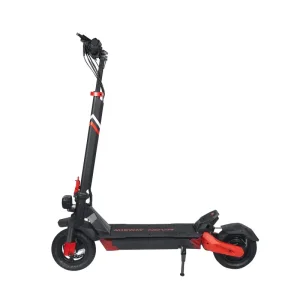
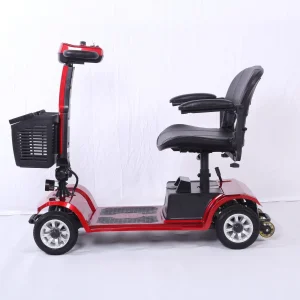
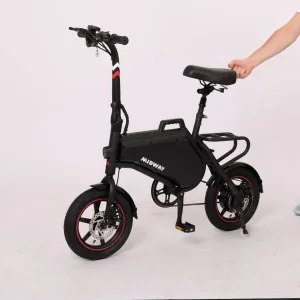
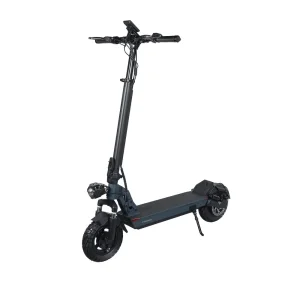
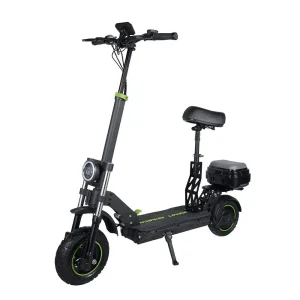
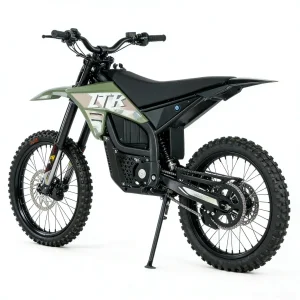
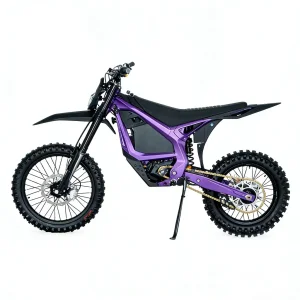
Direct factory production models configured for modular part replacement, rapid field maintenance, and long-lifecycle enterprise fleet utilization.
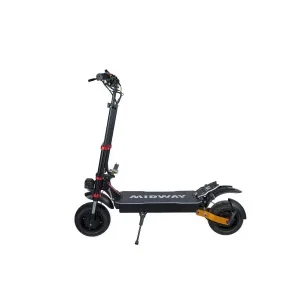
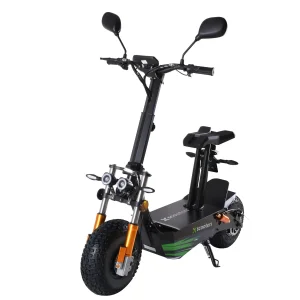
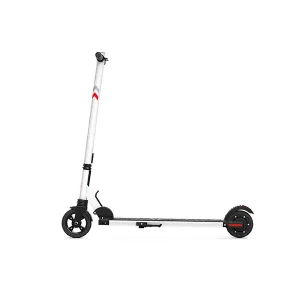
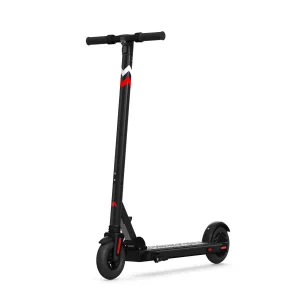
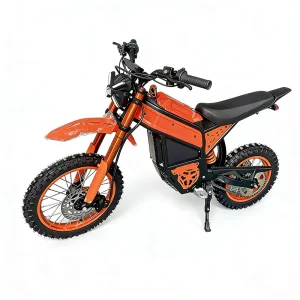
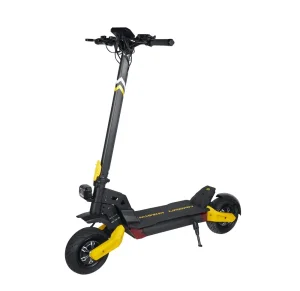
How leading Chinese manufacturing hubs are driving Total Cost of Ownership (TCO) optimization for global micro-mobility importers, fleet maintenance hubs, and B2B distributors.
Modern micro-mobility vehicles are evolving from single-body unibody frames into modular sub-assemblies. By isolating the battery enclosure, controller housing, stem hinge assembly, and wheel hubs, maintenance technicians can replace failed sub-components in under 15 minutes without disturbing the primary wiring loom or structural chassis integrity.
China's light electric vehicle manufacturing ecosystems (centered in Wuyi, Yongkang, and Zhejiang industrial zones) provide standardized Bills of Materials (BOM). Common mechanical specifications—such as standard 10-inch split-rim motor hubs, waterproofing IP67 quick-connect pin systems, and uniform disc brake caliper mountings—guarantee component availability for up to 7 years post-production.
Unplanned downtime is the single greatest expense for commercial fleet operators and retail warranty centers. Implementing systematic repair protocols—replacing worn MOSFET arrays, damaged hall sensors, or individual lithium cell series rather than entire assemblies—reduces operational capital expenditure by up to 64% over a 36-month operational deployment.
Factory Insight: Transitioning from whole-vehicle replacement to a precision SKU-level spare part management strategy reduces international freight expenditures by 80% and slashes warranty turnaround times from 30 days down to local same-day service.
Evaluating regional regulatory pressures, supply chain dynamics, and localized maintenance demands across major international markets.
European directives increasingly enforce strict environmental compliance, CE standards, and legal Right-to-Repair legislation. Importers in Germany, France, and the Netherlands require OEM partners in China to provide granular technical documentation, schematics, and individual component SKUs (down to brake pads, BMS boards, and controller chips) to comply with regional consumer protection standards.
With municipal adoption of UL 2272 and UL 2271 battery certification frameworks across major US and Canadian metropolitan areas, repair protocols must emphasize electrical safety. Chinese manufacturing partners supply pre-tested, certified wire harnesses, flame-retardant potting compounds for controllers, and thermal-runaway protected lithium battery packs to preserve certification validity post-repair.
Operating electric scooters under extreme ambient temperatures (45°C+) in the UAE, Saudi Arabia, or Brazil leads to accelerated thermal degradation of controllers and tire wear. Local commercial operations rely on high-torque brushless hub motors with heavy-duty heat-sink casings and reinforced solid tire replacements imported directly from specialized Chinese OEM factories.
Systematic failure diagnosis and component restoration across the three core LEV engineering subsystems: Motor, Electronics, and Mechanical Chassis.
Common Failure Modes: Hall sensor board failure due to water ingress, phase wire short-circuiting under heavy load, and neodymium magnet displacement caused by violent impacts.
Factory Repair Protocol: OEM split-rim designs allow quick separation of the stator and rotor. Technicians utilize standardized 3-phase hall-sensor replacement cards, high-temp epoxy resin (200°C rated) for magnet re-securing, and automated stator re-winding kits. Re-assembled motors undergo isolation resistance testing (>500MΩ at 500V DC) before dispatch.
Common Failure Modes: MOSFET junction breakdown under peak regenerative braking, voltage drift in lithium series cells, CANbus communication timing errors.
Factory Repair Protocol: Controllers use Sine-Wave Field Oriented Control (FOC) boards with replaceable power MOSFET cards. Smart BMS repair involves balance-charging individual series blocks to restore voltage uniformity (ΔV < 30mV) and flashing updated firmware protocols via UART/CANbus diagnostic software to eliminate nuisance fault codes.
Common Failure Modes: Folding latch mechanism play, stem fatigue cracks, hydraulic line pressure loss, and brake rotor warping.
Factory Repair Protocol: Frame stems engineered from 6061-T6 aviation aluminum utilize replaceable hardened steel hinge bushings. Hydraulic brake line service includes standardized mineral oil purge fittings, dual-piston caliper seal replacements, and heat-treated stainless steel disc rotors engineered to EN 17128 dynamic strain standards.
Empowering international business partners with factory-direct technical training, fully certified spare parts kits, and complete regulatory compliance packs.
To eliminate long freight delays for micro-components, factories export pre-packaged Maintenance, Repair, and Operations (MRO) bundles along with container shipments. Bundles include color-coded wiring looms, pre-programmed controllers matched to motor Kv ratings, replacement tubeless pneumatics, and pre-bled hydraulic brake assemblies.
Professional OEM factories furnish distributors with full 3D exploded view drawings, precise torque specification charts (e.g., motor axle nuts to 65 N·m), step-by-step diagnostic flowcharts, and multimeter pin-out testing guides to accelerate local technician onboarding.
When swapping major power-train components (such as lithium battery packs or main controllers), regulatory compliance must be maintained. OEM factories supply tested components with verified CE, EMC, RoHS, UL 2272, UN38.3, and MSDS documentation, ensuring local service hubs preserve operational legality.
Tailoring repair standards and spare part logistics to specific commercial operating models.
High-frequency usage requires ultra-ruggedized components. Fleet operators deploy heavy-duty Citycoco and 1000W scooter platforms featuring hot-swappable battery bays, solid anti-puncture rubber tires, and internal cable routing to minimize vandalism and daily wear-and-tear.
Last-mile food and courier services demand 99%+ vehicle uptime. Heavy-duty 72V electric motorcycles and dual-battery long-range scooters rely on rapid plug-and-play controller modules and heavy-load suspension spares to sustain continuous multi-shift operations.
Retail store networks and local warranty centers utilize OEM-supplied bench-top testing rigs, automated battery capacity discharge testers, and factory-authorized spare part SKUs to offer quick turnaround consumer warranty repairs.
The next generation of electric vehicle maintenance is shifting toward automated telematics, predictive AI diagnostics, and fully circular lifecycle engineering.
Embedded CANbus telematics continuously stream thermal data, battery cell internal resistance, and motor phase vibration directly to cloud portals, enabling maintenance alerts before catastrophic failure occurs.
Next-gen chassis frameworks incorporate snap-latch electrical interconnects and magnetic mounting brackets, allowing non-technical personnel to replace throttles, displays, and headlights without specialized tools.
Standardized diagnostic software enables technicians to extract degraded traction batteries (<70% SOH) and re-pack healthy lithium series cells into low-power stationary energy storage systems (ESS).
Major Chinese factories are aligning pin-out configurations and communication protocols (Open CAN/ISO 11898), allowing universal cross-brand component compatibility for global repair hubs.
Direct technical answers addressing OEM spare part sourcing, battery repair safety, motor diagnostic routines, and lead times.
For established vehicle models, spare parts (such as controllers, brake assemblies, displays, and wiring looms) are available in minimum package sizes starting at 10 to 50 units per SKU. When bundled inside full-container vehicle orders (40HQ), spare parts have no additional MOQ restrictions and ship seamlessly with your vehicle inventory.
A hall sensor fault typically manifests as motor shuddering under load, noisy acceleration, or error codes (e.g., Error 08/E-07). Technicians connect a 5V DC power supply across the red (+5V) and black (GND) hall wires while measuring signal voltage toggling (0V to 5V) on the yellow, green, and blue phase signal lines as the wheel is rotated by hand. Faulty sensor chips can be desoldered and replaced individually, or replaced as a pre-assembled PCB ring module.
Yes. Factory engineering teams maintain strict dimensional and electrical backward-compatibility. Updated battery packs retain identical aluminum extrusion channel widths, discharge connector keying (e.g., XT60/XT90 or Anderson terminals), and pin-out configurations. Furthermore, upgraded Smart BMS modules automatically match older controller voltage cut-off thresholds.
All replacement lithium-ion batteries manufactured for export are shipped with UN38.3 test reports, 1.2-Meter Drop Test Certificates, MSDS (Material Safety Data Sheets), and official Air/Sea Transport Safety Inspection Reports. This ensures smooth customs clearance and compliant warehousing in destination countries.
Standard off-the-shelf maintenance components (controllers, displays, throttles, wiring harnesses, brake calipers) ship within 3 to 5 business days from factory stock via DHL/FedEx express freight. Custom-branded components or specialized battery assemblies require 15 to 20 days production lead time.
Explore our broader portfolio of high-torque urban scooters, mobility aids, and electric motorcycles built with standardized modular architecture.