Engineered for urban commuters, shared fleet operators, and high-power off-road mobility importers. Fully certified for global market entry.
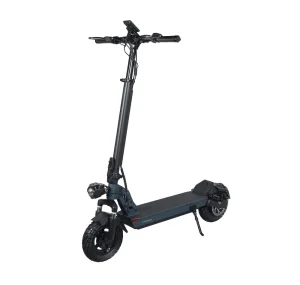
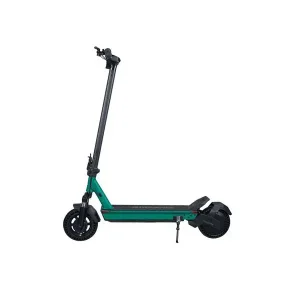
Analyzing supply chain concentration, technological advancement, and structural cost advantages in Chinese electric vehicle manufacturing clusters.
The global light electric vehicle (LEV) market is undergoing a paradigm shift driven by stringent carbon neutrality mandates, urban congestion, and rapid advancements in battery energy density. As global distributors, brand owners, and fleet operators seek high-reliability manufacturing partners, China remains the epicenter of electric mobility innovation. Concentrated primarily within specialized industrial corridors in Zhejiang (Wuyi, Yongkang, Taizhou) and Jiangsu (Wuxi), Chinese suppliers synthesize complete supply-chain vertical integration—from raw lithium cell refining to precision motor winding and Automated Optical Inspection (AOI) vehicle assembly.
Modern B2B electric scooter procurement has evolved past basic cost-per-unit comparisons. Professional importers evaluate suppliers across complex technical vectors: controller thermal dissipation under continuous high amperage, Battery Management System (BMS) telemetry bandwidth, chassis fatigue limits measured via FEA (Finite Element Analysis) stress modeling, and global regulatory compliance (CE, UL, EN 17128, EEC homologation). Finding a good China electric scooter manufacturer requires navigating this highly sophisticated industrial ecosystem to lock in supply chain stability, technical information gain, and structural margin protection.
Leading Chinese factories have shifted from low-cost assembly workshops to high-tech research centers. Top-tier manufacturers now implement automated robotic frame welding, inline laser battery welding, and end-of-line dynamometer testing for 100% of finished units prior to container loading.
Deconstructing the core hardware components that define performance, lifespan, and safety in modern electric scooters and motorcycles.
Direct-drive Brushless DC (BLDC) hub motors (ranging from 600W to 3000W Citycoco models) offer maintenance-free operation and high torque density. High-power electric motorcycles (10kW to 35kW) leverage Permanent Magnet Synchronous Mid-Motors (PMSM) paired with liquid cooling or high-airflow heat sinks to prevent thermal demagnetization during sustained high-speed runs.
While standard consumer kick scooters utilize high energy density NCM (Nickel Cobalt Manganese) 18650/21700 cylindrical cells (such as LG, Samsung, or grade-A domestic equivalents), commercial fleets and heavy-duty mobility scooters are transitioning toward LiFePO4 (Lithium Iron Phosphate). LiFePO4 offers 2,000 to 3,500 full charge cycles and superior thermal stability up to 600°C.
Modern controllers have evolved from harsh trapezoidal wave drivers to intelligent Field-Oriented Control (FOC) vector sine-wave systems. FOC controllers dynamically calculate motor magnetic flux vectors, increasing energy transformation efficiency to >92%, reducing acoustic motor noise to under 45dB, and enabling smooth regenerative braking (E-ABS).
| Vehicle Class / Category | Motor Architecture | System Voltage & Battery | Max Speed & Range | Primary Commercial Use Case |
|---|---|---|---|---|
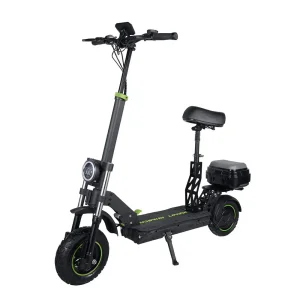
| 600W–1000W Urban Commuter | Brushless Rear Hub (Single/Dual) | 48V 10Ah–15Ah Lithium-ion | 25 – 45 km/h | 35 – 65 km | First/Last Mile Urban Commute, Consumer Retail |
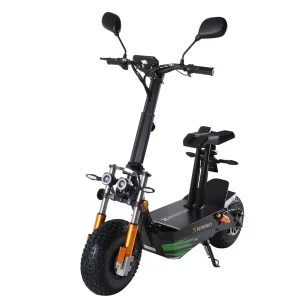
| 3000W Citycoco Cruiser | High-Torque Fat-Tire Rear Hub | 60V 20Ah–40Ah Removable Pack | 45 – 60 km/h | 60 – 100 km | Tourism Rentals, Lifestyle Cruiser, Urban Delivery |
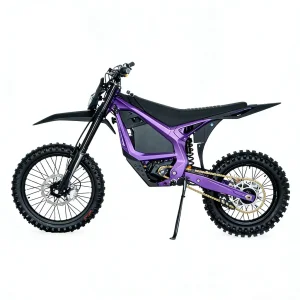
| 10kW–35kW E-Motorcycle | Mid-Drive PMSM / Liquid-Cooled | 72V–96V 40Ah–60Ah High-C Rate Pack | 90 – 130+ km/h | 100 – 160 km | Highway Commute, Off-Road Sport, Municipal Fleet |
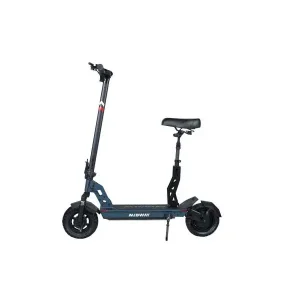
| 600W Folding Mobility Scooter | Differential Gear Hub / Transaxle | 48V 10Ah–20Ah Sealed Pack | 15 – 25 km/h | 30 – 50 km | Senior Mobility, Accessibility, Airport/Campus Transit |
How global importers mitigate quality risks, secure IP rights, and establish robust quality assurance protocols.
Understanding factory tiering is critical for margin optimization. Tier-1 manufacturers own their frame stamping dies, automated robotic welding cells, and SMD surface-mount lines for PCB controller production. Working directly with established Tier-1 suppliers like Yuema eliminates middleman markups, grants direct engineering support for custom tooling (OEM), and ensures strict adherence to Minimum Order Quantity (MOQ) flexibility for new market rollouts.
A low FOB price can be deceptive if uncertified components lead to high warranty claim rates or customs delays. A comprehensive TCO analysis must factor in: HS Code classification (e.g., HS 8711.60 for electric motorcycles/scooters), anti-dumping tariffs, container utilization rates (SKD vs. CKD packaging), spare parts allocation (typically 2-3% critical components included per container load), and land transport insurance for dangerous goods (Class 9 Lithium Batteries).
Ensuring full legal compliance across European Union, North American, and Asia-Pacific regulatory frameworks.
Personal Light Electric Vehicles (PLEVs) must comply with EN 17128:2021, covering structural integrity, maximum speed limiters (25 km/h), and electrical safety. High-power models and Citycocos require EEC/e-Mark (L1e/L3e category) approval for street-legal registration, alongside CE Machinery Directive (2006/42/EC) and RoHS 2.0 hazardous substance restrictions.
Importers to the United States and Canada must adhere to UL 2272 (Electrical Systems for Personal E-Mobility Devices) and UL 2271 for lithium battery packs. US Customs and CPSC strictly seize non-compliant imports. High-speed electric motorcycles must also carry DOT (Department of Transportation) compliance plates and VIN identifiers for state DMV titling.
Lithium battery shipping demands rigorous hazardous material certification. All factory shipments must be accompanied by UN38.3 Test Reports (covering thermal shock, vibration, impact, external short circuit, and overcharge resilience), Material Safety Data Sheets (MSDS), and official Dangerous Goods (DG) packaging certifications for ocean container logistics.
Integrating IoT hardware, CAN-BUS telemetry, and mobile cloud applications for modern commercial mobility services.
The convergence of telematics and light electric vehicles has transformed simple hardware products into connected mobility platforms. Leading Chinese factories now offer factory-installed IoT modules operating on 4G LTE-M / NB-IoT communication protocols, integrated with low-energy Bluetooth (BLE 5.2) and dual-mode GPS/Beidou positioning.
Replacing traditional analog wiring with automotive-grade Controller Area Network (CAN-BUS) systems allows real-time data exchange between the BMS, FOC controller, smart dashboard, and IoT gateway. Fleet managers gain visibility over cell voltage deltas, MOSFET temperatures, and real-time state-of-charge (SoC) metrics.
Over-The-Air (OTA) updates allow distributors to push firmware enhancements, calibrate throttle response curves, and patch security vulnerabilities across thousands of deployed scooters simultaneously. Dynamic geofencing algorithms automatically govern vehicle speed upon entering designated pedestrian zones.
Advanced security architecture incorporates 3-axis accelerometer motion detection, remote ignition kill-switches, and automated motor lock engagement upon unauthorized movement detection—reducing fleet loss rates by over 98% for commercial operators.
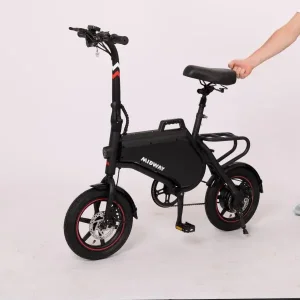
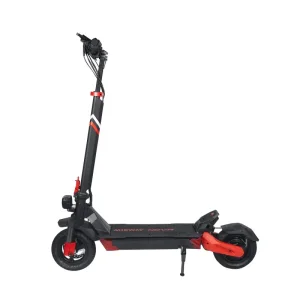
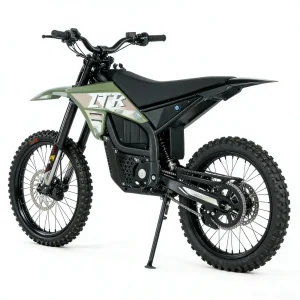
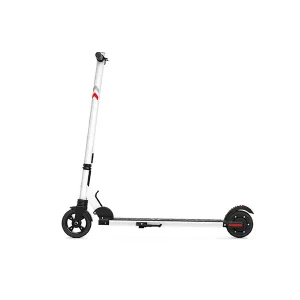
Explore our extended series of electric scooters, Citycocos, mobility vehicles, and high-voltage motorcycles ready for wholesale customization.
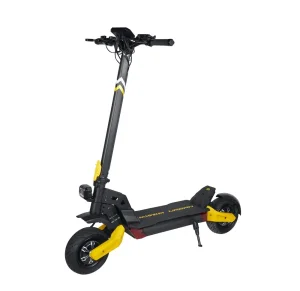
Anticipating the technological disruptions that will reshape the electric scooter manufacturing landscape through 2030.
Pilot production lines in China are already testing semi-solid state lithium batteries for commercial light electric vehicles. Yielding energy densities exceeding 350 Wh/kg while eliminating volatile liquid electrolytes, solid-state technology will effectively eradicate battery thermal runaway risks and double single-charge vehicle ranges by 2028.
For budget-conscious urban commuter scooters, Sodium-ion (Na-ion) cell chemistries present a game-changing alternative to lithium. Resistant to thermal breakdown and performing reliably down to -20°C with zero capacity degradation, Na-ion packs will significantly drive down wholesale bill-of-materials (BOM) costs.
Transitioning from silicon-based power electronics to compact Gallium Nitride (GaN) chargers enables 600W to 2000W fast charging in under 90 minutes. Compact GaN chargers reduce thermal dissipation by 40% and fit effortlessly into under-seat storage compartments.
Expert insights covering MOQs, OEM customization, tariffs, battery certifications, and factory inspection protocols.
