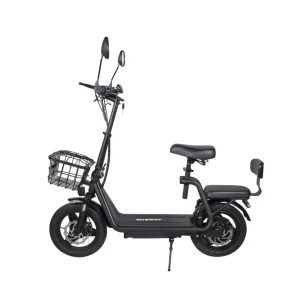
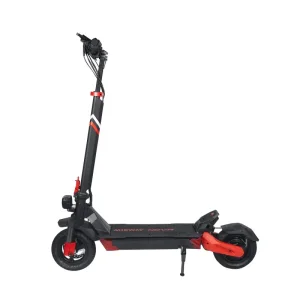
Direct factory-supplied electric mobility hardware engineered for maximum load capacities, extended range, and rigorous commercial use environments.
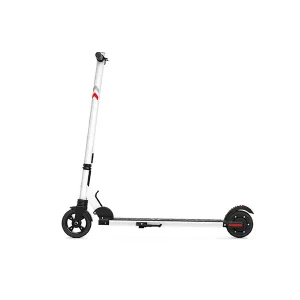
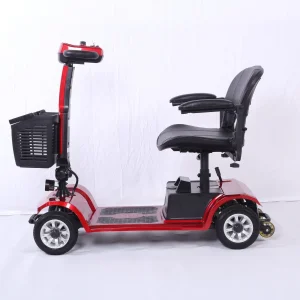
Analyzing macroeconomic drivers, demographic shifts, and evolving industrial mobility specifications worldwide.
The global market for Heavy Duty Mobility Scooters (often categorized under medical-grade bariatric mobility devices, industrial transport vehicles, and heavy-capacity electric personal mobility vehicles) is experiencing a structural paradigm shift. Driven by worldwide demographic aging, rising prevalence of mobility challenges, and the rapid expansion of commercial, industrial, and municipal micro-mobility management programs, international buyers—including healthcare distributors, commercial fleet operators, municipal transport contractors, and retail brands—are seeking higher payload thresholds, robust drive systems, and extended battery ranges.
Key Strategic Insight: Unlike standard lightweight electric kick scooters intended for short urban commutes, heavy-duty mobility scooters require reinforced chassis integrity, high-torque transaxle or hub motor configurations, dynamic braking response systems, and strict compliance with medical and industrial vehicle safety standards (such as EN 12184, CE, ISO 13485, and UL 2272).
Weight Capacity Rating
Max Incline Gradeability
Single Charge Range
Chinese Manufacturing Base
Global aging populations across North America, Western Europe, and Asia-Pacific have accelerated demand for bariatric mobility scooters capable of supporting payloads from 350 lbs up to 600 lbs without sacrificing structural safety or drive comfort.
Theme parks, international airports, mega-factories, resort complexes, and warehouse facilities are replacing traditional gasoline utility carts with zero-emission heavy-duty 3-wheel and 4-wheel electric scooters to improve operational mobility efficiency.
B2B importers prioritize factory-direct Chinese manufacturers who deliver modular, serviceable vehicles. Easy replacement of lithium battery modules, controllers, and transaxles significantly reduces long-term warranty costs for global importers.
Understanding the core components, structural mechanics, and electrical safety standards that define true heavy-duty mobility manufacturing.
Engineering a heavy-duty mobility scooter requires far more than merely scaling up frame dimensions. High load requirements exert intense mechanical stress on structural welds, gearboxes, braking assemblies, and power delivery circuits. Leading Chinese manufacturers utilize state-of-the-art computer-aided stress simulation (FEA) and automated robotic welding lines to ensure structural reliability under extreme operational cycles.
| Engineering Subsystem | Standard Entry-Level Specifications | China Heavy-Duty Industrial Standard | Commercial Advantage |
|---|---|---|---|
| Chassis Structure | 1.5mm Tubular Low-Carbon Steel | 2.5mm–3.5mm High-Tensile Alloy Steel Frame | Eliminates structural flexing under heavy loads up to 250kg; enhanced crash safety. |
| Motor & Drivetrain | 250W–350W Brushed DC Transaxle | 600W–3000W Heavy-Duty Brushless Hub / Direct Transaxle | Superior torque delivery, 25° hill-climbing, maintenance-free continuous operation. |
| Battery Technology | 24V 20Ah Sealed Lead-Acid (SLA) | 48V/52V/72V 15Ah–40Ah LiFePO4 / NMC Lithium Modules | 3x cycle life (2000+ cycles), 60% weight reduction, smart BMS protection. |
| Braking Architecture | Single Rear Mechanical Drum | Intelligent Electromagnetic Braking + Dual Hydraulic Discs | Automatic slope hold, failsafe emergency stopping, zero rollback on gradients. |
| Suspension System | Rigid or Basic Rear Spring | Quad-Independent Hydraulic Dampers + Heavy Coil Springs | Maximum shock absorption on rugged terrain, gravel, and unpaved municipal paths. |
Advanced Lithium Battery Management Systems (BMS) integrate multi-point thermal sensors, cell-balancing algorithms, short-circuit shutdown, and over-current protection to prevent thermal runaway under heavy torque demands.
Replacing harsh square-wave controllers with precision Field Oriented Control (FOC) sine-wave motor drivers provides ultra-smooth acceleration curves, silent motor operation, and maximized energy conversion efficiency.
High-density memory foam captain seats featuring 360-degree swivel, adjustable recline angles, reinforced armrests, and dual safety restraint mounts ensure long-duration comfort for all user body profiles.
Why Zhejiang and Jiangsu hardware manufacturing clusters provide unmatched price-performance ratios and rapid scalability for B2B procurement.
China produces over 80% of the world's electric mobility vehicles. Regional manufacturing hubs—most notably in Wuyi, Yongkang, and Taizhou in Zhejiang Province—form an interconnected industrial ecosystem. Within a 30-kilometer radius, factories have immediate access to raw steel suppliers, precision aluminum casting foundries, automated powder-coating plants, brushless motor specialists, and specialized wiring harness fabricators.
This geographical concentration creates substantial competitive benefits for international B2B buyers:
Mass raw material purchasing and continuous production lines lower per-unit manufacturing costs by 25% to 40% compared to fragmented production hubs elsewhere. This cost reduction translates directly into higher gross profit margins for global distributors.
With localized tooling, CNC machining centers, and 3D prototyping labs, Chinese manufacturers can transition custom OEM/ODM concepts into functional production samples in as little as 15 to 25 business days.
Leading suppliers implement automated multi-stage inspection routines: 100% chassis vibration testing, dynamic hill-climb overload verification, IPX4 waterproof spray testing, and lithium battery cell-matching protocols prior to packaging.
Proximity to Ningbo-Zhoushan Port and Shanghai Port—the world's busiest container hubs—reduces inland freight overhead and guarantees consistent container vessel shipping schedules to North America, Europe, Australia, and South America.
From healthcare mobility fleets to commercial venue logistics, explore where heavy-duty electric scooters create high operational value.
Specially engineered with wider seating bases, reinforced subframes, and high-torque braking to offer dignity, autonomy, and safe daily mobility for individuals with mobility challenges in assisted living facilities and private care.
Rental fleets operating in amusement parks, expansive botanical gardens, and holiday resorts require durable, weather-resistant heavy-duty scooters capable of 12+ hours of continuous daily operation on varied gradients.
International airport passenger assistance units utilize customized 3-wheel and 4-wheel heavy-duty mobility scooters with attached luggage racks to transport mobility-impaired passengers across multi-kilometer airport concourses efficiently.
Plant supervisors, maintenance technicians, and security staff employ heavy-duty mobility units equipped with rear cargo baskets to rapidly traverse large-scale manufacturing facilities and logistical distribution complexes.
National parks, coastal boardwalks, and historical city centers rent high-ground-clearance off-road mobility scooters to tourists, opening up rugged nature paths to elderly and mobility-restricted visitors.
OEM factories modify heavy-duty chassis to serve specialized functions: electric golf mobility cruisers, mobility scooters with medical oxygen tank mounts, and climate-shielded enclosed cabin mobility scooters.
A structured strategic roadmap for importing mobility hardware, ensuring regulatory compliance, supplier reliability, and seamless customs entry.
When sourcing heavy-duty mobility scooters from China manufacturers, establishing a structured Quality Assurance (QA) and audit protocol is essential to safeguarding brand reputation and fulfilling target-market legal standards. Professional B2B importers evaluate potential factory partners across five critical pillars:
Ensure the manufacturer holds verified documentation for destination markets: CE (EMC & LVD), RoHS, EN 12184 (for electrically powered wheelchairs and scooters), ISO 13485 (Medical Devices Quality Management), and UN 38.3 certification for lithium battery air and ocean transportation safety.
Evaluate whether the factory supports custom frame color options, branded vinyl decals, customized speed limiter software settings for localized regulations, tailored user manual translations, and bespoke packaging designed to withstand drop tests during parcel courier shipment.
Conduct third-party factory audits (e.g., SGS, TÜV, Intertek) or on-site inspections evaluating monthly output capacity, automated assembly line throughput, aging-test rooms for electronic controllers, and raw material warehousing practices.
Negotiate a standard 2% to 5% spare parts allocation package within bulk container orders (including spare controllers, throttle potentiometers, inner tubes, electromagnetic brake coils, and key switches) to streamline localized after-sales warranty support.
Key technological advancements driving next-generation heavy-duty mobility vehicles over the next decade.
Integration of 4G/GPS telematics modules allows commercial rental fleets and healthcare facility managers to monitor battery health status, track vehicle locations in real time, set geofenced speed zones, and perform remote diagnostic updates.
Smart controllers capture kinetic braking energy during downhill deceleration and store it back into the lithium battery pack, extending continuous operational range by up to 12% in hilly environments.
Full-color TFT LCD displays, keyless NFC card ignition, USB fast-charging ports for mobile devices, and ambient LED surround lighting enhance night visibility while offering an ultra-modern user interface.
Addressing crucial technical, legal, and operational questions for overseas procurement buyers and distributors.
Standard heavy-duty models produced by experienced Chinese factories typically support maximum user weights ranging from 150 kg (330 lbs) up to 250 kg (550 lbs). Bariatric specialized units can be engineered to support up to 300 kg (660 lbs) with custom reinforced double-wishbone frames and high-torque transaxles.
For standard models with custom branding, average production lead time is 25 to 35 calendar days following deposit confirmation and artwork approval. For new ODM orders requiring custom mold fabrication or frame redesign, initial tooling and sample approval take approximately 45 to 60 days.
For European Union markets, products require CE certification under the Medical Devices Regulation (MDR 2017/745) or Machinery Directive, EN 12184 compliance, and RoHS. For the United States, FDA Class II registration (for medical mobility devices), UL 2272 (electrical system safety), and UN 38.3 (for lithium battery air/sea freight) are generally required.
Batteries are manufactured and certified according to UN 38.3 standards and accompanied by MSDS (Material Safety Data Sheets) and Dangerous Goods (DG) certificates. They are packaged in UN-certified protective cartons with dangerous goods labeling, allowing seamless ocean freight customs clearance under IMO Class 9 regulations.
Yes. Chinese factories program controller firmware according to destination country regulations (e.g., UK 4 mph pavement / 8 mph road rules; EU 6 km/h or 15 km/h limits; US 10 mph limits). Speed limiters can be locked electronically or selected via a high/low speed rocker switch.
Standard factory MOQ for customized logo branding and packaging color boxes is typically 20 to 50 units (or one 20ft container load). For standard off-the-shelf inventory models, smaller sample trial orders starting from 5 to 10 units can be arranged.
Reliable OEM manufacturers provide a 2-year structural warranty on main chassis frames, and 12-month warranties on critical powertrain components including brushless motors, electronic controllers, transaxles, and lithium battery packs, supported by free replacement parts dispatch.
Explore our complete commercial and personal mobility scooter manufacturing range available for global distribution.