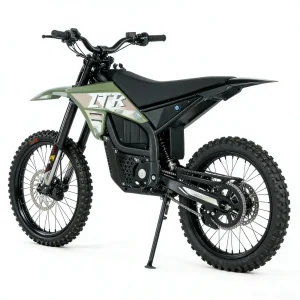
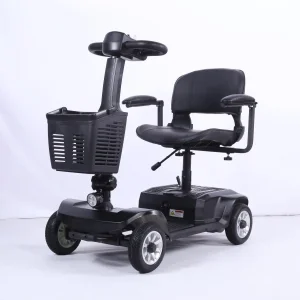
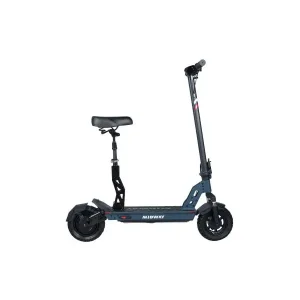
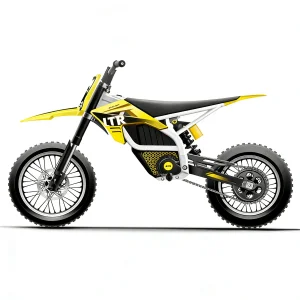
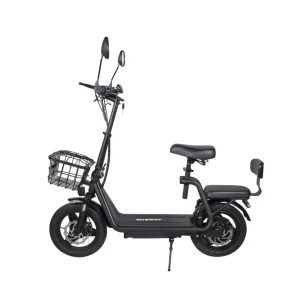
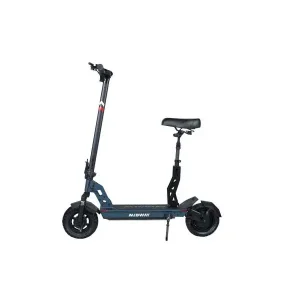
Explore high-performance urban commuting scooters, folding mobility units, and heavy-duty electric models manufactured to international standards.
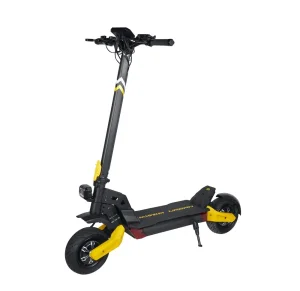
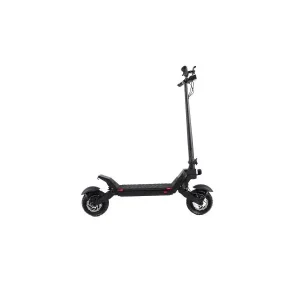
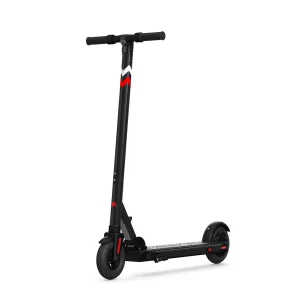
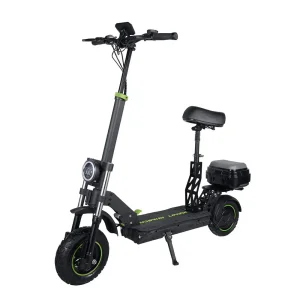
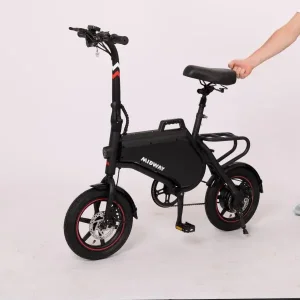
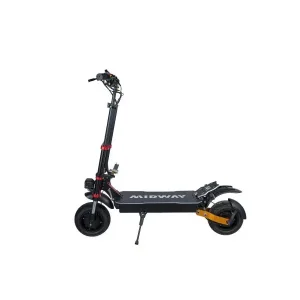
Strategic insight into China's position as the hub of global electric travel scooter research, manufacturing, and supply chain logistics.
The global demand for travel scooters—encompassing lightweight folding electric scooters, high-power urban commuting devices, and medical-grade adult mobility scooters—has experienced exponential growth over the past decade. Driven by urban congestion, stringent municipal carbon reduction targets, and an aging demographic requiring personal mobility assistance, international distributors and fleet operations are increasingly sourcing high-tech vehicles directly from specialized OEMs in China.
China accounts for over 80% of global electric micro-mobility manufacturing. This dominance is not merely based on cost efficiency, but on complete vertical integration. From primary lithium refining and specialized brushless motor manufacturing to automated frame welding and advanced battery management system (BMS) software, the Chinese industrial cluster—particularly centered in Zhejiang (Wuyi, Jinhua) and Jiangsu—provides an end-to-end ecosystem that drastically reduces time-to-market for international brands.
A granular look at the electro-mechanical components that define commercial-grade durability, rider safety, and thermal management.
Modern Chinese travel scooters utilize permanent magnet synchronous motors (PMSM) and outer-rotor hub designs. Operating at efficiency rates above 88%, these motors (ranging from 350W up to 10KW peak output) feature neodymium magnets (NdFeB) engineered to withstand stator temperatures exceeding 150°C without demagnetization.
Safety centers on cell selection (Class-A 18650/21700 cells from CATL, EVE, or LG) coupled with Smart BMS architectures. Integrated microcontrollers monitor individual cell voltage balance, short-circuit cutoffs, over-current protection, and thermal runaway prevention, communicating via CAN-bus or UART protocols.
Extruded 6061-T6 aircraft-grade aluminum alloy serves as the backbone for travel scooters. Rigidity tests mandate dynamic load testing of 120kg-150kg payloads across 100,000 vibration cycles. High-pressure die-cast folding hinges incorporate dual-stage lock mechanisms to ensure zero handle-post backlash during operation.
| Category Tier | Nominal Voltage / Capacity | Motor Configuration | Max Range (Km) | Key Target Application |
|---|---|---|---|---|
| Lightweight Folding Commuter | 36V 7.8Ah – 10.4Ah Lithium | 250W – 350W Front/Rear Hub | 25 – 40 km | First/Last Mile Urban Commute, Trunk Storage |
| High-Performance Dual-Motor | 48V – 52V 18Ah – 24Ah Lithium | Dual 600W – 1200W Motors | 50 – 85 km | Suburban Cruising, Steep Incline Urban Navigation |
| Heavy-Duty Mobility Scooter | 48V 20Ah – 40Ah Lead-Acid / LiFePO4 | 600W – 1000W Differential Gear Motor | 40 – 60 km | Elderly Transport, Medical Travel, Accessibility |
| Hyper-Scooter & Electric Motorcycle | 60V – 72V 30Ah – 50Ah High-Discharge | 3000W – 10KW Mid-Drive / Dual Motor | 90 – 140 km | Off-Road Exploration, High-Speed Rural Commute |
Evaluating the macroeconomic, logistical, and technological competitive edges provided by China's leading manufacturing hub.
By leveraging massive raw material throughput, standardized component sourcing, and localized supply pipelines, Chinese manufacturers reduce bill-of-materials (BOM) costs by 30% to 45% compared to European or North American assembly units.
Whether demanding custom frame colors, proprietary plastic injection tooling, tailored speed-governor firmware, or co-branded app interfaces, Chinese factories offer highly adaptable production lines tailored to B2B specifications.
Top-tier exporters operate under ISO9001 quality management systems. Equipment includes salt-spray corrosion chambers, battery drop-test rigs, waterproof testing booths (IPX5/IPX7), and dyno motor testers to eliminate DOA products.
Established suppliers navigate complex international freight procedures seamlessly, including MSDS battery documentation, UN38.3 shipping compliance, dangerous goods (DG) sea-freight packaging, and custom duty clearing (DDP/FOB/CIF).
Navigating mandatory international directives for importing electric scooters into Europe, North America, and Australia.
Entering overseas markets requires strict adherence to regional regulatory frameworks. Failure to comply can result in port seizures, heavy fines, or recall liability. Reliable Chinese travel scooter manufacturers support global distributors by maintaining updated test reports from accredited third-party laboratories (SGS, TUV, Intertek).
Imports into the EU require comprehensive CE marking, complying with the Machinery Directive (2006/42/EC), Low Voltage Directive (LVD), and Electromagnetic Compatibility (EMC). Additionally, light personal electric vehicles (PLEVs) must satisfy EN 17128:2020 safety standards and RoHS 2.0 chemical restriction compliance.
In the United States and Canada, lithium battery safety is governed by UL 2272 (Standard for Electrical Systems for Personal E-Mobility Devices). Electric travel scooters must also feature FCC Part 15 compliance for wireless modules, along with UN38.3 transport certification for lithium cell stability.
Seniors and medical travel mobility scooters must comply with medical device standards such as ISO 7176 series (governing static/dynamic stability, seating ergonomics, and brake efficiency) as well as FDA Class I/II clearance for North American distribution.
Understanding diverse consumer use-cases to strategically select product lines for targeted regional sales.
Modern commuters require ultra-portable, lightweight (under 15kg) folding scooters equipped with 350W motors and quick-folding stems. These units are ideal for multi-modal travel, effortlessly transitioning onto metro trains and fitting into apartment storage.
Travel mobility scooters designed for seniors feature 3-wheel or 4-wheel stability, electromagnetic braking systems (auto-brake when throttle is released), swivel chairs, and airline-approved detachable lithium battery packs (under 300Wh).
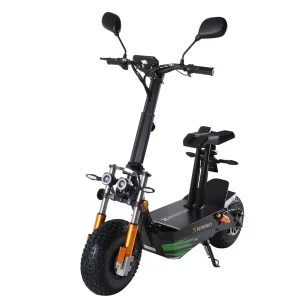
Heavy-duty, wide-tire scooters (such as Citycoco 1000W-2000W models) offer high comfort and ground clearance. Designed for tourist rental fleets, these models emphasize ruggedized frames, dual suspension, and long battery autonomy.
High-capacity cargo scooters integrated with extended footboards, rear carrier racks, and heavy-duty front shock absorbers serve food delivery riders and courier fleets demanding robust durability under continuous 12-hour operational cycles.
Key technological shifts reshaping the next generation of Chinese-manufactured travel scooters.
Future scooters incorporate embedded 4G/5G IoT modules, enabling real-time GPS tracking, remote geofencing, over-the-air (OTA) firmware updates, and app-based smartphone diagnostics for consumer and rental fleet management.
The transition toward Sodium-Ion (Na-Ion) cells and semi-solid-state lithium chemistry will lower raw material costs while drastically improving cold-weather discharge rates (-20°C retention above 85%) and fire safety profiles.
Miniaturized Electronic Anti-Lock Braking Systems (E-ABS) paired with traction control algorithms (TCS) and integrated turn-signal indicators are becoming standard features across mid-to-high tier travel scooters.
Answers to crucial commercial, technical, and shipping questions for global importers and brand buyers.
For standard factory models with basic laser logo customization, MOQs typically start at 50 to 100 units. For fully customized frame colors, unique deck molds, or custom plastic injection tooling, MOQs generally range from 200 to 500 units per order.
All battery packs exported from certified Chinese factories undergo rigorous UN38.3 testing, including altitude simulation, thermal tests, vibration, shock, external short circuit, and overcharge evaluations. Shipments are accompanied by updated MSDS reports, 1.2m drop test reports, and Dangerous Goods (DG) packaging certificates.
Factories standardly offer a 12-month warranty on main structural frames, brushless motors, and battery management systems (BMS). Key electronic components such as controllers and displays carry a 12-month warranty. Manufacturers typically provide 1%-2% free spare parts (brakes, tires, cables) with container shipments for localized warranty service support.
Structural engineering relies on finite element analysis (FEA) software during design. Production units undergo dynamic fatigue testing where a 120kg-150kg weight is loaded onto the deck while the chassis is subjected to 100,000 continuous impacts on a rolling drum test rig.
Yes. Firmware in the motor controller can be factory-programmed to lock maximum speeds (e.g., 20km/h for Germany/UK, 25km/h for general EU, or unlocked up to 60km/h for private land use). Speed limiters can also be wired to a hidden toggle switch or controlled via app configuration.
Explore high-power electric motorcycles, senior mobility scooters, and specialized commuting solutions.