Direct-from-factory production lines featuring advanced brushless powertrain engineering, Smart BMS integration, and ergonomic structural frames optimized for global commercial fleet and retail markets.
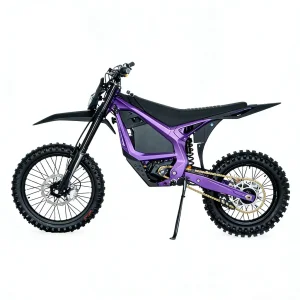
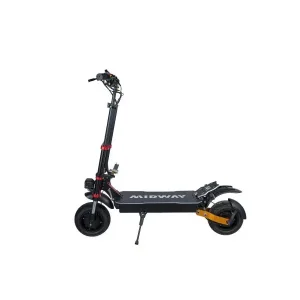
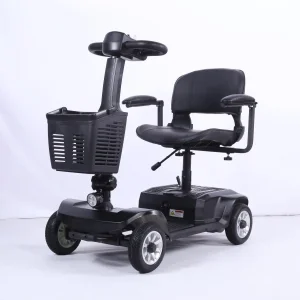
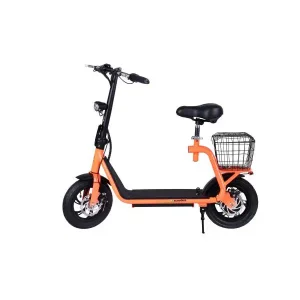
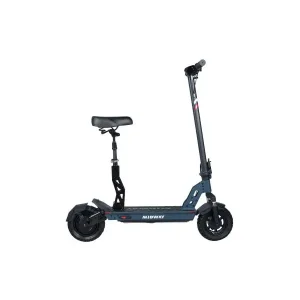
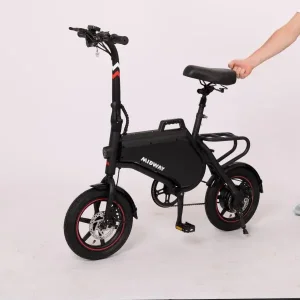
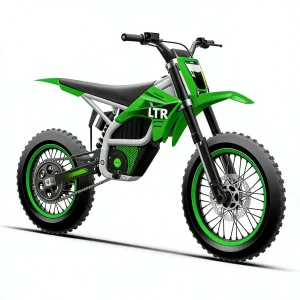
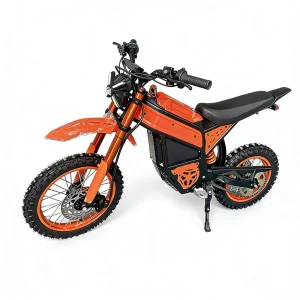
The global light electric vehicle (LEV) market has reached a critical pivot point in 2026. Buyers no longer evaluate China travel scooter manufacturers purely on unit price; modern procurement focuses heavily on BMS telemetry architecture, structural modularity, battery chemistry stability, and homologation readiness for localized markets.
As the hardware capital of the world, China's industrial micro-mobility sector—specifically clustered within the Zhejiang (Wuyi/Jinhua/Yongkang) corridor—produces over 80% of global travel scooters, adult mobility vehicles, Citycoco fat-tire variants, and lightweight electric motorcycles. The transition from legacy lead-acid systems to automotive-grade lithium-iron-phosphate ($LiFePO_4$) and nickel-manganese-cobalt ($NCM$) architectures has fundamentally redefined the longevity and safety profiles of China-made mobility products.
Traditional procurement checklists frequently overlook controller Field-Oriented Control (FOC) tuning curves, thermal runaway dispersion channels within battery packs, and structural fatigue resilience of quick-folding mechanisms. High-end Chinese manufacturers now employ automated robotic TIG welding, FEA (Finite Element Analysis) stress testing, and CAN-bus diagnostic protocols to deliver automotive-tier reliability.
Transitioning from trapezoidal wave controllers to high-efficiency Sinusoidal FOC vector controllers. Offers smooth torque delivery, noise mitigation under 50dB, and energy conversion efficiency rating above 88%.
Integrated Battery Management Systems with dual-MOSFET protection, over-current cutoff, thermal sensors, and optional IoT module connectivity for real-time mobile app telemetry and fleet lockouts.
Aircraft-grade 6061-T6 aluminum alloy frames combined with cold-drawn seamless steel tubing for heavy-duty models. Dynamic drop-tested and load-rated up to 200kg for rugged terrain stability.
The unmatched competitive edge of China travel scooter manufacturers stems from comprehensive industrial verticalization. Within a 50-kilometer radius in Zhejiang's manufacturing hubs, OEM factories source raw aluminum extrusions, precision CNC tooling, SMT circuit boards, custom wiring harnesses, and molded plastics with zero latency.
With dedicated 3D modeling, rapid mold building, and CAD stress simulations, Chinese tier-1 factories reduce initial prototype lead times from 90 days down to just 14 days. Brands can customize deck dimensions, handle height, battery capacities, and branded fairings with minimal tooling expenses.
Leading export factories execute 100% aging tests on battery packs, dynamic roller road testing for drivetrain vibration, waterproofing IPX5-IPX7 spray chamber validation, and salt-spray testing for anti-corrosion chassis coatings prior to container loading.
Travel scooters and mobility vehicles must adapt to diverse geographical environments, infrastructure standards, and user demographics across North America, Europe, Asia-Pacific, and Latin America.
| Target Region | Primary Application Scenario | Key Engineering Modifications | Required Compliance |
|---|---|---|---|
| Europe (EU/UK) | Last-mile urban commute, compact airline travel, low-emission zones | 25km/h speed limiters, EN17128 compliance, dual independent braking, IPX5 waterproofing | CE, EN 17128, RoHS, REACH, EEC/CoC |
| North America (US/CA) | Suburban mobility, long-range commuting, heavy-duty recreational riding | Higher power motors (500W-1500W), 48V/60V high-capacity batteries, wider decks, dual suspension | UL 2272 (Vehicle Safety), UL 2271 (Battery), FCC |
| Latin America & SEA | Rugged terrain travel, high-humidity cargo/passenger transport | 10-12 inch pneumatic off-road tires, reinforced steel fork suspension, heavy-duty dust seals | INMETRO, local road safety permits |
| Global Healthcare & Senior Mobility | Medical travel, cruise ship transport, indoor shopping accessibility | Airline-approved removable lithium packs (<300Wh), electromagnetic automatic braking, 360° swivel seats | ISO 7176, FDA Class II / CE MDD medical device |
Next-generation travel scooters are incorporating ultrasonic blind-spot sensors, front collision warnings, auto-throttling on steep slopes, and AI-driven predictive battery maintenance alerts via integrated cloud connectivity.
To combat lithium cost volatility and extreme cold performance degradation, top-tier Chinese manufacturers are trialing sodium-ion battery configurations, maintaining 85% capacity even at -20°C ambient temperatures.
Navigating customs homologation and local electrical safety legislation is often the single greatest barrier for international scooter importers. Established Chinese manufacturing partners provide comprehensive certification suites.
Critical electrical system and battery pack certification required for US and Canadian retail markets. Covers electrical, mechanical, and environmental hazard testing to eliminate thermal runaway risks.
Harmonized European standard for personal light electric vehicles (PLEV). Mandates specific structural fatigue thresholds, maximum operational speeds, dual braking systems, and optical reflector placements.
Mandatory dangerous goods transport documentation for lithium battery air and ocean freight export. Ensures battery cells pass thermal shock, vibration, overcharge, and external short circuit tests.
Key questions answered by industry experts regarding minimum order quantities, customization possibilities, quality assurance protocols, and shipping logistics.
Explore additional OEM/ODM models including high-torque Citycoco fat-tire models, high-speed electric motorcycles, and ultra-lightweight folding travel mobility scooters.
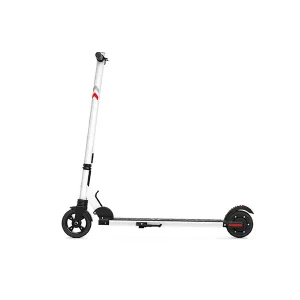
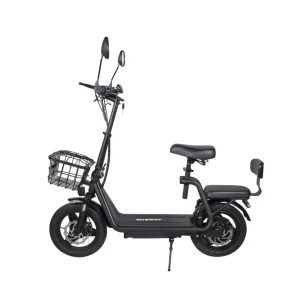
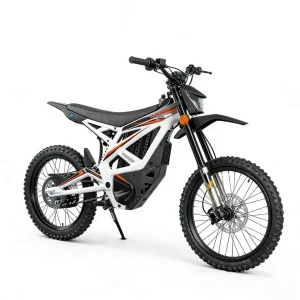
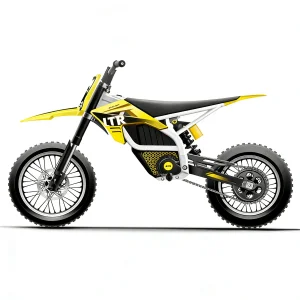
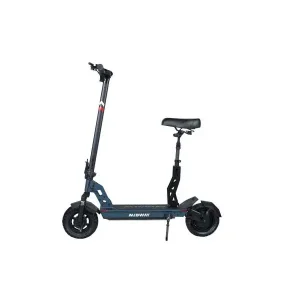
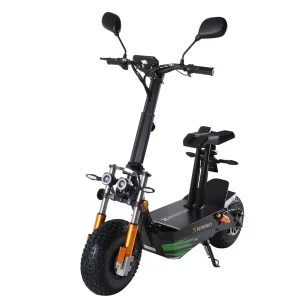
Before finalizing OEM contracts or placing full container orders, global buyers must complete a thorough multi-stage factory audit. Evaluating these critical operational metrics mitigates supply chain risks and ensures product compliance.
Verify whether the manufacturer controls its own SMT (Surface Mount Technology) assembly lines for motor controllers and BMS boards, or if they rely on third-party sub-assembly vendors. In-house controller manufacturing guarantees significantly higher software optimization and lower defect rates.
Inspect the factory's welding line. Premier factories utilize automated robotic arm TIG welding to maintain uniform bead depth and eliminate micro-fissures in aluminum joints. Demand dynamic load testing reports (minimum 100,000 vibration cycles under 150kg payload).
Request full traceability records for lithium-ion battery cells. Quality Chinese factories assign individual QR code tracking to every incoming cell, monitoring internal resistance, voltage variance, and capacity matching before assembling cells into final battery packs.
Ensure all test certificates (CE, EN 17128, UL 2272, UN 38.3) are issued by accredited third-party laboratories (such as SGS, TÜV, Intertek, or Dekra) with verifiable test report numbers rather than self-declaration certificates.
