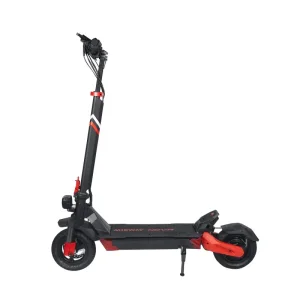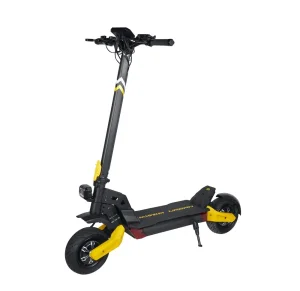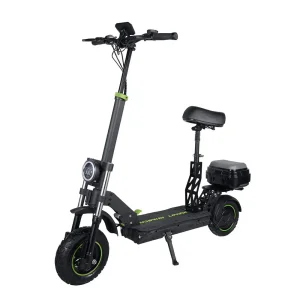
Historically engineered as singular personal transport for elderly or impaired individuals, mobility scooters have evolved into versatile macro-mobility units. Global procurement metrics reveal a sharp acceleration in orders for 2-person mobility scooters from commercial resorts, gated communities, rehabilitation centers, and municipal tourism operators. Buyers are prioritizing higher payload capacities (250 kg to 300+ kg), dual-motor torque configurations, and extended range lithium-ion power plants capable of handling multi-rider duty cycles over complex terrain.
From an industrial manufacturing perspective, building an authentic, high-reliability two-person mobility scooter requires significantly more than stretching a single-seat frame. It demands a redesigned structural chassis geometry, upgraded electromagnetic braking systems, high-torque transaxle gearboxes or dual hub motor assemblies, and advanced thermal management within the Battery Management System (BMS). Procurement directors must navigate factory qualifications to ensure suppliers meet ISO 7176, EN 12184, and CE medical/machinery safety mandates.
Over 16% of the global population will be aged 65 or older by 2050. The need for dual-passenger vehicles allows couples and caregivers to travel together safely without sacrificing independence or purchasing two separate devices.
Hospitality conglomerates and rental operators are adopting 2-person electric mobility scooters as sustainable zero-emission transport across expansive resort properties, botanical parks, and historical city tours.
Medical campuses, retirement villages, and assisted living facilities utilize double-seat scooters for staff-assisted patient transport, requiring heavy-duty chassis and medical-grade controller safety algorithms.
The core structural backbone of an industrial-grade 2-person mobility scooter utilizes cold-drawn high-tensile carbon steel tubing (Q235/Q355 grade) or high-strength aviation aluminum alloys. Frame deflection must be minimized under dynamic braking and cornering. Leading suppliers utilize Finite Element Analysis (FEA) to simulate multi-point weight distribution across both tandem (front-back) and side-by-side seating arrangements.
Powertrain selection dictates vehicle torque, hill-climbing ability, efficiency, and maintenance intervals:
| Specification Parameter | Standard Single-Seat Scooter | Heavy-Duty Tandem (2-Person) | Executive Side-by-Side (2-Person) |
|---|---|---|---|
| Frame Material | Standard Tubular Steel | Reinforced Q355 High-Tensile Steel | Automotive Alloy Chassis / Steel Frame |
| Rated Payload Capacity | 120 kg - 150 kg | 220 kg - 280 kg | 250 kg - 350 kg |
| Motor Configuration | 400W - 600W Transaxle | 1000W - 1500W Gearbox Transaxle | Dual 1200W Hub Motors / 2000W Transaxle |
| Braking System | Single Electromagnetic Brake | Dual Rear Electro-Braking + Front Disc | 4-Wheel Hydraulic Disc + Electro-Brake |
| Battery System | 24V 35Ah Lead-Acid / Lithium | 48V 40Ah - 60Ah LiFePO4 / NMC | 60V / 72V 50Ah - 100Ah Lithium-Ion |
| Climbing Capability | 8° to 10° | 12° to 15° | 14° to 18° |
| Compliance Certification | CE, ISO 7176 | CE, EN 12184 Class C, ISO 7176 | CE, FDA Class II (Select Models), DOT/EEC |
North American buyers prioritize heavy-duty build quality, wider ergonomic seats (20"+ width), high ground clearance for suburban and park trails, and strict UL 2272/UN38.3 lithium battery safety certifications.
European importers demand EN 12184 Class C (outdoor mobility) certification, precise speed limiters (6 km/h, 10 km/h, or 15 km/h depending on pavement regulations), and environmental RoHS/REACH compliance.
Rapid expanding luxury resorts, airport terminals, and eco-tourism destinations in UAE, Saudi Arabia, and Southeast Asia procure 2-person mobility scooters equipped with sunshades, dust protection, and fast-charging capabilities.
Leading suppliers provide comprehensive turnkey white-label and ODM solutions for global commercial clients:
Specifies requirements and test methods for electrically powered wheelchairs and mobility scooters. Covers dynamic stability on slopes, obstacle climbing performance, impact strength, and brake effectiveness.
All lithium-ion battery packs (LiFePO4 / NMC) must undergo stringent UN38.3 transport testing (thermal, shock, vibration, overcharge) and hold MSDS / CE certification for global sea and air freight safety.
Ensures the vehicle’s electronic speed controller (e.g., Curtis, Dynamic, or Proprietary Sine-Wave controllers) does not cause or suffer from electromagnetic interference with nearby medical devices or communication radios.
Transitioning from traditional AGM/Lead-Acid to Lithium Iron Phosphate (LiFePO4) extends battery lifespan to 3,000+ charge cycles, reduces vehicle weight by 40%, and enables real-time Bluetooth/CAN-bus cell monitoring.
Embedded 4G/GPS telematics modules allow fleet operators to track real-time locations, monitor battery state of health (SoH), receive remote diagnostic error codes, and issue over-the-air (OTA) firmware updates.
Advanced sine-wave controllers recover kinetic energy during downhill deceleration and braking, returning up to 12% energy to the battery pack, complemented by integrated solar canopy panels for auxiliary trickle charging.