Explore our industrial-grade, commercial 2-wheel electric scooters and mobility solutions designed for worldwide distribution and fleet deployment.
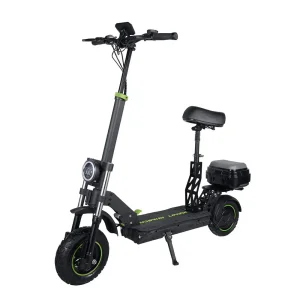
Analyzing market dynamics, fleet adoption trends, and commercial transformation across international supply chains.
The global transition toward sustainable urban mobility has elevated 2-wheel electric scooters from casual personal transport devices to critical commercial infrastructure assets. As metropolitan zones enforce stringent low-emission mandates, enterprise logistics operators, sharing platform integrators, and commercial distributors are seeking tier-1 manufacturing partners capable of delivering scalable, robust, and certified electric mobility hardware.
Securing an optimized supply chain through an established wholesale 2 wheel electric scooter supplier & suppliers network provides commercial enterprises with a decisive structural advantage. Modern micro-mobility manufacturing requires a synthesis of structural integrity, precision battery integration, advanced motor control algorithms, and comprehensive international regulatory compliance. China's industrial manufacturing ecosystem—specifically specialized production hubs in Zhejiang—remains the epicenter for high-efficiency, cost-optimized e-scooter production.
Modern enterprise procurement teams must evaluate suppliers not merely on unit cost, but on Total Cost of Ownership (TCO), cellular battery health telemetry, controller thermal dissipation indices, and spare-parts interchangeability ratios. Tier-1 suppliers engineered for enterprise deployment design frame architectures for over 15,000 km of operational lifecycle endurance.
How B2B importers, municipal fleets, and regional brand owners structure resilient supply contracts.
Enterprise procurement demands multi-tiered component sourcing protection. Leading manufacturers mitigate supply disruption risks by maintaining dual-sourcing channels for key sub-assemblies including MOSFET controllers, lithium cells (LG/Samsung/EVE), and structural aluminum alloys.
Initial acquisition cost represents only 35% of an industrial e-scooter's lifetime expense. Top suppliers build modular chassis designs that allow field technicians to replace wear-and-tear components (tires, brake pads, controllers, LCD displays) in under 12 minutes, reducing downtime by up to 60%.
Commercial buyers require private-label branding, custom firmware speed limiters, customized throttle curves, integrated IoT tracking modules, and region-specific charger plugs. Factory-direct suppliers provide full engineering assistance from CAD validation to mold production.
| Performance Metrics | Consumer Grade (Retail) | Commercial / Fleet Grade (B2B Supply) | Enterprise Advantage |
|---|---|---|---|
| Frame Material | Standard Aluminum 6061-T4 | Reinforced 6061-T6 / High-Tensile Steel | +200% Fatigue Resistance |
| Motor Peak Efficiency | 82% - 85% Efficiency | 90% - 94% Brushless Hub Vector Control | Lower thermal load, extended range |
| BMS Protection Level | Basic Overcharge / Short Circuit | CAN-Bus Smart BMS 3.0 (Cell Balancing) | Real-time telemetry & 1000+ lifecycle cycles |
| Water Ingress Rating | IPX4 (Splash Proof) | IPX6 Chassis / IPX7 Battery Enclosure | All-weather commercial operational uptime |
| Maintenance Interval | Every 500 km | Every 3,500 km (Modular Design) | Significantly reduced field service OPEX |
Dissecting the motor electronics, battery management systems, and smart telemetry driving modern 2-wheel electric mobility platforms.
Modern commercial scooters utilize Field-Oriented Control (FOC) sine-wave controllers paired with high-torque Brushless DC (BLDC) hub motors ranging from 150W commuter hubs up to 5000W dual-motor configurations. The integration of high-grade N45SH neodymium magnets guarantees thermal stability up to 150°C, eliminating magnetic degradation during steep incline climbs or prolonged continuous usage.
Energy density and safety remain paramount. Modern factory platforms incorporate high-density 18650 and 21700 lithium-ion ternary or LiFePO4 chemistry cell arrays. Multi-channel Smart Battery Management Systems (BMS) actively monitor individual cell voltage, differential temperatures, state-of-charge (SoC), and state-of-health (SoH), providing automated isolation in the event of current spikes or thermal anomalies.
Through Finite Element Analysis (FEA) testing, chassis designs are optimized to withstand dynamic impacts exceeding 300 kg load stress. Advanced suspension setups—combining dual hydraulic front forks with adjustable rear spring dampers—absorb high-frequency road vibrations, protecting internal electronic control units (ECUs) and improving rider ergonomics during long commercial shifts.
Next-gen commercial scooters come pre-wired for IoT modules running cellular 4G LTE-M / NB-IoT connectivity coupled with GPS/GLONASS positioning. Fleet managers receive automated telemetry regarding geo-fencing compliance, remote locking controls, real-time diagnostic error codes, and predictive battery degradation analytics via cloud APIs.
How tailored 2-wheel electric scooter configurations solve operational challenges across diverse commercial sectors.
Optimized for food delivery platforms and urban parcel couriers. Features heavy-duty cargo rack mountings, dual swappable battery bays for continuous 24/7 operation, and puncture-resistant 10-inch solid or tubeless pneumatic tires.
Built specifically for municipal scooter-sharing schemes. Includes hidden cable routing, tamper-proof electronic stem locks, integrated IoT units, IPX7 waterproof housing, and enforced speed governance compliant with municipal laws.
Designed for large manufacturing complexes, airports, and warehouse logistics hubs. Low-speed high-torque 250W-500W platforms with high payload capacities allow staff to travel efficiently across wide indoor and outdoor facilities.
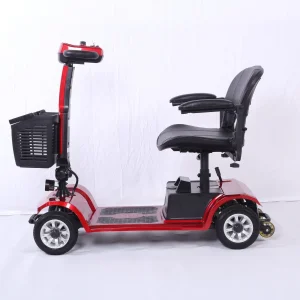
Specialized 3-wheel and 4-wheel or wide-deck 2-wheel scooters equipped with intelligent automatic electromagnetic braking, ergonomic seating setups, and ultra-low step-through decks ensuring safe personal mobility for aging demographics.
Ensuring frictionless international trade and customs clearance through comprehensive testing and certification protocols.
Full compliance with EN 17128:2020 (Light motorized vehicles for transportation of persons), CE Directive 2006/42/EC on Machinery, and RoHS 2.0 environment standards. All lithium packs carry UN38.3 transport testing certification and MSDS documentation for seamless sea and air freight entry into EU ports.
Engineered to meet UL 2272 (Standard for Electrical Systems for Personal E-Mobility Devices) and UL 2271 (Batteries for Use in Light Electric Vehicle Applications). Adherence to CPSC (Consumer Product Safety Commission) structural guidelines and FCC Class B electromagnetic radiation limits.
Manufacturing facilities operating under strict ISO 9001:2015 quality management systems. Every wholesale batch undergoes standardized testing protocols: 100% automated electrical high-voltage insulation tests, dynamic brake distance verification, 50-kilometer salt-spray corrosion chamber testing, and computerized chassis vibration fatigue analysis.
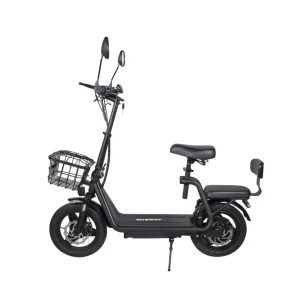
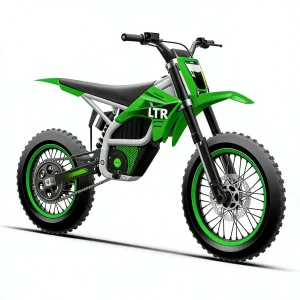
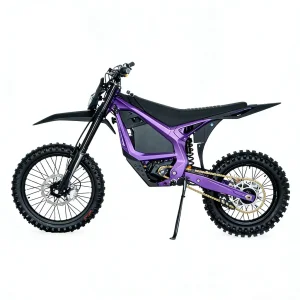
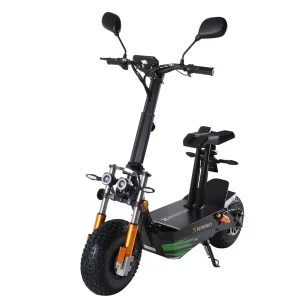
Review additional high-power, specialized, and commuter models available for volume wholesale ordering.
In-depth technical, regulatory, and commercial answers for professional procurement teams.
