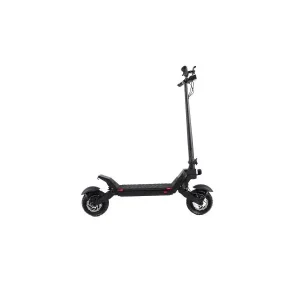
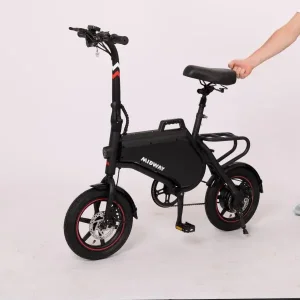
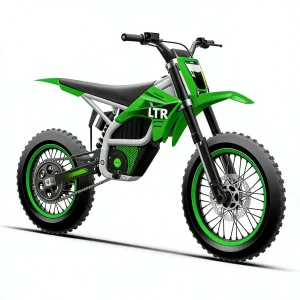
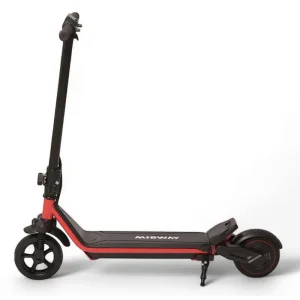
Explore our certified, factory-direct electric scooters, mobility vehicles, and high-power electric motorcycles engineered for global distributors.
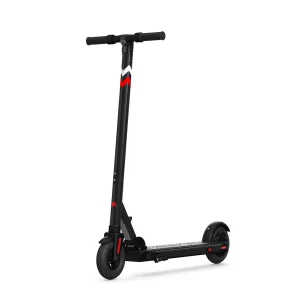
The global micro-mobility sector is undergoing a massive structural shift. While standard 15 mph (25 km/h) entry-level kick scooters dominated early urban last-mile sharing networks, international B2B importers, commercial fleet operators, and regional distributors are increasingly pivoting toward 30 Mph (approx. 48–50 km/h) high-speed electric scooters. This speed tier represents the ideal equilibrium between commuter efficiency, suburban roadway adaptability, safety ergonomics, and total operating economy.
As suburban sprawl increases and urban low-emission zones (LEZs) expand across Europe, North America, and Latin America, commuters require vehicles capable of keeping pace with vehicular traffic on secondary arteries without requiring full motorcycle licensing registration in many jurisdictions. Consequently, demand for 48V–60V powertrain systems rated between 1000W and 2000W nominal output has experienced an estimated 28.4% CAGR over the past three fiscal cycles.
Sustaining a top velocity of 30 Mph under real-world payload dynamics requires sophisticated electro-mechanical engineering. High-performance OEM scooter manufacturing demands deep synergy across powertrain components, thermal mitigation, and frame topology.
To safely sustain 30 Mph speeds without excessive thermal voltage sag, premium China factories utilize 18650 or 21700 High-Drain Lithium Nickel Manganese Cobalt (NMC) cells or stable LiFePO4 configurations. Integrated Smart Battery Management Systems (BMS) monitor per-cell voltages, over-current discharge thresholds, and multi-point temperatures via integrated NTC sensors, transmitting real-time telematics via CAN-bus or UART protocols.
Dual-motor configurations (e.g., dual 1000W motors) or single high-torque 1200W–2000W rear hub motors utilize 45H/50H neodymium magnet stators. Coupled with 12-MOSFET or 18-MOSFET Sine-Wave Field-Oriented Control (FOC) vector controllers, energy efficiency exceeds 88% while delivering whisper-quiet acceleration and precise E-ABS regenerative braking response.
Vehicle structural integrity at 30 Mph is paramount. Professional manufacturers execute robotic TIG welding on heat-treated 6061-T6 aluminum or high-tensile carbon steel chassis. Reinforced steering stems, heavy-duty folding mechanisms with dual clamp locks, and anti-wobble geometry eliminate high-speed speed oscillations (speed wobble).
Stopping distance from 30 Mph must comply with international safety margins (under 6 meters). Fully hydraulic dual-piston oil brakes combined with ventilated 140mm/160mm stainless steel rotors deliver robust braking force. Long-travel front hydraulic forks and rear dual spring/oil shock absorbers damp urban vibration and preserve tire traction.
China remains the undisputed epicenter of global e-mobility manufacturing, producing over 85% of all light electric vehicles worldwide. For international B2B buyers—ranging from regional wholesalers and brand owners to commercial logistics fleets—partnering directly with tier-1 China factories like WuYi YueMa Leisure Articles Co., Ltd. (operating in the Zhejiang industrial hub) grants unparalleled competitive advantages:
From local silicon steel stamping and motor coil winding to battery cell synthesis and precision CNC extrusion, China's industrial clusters eliminate component lead-time bottlenecks and reduce freight logistics overhead.
Mass-scale production capacity allows China suppliers to procure raw materials at wholesale scale. This direct cost efficiency is passed to international B2B partners, protecting gross profit margins of 30%–45%.
Engineers can rapidly modify frame geometry, adjust controller firmware settings (speed capping to 25km/h or unlocking to 50km/h), apply customized silk-screen branding, and integrate IoT modules within 15-day prototyping cycles.
30 Mph electric scooters serve diverse global application scenarios beyond personal leisure. Factory-customized vehicle builds cater to targeted B2B industry requirements:
In regions with sparse public transport infrastructure (e.g., North American suburbs, Middle Eastern compounds), lightweight 15 mph scooters are inadequate. A 30 Mph scooter provides the speed necessary to safely navigate suburban secondary roads and hill climbs up to 30-degree inclines.
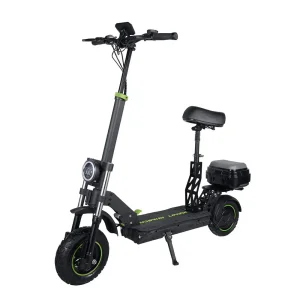
Logistics operators utilize reinforced 30 Mph scooter chassis fitted with rear cargo racks, thermal delivery boxes, and dual battery swap enclosures. Speed reduces delivery cycle times by 35%, maximizing operator earning potential.
Corporate campuses, seaport terminals, and manufacturing complexes deploy fleet-managed 30 Mph scooters equipped with RFID access controls and IoT GPS tracking to enable rapid transport across expansive facilities.
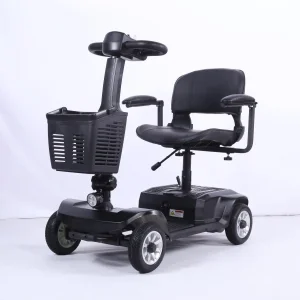
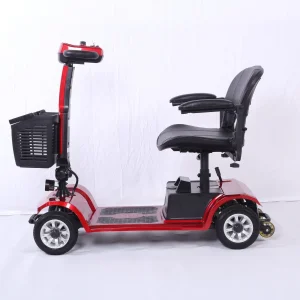
Heavy-duty 3-wheel and 4-wheel mobility variants (such as YUEMA mobility series) utilize specialized high-torque 600W–1000W gearboxes to deliver safe, stable terrain traversal for mature riders and personal utility applications.
Comparing performance metrics across standard urban, high-speed 30 Mph, and high-power motorcycle tiers:
| Vehicle Class | Motor Configuration | Battery Voltage & Cap. | Top Speed | Max Range | Target B2B Market |
|---|---|---|---|---|---|
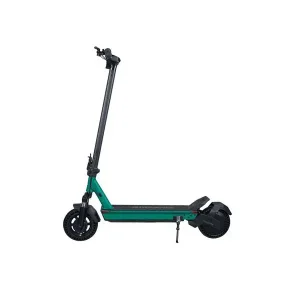
| Urban Light | 350W – 600W Single Hub | 36V / 48V 10Ah - 15Ah | 15 – 20 Mph (25–32 km/h) | 20 – 35 km | First-mile urban commuters, retail entry level |
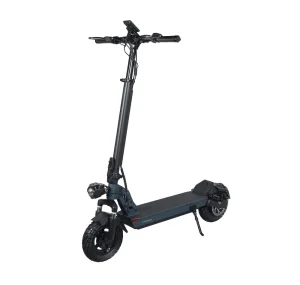
| High-Speed Cruiser | 1000W – 2000W Single/Dual | 48V / 60V 20Ah - 30Ah | 30 Mph (48–50 km/h) | 50 – 85 km | Suburban commuters, delivery fleets, OEM brand catalog |
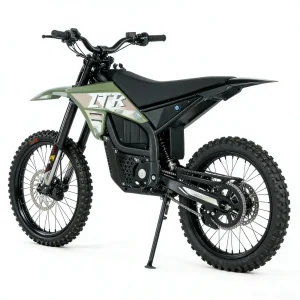
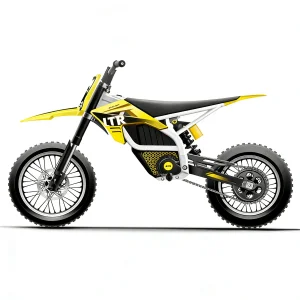
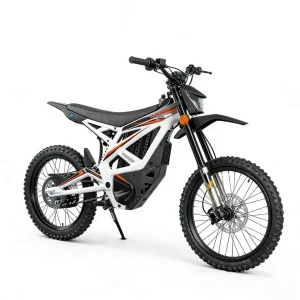
| Hyper-Performance / E-Moto | 4000W – 10000W Dual / Mid-Drive | 72V 40Ah - 60Ah | 50 – 70 Mph (80–110 km/h) | 90 – 140 km | Off-road enthusiasts, motorcycle distributors |
Importing high-speed electric scooters requires absolute adherence to regional legal frameworks and quality assurance protocols to mitigate operational risk.
Before issuing purchase orders, enterprise buyers must verify factory compliance documentation. Premier Chinese factories maintain comprehensive certification portfolios:
To eliminate defect rates in mass production, direct factory suppliers enforce strict three-stage inspection workflows:
100% testing of incoming lithium cells, BMS PCBs, and motor stators. X-ray inspection of chassis structural welds.
Automated assembly line testing including dyno load testing, waterproof IPX5/IPX7 chamber isolation testing, and wiring harness stress analysis.
Full road acceleration, 30 Mph speed validation, thermal dissipation checks, and drop-box packaging verification prior to container sealing.
Key procurement queries answered by our senior engineering and export logistics team:
Standard factory MOQ for custom branded 30 Mph electric scooters starts at 50 to 100 units for logo branding and color customization. Full structural ODM frame modifications typically require 200–500 units or a 20ft container load.
Yes. Our controllers feature multi-mode firmware speed-limiting functions. Vehicles can be factory-restricted to 15 mph (25 km/h) to meet local street-legal regulations, with speed-limit toggles or app-enabled unlocking for 30 Mph off-road/private property operation.
Standard production cycles range from 25 to 35 calendar days following sample approval and deposit confirmation. Peak season order lead times may extend to 40 days.
We supply 1% to 2% complimentary wearing spare parts (controllers, tires, brake pads, levers) with every bulk container shipment. Core components (motor, frame, battery) carry a 12-to-24 month factory warranty.
Explore additional high-demand models available for direct container procurement, distributor catalog distribution, and private label projects.