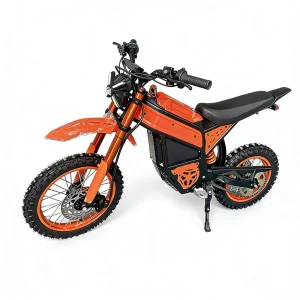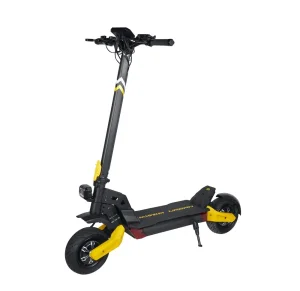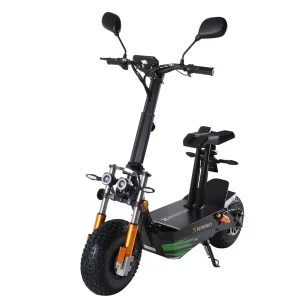
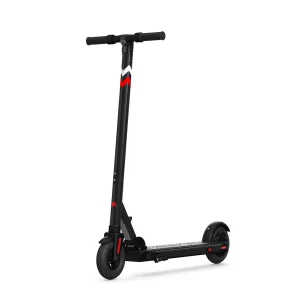
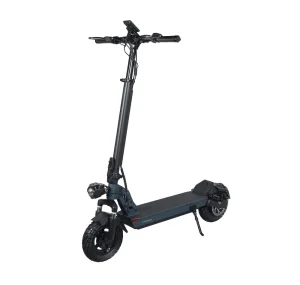
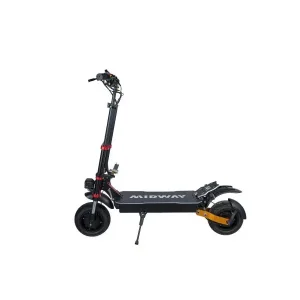
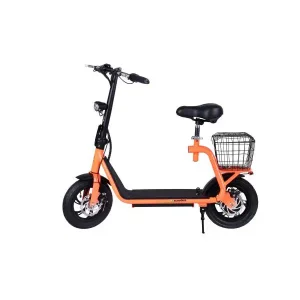
The global light electric vehicle (LEV) sector is experiencing a paradigm shift driven by urban congestion, stringent carbon-neutrality mandates, and rapid advancements in high-power brushless DC (BLDC) powertrains. Within the B2B commercial transport, last-mile delivery, and recreational rental verticals, Wholesale Citycoco Electric Scooter 3000w platforms have emerged as the benchmark for heavy-duty, high-torque micro-mobility.
Unlike standard low-power commuter scooters (250W–500W) designed purely for flat urban pavement, the 3000W Citycoco architecture bridges the gap between lightweight electric kick-scooters and full-sized electric motorcycles. Featuring ultra-wide pneumatic fat tires (typically 18x9.5-8 inches or 225/55-8), heavy-gauge steel tubular frames, and high-voltage 60V–72V power plants, these vehicles offer unparalleled stability, hill-climbing capability (up to 30° gradients), and payload capacities exceeding 200kg.
For B2B buyers—including regional distributors, fleet operators, e-commerce brand owners, and OEM importers—sourcing 3000W Citycoco scooters directly from Tier-1 Chinese manufacturers and certified manufacturing hubs (such as Wuyi and Yongkang in Zhejiang Province) represents a high-margin business opportunity. However, navigating supplier capabilities, technical specs, regulatory compliance (such as EEC/COC homologation), and quality control requires an expert understanding of the industry's supply chain matrix.
3000W Citycoco platforms yield a 65% lower operating cost over 36 months compared to 125cc gas scooters, factoring in maintenance, fuel elimination, and regenerative braking pad preservation.
Engineered for modular utility attachments, including rear cargo delivery boxes, dual-battery long-range pans, and heavy-duty dual-suspension setups for rugged terrain.
Rising consumer interest in high-speed, wide-tire cruiser aesthetics in Europe, North America, and Australia has expanded the market beyond fleets into lifestyle retail.
To evaluate a wholesale 3000W Citycoco supplier, engineering managers and sourcing directors must look beyond surface aesthetics. The structural integrity, power efficiency, and long-term reliability of a Citycoco scooter depend on four core subsystem assemblies:
The heart of the 3000W Citycoco is a direct-drive outer-rotor BLDC hub motor integrated within the rear wheel rim. Tier-1 factories utilize 35H or 40H high-grade magnetic steel stators (Neodymium Iron Boron, NdFeB) paired with 99.9% oxygen-free copper windings. This configuration ensures an energy efficiency rating exceeding 88% while keeping thermal dissipation manageable during sustained high-load hill climbs.
| Specification Parameter | Standard 1500W-2000W Citycoco | Industrial Grade 3000W Citycoco | Heavy-Duty Commercial 3000W Platform |
|---|---|---|---|
| Operating Voltage | 60V DC | 60V / 72V DC | 72V High-Voltage Architecture |
| Peak Motor Torque | 75 Nm - 90 Nm | 110 Nm - 125 Nm | 130 Nm - 145 Nm |
| Top Speed Capability | 40 - 45 km/h | 60 - 65 km/h | 65 - 75 km/h (Derestricted) |
| Climbing Capacity | 18 - 20 Degrees | 25 - 30 Degrees | 35+ Degrees (Dual Motor Optional) |
| Controller Current Limit | 35A - 45A Sine Wave | 55A - 65A FOC Controller | 75A - 90A Programmable Vector Controller |
| Ingress Protection (IP) | IP54 Water Resistant | IP65 Motor & Harness | IP67 Sealed Powertrain & Battery Box |
Energy density and cycle longevity are dictated by the lithium chemistry employed. Leading 3000W Citycoco manufacturers offer two primary configurations:
The Battery Management System (BMS) must feature passive or active cell balancing, over-current protection, short-circuit protection, high-temperature cutoff (above 65°C), and low-temperature charge prevention.
Cheap market knock-offs often use low-cost square wave controllers that produce harsh motor noise, rapid heat accumulation, and jerky acceleration. Professional-grade 3000W Citycoco platforms mandate Field Oriented Control (FOC) Sine Wave vector controllers. FOC controllers deliver smooth torque response, silent operational acoustics, regenerative braking (E-ABS), and up to 15% greater energy conversion efficiency.
When sourcing 3000W Citycoco electric scooters at scale, commercial buyers face distinct challenges regarding supply chain transparency, quality consistency, and logistics optimization. Establishing a robust sourcing framework involves evaluating factories across several critical dimensions:
Factory-direct suppliers must provide private label customization, including custom frame powder coating, laser-engraved branding on wheel hubs, custom LCD display boot screens, and tailor-made packaging cartons with customer SKU coding.
To optimize container packing density and mitigate import tariffs in countries with high CBU (Completely Built Up) duty rates, Tier-1 factories support SKD (Semi-Knocked Down) and CKD (Completely Knocked Down) packaging with complete assembly documentation.
Every batch must undergo strict QA protocols: 100% automated battery pack aging tests, frame stress & weld ultrasonic testing, chassis salt-spray corrosion testing, and dynamic roller dyno bench tests prior to export packaging.
WuYi and Yongkang in Zhejiang Province represent the industrial epicenter of global Citycoco and light electric vehicle production. Procuring from manufacturers situated within this geographical cluster grants B2B buyers distinct supply chain advantages: immediate access to high-volume steel tube bending plants, specialized aluminum rim foundries, local brushless motor winders, and dedicated lithium battery assembly facilities. This localized ecosystem dramatically reduces component lead times and enables highly competitive FOB prices.
Road-legal 3000W Citycocos in the EU require EEC homologation under L1e-B (25-45 km/h speed limited) or L3e-A1 (motorcycle category for >45 km/h). Each unit must be supplied with an official Certificate of Conformity (COC) tied to a unique VIN for VIN-stamping and local license plate registration.
In the US and Canada, road legality is governed at state/provincial levels. Battery packs and charging hardware must comply with UL 2271 (light EV batteries) and UL 2272 or UL 2849 safety standard certifications to clear customs and fulfill commercial liability insurance prerequisites.
International sea freight (IMO Danger Class 9) demands full compliance documentation: UN 38.3 test reports, Material Safety Data Sheets (MSDS), and strict UN-approved drop-tested hazard packaging for all standalone and equipment-integrated battery shipments.
Sustaining commercial profitability in the electric mobility sector requires more than transactional inventory acquisition. B2B distributors and fleet operators require comprehensive post-purchase infrastructure and localized support systems.
Tier-1 factories provide 2%–3% wear-and-tear replacement parts kits (controllers, throttles, brake pads, LED lights, relays) bundled directly inside every full container load (FCL).
Optional OEM integration of 4G/GPS telematics modules enabling remote fleet monitoring, geofencing, battery state-of-charge (SoC) tracking, and remote ECU disable commands for rental operators.
Industrial waterproof quick-disconnect harnesses (IP67) allow dealer mechanics to replace throttles, displays, or brake sensors in under 5 minutes without soldering.
Dedicated B2B tech support providing schematic diagrams, diagnostic codes, troubleshooting manuals, and factory-backed 12-to-24 month warranty coverage on core components.
As the light electric vehicle industry matures, 3000W Citycoco platforms are evolving rapidly through technological convergence. Manufacturers are actively integrating next-generation innovations to increase performance efficiency and meet evolving consumer demands:
Sodium-ion (Na-ion) battery chemistries are emerging as a cost-effective alternative to lithium. Offering exceptional cold-weather operating performance (-20°C retention >85%) and lower raw material costs, Na-ion packs will enter mainstream wholesale options by 2026.
Next-generation FOC vector controllers integrated with AI algorithms continuously analyze phase current anomalies, battery internal resistance shifts, and thermal spikes to alert riders and fleet operators prior to hardware failure.
Strict European battery passport directives will mandate full supply chain carbon auditing. Forward-thinking manufacturers are implementing digital passports tracking cell origins, recycled cobalt/lithium content, and clean-energy factory production.