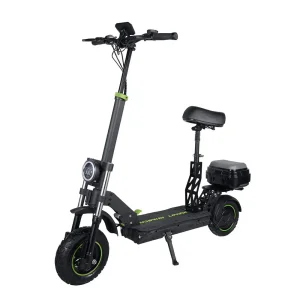
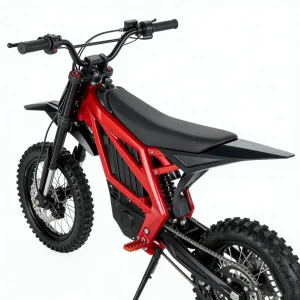
Engineered for global compliance, long battery lifecycle, and optimized B2B total cost of ownership (TCO).
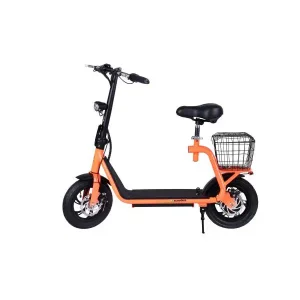
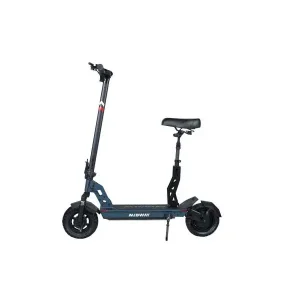
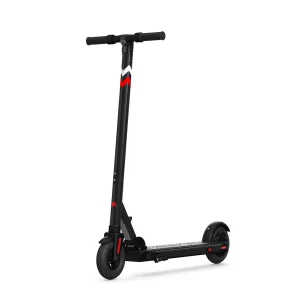
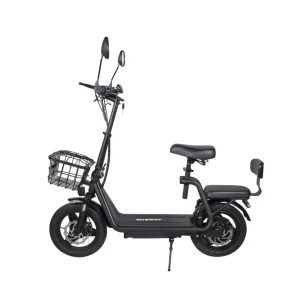
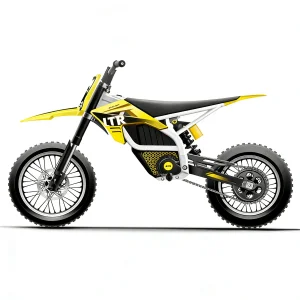
The global transportation paradigm is undergoing an unprecedented structural transition toward electrified, light-footprint personal transit systems. As urban congestion costs world economies billions annually in lost productivity and elevated carbon footprints, municipalities and corporate enterprises are prioritizing compact, high-efficiency personal electric vehicles (PEVs). Compact electric scooters have evolved from peripheral recreational items into vital industrial components of multimodal urban transportation networks, corporate campus transit solutions, and last-mile commercial delivery operations.
For enterprise B2B buyers, sourcing from tier-1 wholesale compact electric scooters manufacturers is no longer simply about unit price negotiation; it requires a strategic alignment with advanced production methodologies, battery chemistry integrity, and robust supply chain resilience. Lightweight structural design must be balanced against payload endurance, thermal control under high duty cycles, and strict regional regulatory compliance.
Commercial courier networks integrated with compact electric scooters report a 42% reduction in delivery turnaround times within high-density urban zones. Small footprint frames allow seamless navigation through pedestrianized corridors and restricted traffic zones.
Deploying enterprise scooter fleets across industrial complexes and institutional campuses allows global organizations to drastically reduce Scope 1 and Scope 2 operational carbon emissions, generating verifiable ESG compliance data for corporate sustainability reporting.
Modern compact electric scooter architectures natively incorporate IoT telemetry protocols (CAN-bus / RS485), enabling rental operators and corporate fleet managers to track real-time spatial positioning, battery health, and preventative maintenance markers.
The international supply chain for light electric vehicles has matured rapidly. B2B buyers must navigate complex regional dynamics: stringent European safety directives (EN 17128:2020), North American electrical safety benchmarks (UL 2272), and varying localized customs tariffs. In this demanding landscape, partnering directly with an established compact electric scooters factory provides decisive competitive leverage.
Vertical manufacturing integration—encompassing high-precision frame welding, robotic electrostatic powder coating, automated surface mount technology (SMT) for motor controllers, and end-of-line battery stress testing—ensures strict component-level quality control. Middleman markups are eliminated, allowing distributors to secure higher gross margins while offering end-users robust product reliability.
| Supply Chain Metric | Tier-1 Factory Direct (YUEMA Model) | Trading Intermediary Model | Impact on B2B Importer |
|---|---|---|---|
| Component Traceability | Full 100% batch tracking (Cells, Controller, Chassis) | Fragmented / Third-party procurement | Mitigates recall risks and warranty liabilities |
| OEM Frame Customization | In-house CAD/CAM tooling, custom dies | Limited to standard off-the-shelf molds | Enables unique brand identity and structural IP |
| Certifications (UL, CE, EN) | Direct factory-owned test reports & certificates | Borrowed or re-badged certificates | Accelerates customs clearance without legal friction |
| Minimum Order Quantity (MOQ) | Flexible scaling based on continuous production runs | High fixed stock thresholds | Optimizes working capital and inventory turnover |
| Unit Cost Structure | Ex-factory baseline costing | 15% - 30% added trading markup | Maximizes distributor margin and pricing flexibility |
Achieving the optimal ratio of power density, structural stability, and lightweight portability requires continuous engineering refinement. Compact electric scooters operate under demanding mechanical stress: high vibration environments, variable road surfaces, thermal expansion during high-current discharge, and exposure to moisture.
High-tier compact scooters utilize 6061-T6 Aircraft Grade Aluminum Alloy or reinforced magnesium-aluminum composites. Frame geometry undergoes Finite Element Analysis (FEA) to verify yield strength under continuous load testing up to 150kg.
• Dual-latch safety folding mechanisms eliminate stem play.
• IPX5 or IPX7 chassis ingress protection seals critical electronics.
• Corrosion-resistant anodic oxide surface finishes.
Proprietary Brushless DC (BLDC) hub motors (ranging from 350W nominal to 1000W peak) utilize high-grade N45 magnetic steel laminations to maintain high efficiency up to 92%.
• Field-Oriented Control (FOC) sine-wave vector algorithm ensures silent acceleration.
• Real-time Hall sensor monitoring prevents motor stalling.
• Thermal overload protection limits power smoothly at peak operational temperatures.
Equipped with grade-A 18650 or 21700 ternary lithium or LiFePO4 cells, our battery systems incorporate multi-tier hardware and software protection against thermal runaway.
• Smart BMS tracks cell voltage balancing, over-charge, over-discharge, and short-circuit conditions.
• Integrated thermal sensors trigger dynamic current throttling.
• UN38.3 certified packaging withstands intense shock, vibration, and altitude drops.
Safety management combines electronic regenerative braking (E-ABS) with mechanical front/rear ventilated disc brakes or drum brake systems, delivering stopping distances under 3.2 meters from 25 km/h.
• Energy recovery system converts kinetic energy back into battery charge.
• Dual spring or hydraulic shock absorbers damp high-frequency vibration.
• Puncture-resistant solid or tubeless pneumatic tires optimize grip.
The versatile nature of compact electric scooters allows deployment across diverse geographic and commercial environments. Understanding localized use-case scenarios assists B2B importers in selecting optimal frame profiles, battery capacities, and tire configurations.
Target Regions: European & East Asian Metropolitan Areas.
Key Requirements: Ultra-lightweight frame (<15kg), rapid 3-second folding mechanism, compliance with public transit carry-on dimensions.
Optimal Setup: 350W Hub Motor, 36V 7.8Ah Lithium Battery, 8.5-inch Honeycomb Solid Tires.
Target Regions: North American & Middle Eastern Educational Facilities.
Key Requirements: Ruggedized chassis, Geo-fencing integration, long battery range, tamper-resistant fast charging infrastructure.
Optimal Setup: 500W Brushless Motor, 48V 13Ah Heavy-duty Battery, 10-inch Pneumatic Tires.
Target Regions: Global On-Demand Delivery & Logistics Fleets.
Key Requirements: High payload support (120kg+), heavy-duty rear cargo rack mounting, dual battery swap capability.
Optimal Setup: 600W/1000W High Torque Motor, 48V 20Ah Swappable Battery Pack, Front/Rear Hydraulic Braking.
Importing electric mobility products without certified legal documentation exposes B2B enterprises to severe customs seizures, regulatory fines, and legal liability. As an authoritative manufacturer, YUEMA maintains full compliance documentation aligned with global market entry barriers.
• EN 17128:2020 Certification: Mandates mechanical stability, electrical safety, and lighting standards for personal light electric vehicles.
• CE Directives: Machinery Directive (2006/42/EC), EMC Directive (2014/30/EU), Low Voltage Directive (2014/35/EU).
• RoHS & REACH: Heavy metal restriction compliance on all rubber, metallic, and polymeric materials.
• UL 2272 Standard: Rigorous evaluation of the electrical drive train, battery pack, and charger combination to eliminate fire risk.
• UN38.3 Transport Certification: Guarantees safe maritime and air freight transport of lithium batteries under atmospheric changes.
• FCC Mark: Prevents electromagnetic interference with municipal communication networks.
Distinguishing your brand in a crowded market requires flexible manufacturing capabilities. Our engineering team partners with enterprise clients to deliver bespoke structural design, colorways, firmware tuning, and packaging solutions tailored to localized market demands.
Laser-engraved logos, custom Pantoned anodized stems, custom deck grip tape design, and bespoke retail packaging to strengthen brand equity.
Pre-configured speed limits (e.g., 20 km/h for Germany, 25 km/h for France, 32 km/h for USA), acceleration curve mapping, and custom mobile app UI branding.
Modular component architecture allows quick maintenance. Pre-packaged spare parts packages (controllers, brake pads, tires, displays) supplied directly with main shipments.
As the micro-mobility sector transitions into its next maturity phase, technological leadership will be dictated by battery density innovations, AI-driven predictive maintenance telemetry, and sustainable circular production methods.
1. Solid-State & Sodium-Ion Battery Integration: R&D investment is shifting toward safer, wider temperature-range sodium-ion chemistries for cold-climate commercial reliability without thermal degradation.
2. Edge AI & Telemetry Hardware: On-board controllers featuring integrated machine learning models that analyze rider habits, optimize power consumption dynamically, and predict mechanical wear before structural failures occur.
3. Recyclable Composite Frames: Migration toward carbon-neutral, fully recyclable thermoplastic resin composites that lower frame weight by 25% while maintaining structural yield strength.
Addressing crucial procurement inquiries for global fleet operators, retail brands, and industrial importers.
Standard lead time for standard OEM bulk orders is 25 to 35 calendar days following deposit confirmation and sample approval. For customized ODM projects requiring unique chassis tooling or proprietary controller programming, initial prototype development takes 20 days, with full production scaling within 45 days.
Every lithium battery pack undergoes 100% automated cell-sorting (matching internal resistance and voltage within tight thresholds), followed by a 48-hour continuous charge/discharge cycle burn-in test. Our smart Battery Management Systems (BMS) include multi-point thermal sensors, short-circuit protection, over-current cutoff, and cell-balancing circuitry certified under UN38.3 and UL standards.
Our baseline MOQ for custom logo branding, custom deck grip tape, and tailored user manuals is 100 units per model. For deep structural modifications, unique Pantone frame colors, or custom app development, our MOQ starts at 300 to 500 units depending on component supply chain requirements.
Units are secured using heavy-duty 7-layer corrugated cardboard export cartons featuring custom-molded high-density Expandable Polyethylene (EPE) foam internal cradles.Cartons undergo ISTA-1A drop tests, vibration resistance testing, and moisture-sealed poly-bagging to prevent salt-fog corrosion during sea transit.
Yes, our controllers feature factory-locked or app-configurable speed governors aligned with localized traffic legislation—such as 20 km/h for eKFV compliance in Germany, 25 km/h for standard EU directives, or unlocked 32-45 km/h modes for private land use in North America.
We provide a 12-month comprehensive warranty on key components including frame assemblies, motors, battery packs, and main controllers. In addition, every bulk shipment includes 1-2% complimentary wearable spare parts (brake levers, tires, displays) with dedicated technical support engineering.
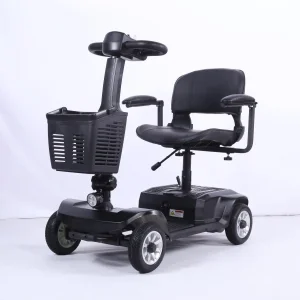
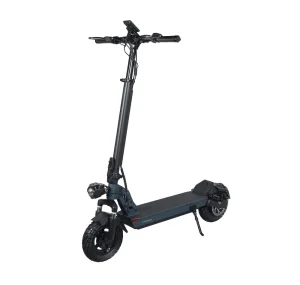
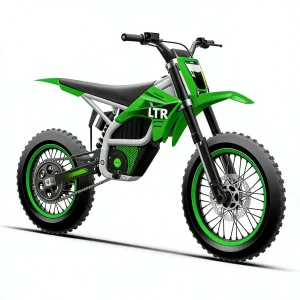
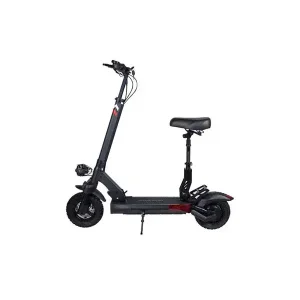
High-power, wide-tire, and senior mobility solutions engineered in our modern manufacturing facility.