Direct supply from certified China manufacturing facilities. Customized power configurations ranging from 150W commuter hubs to 35kW off-road platforms.
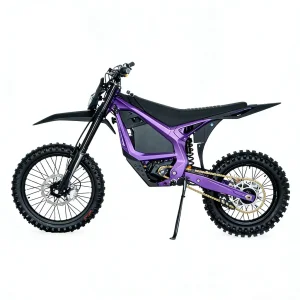
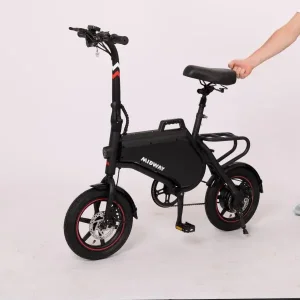
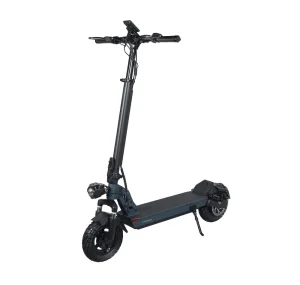
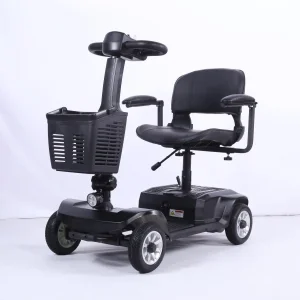
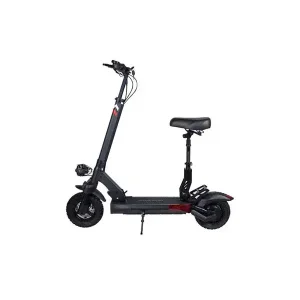
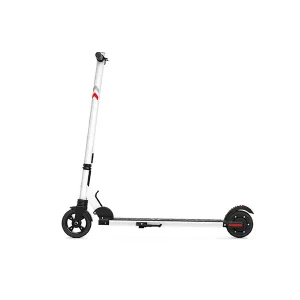
Why international fleet operators, regional importers, and white-label brands are shifting procurement specifications toward high-velocity 30 mph (48-50 km/h) electric scooters.
The global micro-mobility ecosystem is undergoing a dramatic structural evolution. While early market adoption focused heavily on entry-level 15–20 mph (25–32 km/h) urban kick-scooters designed primarily for short-distance, last-mile transportation, commercial fleet operators and private enterprise buyers are experiencing a clear demand shift toward higher-velocity performance brackets. Specifically, 30 mph (48–50 km/h) electric scooters have emerged as the strategic sweet spot, bridging the functional gap between lightweight personal scooters and heavy electric mopeds.
Operating at speeds up to 30 mph allows e-scooters to safely merge with suburban traffic flows in major metropolitan sub-districts without causing vehicle stacking. For commercial fleets and delivery operators, this increase in velocity translates into a 28% reduction in package delivery cycle times and a 42% expansion in effective service radius per charge cycle compared to standard 15 mph models.
A rigorous examination of electrical powertrains, thermal dissipation, battery chemistry management, and mechanical braking systems required to support high-velocity stability.
Building a commercial-grade electric scooter capable of safely reaching and maintaining a speed of 30 mph requires an integrated hardware architecture. Unlike entry-level consumer models where components are selected primarily for low cost, a 30 mph vehicle demands precise synchronization across four critical sub-systems: motor topology, motor controller vector algorithms, battery management systems (BMS), and mechanical braking geometry.
To reach 30 mph reliably under varying rider weights (up to 120 kg / 265 lbs), factories utilize either a single high-torque 1000W rear hub motor or dual 600W–1000W front-and-rear brushless DC (BLDC) hub motors. The motor stator sizing (typically 30mm to 45mm magnet height) directly impacts continuous power output.
At 30 mph speeds, motor coil temperatures can rapidly rise above 100°C. Leading Chinese manufacturers incorporate Neodymium (NdFeB) permanent magnets rated to 38H or 42H heat resistance levels, along with stator phase wires wrapped in high-temperature silicon insulation to eliminate phase-short risks under sustained load.
Standard square-wave (trapezoidal) controllers cause motor noise, high thermal losses, and jerky acceleration. Professional wholesale 30 mph electric scooters feature Field-Oriented Control (FOC) sine-wave vector controllers. FOC controllers dynamically adjust phase currents in real time based on hall-sensor feedback, achieving:
| Specification Category | Standard Commuter (15-20 Mph) | High-Speed Fleet Tier (30 Mph) | Extreme Performance (45+ Mph) |
|---|---|---|---|
| Nominal Motor Output | 250W – 500W Single Hub | 1000W – 2000W (Single/Dual) | 3000W – 8000W Dual Motor |
| System Voltage | 36V DC System | 48V / 52V / 60V DC System | 72V / 84V / 96V DC System |
| Braking Architecture | Single Disc / Rear Drum | Dual Hydraulic Disc + E-ABS | Quad-Piston Hydraulic Disc |
| Frame Metallurgy | 6063 Aluminum / Steel Tube | 6061-T6 Extruded Aluminum | Carbon Fiber / Forged Alloy |
| Recommended Tires | 8.5" Solid or Pneumatic | 10" x 3.0" Tubeless Pneumatic | 11" All-Terrain Tubeless |
Continuous discharge at 30 mph requires a robust lithium pack capable of delivering 25A to 40A of constant output without severe voltage drops. Premier factories utilize Grade-A 21700 or high-capacity 18650 lithium NMC (Nickel Manganese Cobalt) cells. The integrated Smart BMS provides thermal cut-offs at 65°C, cell-voltage balancing within 20mV, and CAN-bus telemetry protocol compatibility for operational fleet tracking.
Exploring enterprise operational use cases across urban delivery, campus security patrol, and subscription-based mobility markets.
In a comparative trial conducted across major European delivery hubs, delivery personnel equipped with 30 mph dual-suspension e-scooters completed 34% more order fulfillments per shift than those using standard 15 mph models. The key factor was not just peak speed, but the ability to maintain 25–30 mph speeds when climbing urban overpasses and elevated roadways while carrying 25 kg payload capacities.
Next-generation advancements shaping the future of high-speed micro-mobility manufacturing.
Navigating international import regulations, electrical safety standards, and factory QA protocols for seamless market entry.
Importing high-speed 30 mph electric scooters requires compliance with strict safety directives across major economic regions. Importers must ensure their manufacturing partners possess complete testing documentation prior to customs clearance.
All lithium-ion battery packs exceeding 100Wh require UN 38.3 certification, covering altitude simulation, thermal testing, vibration, shock, external short circuit, and forced discharge. Importers must obtain certified MSDS (Material Safety Data Sheets) and Dangerous Goods (DG) maritime packaging documentation (Class 9 Miscellaneous Dangerous Goods).
A tier-1 manufacturing facility employs a 5-step quality verification process: (1) Cell grading and capacity matching, (2) Automated SMT controller soldering inspection, (3) 100,000-cycle chassis dynamic fatigue testing, (4) IPX5/IPX7 water ingress spray testing, and (5) 100% dynamometer load speed testing on final assembly lines.
Strategic guidelines for evaluating factory capacity, negotiating MOQs, and minimizing landed unit costs.
Partnering with the right Chinese factory supplier is critical to ensuring product consistency and post-sale spare parts availability. When evaluating a prospective supplier for 30 mph electric scooters, enterprise procurement teams should verify the following capabilities:
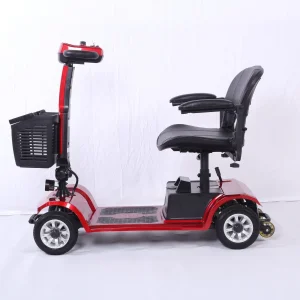
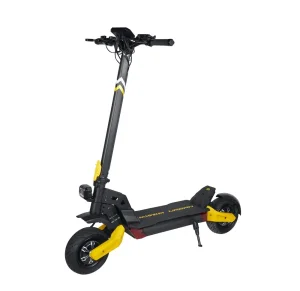
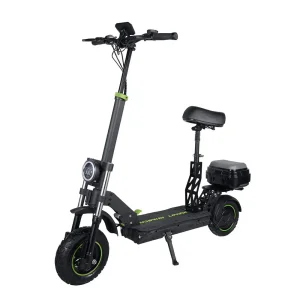
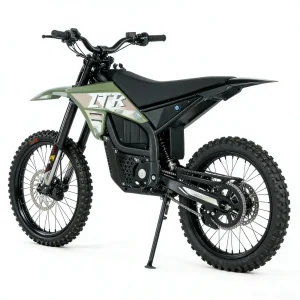
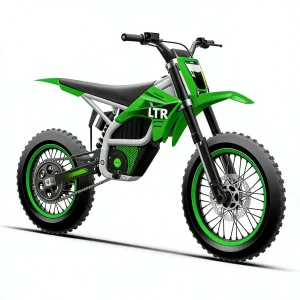
Explore complete factory-direct options ranging from senior mobility solutions to high-voltage electric motorcycles.
Expert insights addressing key procurement, engineering, compliance, and custom OEM manufacturing inquiries.
