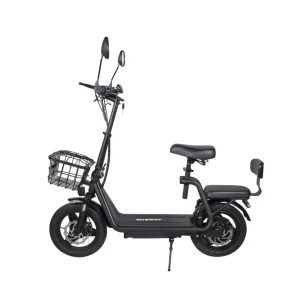
Explore tier-1 industrial build quality, high-discharge lithium powertrains, and certified chassis designs optimized for international distributors.
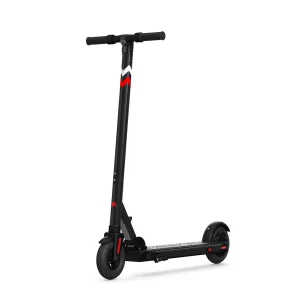
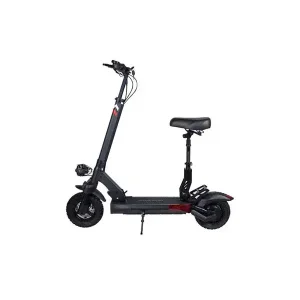
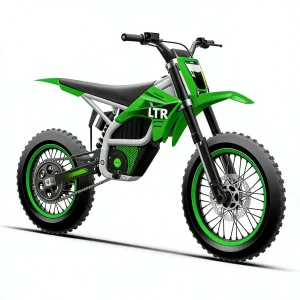
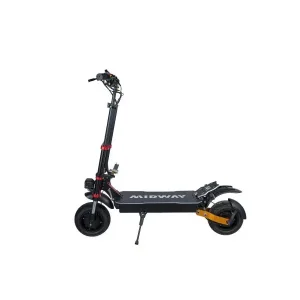
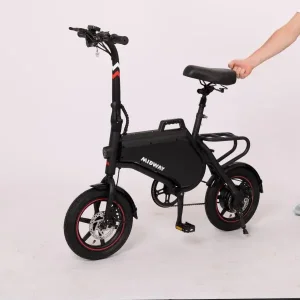
Analyzing the shift from entry-level urban micro-mobility to high-velocity, industrial-grade dual-motor electric transport platforms.
The global micro-mobility market is experiencing a profound architectural paradigm shift. While first-generation electric scooters targeted low-speed, last-mile commuting capped at 15–20 mph (25 km/h), global enterprise buyers, regional distributors, and fleet operators are increasingly seeking 50mph (80km/h) hyperscooter platforms. These heavy-duty vehicles bridge the operational operational gap between conventional electric kick scooters and light electric motorcycles (L1e/L3e categories).
Sourcing from tier-1 Chinese electric scooter 50mph manufacturers requires a deep understanding of structural metallurgy, thermal management dynamics, and high-voltage power conversion electronics. As search intent transitions from retail curiosity to wholesale technical procurement, enterprise buyers require comprehensive transparency into thermal throttling limits, real-world battery discharge curves under continuous 50A+ loads, frame fatigue thresholds, and international legal compliance certifications.
This technical whitepaper provides B2B importers, OEM brand owners, and logistics buyers with the operational framework required to evaluate, spec, and source wholesale 50mph electric scooters directly from qualified Chinese manufacturing hubs.
Deconstructing the high-voltage drivetrain, thermal dissipation systems, and chassis dynamic tolerances necessary for sustained 50mph operation.
Achieving and sustaining a true 50 mph (80 km/h) velocity under real-world payload conditions (100kg–150kg) requires dual direct-drive Brushless DC (BLDC) hub motors operating in synchronicity. Manufacturers employ high-grade N52SH neodymium permanent magnets capable of withstanding operating temperatures up to 150°C without demagnetization.
Power delivery is governed by dual Field-Oriented Control (FOC) Sine-Wave Controllers. Unlike rudimentary square-wave controllers, FOC vector control calculates phase current space vectors in real time, reducing electromagnetic noise by 85%, eliminating torque ripple during high acceleration, and optimizing motor system efficiency to over 92%.
72V architectures are optimal for 50mph speeds, reducing current draw (Amperes) by ~20% compared to 60V systems for identical wattage, minimizing thermal buildup across wiring harnesses and MOSFETs.
Wholesale models utilize 10-inch or 11-inch split-rim alloy hub assemblies. This permits rapid tire changes on commercial fleets without needing hydraulic press equipment to decouple the stator.
Advanced controllers integrate dynamic thermal throttling algorithms that auto-adjust peak phase current from 45A down to 30A if internal stator temperature sensors register >115°C.
The battery pack is the single highest BOM (Bill of Materials) cost component in a 50mph electric scooter. At high velocities, continuous power draw can range between 35A and 60A. Premium wholesale models utilize 21700 High-Discharge Lithium-ion cells (such as LG MJ1, Samsung 50E, or CATL automotive-grade cells) arranged in 20S6P or 20S8P configurations for 72V systems.
| Battery Metric | Standard Commercial Grade | Industrial Hyperscooter Grade | B2B Operational Impact |
|---|---|---|---|
| Cell Form Factor | 18650 (2200-2600mAh) | 21700 (4500-5000mAh) | 40% higher energy density by volume; reduced weld point vulnerability. |
| Continuous C-Rating | 1C - 2C Discharge | 3C - 5C High Discharge | Prevents voltage sag during high-speed acceleration; maintains 50mph velocity up to 30% SOC. |
| BMS Communication | Standalone Analog BMS | Smart CAN-bus / RS485 BMS | Real-time cell balancing diagnostics and telemetry for fleet management apps. |
| Thermal Dissipation | PVC Wrap Insulation | Aluminum Honeycomb Heat Sink + Phase Gel | Extends total battery pack lifecycle from 500 cycles to 1,200+ cycles. |
A vehicle traveling at 50 mph experiences kinetic energy impacts roughly 9 times greater than at 16 mph ($E_k = \frac{1}{2}mv^2$). Consequently, frame metallurgy must withstand extreme mechanical fatigue, torsional stress, and high-frequency surface vibration. Tier-1 manufacturers utilize Aviation-Grade 6061-T6 Aluminum Alloy for forged mainframes combined with high-tensile steel steering columns.
Dual-coil over-oil hydraulic dampers with adjustable rebound and compression damping are essential. Steering head angles are engineered to 68°–72° to provide high-speed directional stability and eliminate speed wobbles (hunting oscillation).
4-Piston Hydraulic Disc Brakes featuring 160mm or 180mm floating rotors paired with ceramic matrix brake pads. Electronic Braking Systems (EBS) with regenerative braking provide up to 15% kinetic energy recovery while reducing pad wear.
Where 50mph electric scooters are creating measurable ROI for enterprise buyers across key global markets.
In high-density urban metropolises across Latin America, Southeast Asia, and Southern Europe, 50mph scooters enable courier fleets to utilize main arterial roads and express lanes, cutting delivery turnaround times by 40% compared to speed-capped 25km/h kick scooters.
Large industrial complexes, port facilities, airport tarmacs, and university campuses utilize 50mph electric scooters for security response teams. Rapid acceleration (0-30mph in <3.2s) allows rapid deployment across extensive land footprints with zero local tailpipe emissions.
Off-road recreational resorts, trail centers, and private estate rentals leverage dual-motor 50mph hyperscooters equipped with 11-inch pneumatic knobby off-road tires, serving adrenaline-seeking consumers in dedicated sport domains.
Why the Wuyi / Jinhua / Zhejiang Light Vehicle Industrial Cluster dominates global B2B electric vehicle manufacturing.
The manufacturing cluster centered around Wuyi and Jinhua in Zhejiang Province, China, represents the most vertically integrated supply network for micro-mobility vehicles on earth. For international B2B importers, sourcing Wholesale 50mph Electric Scooters from this ecosystem provides crucial economic and operational advantages:
Within a 30-kilometer radius of our production facilities in Wuyi, every sub-tier component supplier operates—from aluminum alloy extrusion foundries and CNC precision machining shops to wire harness manufacturers and SMT controller assembly plants. This geographic density reduces component transit times from weeks to hours.
Direct sourcing access to tier-1 battery cell manufacturers (CATL, EVE, Lishen) and localized raw material suppliers enables a 25% to 35% Bill of Materials (BOM) cost reduction compared to overseas assembly operations, giving B2B buyers competitive wholesale margins.
Our in-house R&D team can move from CAD design modification to 3D-printed prototype and functional stress sample within 14 business days. Customization parameters include deck branding, custom controller firmware profiles, battery pack capacity sizing, and color anodization.
Every production unit undergoes a multi-stage Quality Control (QC) protocol before packing: 100% dynamic chassis vibration testing, high-voltage insulation checks, water-ingress enclosure chamber testing (IPX5/IPX7), and road test dyno evaluation.
Navigating international safety certifications, battery shipping regulations, and street-legal speed restrictions.
Navigating the regulatory matrix for high-speed 50mph electric scooters requires careful alignment between manufacturer specifications and destination country import laws. OEM vehicles must meet strict safety testing regimes to clear customs smoothly and minimize product liability risk.
| Region / Market | Core Regulatory Standards | 50mph Vehicle Classification | Compliance Guarantee Package |
|---|---|---|---|
| European Union (EU) | EN 17128:2020, CE-MD (Machine Directive), CE-LVD, RoHS, REACH | Speed capped at 25km/h for standard PMD; 50mph models classified as L1e-B / L3e Light Electric Mopeds requiring EEC CoC (Certificate of Conformity). | Complete CE test reports from accredited labs (TÜV / SGS), dual-speed firmware governor switches, VIN number engraving. |
| North America (US/CA) | UL 2272 (Electrical System Safety), UL 2271 (Battery), DOT / NHTSA requirements | Varies by State: Private property / off-road usage, or registered as motor-driven cycles / mopeds requiring turn signals, headlamps, and mirrors. | UN38.3 Lithium Battery Safety Report, MSDS documentation, UL certified chargers, DOT-approved lighting packages. |
| Australia / New Zealand | ADR (Australian Design Rules), AS/NZS 60335 electrical safety standards | Speed-limited modes for public infrastructure; unrestricted high-speed mode toggles for private property usage. | RCM mark compliance, C-Tick battery charger verification, heavy-duty brake system stress certificates. |
Addressing core technical, logistical, and commercial inquiries from global wholesale buyers and distributors.
From city commuter models to high-power off-road electric motorcycles, access direct OEM supply chains.