Explore our flagship high-speed electric scooters and heavy-duty mobility vehicles engineered for global B2B procurement.
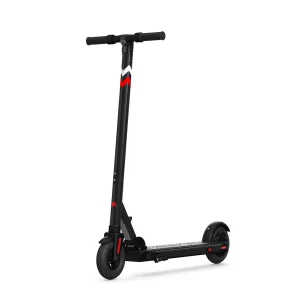
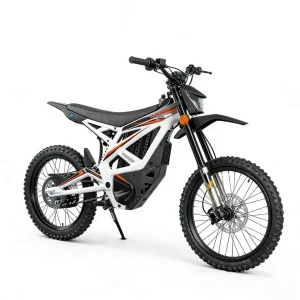
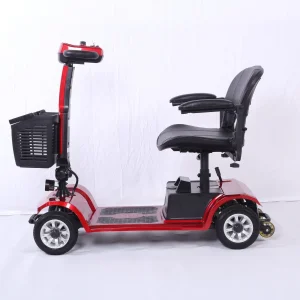
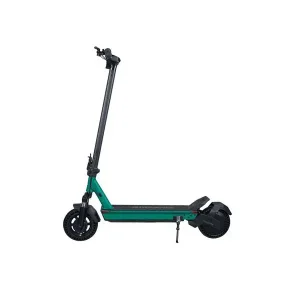
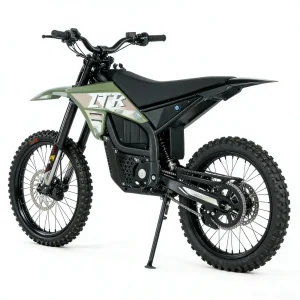
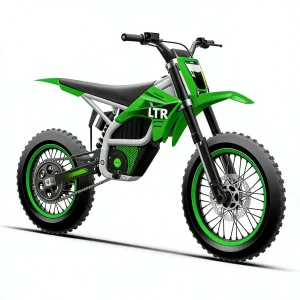
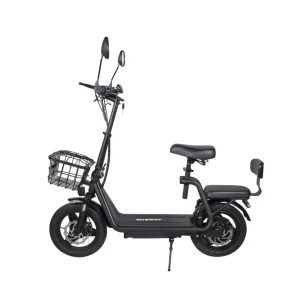
The global personal mobility landscape is undergoing a monumental paradigm shift. As urban density increases and demographic structures evolve, the demand for wholesale fastest mobility scooters has transitioned from a niche medical auxiliary market into a multi-billion-dollar global industry. Modern commercial buyers, fleet operators, and regional distributors are no longer seeking basic mobility assistance; they require engineered, high-torque, long-range electric vehicles capable of safely negotiating diverse topography at optimized cruising speeds.
In this technical white paper, we examine the convergence of advanced Brushless DC (BLDC) motor technology, high-density Lithium Nickel Manganese Cobalt Oxide (NMC) battery architecture, and intelligent Vector Sine-Wave Controllers. Furthermore, we dissect the strategic manufacturing advantages provided by OEM/ODM production hubs in China, establishing a comprehensive sourcing framework for international enterprise importers.
Core Information Gain Insight: The term "Fastest Mobility Scooter" in modern B2B procurement does not merely denote raw top speed. It represents the optimal equilibrium between peak power conversion efficiency, thermal dissipation management, chassis structural integrity, and dynamic braking response under strict regulatory compliance frameworks (CE, EN17128, UL2272, EEC).
Deconstructing the critical mechanical and electrical subsystems that define high-velocity mobility solutions.
High-speed mobility scooters utilize Direct-Drive Brushless DC Hub Motors with rare-earth Neodymium (NdFeB) permanent magnets. Ranging from rated outputs of 350W up to extreme 13.5kW dual-motor motorcycle-grade configurations, these powertrains eliminate mechanical gear friction, delivering instantaneous torque, zero maintenance, and energy conversion efficiencies exceeding 91%.
The brain of the fastest mobility scooters lies in Field-Oriented Vector Sine-Wave Controllers. By continuously monitoring rotor positions via high-precision Hall sensors, FOC controllers smoothly adjust current phase angles. This results in whisper-quiet operation, ultra-smooth acceleration curves, and precise regenerative braking control that recharges the battery pack during downhill decel.
Operating high-wattage electric mobility vehicles generates significant thermal strain. Factory-direct units incorporate smart BMS boards supporting CAN-bus communication. Lithium-ion cell configurations (48V, 60V, 72V up to 40Ah) feature nickel-plated copper busbars, flame-retardant encapsulation, automated cell-balancing, and thermal runaway prevention switches.
| Vehicle Category / Specs | Commuter Mobility (Urban) | Heavy-Duty Elderly / All-Terrain | High-Speed Hyper Mobility |
|---|---|---|---|
| Motor Power Rating | 350W – 600W Brushless Hub | 250W – 1000W Transaxle / Hub | 3000W – 13.5kW Dual Motor |
| Operating Voltage / Ah | 36V / 48V (15Ah Lithium) | 24V / 48V (20Ah Lead/Lithium) | 60V / 72V (25Ah – 40Ah NMC) |
| Max Velocity Horizon | 25 km/h – 35 km/h | 15 km/h – 25 km/h | 60 km/h – 110+ km/h |
| Braking System | E-ABS + Rear Mechanical Disc | Electromagnetic Auto-Brake | Dual Hydraulic Oil Disc + CBS |
| Target Application | Last-Mile Urban Transport | Senior Assisted Living / Resorts | Security Patrol / Extreme Off-Road |
China's industrial mobility manufacturing ecosystem—specifically within hardware hubs like Wuyi, Zhejiang—provides unprecedented competitive edges for international enterprise buyers seeking Wholesale Fastest Mobility Scooter s Suppliers & Factories.
From precision steel chassis robot welding and CNC aluminum forging to SMT circuit board assembly and injection molding, OEM suppliers in Wuyi control every link of the supply chain. This vertical integration drastically reduces component procurement lead times and eliminates third-party markup costs.
China-based Tier-1 factories possess in-house R&D departments equipped with 3D CAD stress simulation, rapid tooling development, and custom battery box fabrication. Overseas buyers can execute private-label branding, customized chassis geometries, and tailored controller firmware updates within accelerated product development cycles.
State-of-the-art factories feature automated dyno testing benches, salt-spray corrosion chambers, chassis vibration stress testers, and IP67 waterproof testing facilities. Every high-speed scooter undergo comprehensive functional inspection before container loading, mitigating RMA and warranty risks for global importers.
Tailored mobility implementations across commercial, municipal, and industrial landscapes.
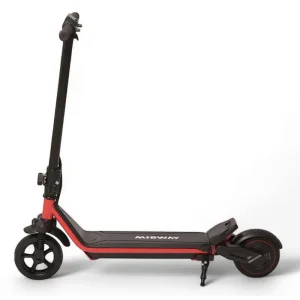
In high-density metropolises with congested traffic lanes, high-speed 600W to 1000W scooters replace conventional gas mopeds. They offer low operational costs, zero direct emissions, and fast travel times for suburban-to-urban commuters.
Equipped with ergonomic seating, low centers of gravity, and intelligent electromagnetic safety brakes, 250W long-range mobility models provide seniors with safe, autonomous transportation across suburban neighborhoods and medical campuses.
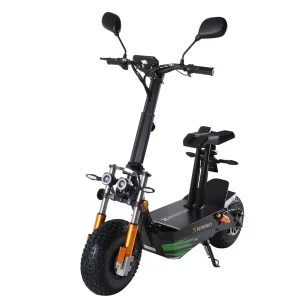
Wide-tire Citycoco scooters (3000W) and heavy-duty electric motorbikes serve as clean tourist transport across vast resorts, island properties, national parks, and golf courses, providing high climbing torque and rugged stability.
Large manufacturing complexes, logistics hubs, and private security forces deploy 4000W to 10kW heavy-duty electric dirt bikes and high-speed scooters for swift perimeter security, facility inspection, and rapid internal movement.
Navigating international import regulations, safety certifications, and logistics for high-power electric mobility vehicles is paramount for enterprise risk management. Below is an essential compliance matrix for key global markets:
To legally import mobility scooters and electric kick scooters into the EU, vehicles must comply with:
US Customs and Consumer Product Safety Commission (CPSC) require specific electrical and battery standards:
Best practices for enterprise B2B buyers when negotiating OEM contracts with Chinese suppliers:
The electric mobility sector is advancing rapidly under global net-zero carbon initiatives and urbanization pressures. Enterprise procurement teams must align their multi-year strategies with the following technology trajectories:
While ternary Lithium NMC cells dominate current high-speed mobility markets due to high energy density, factories are rapidly transitioning toward Lithium Iron Phosphate (LiFePO4) and emerging semi-solid-state cells. LiFePO4 provides 3,000+ charge cycles, superior thermal stability up to 60°C, and virtually eliminates fire risks during rapid high-wattage discharge cycles.
Modern commercial mobility fleets are increasingly integrated with cloud-based IoT hardware. Built-in GPS tracking, cellular IoT modules, remote ECU diagnostics, geo-fencing, and OTA (Over-The-Air) firmware updates are becoming standard factory specifications for fleet distributors and rental platforms.
To reduce shipping costs and streamline replacement logistics, high-speed scooter factories are pioneering modular aluminum alloy unibody chassis. Interchangeable battery trays, quick-release motor swingarms, and standardized wiring harnesses allow distributors to customize end-user configurations locally with minimal technical overhead.
Direct factory supply for high-wattage scooters, Citycoco fat-tire models, and off-road electric motorcycles.
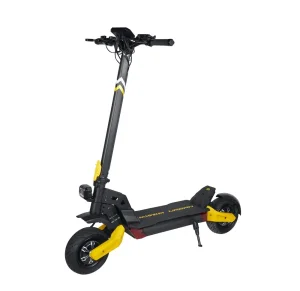
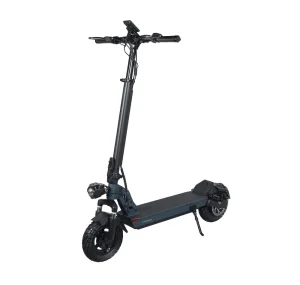
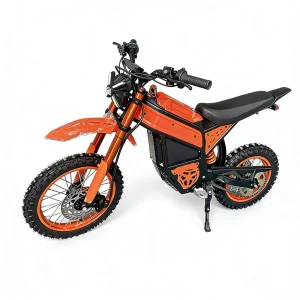
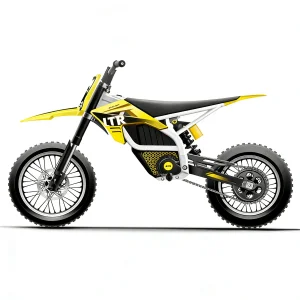
Addressing core technical, logistical, and commercial inquiries regarding wholesale high-speed mobility scooters.
Mobility scooter speeds vary by vehicle class and regional legislation. Standard senior mobility models typically range from 8 km/h to 15 km/h (5 to 10 mph) under medical device classifications. Heavy-duty urban commuting electric scooters and Citycoco models operate between 25 km/h and 65 km/h (15 to 40 mph) powered by 500W to 3000W BLDC motors. High-performance electric motorcycles deliver speeds from 80 km/h up to 110+ km/h utilizing 4000W to 13.5kW powertrains. Speed limiters can be factory-programmed to meet specific country regulations.
Standard factory MOQ for stock electric scooter models starts at 20 to 50 units (sample orders can be provided for evaluation). For custom OEM branding (custom color scheme, logo silk-screening, custom packaging, and tailored controller programming), the typical MOQ is 100 units or one 20ft container (approx. 120-150 units depending on vehicle dimensions). Production lead times generally range from 20 to 35 calendar days following deposit confirmation and artwork approval.
All lithium-ion battery packs manufactured at our facilities undergo rigorous testing to obtain UN 38.3 (United Nations Transportation Testing for Lithium Metal and Lithium Ion Batteries) certification, MSDS (Material Safety Data Sheet), and dangerous goods sea freight transport certificates (IMDG code). Batteries are encased in IP67 water-resistant aluminum or flame-retardant ABS enclosures with integrated smart BMS board protection during transit.
Yes. Factory ODM engineering teams can customize frame structural reinforcement, payload capacity, suspension dampening rates, dual-battery wiring harnesses for extended range, delivery box mounts, specialized lighting systems, and integrated GPS/cellular telematics modules for shared fleet deployments or municipal security operations.
We provide comprehensive B2B technical support including a 12-month limited warranty covering core components (motor, frame, controller, lithium battery). Bulk container orders include a 2% complementary consumable spare parts package (brake pads, levers, inner tubes, throttle assemblies). Additional replacement modules are maintained in factory inventory for immediate express dispatch.
