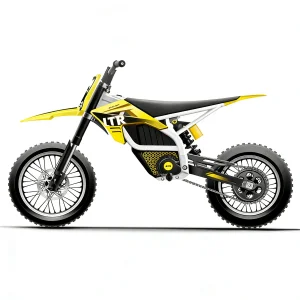
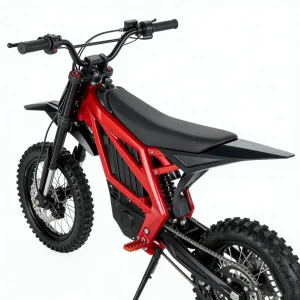
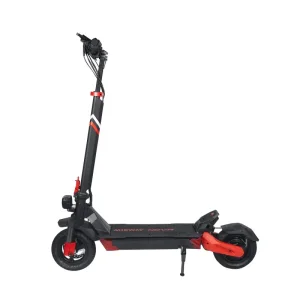
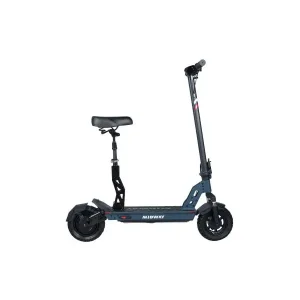
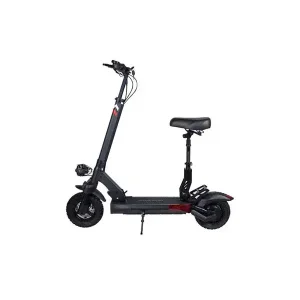
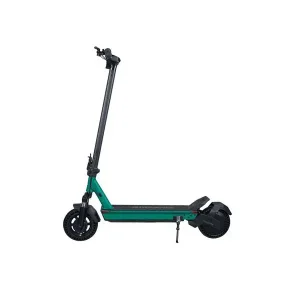
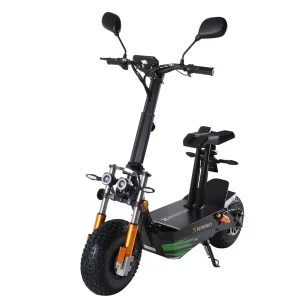
Explore our factory-direct commercial scooters, heavy-load commuting platforms, and high-performance mobility solutions certified for international distribution.
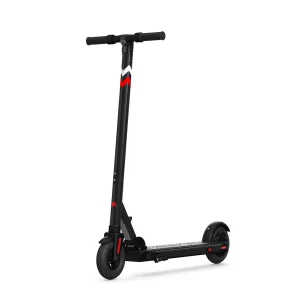
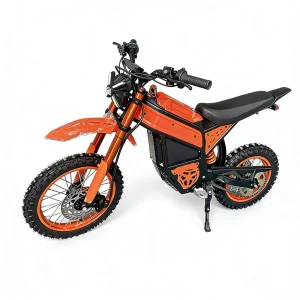
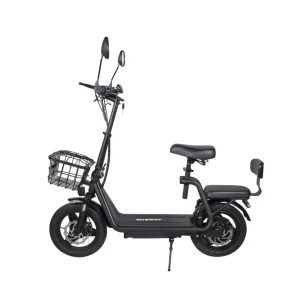
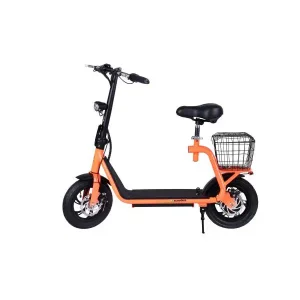
An authoritative analysis of structural engineering requirements, total cost of ownership (TCO), and global procurement strategy for enterprise B2B importers.
The global micro-mobility market is experiencing a profound transition from low-cost consumer recreational scooters to heavy-duty, commercial-grade electric transport platforms. Driven by rapid expansion in last-mile courier delivery, urban cargo logistics, rental sharing operations, and high-weight rider commuting, enterprise buyers require vehicles engineered for extreme operational stress.
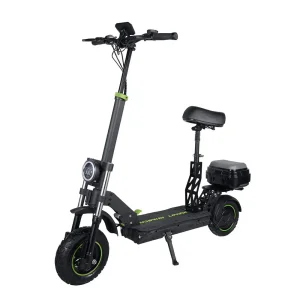
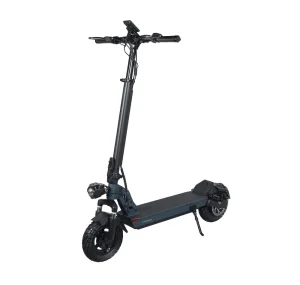
A standard consumer e-scooter designed for light commuting typically accommodates payloads under 100 kg with structural fatigue tolerances rated for smooth asphalt. In contrast, an industrial Heavy Duty Electric Scooter must reliably sustain payloads ranging from 150 kg to 250 kg across severe urban topographies, cobblestone pavements, and off-road industrial facilities without frame deflection or thermal shutdown of the powertrain.
When sourcing heavy-duty electric scooters at scale, procurement managers must evaluate critical engineering thresholds beyond simple peak wattage specs. Structural integrity, thermals, and BMS intelligence determine long-term fleet viability.
| Performance Dimension | Standard Commuter Scooter | Industrial Heavy-Duty Platform |
|---|---|---|
| Payload Tolerance | 80 kg – 100 kg | 150 kg – 250 kg+ |
| Frame Tensile Strength | 180 – 220 MPa (6063-T5) | 310 – 350 MPa (6061-T6 / Carbon Steel) |
| Continuous Power / Torque | 250W – 350W / 15-25 Nm | 600W – 5000W / 45-120 Nm |
| BMS Protection Grade | Basic Overcharge (IP54) | Smart CAN-bus / Multi-Thermal (IP67) |
Deep technical teardown of the structural elements that define heavy-duty reliability, heat dissipation, and long-range energy density.
Heavy-duty scooters demand superior structural design to resist shear stress, frame fatigue, and stem snapping under sudden impact. Our manufacturing process utilizes aviation-grade 6061-T6 aluminum alloy combined with reinforced high-carbon tubular steel at critical stress nodes such as the folding mechanism, head tube junction, and rear swingarm.
Robotic TIG welding ensures seamless joint penetration, eliminating internal micro-fissures. Frames undergo simulated FEA (Finite Element Analysis) stress testing up to 300 kg static load and 100,000 dynamic impact cycles on automated test rigs.
To propel heavy payloads efficiently, motor engineering must balance thermal dissipation with high low-end torque output. Vehicles utilize high-magnetic-flux brushless direct current (BLDC) hub motors or mid-drive systems ranging from 500W to dual 2500W motors.
Paired with Field Oriented Control (FOC) sine-wave controllers, our systems achieve over 92% power conversion efficiency. FOC vectoring reduces acoustic noise, eliminates jerky acceleration, and optimizes regenerative braking energy recovery (E-ABS), feeding up to 12% kinetic energy back into the power pack during descent.
Heavy duty operations require extreme battery output without catastrophic voltage sag. We integrate Grade-A 21700 lithium-ion cells (or LiFePO4 for commercial longevity) configured in 48V, 60V, or 72V architectures with capacities up to 30Ah+.
The integrated Smart Battery Management System (BMS) continuously monitors cell temperature, individual cell voltage balance, over-current, and short-circuit parameters. Aluminum heat-sink enclosures with thermal silicone filling prevent thermal runaway under continuous maximum throttle load in ambient temperatures up to 50°C.
Heavy-duty scooters deployed in cargo or commercial transport face unpredictable road conditions. Our proprietary hydraulic front-fork suspension combined with dual rear spring/oil shock absorbers delivers 150mm of usable travel. This active damping mechanism prevents chassis bottoming out, protects internal electronics from vibration damage, and ensures rider safety and control even when carrying heavy cargo racks or high-payload riders.
How our centralized production ecosystem delivers unmatched cost efficiency, component supply resilience, and custom engineering flexibility.
Located in the heart of China’s hardware and e-mobility industrial cluster in Wuyi, Zhejiang Province, our manufacturing infrastructure operates with deep vertical integration. Unlike assembly-only vendors who outsource component sourcing to fragmented third parties, our industrial facility controls the entire lifecycle:
This localized supply chain cluster dramatically reduces lead times, minimizes component transport overhead, and grants importers direct factory pricing without intermediary markups.
For global distributors, brand owners, and fleet managers seeking product differentiation, our engineering team offers comprehensive OEM and ODM support:
Navigating international safety certifications, road-legal homologation, and regional transport standards with full technical documentation support.
To enter EU markets legally, personal light electric vehicles (PLEVs) must comply with strict mechanical and electrical safety norms:
Navigating US and Canadian safety protocols requires stringent battery and electrical system validation:
Exporting heavy-duty lithium vehicles across ocean freight or air cargo requires certified hazardous goods compliance:
Detailed deployment profiles illustrating how high-payload electric scooters generate ROI across diverse global industries.
Delivery riders cover 80-120 km per shift carrying heavily loaded thermal boxes. Heavy-duty scooters equipped with dual battery hot-swappable trays, 10-inch solid tubeless tires, and integrated rear rack mounts drastically reduce fleet downtime and maintenance costs per kilometer.
Commercial rental operations face severe equipment abuse. Our heavy-duty frames with tamper-proof internal wiring, hidden IoT modules, reinforced stems, and anti-vandalism displays provide the structural resilience required for high-frequency shared mobility fleets.
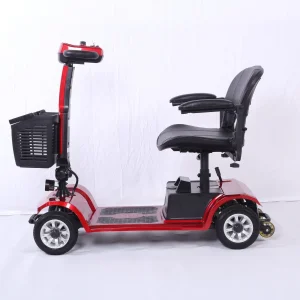
Specially engineered 3-wheel and 4-wheel mobility scooters feature low step-through platforms, ergonomic seating, electromagnetic automatic braking, and anti-tip rear wheels to deliver safe, stable personal transport for senior citizens and mobility-impaired individuals.
Large manufacturing facilities, airport aprons, and security teams deploy high-power models (1000W-4000W) for fast, zero-emission transportation across massive indoor and outdoor complexes, reducing patrol transit time by up to 60%.
How our 4-tier quality management system mitigates importer risk, eliminates defective rates, and guarantees containerized delivery integrity.
To ensure 100% compliance with client technical drawings and defect rates strictly under 0.3%, our manufacturing facility operates a rigorous quality assurance protocol:
1. IQC (Incoming Quality Control): Every batch of lithium cells, BLDC motor stators, MOSFET controllers, and raw alloy tubing undergoes chemical, electrical, and dimensional testing before entering assembly lines.
2. IPQC (In-Process Quality Control): Automated inline optical inspection during SMT controller soldering, continuous weld-seam ultrasonic testing, and torque wrench validation on critical fastener points.
3. FQC (Final Quality Control): 100% fully assembled vehicle testing. Each scooter is mounted on an automated dyno bench to test top speed, acceleration curves, brake stopping distance (wet/dry), and thermal limits.
4. OQA (Outgoing Quality Assurance): Pre-shipment random sampling based on MIL-STD-105E inspection tables, verifying packaging crush resistance, labeling accuracy, and accessory completeness.
Partnering with global B2B buyers requires robust international commercial logistics and post-purchase component support:
Clear, authoritative answers to essential inquiries regarding heavy-duty electric scooter manufacturing, MOQ, customization, and export logistics.
A heavy-duty electric scooter is built specifically for commercial durability, high payload capacities (150 kg to 250 kg+), and intensive operational cycles. Unlike standard consumer models that use lightweight 6063 aluminum and 250W-350W motors, heavy-duty platforms feature reinforced 6061-T6 aluminum or high-carbon steel frames, heavy-duty hydraulic suspension, high-torque BLDC motors (500W to 5000W), larger heat-sink FOC controllers, and high-capacity lithium batteries with smart BMS protection to prevent thermal degradation under prolonged stress.
For standard factory-spec models, our MOQ starts as low as 20 to 50 units, enabling new importers to test local market response. For custom OEM orders (including custom frame colors, laser-etched branding, customized deck grips, and bespoke box printing), the MOQ is typically 100 units per model tier. For full custom frame mold development (ODM), requirements are evaluated on a project-by-project basis.
Thermal management is achieved through a three-part engineering strategy: First, we utilize FOC sine-wave controllers with oversized aluminum heat-dissipation fins to lower switching losses. Second, our BLDC hub motors feature high-temp magnetic coils rated up to 180°C. Third, our battery packs are constructed with thermal conductivity silicone pads between cells housed inside sealed IP67 aluminum casings, managed by a Smart BMS that monitors temperature sensors across cell modules in real time.
Yes. Our export products are designed and certified to comply with relevant international standards. European models hold CE, RoHS, and EN 17128 certifications, with EEC/CoC approval available for road-legal registration (L1e-B / L3e). North American export series feature UL 2272 compliant electrical systems, UL 2271 battery certifications, and FCC Part 15 testing for electronic safety.
Standard production lead time for a full 20ft or 40ft HQ container (approx. 200–500 units depending on vehicle volume) is 25 to 35 calendar days following deposit confirmation and artwork approval. Sample orders and prototype evaluation units are dispatched within 7 to 10 days.
Absolutely. We offer OEM integration of CAN-bus compatible IoT hardware modules supporting 4G/GPS/Bluetooth connectivity. This allows commercial fleet operators and rental businesses to remotely monitor real-time battery status, track vehicle locations, perform remote lock/unlock operations, lock top speeds, and receive diagnostic fault codes directly via cloud API.
We provide a 12-month comprehensive warranty on main structural frames, motors, controllers, and battery packs. To ensure zero operational downtime for your end customers, we ship a 1-3% wear-and-tear spare parts buffer (free of charge) inside every bulk container shipment. In the rare event of a warranty claim, replacement components are dispatched immediately via express air freight.
We offer both ternary lithium (NMC 18650/21700) and Lithium Iron Phosphate (LiFePO4) cell options. NMC provides higher volumetric energy density, making it ideal for lightweight folding heavy-duty models where space and weight are critical. LiFePO4 offers extended cycle life (>2,000 to 3,000 cycles) and maximum thermal stability, making it the preferred choice for commercial delivery fleets and extreme tropical climates.
Explore our extended catalog of high-wattage electric motorcycles, citycoco fat-tire platforms, and long-range urban scooters engineered for enterprise supply chains.