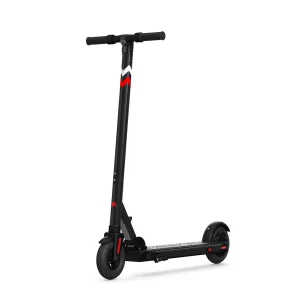
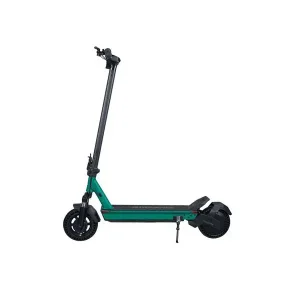
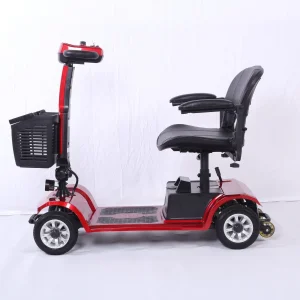
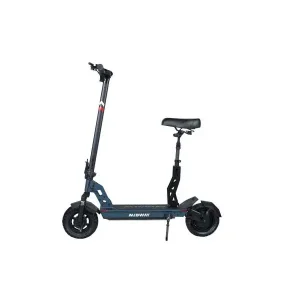
The global mobility equipment ecosystem is currently witnessing an unprecedented technical transformation. Driven by rapid demographic aging across North America, Western Europe, and East Asia, combined with expanding urban micro-mobility and commercial medical fleet leasing, demand for high-reliability mobility scooters has surged. At the epicenter of this hardware evolution is the battery pack—the single critical determinant of vehicle range, operational safety, total cost of ownership (TCO), and user autonomy.
Historically dominated by Sealed Lead-Acid (SLA), Absorbed Glass Mat (AGM), and Gel batteries due to low initial acquisition costs, the industrial sector is rapidly pivoting toward Lithium Iron Phosphate (LiFePO4) and advanced Nickel Manganese Cobalt (NMC) chemistry systems. B2B importers, mobility distributors, and Original Equipment Manufacturers (OEMs) must navigate a technical marketplace where cell chemistry, automated packaging, and Battery Management Systems (BMS) dictate commercial market share.
Strategic Market Insight: High-performance mobility scooter batteries are no longer treated as simple consumable commodities. Enterprise buyers require integrated power modules featuring CAN-bus communication, active thermal management, multi-stage over-current safeguards, and certified compliance with international safety standards including UN 38.3, IEC 62133-2, and UL 2272.
Evaluating wholesale mobility scooter battery manufacturers requires a rigorous understanding of cell-level performance metrics, internal pack architecture, and thermal dynamics. Modern senior mobility scooters, heavy-duty medical power chairs, and urban utility electric vehicles impose unique electrical stress profiles on energy storage systems.
The undisputed gold standard for medical and long-life mobility applications. Featuring an olivine crystal structure, LiFePO4 offers superior chemical and thermal stability. It withstands temperatures up to 60°C without risk of thermal runaway and provides an exceptional cycle life of 3,000 to 5,000 cycles at 80% Depth of Discharge (DOD).
Favored in lightweight folding scooters and ultra-portable travel vehicles where gravimetric energy density (Wh/kg) is paramount. NMC delivers high energy density in a compact envelope, allowing senior users to disassemble battery modules effortlessly for vehicle transport.
Legacy technology serving legacy budget tiers. While cost-effective upfront, SLA/GEL batteries suffer from severe Peukert's effect under heavy loads, weigh 3x more than lithium equivalents, and degrade rapidly within 300 to 500 charge cycles, leading to high warranty replacement costs.
| Performance Parameter | LiFePO4 (LFP) Lithium | NMC Lithium-Ion | AGM / Gel Lead-Acid |
|---|---|---|---|
| Gravimetric Energy Density | 140 - 170 Wh/kg | 200 - 250 Wh/kg | 30 - 45 Wh/kg |
| Cycle Life (80% DOD) | 3,000 - 5,000 Cycles | 1,000 - 2,000 Cycles | 300 - 500 Cycles |
| Thermal Runaway Temperature | 270°C (Highly Safe) | 210°C (Requires Active BMS) | N/A (Gassing Risk) |
| Nominal Module Voltage | 24V (8S) / 36V (12S) / 48V (15S/16S) | 24V (7S) / 36V (10S) / 48V (13S) | 12V blocks wired in series (24V) |
| 5-Year Operational TCO | Lowest (Zero maintenance) | Moderate | High (Frequent replacement) |
A premium battery module relies entirely on its electronic brain: the Smart BMS. Factory-direct manufacturing protocols must incorporate custom PCB boards equipped with microcontrollers that monitor cell parameters in real-time. Key BMS functions engineered into tier-one mobility batteries include:
China’s hardware manufacturing corridor—specifically the industrial clusters in Wuyi, Jinhua, and Zhejiang—represents the absolute core of global light electric vehicle (LEV) production. The synergy between battery cell production, precision aluminum extrusion, automated welding, and chassis assembly creates a massive competitive moat for international B2B buyers.
Modern factories employ high-precision robotic spot welding, automated cell sorting machines, and inline optical inspections (AOI). Every cell undergoes internal resistance (IR) and voltage matching prior to array grouping, minimizing human error and ensuring batch consistency.
By sourcing raw cells, nickel strips, BMS components, and IP-rated housings locally within Zhejiang’s hardware eco-system, factories eliminate component lead-time bottlenecks and provide highly competitive OEM factory-direct pricing.
Every battery pack undergo full-cycle burn-in testing, 3D vibration analysis simulating extreme road conditions, thermal shock chamber validation (-20°C to +65°C), and water-immersion testing to guarantee complete IP67 integrity.
For enterprise importers, medical equipment distributors, and OEM buyers, importing lithium-ion and lead-acid mobility scooter batteries involves strict adherence to regional regulatory frameworks and logistics safety protocols. Navigating customs clearance requires verifiable documentation issued by accredited third-party testing labs.
Lithium batteries are classified as Class 9 Dangerous Goods for air and ocean freight. UN 38.3 compliance mandates rigorous testing, including altitude simulation, thermal tests, vibration, shock, external short circuit, impact/crush, overcharge, and forced discharge. Complete MSDS and Transport Summary Reports are mandatory for ocean shipping containerization.
Crucial for entering North American commercial markets. UL certifications evaluate the complete electrical drive train, ensuring battery packs, chargers, and controllers prevent electrical fires, short circuits, and structural degradation under severe mechanical impact.
Mandatory for European Union distribution. IEC 62133-2 governs safety requirements for portable sealed secondary cells and batteries. RoHS compliance ensures complete elimination of heavy metals such as lead, cadmium, and mercury in battery construction.
Mobility scooter battery designs must be tailored to distinct operational environments. OEM engineering teams optimize casing durability, discharge rates, and weatherproofing based on end-user application demands.
Indoor assisted-living environments demand whisper-quiet power delivery, zero emissions, and consistent 24V supply for low-speed maneuvers. Battery modules require quick-swapping mechanisms so facility staff can exchange depleted packs effortlessly.
Outdoor 4-wheel mobility scooters traversing steep gradients, gravel trails, or grass require high continuous peak discharge currents (up to 3C rating). Rugged aluminum enclosures with shock-absorbing silicone gel lining prevent cell displacement under severe vibration.
Designed for airline compliance (< 300Wh lithium capacity limit per IATA regulations). These micro-packs utilize high-density NMC cells and modular snap-in designs allowing users to detach batteries and take them as carry-on baggage.
High-utilization commercial fleets demand remote telematics. Smart BMS modules equipped with IoT connectivity allow operators to track location, monitor SOC/SOH remotely, receive thermal anomaly alerts, and optimize fleet charging cycles.
While the initial purchase cost of a LiFePO4 battery pack is approximately 2.2x to 2.8x higher than a traditional lead-acid unit, a comprehensive Total Cost of Ownership (TCO) lifecycle analysis demonstrates undeniable financial superiorities for distributors, fleet operators, and end consumers over a 5-year operational horizon.
| Financial Metric (5-Year Horizon) | Dual 12V 35Ah AGM Lead-Acid System | Single 24V 40Ah LiFePO4 Smart System | Net Commercial Impact |
|---|---|---|---|
| Initial OEM Unit Cost | $110.00 | $260.00 | + $150.00 initial capital outlay |
| Replacement Frequency (5 Years) | 3 Replacements (Every 15-18 months) | 0 Replacements (Lifespan > 7 years) | Saves 3x full battery procurement costs |
| Labor & Service Call Out Costs | $180.00 ($60 per service cycle) | $0.00 | Direct savings for fleet operator |
| Freight & Warehousing Cost | High (Heavy weight: 26 kg/set) | Low (Lightweight: 8.5 kg/set) | 67% reduction in ocean & inland freight fees |
| Warranty RMA Claim Rate | 8.5% (Sulfation, capacity drop) | < 0.4% (Protected by Smart BMS) | Drastic reduction in dealer overhead |
| Estimated Total 5-Year Cost | $620.00 per vehicle | $260.00 per vehicle | 58% Total Cost Savings ($360 Net Gain) |
Expert answers to critical technical and commercial queries raised by mobility equipment importers and wholesale buyers.