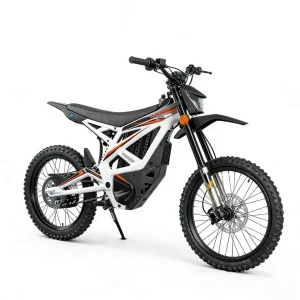
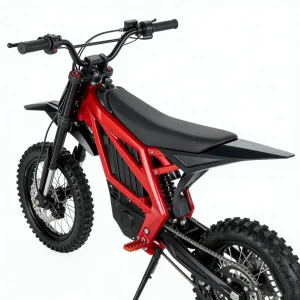
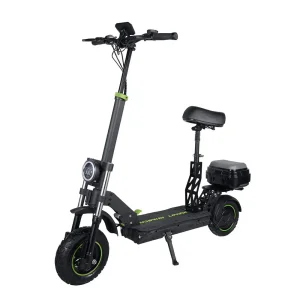
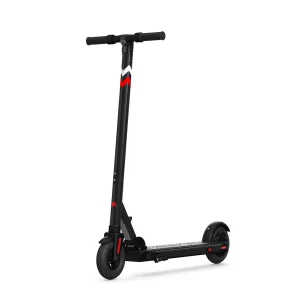
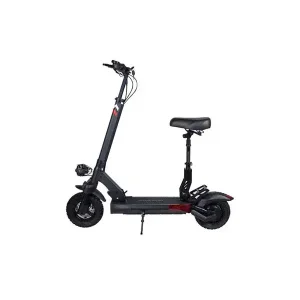
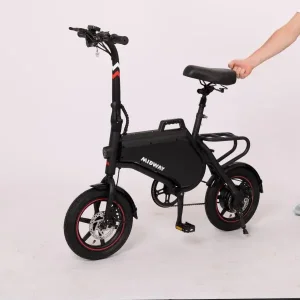
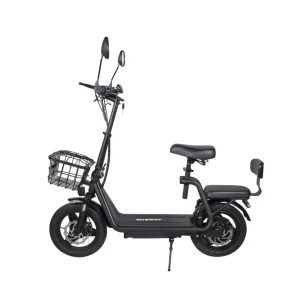
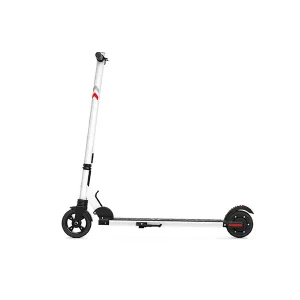
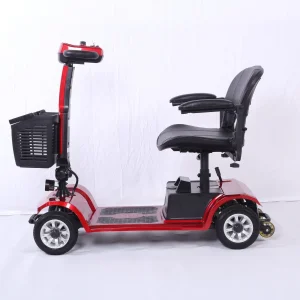
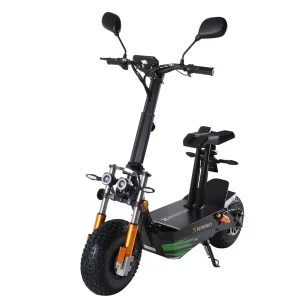
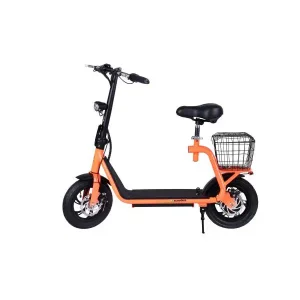
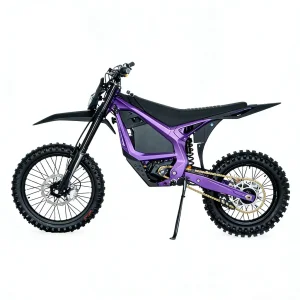
Direct factory-grade light electric vehicles and mobility systems tailored for international commercial importers, healthcare mobility fleets, and regional wholesale distributors.
The global medical and personal mobility industry is undergoing a structural paradigm shift. As healthcare providers, regional distributors, and fleet operators demand extended operational range, absolute thermal stability, and reduced total cost of ownership (TCO), the market is aggressively transitioning from legacy Sealed Lead-Acid (SLA/AGM) batteries to highly engineered Lithium-ion (NMC) and Lithium Iron Phosphate (LiFePO4) power systems.
As a primary Wholesale Mobility Scooter Battery Supplier & Factory, our manufacturing ecosystems synthesize advanced electrochemical cell selection, smart Battery Management Systems (BMS) with real-time telemetry, dynamic thermal management, and automated laser-welded pack assembly. This technical whitepaper evaluates macro market trends, OEM procurement metrics, electrochemical safety dynamics, regulatory compliance frameworks, and technological roadmaps to guide global enterprise buyers through high-volume sourcing decisions.
The global market for mobility scooter batteries is projected to expand at a compound annual growth rate (CAGR) exceeding 8.4% through 2032. This growth trajectory is fueled by demographic aging in developed economies, accelerating urbanization, and stringent ESG (Environmental, Social, and Governance) mandates favoring recyclable energy storage solutions.
Legacy AGM/SLA batteries present severe weight penalties, low energy density (~35 Wh/kg), and short lifecycle limits (300–500 cycles). Modern Tier-1 OEM suppliers are replacing lead-acid systems with LiFePO4 chemistry, which yields up to 160 Wh/kg, reduces pack weight by 65%, and offers 3,500+ full charge-discharge cycles, radically lowering field replacement costs for medical equipment vendors.
Modern commercial mobility fleets demand real-time diagnostics. High-volume B2B buyers require battery packs equipped with microcontrollers supporting CANbus, SMBus, or RS485 protocols. Real-time monitoring of State of Charge (SOC), State of Health (SOH), cell-level voltage variance, and temperature gradients has become mandatory for commercial deployment.
Regulatory agencies (FDA, EMA, NMPA) have heightened safety enforcement regarding thermal runaway prevention in personal mobility devices used in home-care and clinical settings. Battery factories must adhere to ISO 13485 quality systems and achieve strict UL 2271 certifications to guarantee zero-defect manufacturing.
For enterprise procurement directors and OEM product managers, selecting a high-capacity Wholesale Mobility Scooter Battery Supplier & Factory goes beyond comparing unit costs. Sourcing strategies require evaluating cell tier purity, automated production yield, raw material supply security, and total cost of ownership (TCO).
| Evaluation Parameter | Tier-1 Certified Factory (Target Standard) | Tier-3 Low-Cost Assembly Workshop | Impact on B2B Importers |
|---|---|---|---|
| Cell Sourcing & Grading | Grade-A Automotive-Grade Cells (CATL, EVE, BYD) with matched impedance & capacity. | Grade-B/C or re-wrapped recycled 18650/21700 cells with mismatched specs. | Prevents premature capacity fade, imbalanced voltage drop, and early warranty claims. |
| Busbar & Interconnects | Pure Copper / Nickel-plated Copper busbars with automated micro-laser spot welding. | Thin spot-welded steel/nickel strips with manual soldering irons. | Eliminates high-resistance hot spots, physical joint fractures, and thermal failure under heavy load. |
| BMS Protection Architecture | Dual-layer hardware protection + programmable smart software BMS (Over-charge, over-discharge, short-circuit, thermal cutoff). | Basic single-IC analog protection board without thermal sensors or balancing circuitry. | Guarantees 100% operational safety and prevents cataclysmic thermal runaway events. |
| Enclosure Engineering | High-impact ABS+PC flame-retardant (UL94-V0) casing with internal silicone shock damping. | Generic non-flame retardant PVC heat-shrink or thin plastic housing without shock isolation. | Protects internal cell matrices against heavy vibration, curb impacts, and moisture ingress. |
| Compliance Documentation | UN38.3, MSDS, CE, RoHS, UL2271, IEC 62133 full test report dossiers included. | Missing or forged test certificates; non-compliant shipping documentation. | Ensures frictionless customs clearance and legal protection against product liability lawsuits. |
The engineering integrity of a mobility scooter battery pack dictates both operational performance and user safety. Below is an exhaustive breakdown of the primary technological pillars engineered within high-grade battery manufacturing plants.
Choosing between Lithium Iron Phosphate (LiFePO4) and Nickel Manganese Cobalt (NMC) depends heavily on the intended vehicle form factor:
A battery pack is only as strong as its weakest cell. Our factory-engineered Smart BMS continuously monitors cell status via precision ADC chips:
Different mobility deployment environments demand specialized technical configurations. Our OEM/ODM factories deliver optimized power modules for diverse operational verticals:
Designed for continuous duty cycles in hospitals, nursing facilities, and residential environments. Packs feature redundant circuit cutoffs, flame-retardant V0 enclosures, zero maintenance requirements, and zero off-gassing, guaranteeing compliance with strict indoor medical standards.
High-capacity 48V and 60V power configurations engineered to handle steep inclines and rough surfaces. Built with continuous high-discharge C-rate cells (2C continuous, 5C peak) to provide sustained torque without causing internal voltage drops or BMS tripping.
Compact 24V 10Ah – 15Ah modular packs designed for airline travel compliance (under 300Wh UN38.3 standard). Utilizes high energy density 21700 NMC cells housed in quick-release aluminum or polycarbonate casings for tool-less removal.
Navigating international regulatory customs demands zero-defect compliance. Importing lithium-ion battery modules without accredited certification risks customs confiscation, massive fines, and product recalls. Our manufacturing facilities maintain an updated compliance matrix:
Mandatory for all air, ocean, and land freight. Includes rigorous altitude simulation, thermal testing, vibration, shock, external short circuit, impact, overcharge, and forced discharge safety evaluations.
The North American benchmark for safety in personal mobility devices. Tests evaluate resistance to crushing, water immersion, extreme thermal exposure, and electrical fault isolation performance.
Ensures full compliance for European Union importers, satisfying Electromagnetic Compatibility (EMC) standards, heavy metal usage limits (RoHS/REACH), and new EU Digital Battery Passport traceability norms.
As an innovation-driven wholesale supplier, our R&D team actively advances next-generation energy storage technologies designed to enter commercial production over the coming years:
Replacing liquid electrolytes with solid ceramic or polymer substrates. This shift promises to eliminate flammability risks completely while doubling volumetric energy density for compact mobility frames.
Emerging as a cost-effective alternative for budget mobility markets. Sodium-ion batteries maintain over 85% capacity retention at sub-zero temperatures (-20°C) and reduce raw material supply dependencies.
Incorporating Machine Learning edge chips directly on the BMS to predict cell degradation patterns, optimize charge rates based on user habits, and alert fleet operators to potential cell faults before they occur.
Addressing core technical and procurement queries frequently raised by enterprise buyers, OEM engineering teams, and regional mobility importers.
While legacy systems heavily utilized 24V SLA series setups (two 12V batteries wired in series), modern high-torque and long-range mobility scooters have standardized on 24V LiFePO4 modules or upgraded to 36V and 48V systems. Higher voltage architectures reduce current draw (amperage) for the same power output, minimizing resistive heating (I²R loss) across wiring harnesses, improving motor efficiency, and extending thermal endurance during steep inclines.
Our factory houses complete 3D CAD engineering and injection molding tooling divisions. We customize external casing dimensions, mounting bracket geometry, and ingress protection sealing to match your specific vehicle chassis. Furthermore, we support factory pre-wiring with industrial connector standards including Anderson Powerpole, XLR 3-pin, Neutrik, coaxial DC jacks, or custom waterproof automotive connectors (e.g., Amphenol/Deutsch).
Standard production MOQs start at 50 to 100 units per specification for customized battery packs. Standard, off-the-shelf replacement modules can be fulfilled in smaller batch sizes. Production lead times typically range from 15 to 25 business days following sample approval, which includes automated cell sorting, aging cycles, spot welding, smart BMS programming, and 100% full-capacity load burn-in testing.
Every production lot is delivered with a complete compliance dossier containing UN38.3 test summaries, 1.2-meter drop test certification, Material Safety Data Sheets (MSDS), and official Dangerous Goods (DG) transport certificates. For North America, packs are built to meet UL2271 and UL1642 cell standards. European orders include CE, RoHS, and EN62133 compliance reports.
Explore our extended catalog of factory-direct electric scooters, folding mobility vehicles, and high-power urban motorcycles engineered for international wholesale distribution.