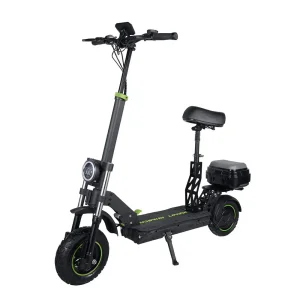
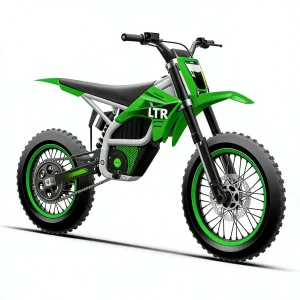
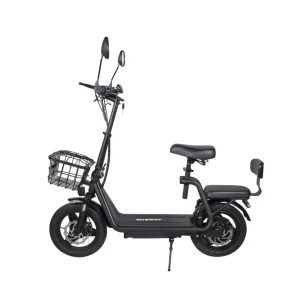
Factory-direct supply engineered for global distributors, logistics operators, and retail brands requiring rigorous compliance and certified performance.
Single wheel electric scooters—commonly known in technical mobility sectors as Electric Unicycles (EUCs) or self-balancing single-wheel personal transporters—represent the highest volumetric efficiency in micro-mobility engineering.
As urban centers enforce strict low-emission zones (LEZs) and space-constrained transport corridors, traditional multi-wheel personal electric vehicles (PEVs) face operational bottlenecks related to mass and volumetric footprint. A single wheel electric scooter delivers an unmatched power-to-weight ratio. By housing high-torque direct-drive brushless hub motors, dual-axis solid-state gyroscopes, and high-discharge lithium-ion battery packs within a single coaxial wheel assembly, these vehicles eliminate steering linkages, structural swingarms, and complex differential gears.
For B2B importers and regional brands, sourcing directly from specialized China manufacturing hubs allows access to advanced Field-Oriented Control (FOC) inverter platforms that offer up to 96% thermal-electrical conversion efficiency, ensuring minimal energy loss per ton-kilometer traversed.
Navigating the single wheel electric scooter wholesale landscape requires an acute understanding of manufacturing tiering. Unlike standardized kick scooters, single-wheel balancing systems demand zero-tolerance quality assurance. A firmware delay or MOSFET thermal overload in a dual-wheel vehicle results in coasting; in a self-balancing single wheel vehicle, it results in instantaneous cutout.
Consequently, global buyers must partner with tier-1 original equipment manufacturers (OEMs) and original design manufacturers (ODMs) equipped with high-speed surface-mount technology (SMT) lines, automated motor coil winding stations, and dynamic hardware-in-the-loop (HIL) simulation rigs. OEM manufacturing plants in Wuyi and the broader Zhejiang hardware corridor provide the necessary supply chain integration to deliver high-reliability units at scale.
| Performance Metrics | Single Wheel Electric Scooter (EUC) | Dual-Wheel Kick Scooter | Electric Bicycle (E-Bike) |
|---|---|---|---|
| Volumetric Efficiency (Payload/M³) | High (850 kg/m³) | Moderate (320 kg/m³) | Low (140 kg/m³) |
| Motor Power Density (W/kg Frame) | 180 - 240 W/kg | 45 - 85 W/kg | 25 - 50 W/kg |
| Gradability (Max Incline Angle) | up to 35° - 45° | 15° - 25° | 12° - 20° |
| Obstacle Clearance (Tire Diameter Ratio) | Superior (14" - 22" single contact point) | Limited (8.5" - 11") | Excellent (26" - 29") |
| Supply Chain Component Integration | Coaxial Integrated Controller & Motor Hub | Modular Frame Assembly | Distributed Mechanical Frame |
Deconstructing the hardware stack, control electronics, battery chemistry, and telemetry algorithms that power modern wholesale single wheel scooters.
At the heart of modern single wheel self-balancing technology lies high-frequency Field-Oriented Control (FOC) paired with redundant 6-axis Inertial Measurement Units (IMUs). By sampling pitch, roll, and yaw angles at 1,000 Hz to 2,500 Hz, the core MCU calculates precise phase currents for the motor. Dual-CPU redundancy architectures ensure that if one processing core encounters a parity check error, the secondary safety core takes over within 0.5 milliseconds, preventing high-speed balancing cutouts.
Direct-drive brushless DC hub motors utilize ultra-thin 0.2mm to 0.35mm silicon steel laminations to reduce eddy current losses. Combined with high-grade N52SH neodymium-iron-boron (NdFeB) permanent magnets capable of withstanding operating temperatures up to 150°C without demagnetization, our factory configurations yield up to 160 N.m of peak wheel torque. Custom stator winding layouts allow optimal balance between high top-end speed and steep incline climbing power.
Battery failure is non-negotiable in B2B micro-mobility. Modern single wheel electric scooter factories utilize high-rate 21700 lithium-ion cells (such as Samsung 50S or LG M50LT) arranged in 20S to 32S configurations (84V to 134.4V nominal). Advanced Smart BMS modules track individual cell voltages, temperature gradients across pack zones, and internal resistance. Research and development roadmaps are currently transitioning toward semi-solid-state lithium cells, offering 350 Wh/kg energy density and superior thermal safety.
Beyond personal recreation, single wheel electric scooters are breaking into high-value commercial and industrial applications across global markets.
In ultra-dense metropolitan environments like London, Paris, Tokyo, and New York, traditional delivery vans spend up to 40% of their operational cycle stuck in traffic or searching for parking. Delivery personnel equipped with single wheel electric scooters fitted with custom backpack frames can transition seamlessly from road lanes to pedestrian zones and elevator interiors. The compact profile allows the rider to bring the vehicle directly inside multi-story office towers, reducing last-mile drop-off times by up to 65%.
Large logistics hubs, automotive assembly plants, and seaport terminals spanning hundreds of thousands of square meters require rapid mobility for supervisors, maintenance engineers, and security personnel. Single wheel scooters offer zero turning radius, allowing staff to navigate narrow warehouse aisles, cross tight footbridges, and operate indoors without zero-emissions violations. Hands-free riding capability enables workers to operate handheld barcode scanners or walkie-talkies while in motion.
University campuses, private industrial parks, and event venues are increasingly deploying security officers on heavy-duty single wheel scooters. Equipped with long-range 18" to 20" pneumatic tires, integrated emergency flashing strobe lights, and rugged IP67 weatherproofing, patrol personnel can traverse curb steps, gravel walkways, and grass fields smoothly, maintaining a high command presence and rapid response time during emergencies.
Off-road recreational riding represents the fastest-growing consumer sub-segment. Commercial rental centers and eco-tourism resorts in mountain regions are stocking adjustable air-suspension single wheel scooters. Models with 80mm to 130mm of suspension travel absorb root impacts, rock drops, and steep single-track trail spikes, opening up lucrative revenue models for fleet operators who offer guided off-road eco-tours.
Unpacking the structural, geographical, and technological cluster advantages of sourcing from Wuyi and Zhejiang electric vehicle manufacturing hubs.
The hardware manufacturing cluster in Wuyi, Zhejiang, houses an unparalleled concentration of component specialized vendors. Within a 30-kilometer radius, single wheel scooter factories source high-precision aluminum die-cast rim housings, custom CNC pedal brackets, SMT PCB assemblies, wire harnesses, and molded polycarbonate outer shells. This hyper-localized supply chain eliminates cross-border component lead time risks, drastically reducing bill-of-materials (BOM) overhead.
Leading wholesale production facilities operate integrated quality assurance SOPs across three strict gateways:
1. IQC (Incoming Quality Control): Ultrasonic internal crack detection for magnesium-alloy rim castings and cell capacity sorting using automated battery analyzers.
2. IPQC (In-Process Quality Control): 100% automated optical inspection (AOI) of controller mainboards and high-voltage insulation dielectric testing.
3. OQC (Out-going Quality Control): Dynamic dyno testing, 30-degree incline hill hold tests, and 24-hour waterproof chamber spray tests.
Equipped with multi-axis CNC machining centers and rapid 3D tooling setups, modern OEM factories can transition a customized single wheel scooter design from CAD model to functional prototype in under 21 days. High-volume automated production lines enable factory outputs exceeding 15,000 units per month, delivering economies of scale that allow global wholesale buyers to maintain healthy gross profit margins above 35% in destination retail markets.
Navigating international product safety compliance and establishment of local distributor support channels.
Exporting single wheel electric scooters into North American and European jurisdictions demands adherence to stringent safety frameworks:
To protect our global B2B partners' brand reputation, our factory implements a turnkey post-purchase support infrastructure:
Addressing key technical, logistical, and commercial inquiries from global importers and distributors.
Direct factory pricing, verified OEM capabilities, and fast global dispatch across our complete electric scooter catalog.