Factory-direct supply engineered for global distributors, urban sharing operators, and commercial leasing enterprises.
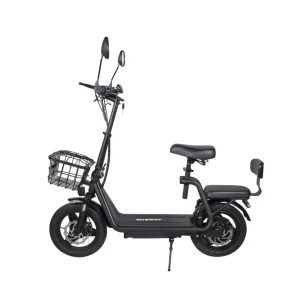
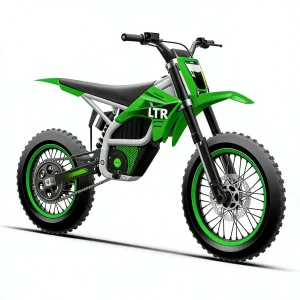
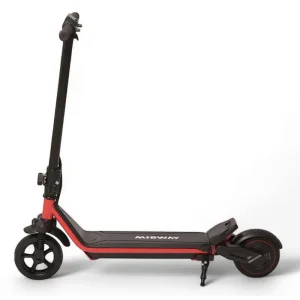
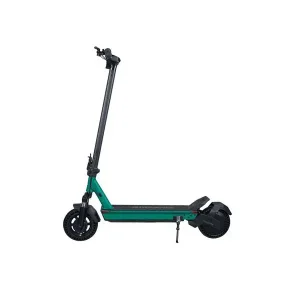
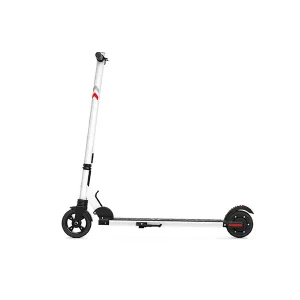
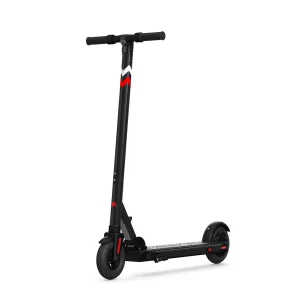
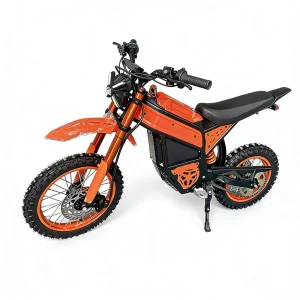
The integration of photovoltaic (PV) technology into micro-mobility hardware represents a structural shift in zero-carbon urban transportation, reducing grid dependency and lowering fleet Total Cost of Ownership (TCO).
The global electric scooter market is undergoing a rapid technological evolution. As urban centers around the world enforce stricter clean-air zones and corporate fleets embrace rigorous ESG (Environmental, Social, and Governance) targets, standard grid-recharged e-scooters face operational bottlenecks: elevated electricity cost, carbon intensity of non-renewable grid mixes, and the massive logistical overhead of manual battery swapping. Wholesale buyers, fleet operators, and regional distributors are increasingly demanding solar-assisted electric scooters that harvest ambient sunlight during transit and idle park states.
By embedding flexible, ultra-thin CIGS (Copper Indium Gallium Selenide) or high-efficiency Monocrystalline Silicon solar films directly into the scooter chassis, deck panels, and steering columns, modern manufacturers achieve continuous trickle-charging. This continuous energy yield offsets parasitic electronic loads, mitigates lithium cell voltage drop, and extends daily operational radius by 15 to 30 kilometers without requiring manual plug-in intervention.
How proprietary power conversion algorithms and flexible solar film encapsulation yield maximum energy density under real-world irradiance.
Unlike rigid glass panels, thin-film CIGS photovoltaic modules feature flexural elasticity allowing seamless contour-matching to curved scooter stem geometries. Offering conversion efficiencies up to 21.8%, these cells perform exceptionally under low-light and shaded conditions.
Integrated Maximum Power Point Tracking (MPPT) micro-controllers dynamically step-up voltage output from panel arrays (18V-36V) to match 24V, 36V, 48V, or 60V lithium battery architectures, optimizing power tracking efficiency up to 98.5%.
Solar charging demands intelligent battery protection. Our smart BMS prevents overcharging, cell imbalance, and thermal stress during prolonged solar exposure using multi-point NTC temperature sensors and automated power throttling.
Technical Insight for OEM Importers: Integrating solar harvesting into high-power brushless hub motors (e.g., 600W to 5000W models) minimizes phase-current losses during acceleration by maintaining higher baseline battery terminal voltage throughout daylight hours.
Tailored micro-mobility hardware configurations optimized for diverse global operating environments.
For municipal dockless operators, solar-assisted scooters dramatically reduce the frequency of manual battery swap truck routes. Vehicles parked in open sunlight naturally top up their reserves, increasing asset uptime by up to 28% and directly lowering operational overhead in high-density metropolitan areas.
Resorts, university campuses, and industrial parks require zero-emission internal transit. Solar electric scooters eliminate the requirement for expensive charging hub infrastructure installation across vast outdoor properties, offering visitors and staff self-sustaining mobility.
Equipped with 1000W to 1500W brushless motors and high-capacity 48V battery systems, heavy-duty solar cargo scooters provide courier services with continuous auxiliary power, enabling uninterrupted delivery shifts throughout sunny daylight hours.
In regions where power grid reliability is low and fuel costs are high (e.g., parts of LATAM, SE Asia, and Africa), solar-integrated 2-wheel vehicles offer true energy independence, unlocking reliable transport for personal and commercial usage alike.
Comprehensive architectural matrix for industrial B2B procurement evaluation.
| Model Category | Motor Rating | System Voltage | Battery Cell Chemistry | Solar Panel Type | Daily Solar Extension | Target Compliance |
|---|---|---|---|---|---|---|
| Light Commuter | 150W Brushless | 21.6V / 24V | 18650 Li-ion / 15Ah | Flexible CIGS Stem Film | +8 - 12 km | CE / RoHS / EN17128 |
| Urban Standard | 350W Hub Motor | 36V | High-Density NMC / 10.4Ah | Embedded Deck Monocrystalline | +12 - 18 km | CE / UL2272 |
| Pro Commuter App | 600W Brushless | 48V | Automotive Tier-1 NMC / 15Ah | Dual Stem/Deck Photovoltaic | +15 - 22 km | CE / UN38.3 / FCC |
| Heavy Duty Folding | 1000W Brushless | 48V | Heavy-Duty LiFePO4 / 20Ah | High-Efficiency Flexible CIGS | +20 - 28 km | CE / EN17128 / IP67 |
| Off-Road Dirt Bike | 1500W High Torque | 48V | High-Discharge Pack / 25Ah | Reinforced Impact PV Film | +18 - 25 km | CE / MSDS / UN38.3 |
| Super Power Moto | 5000W Peak Moto | 60V / 20Ah | Prismatic LiFePO4 Module | Auxiliary Cargo Canopy PV Array | +25 - 35 km | CE / EEC / COC |
Backing global brands with 20+ years of production experience from Wuyi, Zhejiang, China.
WuYi YueMa Leisure Articles Co., Ltd. operates a state-of-the-art 34,000 m² vertically integrated manufacturing facility. Our production lines combine automated robotic frame welding, automated SMT PCB assembly for motor controllers, and clean-room battery pack assembly lines equipped with automated laser cell welding.
Every solar electric scooter undergoes dynamic chassis stress testing (100,000 vibration cycles), thermal chamber testing (-20°C to +60°C), and high-pressure IPX7 water immersion testing to ensure panel reliability under harsh weather.
We assist global importers with complete regulatory certification dossiers, including CE, RoHS, EN17128, UL2272, UN38.3 lithium battery transport safety, and MSDS clearance documentation.
Custom OEM branding, colorways, deck grip graphics, firmware customization (speed caps, IoT telemetry protocols), custom packaging, and customized solar wattage configurations.
Factory-direct supply engineered for heavy usage, terrain versatility, and commercial applications.
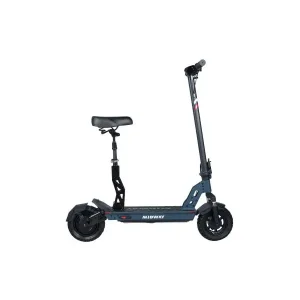
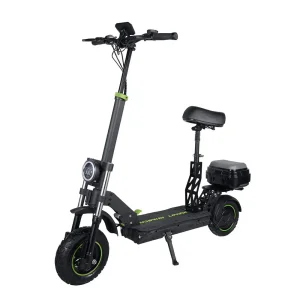
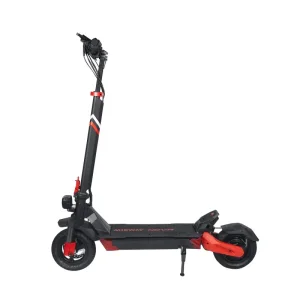
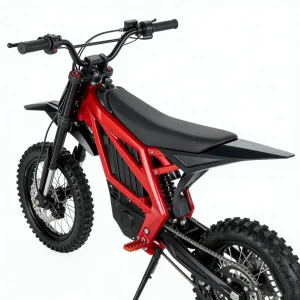
Analyzing the commercial economic advantages of solar-assisted micro-mobility deployments for fleet operators and B2B importers.
When fleet operators analyze CAPEX vs OPEX in micro-mobility deployment, battery swapping and charging operations represent up to 45% of gross operational expense. Traditional electric scooter sharing models rely on field operations teams driving diesel vans to collect flat batteries or haul entire scooters back to central charging hubs. This introduces labor costs, fuel consumption, and battery wear caused by rapid high-current grid charging.
Solar-assisted scooters shift the operational curve. By collecting 150Wh to 350Wh of solar energy daily under normal irradiance (4.5 Peak Sun Hours), the scooter experiences continuous trickle-charging while parked in public spaces. The economic return on investment (ROI) materializes through three primary vectors:
Emerging engineering trends shaping the next decade of solar-powered zero-emission vehicles.
Next-gen tandem solar cells target panel conversion efficiencies exceeding 30%. Commercializing these lightweight tandem layers will enable scooters to harvest up to 500Wh of energy daily within the same deck surface area.
Onboard IoT telemetry equipped with machine learning algorithms evaluates weather forecasts, GPS solar angle data, and rider history to optimize real-world motor power consumption and dynamic solar harvest trajectories.
Integrating bidirectional Vehicle-to-Grid (V2G) capabilities allows fleets of parked solar scooters to act as distributed micro-energy storage nodes, feeding excess solar energy back into smart urban micro-grids.
Answers to common commercial, engineering, and logistics questions from global wholesale buyers.
