Engineered for Boston's dense urban corridors, steep incline gradients, and rigorous multi-season climate demands.
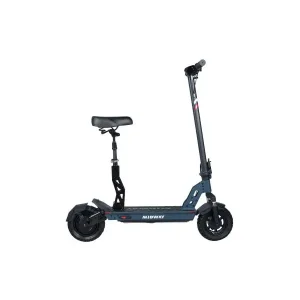
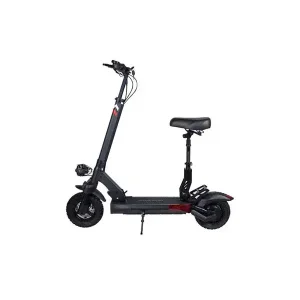
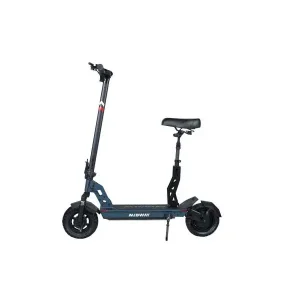
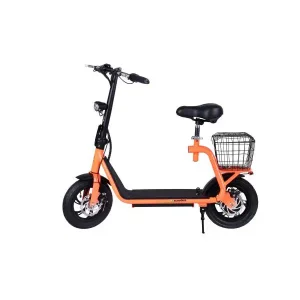
A comprehensive engineering assessment for deploying electric scooter fleets across Greater Boston, Cambridge, and the Commonwealth of Massachusetts.
As the metropolitan landscape of Greater Boston accelerates its transition toward zero-emission urban transit, commercial operators, university campus fleet managers, and retail distributors face distinct engineering and operational demands. Boston’s urban topology presents a unique combination of historic brick and cobblestone streets in historic districts like Beacon Hill and North End, steep elevation profiles across neighborhoods such as Mission Hill and Bellevue, and extreme seasonal weather fluctuations ranging from humid summers to sub-zero, salt-laden winter storms.
For B2B importers and regional micro-mobility providers, sourcing generic electric scooters directly off the shelf often leads to premature mechanical failures, battery thermal throttling, and excessive maintenance overhead. Sourcing from a tier-1 China electric scooter manufacturer with custom OEM design capabilities is critical to ensuring long-term fleet durability, regulatory compliance with Massachusetts State Law (MassDOT), and optimal Total Cost of Ownership (TCO).
Standard 8.5-inch solid tires generate excessive vibration on historic Boston streets, loosening internal soldering and fatiguing frame welds. Our Boston-spec export models feature reinforced 10-inch pneumatic off-road tubeless tires mated to hydraulic front fork shock absorbers and dual-rear coil suspension systems to dissipate high-frequency energy.
New England winters severely degrade standard lithium-ion battery capacity. Our vehicles integrate custom smart BMS boards engineered with low-temperature cut-off algorithms, thermal insulation battery casing, and optional integrated heat pads to maintain chemical charge acceptance during Boston’s freeze cycles.
Regulatory Compliance Alert (City of Boston & MassDOT): In Massachusetts, low-speed electric mobility units are classified under state guidelines requiring maximum governed speeds (typically 20 mph), dual braking redundant systems, integrated LED lighting (minimum 500-lumen front headlight), and UL2272 electrical system safety certification for bulk retail and shared-fleet deployment.
Leveraging the world’s most concentrated hardware manufacturing infrastructure in Wuyi, Zhejiang to deliver unmatched cost efficiency and engineering precision.
The global micro-mobility market is projected to reach over $180 Billion by 2030, driven by severe urban traffic congestion, last-mile commercial delivery expansion (e.g., food, courier, micro-logistics), and corporate ESG initiatives. North American distributors face relentless pressure to deliver highly reliable, feature-packed e-scooters while maintaining viable profit margins despite global shipping fluctuations and tariff barriers.
China's Yangtze River Delta—specifically the Wuyi Hardware Industrial Cluster in Zhejiang Province—represents the global epicenter of personal electric vehicle (PEV) engineering. Unlike fragmented assembly operations in emerging manufacturing hubs, Wuyi provides an end-to-end industrial ecosystem within a 30-mile radius, encompassing raw aviation-grade aluminum extrusion mills, CNC machining facilities, brushless DC (BLDC) motor winding factories, SMT PCB controller plants, and specialized automated assembly lines.
We empower Boston B2B importers with tailor-made specifications suited to exact commercial use cases:
Compare standard OEM consumer configurations against our industrial-grade commercial build standards optimized for New England operators.
| Technical Parameter | Standard Retail E-Scooter | Yuema Boston Commercial-Grade OEM | Operational Benefit for Importers |
|---|---|---|---|
| Motor Power & Architecture | 250W - 350W Front Single Hub | 500W - 1200W Dual/Single Rear BLDC Motor | Conquers steep Boston hills (15-20% inclines) without motor overheating. |
| Battery Cell Chemistry | Generic 18650 Chinese Cells | Grade-A 21700 Lithium / High-Thermal BMS | Prevents voltage sag in sub-zero winter temperatures down to -10°C. |
| Frame Material & Structure | Standard Aluminum Alloy 6063 | Aviation-Grade 6061-T6 Heat-Treated Alloy | Higher tensile strength prevents frame snapping under heavy commercial payloads (up to 150 kg). |
| Braking Architecture | Single Rear Mechanical Disc | Dual Front & Rear E-ABS + Hydraulic Disc Brakes | Shortens stopping distance on wet or icy Boston pavement by up to 40%. |
| Ingress Protection Rating | IP54 (Splash Proof) | IP65 - IP67 Sealed Electronics & Battery Deck | Resists road slush, winter road salt corrosion, and heavy rain storms. |
| IoT & Fleet Management | Basic Bluetooth App or None | Embedded 4G / GPS / CAN-Bus Protocol | Enables real-time fleet telemetry, remote lock/unlock, and geofencing for rentals. |
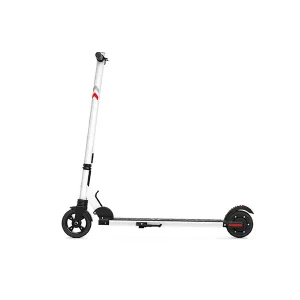
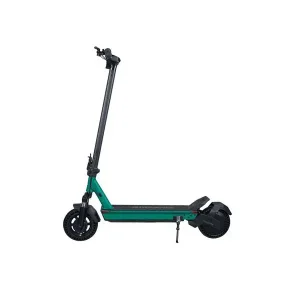
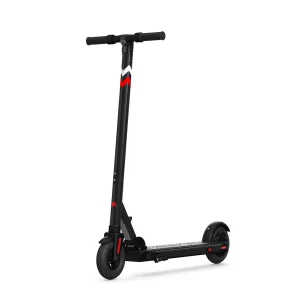
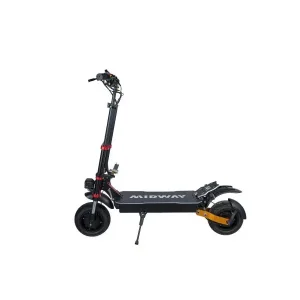
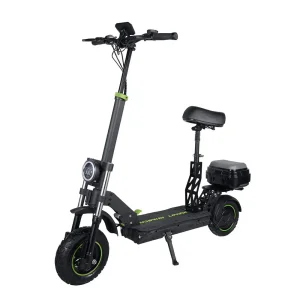
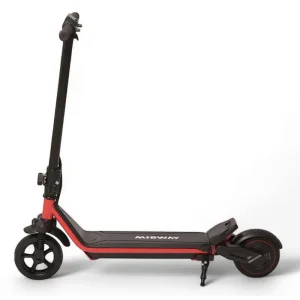
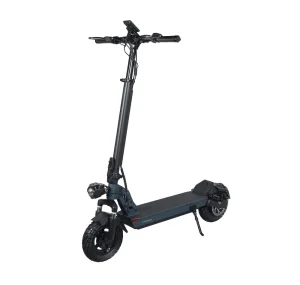
Explore our full line of wholesale electric scooters, from lightweight campus micro-mobility units to extreme long-range commercial delivery vehicles.
Addressing key technical, regulatory, logistics, and OEM compliance queries from micro-mobility buyers.
To legally import and sell electric scooters in the United States and Massachusetts, products must comply with UL2272 (electrical system safety certification covering battery packs, chargers, and controllers). Additionally, battery packs require UN38.3 transport certification, FCC approval for wireless/Bluetooth modules, and RoHS/CE compliance for electronic assemblies. Yuema provides complete testing documentation for fast US Customs (CBP) clearance.
Our Boston-spec models utilize anti-corrosive powder-coated aluminum chassis, IP67-rated waterproof silicone wire harnesses, and sealed stainless steel bearings resistant to road salt corrosion. Battery management systems (BMS) are calibrated with low-temperature protective thresholds to prevent lithium cell plating during freezing charging cycles.
Our standard MOQ for OEM/ODM private-label electric scooter orders starts at 50 to 100 units per model, depending on the degree of customization (custom paint, IoT branding, battery sizing). Standard mass production lead time is 20-30 days upon sample approval, with ocean freight to the Port of Boston taking approximately 25-35 transit days.
Yes. We collaborate directly with major IoT software providers (such as Omni, Segway IoT, or custom API solutions). Our electronic controllers feature dedicated CAN-bus or UART serial communication ports, allowing seamless plug-and-play installation of 4G LTE/GPS modules for geofencing, remote locking, and real-time fleet analytics.
We supply 1-2% free wearable spare parts (brake pads, tires, inner tubes, throttles) with every bulk container shipment. We offer a 12-month structural warranty on frames and core electrical components (motors, controllers, batteries). Spare parts orders are stocked in factory reserves for quick air-freight dispatch if urgent replacements are required.
Our logistics division handles both FOB (Free on Board) Ningbo/Shanghai and full DDP (Delivered Duty Paid) shipments direct to your Boston-area warehouse. We handle ocean freight booking, hazardous material (Hazmat Class 9) lithium battery handling documentation, customs clearance, and inland trucking.
Request a custom OEM quote, engineering catalog, or factory audit report for your Greater Boston micro-mobility project today.
Send Inquiry Now