Engineered for high durability, climate adaptability, and strict compliance with Finnish Transport and Communications Agency (Traficom) regulations.
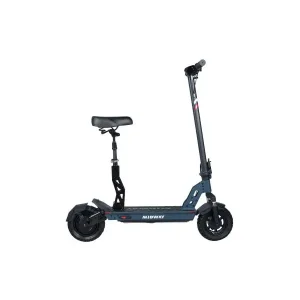
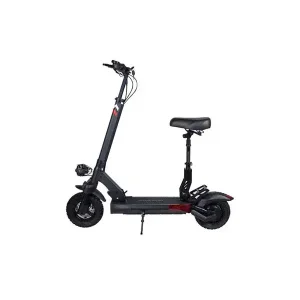
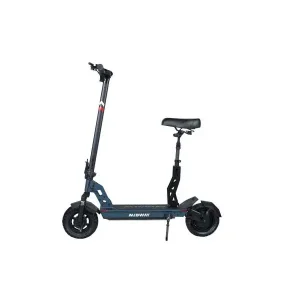
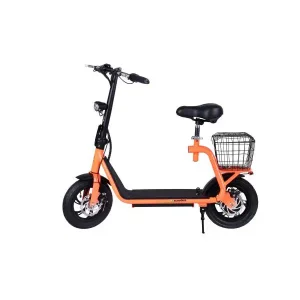
Analyzing Finland's aggressive carbon-neutrality targets, micro-mobility adoption rates, and specific cold-climate operational requirements.
Finland stands at the forefront of Europe’s green mobility transition. Driven by the national goal to achieve carbon neutrality by 2035—fifteen years ahead of the broader European Union target—the Finnish transport sector is undergoing a structural paradigm shift. Micro-mobility, particularly lightweight electric vehicles (LEVs) and electric scooters, has evolved from a recreational commodity into a critical component of Finland’s urban transit infrastructure across major metropolitan areas including Helsinki, Espoo, Tampere, Vantaa, and Oulu.
However, the Finnish micro-mobility landscape presents a unique set of engineering and operational challenges that differentiate it from southern European markets. B2B importers, local brand owners, fleet operators, and retail distributors seeking an electric scooter manufacturer & supplier in Finland must look beyond standardized specifications. Success in this market demands hardware and software optimized for sub-zero operating environments, prolonged exposure to road salt and moisture, rigorous safety compliance under the Finnish Transport and Communications Agency (Traficom), and exceptional battery thermal durability.
Regulatory Insights (Traficom Compliance): In Finland, electric scooters with a maximum continuous power output of up to 1000W and a top speed restricted to 25 km/h are classified as light electric vehicles. They share legal status with bicycles, eliminating the requirement for driver's licenses or mandatory registration. However, vehicles exceeding these parameters require vehicle registration and insurance, making the 250W–1000W / 25km/h envelope the absolute sweet spot for commercial volume importing.
Detailed analysis of global supply chain evolution, Nordic purchasing behaviors, and Total Cost of Ownership (TCO) benchmarks.
The global e-scooter market is projected to reach $42 billion by 2030, exhibiting a compound annual growth rate (CAGR) exceeding 8.5%. In Finland, private ownership is growing at a rate 1.4x faster than commercial sharing fleets due to suburban commute preferences and year-round usage demands.
Early-generation consumer e-scooters failed rapidly under Nordic weather conditions. Modern Finnish B2B buyers now mandate aviation-grade aluminum frames, anti-corrosion powder coatings, sealed waterproof electronics, and modular component design for rapid maintenance.
For Finnish fleet managers and corporate distributors, unit purchase price accounts for only 40% of the lifetime cost. Low warranty return rates, long battery cycle life (800+ cycles at -10°C), and spare part availability dictate ultimate profitability.
Why partnering with specialized OEM/ODM factories in Zhejiang, China delivers unmatched technical and financial advantages to Finnish enterprises.
While European brand development and localized customer service are vital, the global manufacturing heartland for electric micro-mobility remains centered in China—specifically within the hardware and automotive hubs of Zhejiang province. Chinese electric scooter manufacturers provide the scale, engineering agility, and supply chain integration required to deliver high-performance electric vehicles at competitive price points.
| Technical Parameter | Standard Global Specification | Finland Climate Optimized (OEM Custom) |
|---|---|---|
| Battery Cell Thermal Range | -5°C to 45°C | -20°C to 50°C (Includes silicone thermal wrap & BMS heat recovery) |
| Ingress Protection (IP Rating) | IPX4 (Splash resistant) | IPX6 / IPX7 (Fully sealed battery deck & controller casing) |
| Tire Compound & Tread | Standard smooth slick tires | Deep-tread pneumatic off-road / stud-compatible winter tires |
| Hydraulic Braking System | Standard mineral oil (-10°C freezing limit) | Low-viscosity synthetic fluid (Functional down to -30°C) |
| Controller Firmware | Standard linear acceleration | Soft-start winter traction control (Prevents skidding on icy asphalt) |
Understanding regional demographic demands, terrain variations, and specialized use-cases across Finland.
Primary Use: Last-Mile Urban Commuting & Multimodal Transit. Compact 350W–600W folding scooters with app connectivity and dual braking systems dominated this market. High demand for lightweight designs easily carried onto commuter trains and metro networks.
Primary Use: Factory, Port & Warehouse Intra-Mobility. Heavy-duty 1000W electric scooters with front/rear cargo baskets, puncture-proof solid or tubeless tires, and high-load frames (up to 150 kg payload) designed to reduce worker transit time across large industrial footprints.
Primary Use: Student Mobility & Tech Campus Fleets. Mid-range 500W scooters equipped with IoT telematics, geofencing capabilities, and rapid-swap battery technology allowing continuous operation across expansive academic campuses.
Primary Use: All-Terrain Safari & Arctic Hospitality Rentals. High-torque 1000W–1200W dual-motor scooters featuring 10-inch or 11-inch fat pneumatic tires, extended 24Ah battery packs, and heavy-duty suspension for snow tracks and gravel paths.
Primary Use: Hilly Terrain & Medium-Distance Travel. 600W–1000W scooters featuring 48V/52V high-voltage architecture capable of tackling steep inclines without motor overheating or severe voltage sag.
Primary Use: Eco-Friendly Commercial Micro-Logistics. Fleet scooters with integrated GPS tracking, remote diagnostics, reinforced kickstands, and heavy-duty deck enclosures designed for high-frequency daily commercial rental cycles.
Key technological shifts driving product differentiation, user safety, and operational longevity in cold-climate markets.
Modern Finnish consumers expect full smartphone integration. Next-generation electric scooters feature Bluetooth and 4G IoT modules enabling digital locking, real-time GPS tracking, battery health monitoring (SOH), self-diagnostic fault codes, and customized speed mode configuration via iOS and Android apps.
Lithium-ion technology is evolving toward high-density 21700 cell formats and Lithium Iron Phosphate (LiFePO4) chemistries for specialized commercial applications. Smart Battery Management Systems (BMS) now integrate active balancing, over-charge protection, low-temperature charging inhibitors, and thermal management sensors to preserve cycle life during Finnish winter months.
Energy recovery systems convert kinetic braking force back into electrical power, extending range by up to 12% in stop-and-go urban traffic. Furthermore, electronic ABS prevents wheel lockup on wet or icy pavement, greatly enhancing rider safety.
Given Finland's limited daylight during winter, high-lumen integrated front headlights, deck side ambient LED strips, ultra-bright brake lights, and turn signals are becoming standard requirements rather than optional accessories.
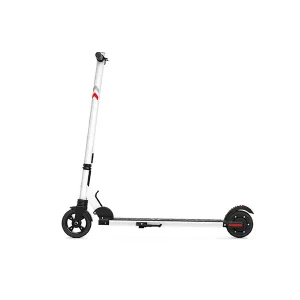
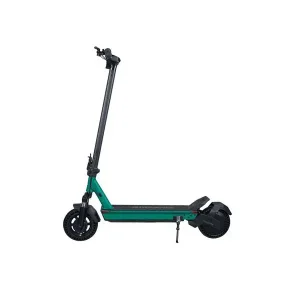
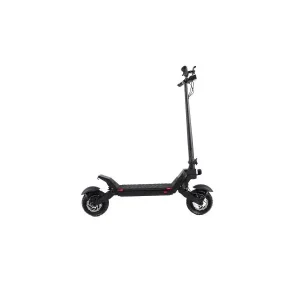
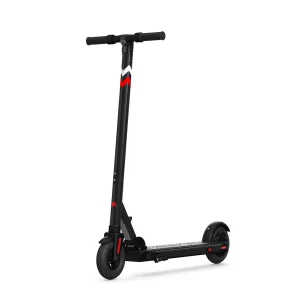
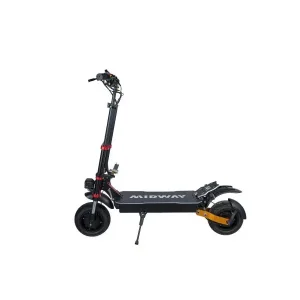
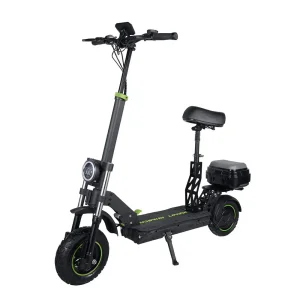
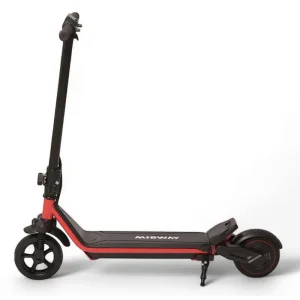
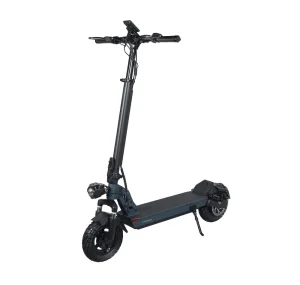
Explore our full range of factory-direct electric scooters, available for OEM/ODM customization and volume supply.
Essential criteria to evaluate when selecting a factory direct manufacturing partner.
Verify that your supplier provides complete test reports for CE-MD (Machine Directive), CE-LVD (Low Voltage Directive), CE-EMC, EN 17128:2020 (the European safety standard for personal light electric vehicles), and RoHS 2.0. Battery packs must carry valid UN38.3, MSDS, and IEC 62133 transport and safety testing.
Ensure the manufacturer executes environmental chamber testing (temperature cycling from -20°C to 50°C), waterproof IPX6 water jet testing, chassis salt-spray corrosion testing (minimum 72 hours), and continuous vibration testing for battery decks before bulk shipment.
Establish a guaranteed spare parts supply chain. Reliable factories should supply 2%–3% wear-and-tear spare parts (brakes, tires, throttle assemblies, cables) free of charge with full container load (FCL) orders and maintain a minimum 5-year replacement part stock availability.
Confirm that your supplier provides 5-ply reinforced honeycomb shipping boxes designed to withstand sea freight and multi-node transit, complete with customized Finnish/English user manuals, warning labels, and Traficom compliant rating plates.
In-depth technical, regulatory, and commercial insights for electric scooter procurement.
Under Finnish Traficom regulations, light electric vehicles restricted to a top speed of 25 km/h and maximum motor power of 1000W do not require vehicle registration, license plates, or driver's licenses. They are legally permitted on bicycle paths. Scooters with speeds under 15 km/h are categorized as pedestrian helpers. If motor power exceeds 1000W or speed exceeds 25 km/h, the vehicle must be registered and insured as a moped (L1e-B category).
Sub-zero temperatures increase internal lithium-ion battery resistance, temporarily reducing usable capacity by 20% to 35% at -10°C. To combat this, our factory provides specialized winter upgrades: thermal insulating deck liners, cold-resistant BMS firmware that prevents charging under 0°C (preventing lithium plating damage), and high-discharge Grade-A battery cells rated for low-temperature operations.
Standard OEM/ODM orders (custom logo, custom colors, localized user manuals, and packaging) typically require an MOQ of 50 to 100 units per model. Standard sample lead time is 10–15 days, while full container production (20GP / 40HQ) takes approximately 25–35 days. Sea shipping from Ningbo or Shanghai port to Helsinki or Kotka takes around 35–45 days depending on routing.
Yes. Finland experiences frequent rain, slush, and snowmelt. Standard IPX4 rating is often insufficient for long-term commercial durability. We engineer our Finnish export models with IPX6 overall vehicle ingress protection and IPX7 sealed battery deck enclosures, utilizing waterproof wire harnesses, sealed silicone gaskets, and potted controller boards.
Yes, absolutely. Our factory can lock the controller firmware to a hard maximum speed ceiling of 25 km/h (or 20 km/h for specific fleet requirements) directly from the assembly line. We also provide dual-speed firmware options switchable via companion smartphone application if permitted by specific local municipal guidelines.
Finnish Customs (Tulli) requires a Commercial Invoice, Packing List, Bill of Lading, CE Declaration of Conformity (listing EN 17128 standards), UN38.3 test report for lithium batteries, and safety data sheets (MSDS). Our export documentation department prepares complete customs-clearance documentation packages for seamless import processing.
Looking to launch or expand your electric scooter brand in Finland? Contact our B2B engineering and sales team today to request product catalogs, technical specs, and factory-direct wholesale quotes.
Send Inquiry Now