An Industrial Deep-Dive into Local Manufacturing Dynamics, Strategic OEM/ODM Chinese Supply Chains, AIS-156 Compliance, and Micro-Mobility Architecture for Global & Indian Enterprises.
Send Inquiry NowExplore our premier electric mobility vehicles engineered for rugged terrain resilience, high battery efficiency, and international safety compliance. Built for B2B distributors and enterprise procurement in India and across global markets.
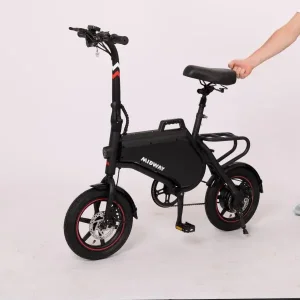
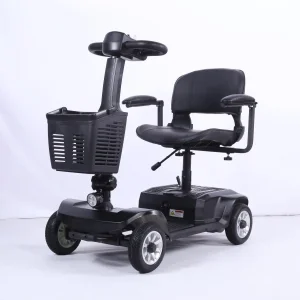
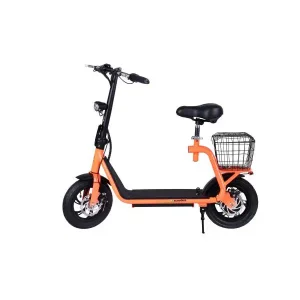
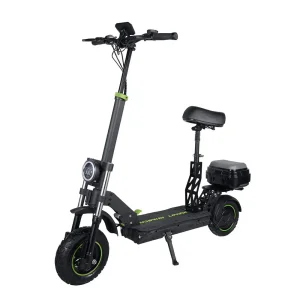
India is undergoing an unprecedented structural transition towards electrified micro-mobility. Driven by government initiatives like FAME II and the newly structured PM E-DRIVE program, alongside rapid urbanization in Tier-1 and Tier-2 cities, the demand for personal mobility scooters, medical accessibility devices, and commercial utility transport is expanding exponentially.
The landscape for mobility scooter manufacturers and factories in India presents a dynamic balance of booming consumer intent, aggressive local policy incentives, and systemic supply-chain bottlenecks. While major industrial hubs in Tamil Nadu (Hosur/Chennai), Gujarat (Sanand), Maharashtra (Pune), and Haryana (Dharuhera) have evolved into hubs for two-wheeler electric vehicles (EVs), specialized mobility scooters (such as 3-wheel/4-wheel personal accessibility vehicles, medical mobility chairs, and heavy-duty folding micro-vehicles) remain in a nascent stage of localization.
Currently, over 70% of Indian mobility scooter enterprises operate on a semi-knocked-down (SKD) or completely knocked-down (CKD) assembly model. While the frame fabrication, body stamping, and final harness integration are frequently conducted inside domestic Indian workshops, key core technological components—such as advanced brushless DC (BLDC) hub motors, sine-wave vector controllers, precise Battery Management Systems (BMS), and specialized transaxle units—are predominantly imported from established tier-1 EV supply clusters in Zhejiang and Jiangsu, China.
Indian regulatory standards mandate stringent thermal management, ingress protection (IP67), and cell-level safety tests under AIS-156 Phase 2 certification to prevent thermal runaway under extreme Indian ambient temperatures (+45°C to +50°C).
Domestic Indian factories face challenges in localizing precision planetary gearboxes, high-efficiency rare-earth magnet motors, and lightweight high-tensile aluminum alloy folding chassis frames cost-effectively.
Import duties under Basic Customs Duty (BCD) on fully built units (CBU) incentivize Indian distributors and brand owners to collaborate with international OEM manufacturing partners who offer flexible SKD/CKD supply solutions.
To compete effectively in the price-sensitive Indian market without sacrificing product reliability or technical sophistication, leading mobility importers rely on seasoned Chinese manufacturers like Yuema Leisure Articles Co., Ltd. (Wuyi, Zhejiang). Over two decades of specialized R&D and large-scale manufacturing yield unmatched operational benefits.
Complete OEM/ODM capability—from 3D CAD frame layout, FEA stress analysis on suspension points, to custom motor torque tuning for steep inclines found in Indian topography.
Direct access to top-tier Lithium Iron Phosphate (LiFePO4) and Nickel Manganese Cobalt (NMC) cell manufacturers with integrated smart BMS featuring CANbus telematics communication.
Exporting pre-tested chassis modules, wire harnesses, and calibrated controllers tailored for local Indian assembly plants to maximize tax concessions under Indian EV tariffs.
Mobility scooters in India are no longer restricted to traditional geriatric care. Commercial diversification has created specialized demand segments across public, private, and institutional markets:
Large-scale pilgrimage sites (such as Tirupati, Varanasi, Golden Temple, and Shirdi) receive millions of visitors daily. Municipalities and temple trusts are deploying fleets of heavy-duty, high-capacity electric mobility scooters and multi-passenger utility carts to assist elderly and disabled pilgrims across long pedestrian corridors.
Modern luxury residential complexes (in Bengaluru, Gurugram, Hyderabad, and Mumbai Suburban) and sprawling IT parks (e.g., Manyata Tech Park, DLF Cyber City) use compact low-speed folding mobility scooters for zero-emission internal transit.
Premium medical chains (Apollo, Fortis, Max Healthcare) demand clinical-grade motorized mobility chairs and compact 4-wheel scooters engineered with anti-tip mechanisms, smooth electromagnetic braking, and non-marking rubber tires suitable for indoor hospital floors.
Warehouse complexes and manufacturing facilities employ modified 500W–1000W mobility scooters equipped with heavy-duty cargo baskets or rear hitches for efficient intra-facility material transport.
| Scooter Classification | Motor Power & Drive | Battery Tech Options | Max Payload & Range | Ideal Indian Scenario | Regulatory Standard |
|---|---|---|---|---|---|
| Lightweight Folding Scooter | 180W – 350W Hub Motor | 48V 10Ah Lithium LiFePO4 | 120 kg / 20–25 km | Airport Transit, Metro Commute, Indoor Malls | EN17128, CE, UN38.3 |
| Heavy-Duty Commercial Cruiser | 500W – 1000W Brushless Motor | 48V 20Ah / 52V 24Ah Lithium | 180 kg / 45–60 km | Temple Parks, Gated Communities, Resort Fleet | AIS-156 Phase 2, CE |
| All-Terrain Utility Vehicle | 1000W – 4000W Dual Hub/Mid Drive | 60V 20Ah – 72V 40Ah Lithium | 250 kg / 70–90 km | Rugged Roads, Industrial Campuses, Rural Facilities | ISO9001, UL2272 compliant |
| Medical Grade Personal Mobility | 250W Transaxle Differential | 24V 20Ah AGM / LiFePO4 | 136 kg / 25 km | Hospitals, Rehabilitation, Assisted Living | FDA Class II, CE Medical Device |
When sourcing mobility scooters from international factories for distribution in India or global markets, enterprise procurement managers must rigorously audit five critical operational pillars:
Ensure battery packs have certified UN38.3 test reports, MSDS documentation, and robust thermal protection designed to withstand high humidity and tropical heat waves.
Verify that high-tensile carbon steel or aluminum alloy frames undergo automated robotic welding and salt-spray anti-corrosion testing to prevent frame failure under rough road vibration.
Check that sine-wave controllers offer smooth acceleration curves to ensure user safety, preventing jerky starts for elderly operators.
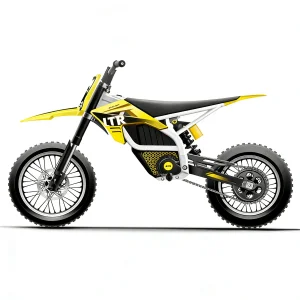
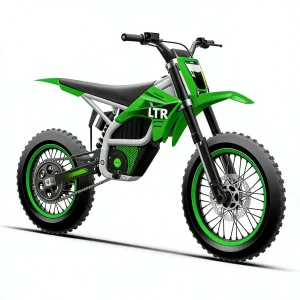
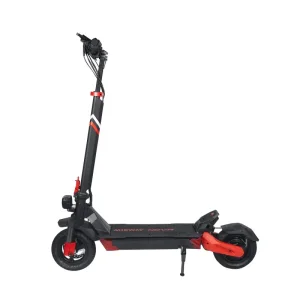
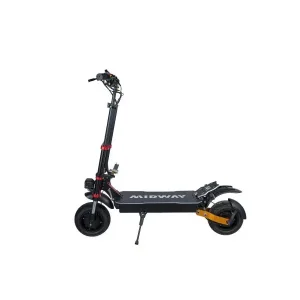
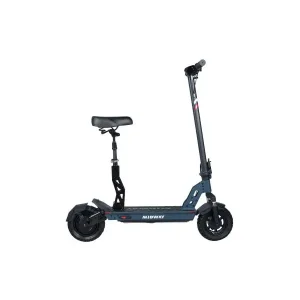
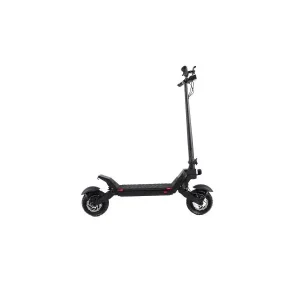
Browse our full factory portfolio of high-efficiency electric scooters, long-range mobility vehicles, and heavy-duty electric motorcycles customizable for local markets.
Importers must ensure compliance with the Automotive Industry Standards (AIS-156 Phase 2) for lithium battery packs. Additionally, low-speed electric mobility vehicles under 25 km/h with motor power under 250W enjoy exemption from formal RTO registration, simplifying market entry.
Yes. Yuema provides flexible Semi-Knocked-Down (SKD) and Completely Knocked-Down (CKD) solutions, providing pre-tested frames, motor wheels, wiring harnesses, and controllers so Indian brand partners can assemble locally and minimize customs duties.
Our export vehicles feature reinforced dual hydraulic shock absorbers, heavy-duty tubeless pneumatic or solid honeycomb tires, and IP65-IP67 water-resistant electrical enclosures specifically engineered to withstand monsoon rains and high ambient temperatures.
Standard B2B orders begin at 20-40 units (1x20GP container equivalent), with customized OEM production lead times ranging between 20 to 35 days depending on specification and certification requirements.
Whether you are establishing a new mobility brand in India, expanding a medical supply distribution network, or sourcing high-efficiency fleet solutions, Yuema provides factory-direct pricing, custom OEM engineering, and global logistics support.
Send Inquiry Now