
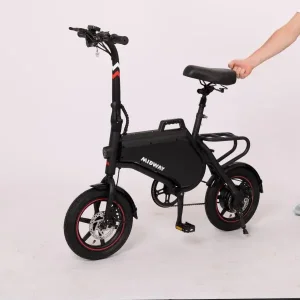
Engineered to meet rigorous ANMAT standards, withstand varied terrain across Buenos Aires, Córdoba, and Mendoza, and deliver high-torque efficiency.
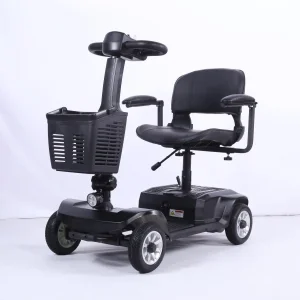
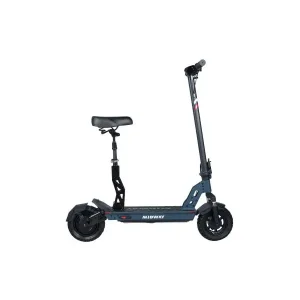
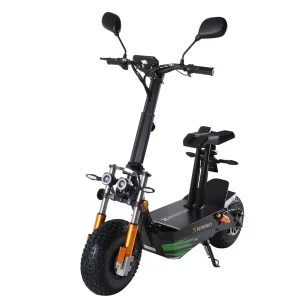
Argentina presents a unique, high-growth environment for electric mobility scooters and personal assistive transportation vehicles. As the second-largest country in South America by land area and the third-most populous, Argentina’s urban demographic profile is rapidly evolving. According to recent demographic data from the National Institute of Statistics and Censuses (INDEC), over 15.5% of the Argentine population is aged 60 or older—making it one of the most rapidly aging societies in Latin America. Metropolitan hubs such as Autonomous City of Buenos Aires (CABA), Greater Buenos Aires (AMBA), Córdoba, Rosario, and Mendoza account for over 60% of this demographic concentration, driving urgent demand for reliable, ergonomic, and durable mobility assistance solutions.
Beyond demographic aging, the Argentine government’s focus on universal accessibility under National Law Ley 24.901 (Sistema de Prestaciones Básicas en Habilitación y Rehabilitación Integral a Favor de las Personas con Discapacidad) mandates structured healthcare coverage, insurance reimbursements (obra social), and institutional procurement programs for mobility equipment. Consequently, medical equipment importers, commercial mobility fleet operators, and specialized retail distributors in Argentina face growing pressure to source reliable mobility scooters that comply with stringent local regulatory metrics, notably registration and safety approvals overseen by ANMAT (Administración Nacional de Medicamentos, Alimentos y Tecnología Médica).
Information Gain Insight: Sourcing mobility scooters for Argentina requires navigating specific macroeconomic dynamics, including currency fluctuations, customs clearance under SIRA/SEDI import licensing systems, and strict battery safety regulations (UN38.3 and MSDS certification). Manufacturers capable of providing Modular SKD/CKD shipping kits and pre-certified compliance documentation offer Argentine distributors up to a 35% reduction in total landed procurement costs.
Deploying mobility scooters across Argentine municipalities requires hardware resilience that far exceeds standard suburban paved use. Urban centers like San Telmo or Recoleta in Buenos Aires feature historical cobblestone streets (adoquines), uneven sidewalk curb transitions, and steep inclines in foothill regions like Salta or San Rafael. Lightweight electric scooters engineered solely for flat indoor shopping malls often suffer structural frame fatigue, premature motor overheating, or rapid tire degradation under these conditions.
To address these operational hurdles, global manufacturers serving Argentina must integrate heavy-duty high-tensile steel or reinforced aviation-grade aluminum frames, dual-spring rear suspension systems, high-ground-clearance chassis designs (minimum 80mm to 110mm), and high-torque brushless DC (BLDC) motors paired with intelligent sine-wave controllers capable of negotiating 15° to 20° gradients without current overload.
How original equipment manufacturers (OEMs) satisfy strict global procurement protocols while customizing units for Argentine commercial importers.
Integrated Smart Battery Management Systems (BMS) with over-charge, deep-discharge, thermal runoff protection, and UN38.3 certification ensuring safe sea and air freight to South America.
Tool-less quick-disassembly frames allowing 4-piece breakdown for easy trunk transport in standard compact sedans widely used across Argentine taxi and family networks.
Automatic regenerative electromagnetic brakes that lock instantaneously upon throttle release, preventing rollback on steep slopes in sub-Andean Argentine cities.
| Technical Parameter | Standard Commercial Scooter | Medical-Grade Mobility Scooter (ANMAT Compliant) | Heavy-Duty All-Terrain Mobility Scooter |
|---|---|---|---|
| Motor Rating (Continuous/Peak) | 180W - 350W Hub Motor | 400W - 800W Transaxle BLDC | 1000W - 3000W Brushless Dual Hub |
| Battery Architecture | 24V 12Ah Lead-Acid / AGM | 36V/48V 20Ah - 40Ah Lithium LiFePO4 | 60V/72V 40Ah - 60Ah High-Density Li-ion |
| Max Speed Range | 6 - 8 km/h (Governed) | 8 - 12 km/h (Adjustable Potentiometer) | 20 - 45 km/h (Speed Switch Configurable) |
| Ground Clearance | 45 mm - 60 mm | 75 mm - 95 mm | 110 mm - 150 mm |
| Payload Capacity | 110 kg (242 lbs) | 150 kg - 180 kg (330 - 396 lbs) | 200 kg - 250 kg (440 - 550 lbs) |
| Charger Compatibility | 110V/220V Auto-sensing | 220V 50Hz Type I Plug (Argentine Standard) | 220V Fast Charger (4A - 8A Smart Pulse) |
Navigating international trade logistics into South America's Southern Cone requires dedicated manufacturing support. Importers in Argentina face unique regulatory customs hurdles, including mandatory electrical safety certificates (IRAM certification), strict labeling compliance (INTI guidelines), and currency-hedged financial transactions. As a premier original equipment manufacturer serving Argentina, our operational model is built around solving these structural friction points.
All mobility chargers shipped to Argentina must natively operate on 220V AC at 50Hz and feature the official Type I plug pattern (three-flat-prong configured in a V-shape with a grounding pin). Providing pre-certified IRAM-compliant power supplies eliminates the risk of customs impoundment at the Port of Buenos Aires (Puerto Madero / Dock Sud) and guarantees seamless consumer out-of-the-box operation.
A primary barrier for Argentine medical device dealers when sourcing overseas is long lead times for replacement components. Our manufacturing strategy incorporates a 10% Spare Parts Buffer Protocol with every bulk container order (FCL). Essential wearable components—such as dynamic thumb throttles, motor brushes, solid puncture-proof tires, replacement keys, electromagnetic brake solenoids, and PCB controller boards—are pre-packaged and color-coded for rapid technical service deployment across Argentine dealer service centers.
To mitigate high import tariffs on fully built vehicles (CBU - Completely Built Up), we offer Semi-Knocked-Down (SKD) and Completely Knocked-Down (CKD) manufacturing options. Argentine distributors with local assembly facilities in industrial zones such as Zárate, Quilmes, or Rosario can import core sub-assemblies (chassis, wiring harness, transaxle) at significantly lower duty rates while maintaining rigorous end-line quality verification using our standardized digital testing guides.
Pioneering smart telemetry, IoT integration, lightweight materials, and advanced energy density for South American distribution networks.
Enabling real-time GPS tracking, remote battery diagnostics, and geofencing via 4G LTE modules—ideal for municipal fleet managers and resort mobility rentals in Mar del Plata or Bariloche.
Transitioning to solid-state chemistry by late 2026, offering 40% higher energy density, zero thermal runway risk, and extended range (up to 65km per charge) in extreme temperatures.
Utilizing ultra-lightweight magnesium alloys and structural carbon fiber to reduce frame weight to under 14kg without compromising load capacity or structural integrity.
Partner with a factory-direct OEM manufacturer offering customized ANMAT compliance support, flexible MOQs, and reliable freight solutions for Argentine importers.
Send Inquiry NowExplore our comprehensive catalog of high-performance electric motorcycles, citycoco cruisers, heavy-duty dirt bikes, and commuter scooters designed for international export.
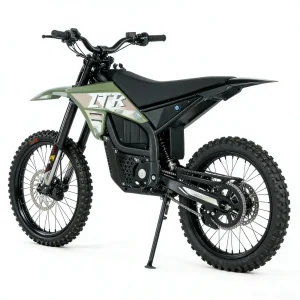
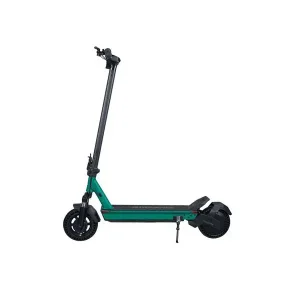
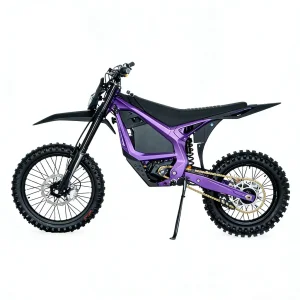
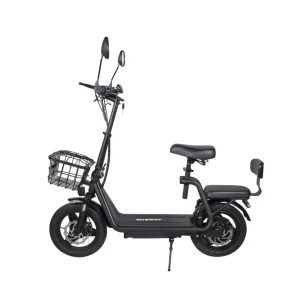
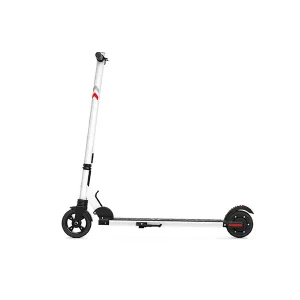
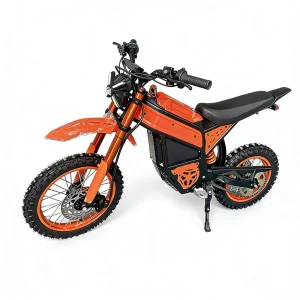
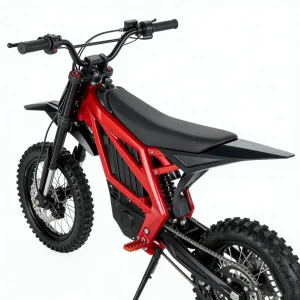
Expert insights on regulatory compliance, shipping logistics, customized manufacturing, and technical specifications.
To clear Argentine customs smoothly and sell through medical or commercial channels, mobility scooters require electrical safety certification under IRAM standards for chargers (220V/50Hz Type I plug), UN38.3 transport safety documentation for lithium batteries, MSDS reports, and CE/ISO13485 manufacturing compliance. For medical mobility classification, registration assistance for ANMAT filing is provided.
We support FOB, CIF, and DDP shipping terms to major ports including Puerto de Buenos Aires, Port of Rosario, and Port of Bahía Blanca. All container shipments are sea-freight hardened with moisture-barrier wrapping, heavy-duty 7-ply corrugated cartons, and custom wooden palletizing to prevent transit movement.
Yes. Full OEM/ODM services are available, including custom frame powder coating, private-label branding, customized Spanish-language user manuals, localized packaging graphics, and specific controller programming (speed limiting, acceleration curves) optimized for local market demands.
We provide a 24-month structural frame warranty and a 12-month warranty on motors, controllers, and lithium battery modules. Spare parts are dispatched either within container shipments or via expedited air freight within 72 hours of request to ensure minimal dealer operational downtime.