Engineered for Uruguay's unique coastal microclimates, urban pavement profiles, and long-range battery resilience.
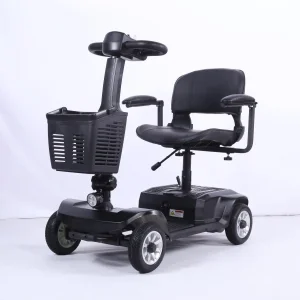
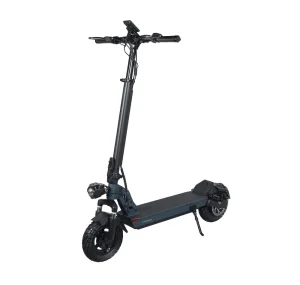
Uruguay stands out in South America as a beacon of economic stability, high per-capita GDP ($20,000+ USD), and progressive green energy initiatives. With over 98% of its electricity generated from renewable sources (wind, hydro, and solar), the nation presents an exceptionally fertile ground for the mass adoption of electric mobility solutions. However, for B2B importers, commercial distributors, and medical equipment suppliers, navigating the Uruguayan market requires a granular understanding of local demographic shifts, regional urban geography, and legislative incentives.
Uruguay possesses the oldest demographic profile in Latin America. Over 15% of the population is aged 65 or older, a figure concentrated heavily in metropolitan Montevideo, Salto, and Paysandú. This dynamic has accelerated demand for senior personal mobility devices, indoor/outdoor mobility scooters, and rehabilitation assistance vehicles. As public healthcare networks (ASSE) and private mutualistas expand orthopedic care coverage, commercial procurement of reliable 4-wheel and folding 3-wheel electric mobility scooters is surging.
From the iconic 22-kilometer Rambla de Montevideo to the sprawling resort stretches of Punta del Este and José Ignacio (Maldonado Department), Uruguay features flat, highly paved coastal corridors ideal for electric micro-mobility. Resort complexes, gated communities (Barrios Privados), and municipal parks are rapidly integrating electric scooter rentals and personal mobility fleets to replace gas-powered golf carts, driven by local noise-abatement ordinances and zero-emission goals.
Under Uruguay’s Commission for the Assessment of the Investment Law (COMAP), local enterprises investing in energy efficiency—including corporate electric vehicle fleets, accessible mobility infrastructure, and eco-tourism mobility fleets—can unlock substantial tax credits against IRAE (Impuesto a la Renta de las Actividades Económicas). Furthermore, electric mobility scooters classified under Mercosur Harmonized System Code (HS 8713.90) benefit from reduced import tariffs when accompanied by proper CE, ISO, and battery safety documentation.
The global personal mobility device market is undergoing a structural transition from lead-acid legacy configurations to smart, lithium-powered electric architectures. Driven by European Union safety directives (EN17128) and North American UL certifications, global B2B procurement standards have shifted away from low-cost, uncertified assembly toward integrated engineering, long-cycle lithium iron phosphate (LiFePO4) or high-density NCM battery chemistries, and IoT telemetry compatibility.
Modern B2B buyers require automotive-grade Smart Battery Management Systems (BMS). Key features include over-current protection, thermal runaway mitigation, and low-temperature charge cut-offs critical for South American coastal winter conditions.
Transitioning from brushed motors to high-torque Brushless Hub Motors has reduced energy loss by 28%. This ensures smooth incline handling on coastal slopes (such as Montevideo’s Punta Carretas or Piriápolis) without overheating.
Commercial operators, municipal mobility hires, and resort managers demand CAN-bus or Bluetooth BLE app connectivity to track battery state-of-charge (SoC), remote speed limiting, and automated fault diagnostics in real time.
| Feature Vector | Legacy Mobility Scooters | Yuema Next-Gen B2B Standard (Uruguay Spec) |
|---|---|---|
| Battery Architecture | Lead-Acid (SLA) 24V / Heavy weight | Lithium-ion NCM / LiFePO4 48V High Density |
| Motor Efficiency | Brushed DC Gear Motor (~65% efficiency) | High-Torque Brushless Hub Motor (88%-92% efficiency) |
| Chassis Structure | Heavy Steel Welding / Subject to rust | Aviation-Grade Aluminum Alloy / Anti-Corrosion E-Coating |
| Braking Architecture | Basic Mechanical Friction Brakes | Regenerative EBS + Hydraulic Electronic Disc Brakes |
| IoT / Fleet Readiness | None | Smart App Integration, GPS/BLE Module Ready |
As a global powerhouse headquartered in Wuyi, Zhejiang—the heartland of China’s high-precision hardware and electric vehicle ecosystem—WuYi YueMa Leisure Articles Co., Ltd. provides Uruguayan importers with unmatched competitive advantages. By bypassing intermediaries and sourcing direct from a 34,000 m² modern production facility, B2B clients secure wholesale price-to-performance metrics that domestic or European assemblers cannot replicate.
Automated TIG/MIG welding robotic arms guarantee structural integrity across 100% of aluminum and high-tensile steel frames, eliminating human error and structural fatigue under heavy loads.
Given Uruguay’s extensive coastline (Montevideo, Punta del Este, Colonia), our frames and electrical connectors undergo 48-hour salt-spray corrosion testing to prevent ocean-air degradation.
We support custom branding, Spanish-language display interfaces, specialized charger configurations (220V/50Hz Type F/L plugs), and bespoke colorways tailored for Uruguayan distributors.
Every scooter leaving the Yuema assembly line undergoes a multi-stage quality audit:
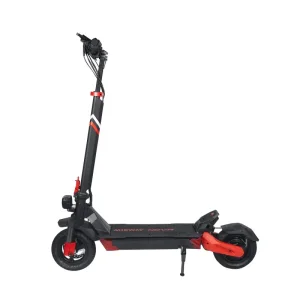
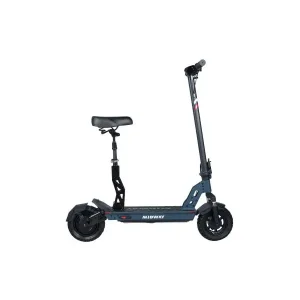
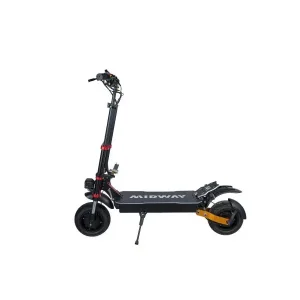
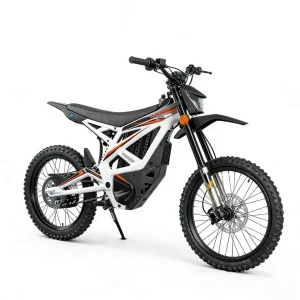
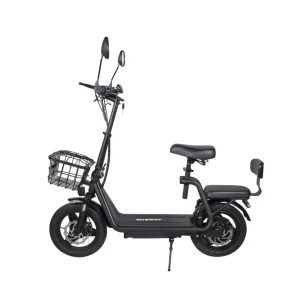
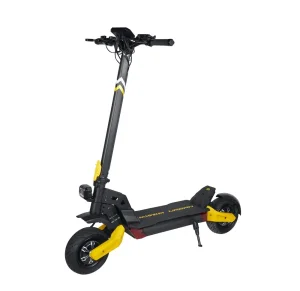
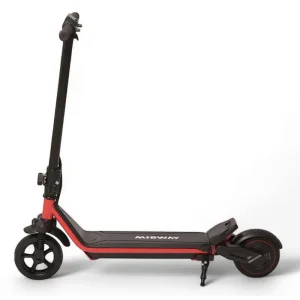
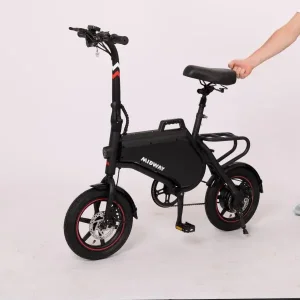
B2B buyers in Uruguay cater to diverse market verticals. Yuema’s versatile portfolio of electric scooters, folding mobility units, and heavy-duty electric motorcycles addresses specific regional operational requirements:
Distributors supplying private healthcare institutions (e.g., CASMU, British Hospital of Montevideo, Española) require compact, zero-emission 180W-600W mobility scooters. These units offer tight turning radiuses for indoor hospital corridors while providing stable outdoor range for patient rehabilitation.
Luxury hotels, boutique vineyards in Canelones, and coastal resorts in Punta del Este require stylish 600W-1000W electric scooters. Equipped with smart app integration and long-lasting lithium battery packs, these scooters deliver silent, eco-friendly guest mobility.
With Montevideo expanding dedicated bike paths along Avenida 18 de Julio and Avenida Italia, high-torque 1000W-1200W electric scooters provide an agile alternative for urban couriers and daily commuters avoiding rising petrol prices.
Importing mobility scooters and electric micro-mobility vehicles into Uruguay requires adherence to national import protocols governed by DNA (Dirección Nacional de Aduanas) and URSEA (Unidad Reguladora de Servicios de Energía y Agua). Below is our step-by-step technical guide for Uruguayan buyers:
All maritime bulk shipments are dispatched from Ningbo or Shanghai Port directly to the Port of Montevideo (Puerto de Montevideo). Standard transit times range from 32 to 38 days via direct ocean carrier services.
To ensure smooth customs clearance without demurrage fees, Yuema supplies a comprehensive compliance package:
Essential technical and commercial clarity for wholesalers, medical supply companies, and fleet operators.
Our standard MOQ for wholesale mobility scooters and electric scooters is 20 units (sample trial orders can be evaluated). For full OEM/ODM branding, logo integration, and custom colorways tailored for the Uruguayan market, our standard minimum is 1x20GP container (approx. 50-80 units depending on model size).
Yes. All scooters configured for the Uruguayan market are supplied with 220V / 50Hz chargers featuring standard Type F or Type L plug configurations, CE certification, and built-in automatic over-charge shutoff to protect lithium battery health.
We provide a 1-year comprehensive warranty on core components (frame, motor, lithium battery, controller). For bulk container orders, we provide 2% free wearable spare parts (controllers, brake pads, tires, switches) to empower local Uruguayan dealers to handle immediate warranty servicing.
Absolute clarity. We support our official distributors with full CE, RoHS, EN17128, ISO9001, and UN38.3 test reports needed to participate in government, municipal, or private healthcare tenders in Montevideo and surrounding departments.
Direct factory supply for Uruguayan distributors, municipal projects, and online retailers.