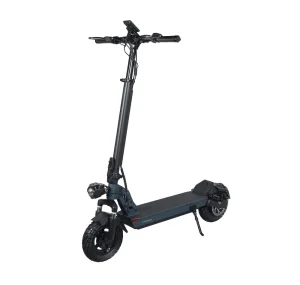
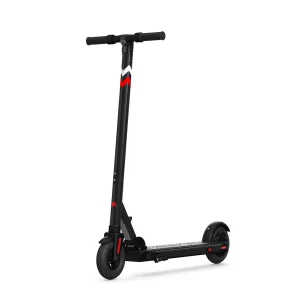
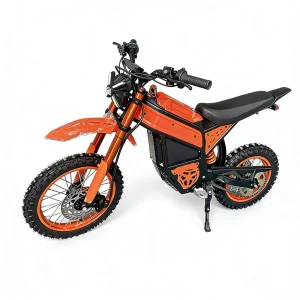
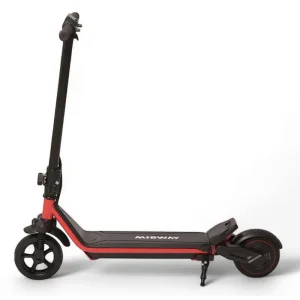
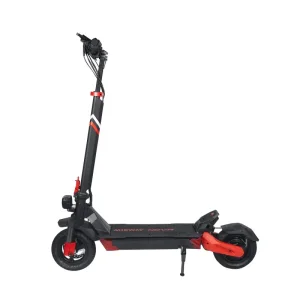
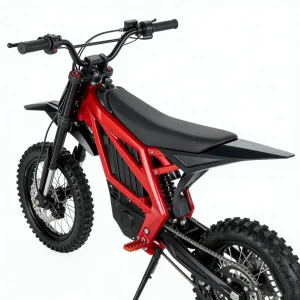
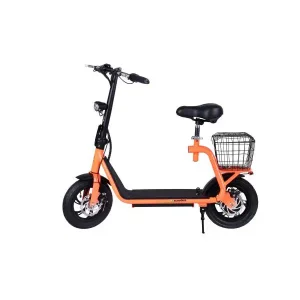
Direct factory configurations for B2B distributors, fleet operators, and enterprise importers.
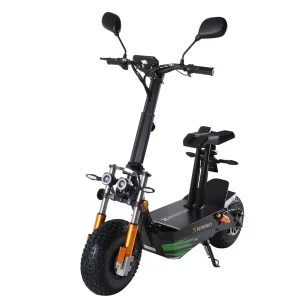
Analyzing the macro-economic drivers, urban payload shifts, and structural advantages of sourcing from Chinese manufacturing hubs.
The global micro-mobility ecosystem is undergoing a fundamental structural transition. Where single-passenger personal mobility devices (PMDs) previously dominated urban centers, enterprise fleet buyers, commercial ride-share operators, and retail distributors are increasingly demanding 2 person electric scooters. This evolution is driven by compelling unit economics, changing urban demographic patterns, and the need for higher utility vehicles capable of dual-occupant payload dynamics without exceeding localized electric vehicle classification limits.
China's electric two-wheeler manufacturing ecosystem—anchored in industrial centers such as Zhejiang (Wuyi/Yongkang), Jiangsu (Wuxi), and Guangdong—supplies over 80% of the world's dual-passenger electric scooters. Sourcing directly from certified Chinese OEM/ODM factories provides enterprise buyers with unprecedented supply chain elasticity, advanced thermal management architectures, automated robotic frame welding, and cost efficiency derived from localized raw material integration.
Information Gain Key Takeaway: A true 2-person electric scooter is not simply an extended single-rider scooter. It requires a fundamental structural redesign, including high-tensile cold-rolled steel chassis geometry, dynamic center-of-gravity balancing, dual-stage hydraulic suspension systems, and multi-MOSFET field-oriented control (FOC) vector controllers to manage sustained thermal spikes during double-occupant incline climbing.
Deep-dive into component specification, structural stress points, and thermal optimization for dual-rider systems.
When evaluating China 2 person electric scooter manufacturers, enterprise buyers must audit five core engineering pillars to prevent premature structural failure, battery thermal runaway, and field degradation under heavy load cycles.
Tier-1 Chinese factories utilize seamless Q235/Q345 high-tensile structural steel frames or robotically welded 6061-T6 aviation aluminum. Structural gussets are integrated at the head tube junction and rear swingarm pivot to withstand dynamic load stress exceeding 250 kg under harsh terrain conditions.
To propel dual passengers effortlessly, factories employ high-efficiency Brushless DC (BLDC) hub motors featuring 35mm to 60mm magnetic steel heights, high-grade N45SH neodymium magnets, and silicon steel stator laminations for continuous torque delivery up to 150 Nm.
Dual-rider power consumption generates substantial continuous current draw (35A–60A+). Advanced Chinese OEM factories utilize Tier-1 automotive-grade 21700 or prismatic LiFePO4 cells paired with Smart BMS platforms featuring active balancing, temperature monitoring sensors, and CAN-bus diagnostic output.
Stopping a 200kg combined payload from 50 km/h requires superior braking leverage. High-end models feature dual-piston or quad-piston hydraulic disc brakes combined with Regenerative Electronic Braking (E-ABS) to distribute kinetic force evenly while re-energizing the battery array.
| Engineering Metric | Standard Single-Person Scooter | Enterprise 2-Person Scooter (Heavy Duty) | B2B Sourcing Advantage |
|---|---|---|---|
| Frame Yield Strength | 150–180 MPa (Standard Steel) | 320–450 MPa (Q345 / 6061-T6 Aluminum) | Eliminates structural fatigue frame snapping risks |
| Motor Power (Continuous/Peak) | 350W – 1000W Peak | 1200W – 5000W Dual-Motor Peak | Guarantees 25° incline climbing with 200kg load |
| Controller Current Rating | 15A – 25A Sine-Wave | 35A – 80A Multi-MOSFET FOC Vector | Lower operating temperatures & zero acceleration jitter |
| Suspension Setup | Single Front Spring / Dual Rear Spring | Dual Rear Hydraulic Shock + Front Inverted Forks | Dampens high impact; extends vehicle lifespan by 40% |
| Tire Load Rating | 54J (Up to 212 kg total) | 64J / Commercial Heavy-Duty Off-Road | Prevents sidewall blowouts during high-payload turns |
Mapping the regional specialization of Chinese EV hubs and strategic cost control mechanisms.
China's manufacturing supremacy in the electric scooter domain stems from hyper-dense industrial clusters where every tier of component supply—from raw steel extrusion to microchip programming—is localized within a 50-kilometer radius. Enterprise buyers must understand regional factory specializations to optimize their OEM procurement strategies:
Cost-Benefit Matrix for B2B Importers: Sourcing complete 2-person electric scooters directly from Chinese factories yields a 35%–55% landed cost advantage over local assembly in Western markets. This margin headroom enables global distributors to absorb freight volatility, invest in localized warranty networks, and offer competitive retail pricing while maintaining healthy net operating margins.
Navigating EU, US, LATAM, and APAC homologation standards to eliminate customs seizures and product liability issues.
Exporting 2-person electric scooters globally requires absolute adherence to regional vehicle homologation rules. Because dual-passenger vehicles bridge the gap between lightweight kick scooters and L-category mopeds/motorcycles, verifying factory certification credentials prior to issuing a Purchase Order (PO) is vital for risk mitigation.
For street-legal dual-seat scooters exceeding 25 km/h, EU customs mandates EEC (European Economic Community) Approval and Certificate of Conformity (CoC) documentation under L1e-B or L3e categories. Lower-speed micro-mobility units must comply with EN17128 safety standards, Machinery Directive 2006/42/EC, and CE-EMC testing.
The US Department of Transportation (DOT) regulates road-legal two-wheelers via VIN registration standards. Furthermore, municipal lithium-ion battery mandates increasingly require UL2272 certification for electrical system safety and UN38.3 certification for transport of lithium battery packs.
All air and sea freight forwarders enforce strict Dangerous Goods (DG) Class 9 compliance. Top Chinese exporters provide complete UN38.3 test reports, Material Safety Data Sheets (MSDS), and 1.2M drop test reports for battery modules.
Unlocking enterprise monetization avenues for dual-occupant electric scooters across diverse global sectors.
The multi-functional utility of 2-person electric scooters creates versatile revenue streams across diverse B2B industries. Leading Chinese manufacturers design modular frame architectures that adapt quickly to specialized commercial deployments:
Hotels, eco-resorts, and island destinations deploy dual-rider Citycoco scooters to enhance guest mobility. Dual seats permit couples or families to explore large properties efficiently without noise pollution or carbon emissions.
By replacing the passenger pillion seat with an insulated commercial thermal top-box, logistics operators convert 2-person frames into ultra-durable delivery vehicles capable of supporting 100 kg+ cargo payloads.
Shared mobility platforms rely on IoT-connected 2-person e-scooters equipped with dual-helmet smart locks, remote telematics tracking, and swappable dual-battery bays to maximize vehicle uptime and average revenue per user (ARPU).
Industrial parks, university campuses, and private security firms utilize dual-seater electric scooters for rapid response pair-patrols, ensuring low noise profiles and minimal maintenance overhead.
A step-by-step framework for managing factory inspections, tooling, sample approval, and mass production quality assurance.
Securing a long-term contract with a trusted Chinese manufacturer demands a structured procurement Standard Operating Procedure (SOP). Enterprise buyers should execute the following evaluation stages:
Verify the supplier's ISO9001 quality management system, floor area (aim for 20,000+ sqm facilities), automated aging test rooms for battery packs, and dynamic chassis fatigue testing equipment. Ensure the factory possesses valid business licenses and direct export rights.
Work with factory R&D engineers to customize:
Prior to container loading, every order batch should undergo rigorous Quality Control (QC) protocols:
| Test Protocol | Testing Procedure | Pass Criterion |
|---|---|---|
| Frame Vibration Test | 100,000-cycle hydraulic vibration bench with 220kg load | Zero structural cracks, weld fractures, or frame deformation |
| Rain & Water Immersion Test | IPX7 water jet chamber spraying for 4 hours while powered on | Zero electrical shorting; no moisture inside motor casing or display |
| High-Load Brake Distance Test | Full brake engagement at 40 km/h with 200kg combined payload | Stopping distance < 4.2 meters under dry road conditions |
| Battery Thermal Cycling | Continuous load discharge test at 55°C ambient temperature | BMS automatically balances cell thermal output without cutoff shutdown |
Expert insights addressing key commercial, technical, and logistical inquiries from international procurement directors.
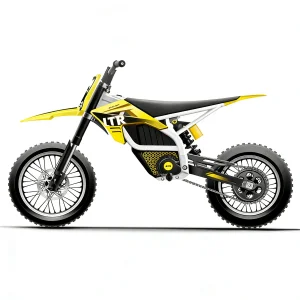
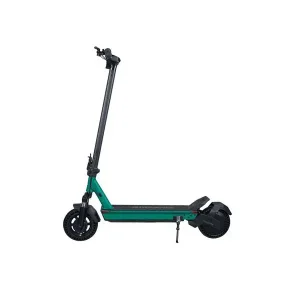
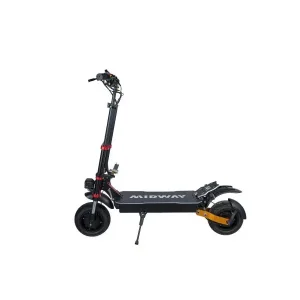
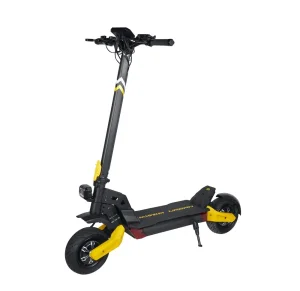
Explore specialized off-road, high-wattage, and urban dual-rider models from our production catalog.