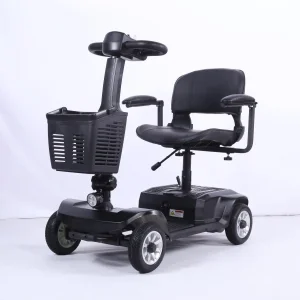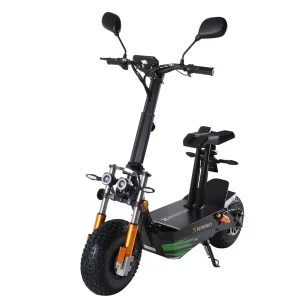
Explore our certified, factory-direct electric scooters engineered for urban commuting, rugged terrain, and heavy-duty commercial deployment.
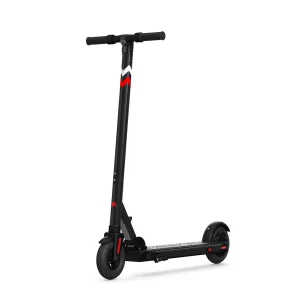
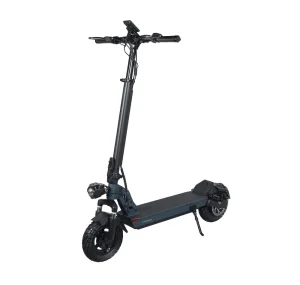
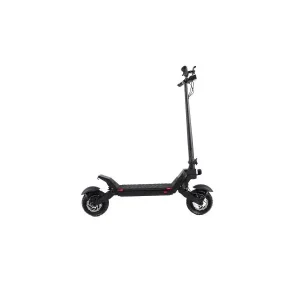
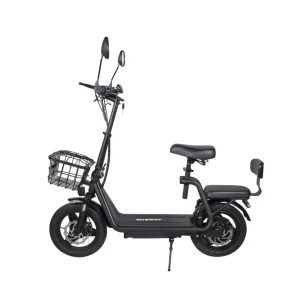
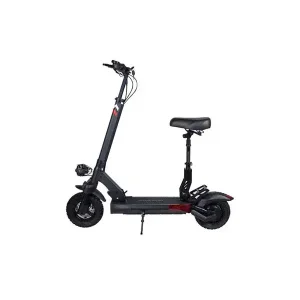
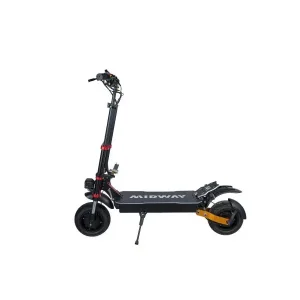
A rigorous engineering analysis of motor torque, thermal dynamics, and regulatory compliance governing global commercial deployment.
In the rapidly evolving global landscape of urban micro-mobility, the 20mph (approximately 32 km/h) electric scooter has emerged as the definitive benchmark for commercial distributors, fleet operators, and retail brands. This velocity class represents an optimal convergence of legal regulatory thresholds, operational safety, battery energy density, and passenger throughput efficiency across major international jurisdictions.
Across North America and Western Europe, municipal transit regulations strictly categorize Light Electric Vehicles (LEVs). In the United States, federal guidelines established by the Consumer Product Safety Commission (CPSC) alongside state-level DOT regulations frequently designate 20mph as the operational speed ceiling for Class 2 low-speed electric mobility without requiring heavy motor vehicle registration or commercial driver licensing. Similarly, under European Standard EN 17128:2020, 32km/h capable platforms engineered with dual-mode firmware limiters allow seamless regional compliance customization between strict 25km/h public infrastructure usage and private/commercial property deployment.
“Engineering Insight: Operating at a sustained 20mph requires an average continuous power draw of 500W to 1000W depending on incline and payload. China’s manufacturing ecosystem has perfected Field-Oriented Control (FOC) vector controllers to maintain 92%+ motor efficiency under these exact dynamic thermal loads.”
From an electromechanical standpoint, cruising at 20mph places unique mechanical stress on chassis fatigue points, braking systems, and battery discharge rates. Standard 250W city scooters exhibit extreme thermal throttling when pushed to 20mph on sustained inclines. Conversely, ultra-high-performance 5000W racing scooters present severe weight, safety, and tariff liabilities for commercial importers. The 20mph factory-engineered platform utilizes targeted motor torque curves (typically 35Nm to 65Nm) paired with 36V, 48V, or 52V architecture, delivering optimal range-to-weight ratios for last-mile delivery and daily commuting.
| Performance Tier | Nominal Motor Power | Battery Configuration | Thermal Throttling Threshold | Primary Commercial Use-Case |
|---|---|---|---|---|
| Light Utility (15mph / 25km/h) | 250W - 350W Hub | 36V 7.8Ah - 10.4Ah NMC | Low (Under 45°C ambient) | Last-mile leisure, flat urban rental |
| Commercial Sweet-Spot (20mph / 32km/h) | 500W - 1200W BLDC | 48V - 52V 13Ah - 24Ah Li-ion | Optimized Heat-Sink Dissipation | Fleet Rental, Urban Commute, Delivery |
| High-Power / Off-Road (35mph+ / 60km/h) | 1500W - 3000W+ Dual | 60V - 72V 20Ah - 40Ah | Requires active liquid/air cooling | All-terrain sports, heavy cargo, private track |
How the Wuyi and Yongkang hardware manufacturing clusters in Zhejiang deliver unrivaled economies of scale, quality control, and vertical integration.
Over 85% of critical structural components—from aviation-grade 6061-T6 aluminum extrusion frames to CNC-machined steering columns—are manufactured within a 50km industrial radius, drastically reducing component lead times.
In-house Surface Mount Technology (SMT) lines manufacture Sine-Wave FOC controllers under strict ISO9001 protocols, ensuring pulse-width modulation precision and eliminating phase-current noise for whisper-quiet acceleration.
Battery packs undergo automated 72-hour burn-in cycles and cell matching testing. Precision laser welding of nickel strips guarantees low internal resistance and prevents vibration fatigue during sustained 20mph transit.
Global B2B procurement officers frequently evaluate manufacturers purely on unit cost, neglecting total cost of ownership (TCO) and post-import defect rates. Modern Chinese tier-1 factories—such as those centered in Wuyi, Zhejiang—operate on Industry 4.0 automation principles that replace manual guesswork with digital precision.
Robotic TIG welding arms execute frame joints with sub-millimeter accuracy, subjecting chassis prototypes to 300,000-cycle vertical dynamic load testing. This structural rigidity is essential for 20mph vehicles, where road vibration forces increase exponentially compared to 10mph leisure kick scooters. Furthermore, factory-direct integration allows custom firmware flashed directly to the MCU, enabling custom speed-governing modes, CAN-bus battery communication, and IoT telematics integration prior to container loading.
Quantifiable quality benchmarks that separate low-tier assembly shops from certified tier-1 OEM manufacturers.
20mph operation generates constant heat within the hub motor motor core. Tier-1 factories integrate internal NTC temperature sensors, automatically throttling current if stator temperatures breach 110°C to prevent magnet demagnetization.
Exporting to EU and US markets requires exhaustive regulatory dossiers. Leading Chinese manufacturers provide full CE, RoHS, EN17128, UL2272, and MSDS test reports directly validated by accredited third-party laboratories (TÜV, SGS, Intertek).
From customized die-cast stem logos and tailored color-way anodization to dedicated smartphone app development (iOS/Android), factories provide end-to-end brand realization for overseas importers.
Engineered to adapt across diverse urban infrastructure, industrial commercial zones, and consumer lifestyle segments.
The 20mph speed allows commuters to keep pace with city traffic in dedicated bike lanes, cutting morning transit times by up to 40% compared to traffic-congested automobiles while folding neatly into multi-modal transit systems.
Equipped with rear heavy-duty cargo racks and high-capacity 52V battery modules, 20mph scooters power food and courier delivery fleets across high-density metropolitan areas with minimal per-mile operational expenditure.
Corporate headquarters, university campuses, airports, and industrial logistics parks utilize custom-geofenced 20mph fleets to facilitate fast, zero-emission transportation for staff and maintenance crews across expansive facility grounds.
Direct technical and commercial answers for purchasing managers, importers, and brand owners sourcing from China.
For standard stock models with custom logo branding and outer carton printing, our baseline MOQ typically starts at 20 to 50 units. For full OEM customization—including unique frame color-ways, customized BMS software programming, custom mold tooling, or specialized battery cell configurations—the standard order batch is generally 100 to 300 units (one 20ft or 40ft High Cube container).
Tier-1 manufacturers design vehicles from the ground up according to targeted regional standards. For Europe, vehicles are constructed to meet EN 17128:2020 safety specifications and CE-EMC directives. For the United States and Canada, electrical architecture is built to align with UL 2272 (Electrical Systems for Personal E-Mobility Devices) standards, utilizing UN38.3 certified lithium battery packs with integrated thermal runaway protection protocols.
We offer both Grade-A Chinese tier-1 cells (such as EVE, BAK, or Lishen) and premium international cells (Panasonic, LG, Samsung). A standard 48V 13Ah pack provides an average real-world range of 30-40 km (18-25 miles) at a constant 20mph cruise speed. Upgrading to a 52V 24Ah pack expands the operational radius to 65-80 km (40-50 miles) per single charge, depending on rider weight and incline topology.
Yes. Our FOC vector controllers support multi-mode speed locking. We can program factory default speed limits (e.g., locked at 25km/h for European street compliance) that can be unlocked to 32km/h (20mph) or higher via display button sequences, a smartphone app, or dedicated dealer service software depending on your local regulatory requirements.
We provide a comprehensive B2B warranty structure: 12 months for core structural elements (frames, hub motors, controllers, and lithium battery packs) and 6 months for secondary electronic components. Additionally, we include a 1% to 2% complimentary wearing spare parts kit (brake pads, inner tubes, tires, throttle assemblies) with every full container shipment to support your localized after-sales warranty center.
Sample orders for evaluation are typically dispatched within 7 to 10 days. Standard container production (20ft / 40ft HQ) requires approximately 25 to 35 calendar days from formal deposit confirmation and OEM art proof sign-off. Expedited manufacturing channels are available for recurring contract fleet buyers.
Explore heavy-duty 1000W-5000W models, dirt bikes, citycoco platforms, and specialized mobility hardware factory-direct from China.