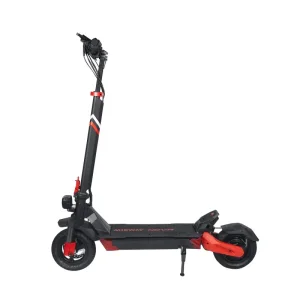
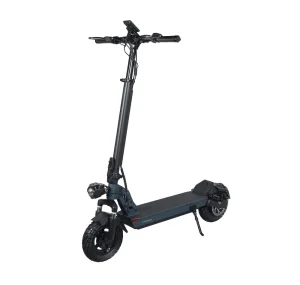
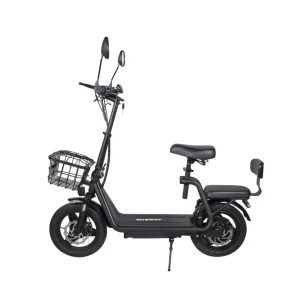
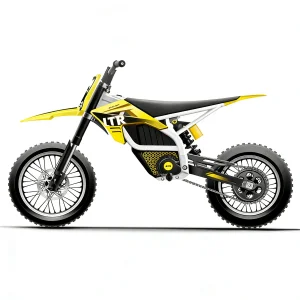
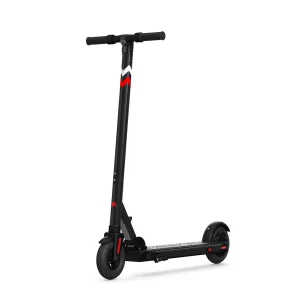
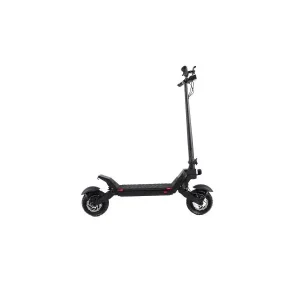
Precision-engineered micro-mobility platforms manufactured under ISO9001 certified conditions, optimized for wholesale importers, commercial fleets, and brand distributors globally.
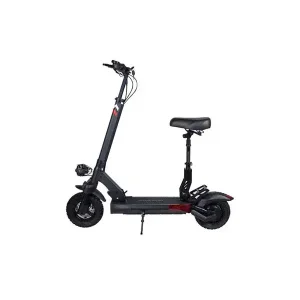
In the rapidly evolving micro-mobility domain, 25 Mph (approximately 40 km/h) electric scooters have emerged as the critical performance nexus for international B2B buyers, fleet operators, and regional brand importers. While entry-level 15 Mph (25 km/h) scooters struggle with inclined suburban topography and heavier commuter payload requirements, high-speed 45+ Mph racing scooters face stringent legal bans, insurance hurdles, and heightened liability risks in major metropolitan jurisdictions.
China's manufacturing ecosystem—specifically specialized production hubs in Zhejiang and Jiangsu—has re-engineered the supply chain to optimize 25 Mph platforms. Modern 25 Mph scooters represent the optimal synthesis of thermal efficiency, kinetic energy utilization, battery cell longevity, and user safety standards. For commercial importers, this category delivers the highest margin turnover, lowest warranty claim rates, and universal consumer appeal across suburban commuting, logistics delivery, and personal leisure segments.
Leading OEMs in China have transitioned from generic assembly lines to highly automated, vertically integrated production ecosystems. From aluminum alloy extrusion and robotic TIG welding to automated Surface Mount Technology (SMT) for controller boards, Chinese manufacturers provide global enterprises with unprecedented scalability, rapid custom prototyping, and strict compliance with European and North American safety frameworks.
Achieving a continuous, safe, and thermally stable 25 Mph operational speed requires complex system integration across powertrains, energy storage systems, and mechanical chassis design.
Sustaining 25 Mph under real-world loads (up to 120 kg) requires 500W to 1200W nominal brushless DC (BLDC) motors paired with Sine-Wave Field Oriented Control (FOC) vector controllers. FOC controllers dynamically adjust current phase, reducing energy loss by up to 18% compared to square-wave controllers and suppressing acoustic noise below 50dB.
Deploying tier-1 Grade-A 18650 or 21700 NCM/LiFePO4 lithium cells configured in 48V (13S) or 52V (14S) topologies. Integrated Smart Battery Management Systems (BMS) offer hardware and software protection against over-charge, over-discharge, short-circuit, phase thermal runaway, and feature active cell-balancing protocols via CAN or RS485 buses.
Constructed from aviation-grade 6061-T6 aluminum alloy or high-tensile carbon steel. Precision Finite Element Analysis (FEA) testing ensures structural integrity across stem-folding mechanisms, deck structural stress nodes, and steering columns, guaranteeing structural safety under dynamic road impacts exceeding 3G forces.
| Technical Parameter | Standard Commuter (15 Mph) | Enterprise 25 Mph Class (China OEM) | Heavy Performance Class (45+ Mph) |
|---|---|---|---|
| Nominal Motor Power | 250W – 350W Single Motor | 500W – 1200W (Single / Dual Hub) | 2000W – 5000W Dual Motors |
| Battery System Voltage | 36V DC | 48V DC / 52V DC | 60V DC / 72V DC / 96V DC |
| Max Incline Capability | 10 – 15 Degrees | 20 – 30 Degrees | 35+ Degrees |
| Braking Architecture | Single Mechanical Disc / E-ABS | Dual Hydraulic / Mechanical Disc + Regenerative | Full Quad-Piston Hydraulic Disc |
| Ingress Protection (IP) | IPX4 (Splash Proof) | IPX5 Main Frame / IPX7 Battery & Electronics | IPX5 Standard |
| Regulatory Target Category | Class 1 / Consumer Kick Scooter | Class 3 / L1e-B Light Electric Vehicle | L3e / Off-Road Motorcycle |
When sourcing 25 Mph electric scooters from Chinese manufacturers, enterprise procurement teams must evaluate suppliers beyond superficial pricing metrics. Total Cost of Ownership (TCO), factory qualification audits, and supply chain transparency govern successful overseas procurement agreements.
A reliable manufacturer must demonstrate robust manufacturing infrastructure across four vital vectors:
Factories must execute Incoming Quality Control (IQC) on cell impedance, controller SMT soldering, and stem aluminum density. In-Process Quality Control (IPQC) and Final Quality Control (FQC)—including dynamic road testing, salt-spray corrosion chambers, and 100% waterproof vibration testing—are mandatory for zero-defect shipments.
Enterprise buyers require quick-plug wiring harnesses (Julet waterproof connectors), modular quick-release controllers, and standardized tire/brake components. Reliable factories commit to guaranteeing 5-year replacement part availability for displays, motors, frames, and battery packs.
To mitigate high import tariffs in South America, Southeast Asia, and Europe, premier Chinese factories support Semi-Knocked Down (SKD) and Completely Knocked Down (CKD) export configurations, supplying assembly jig technical support and line setup guidelines for local assembly plants.
Customs clearance and market viability depend strictly on adherence to destination market regulations. Leading Chinese export manufacturers design their platforms to fulfill multi-jurisdictional standards seamlessly.
All battery packs leaving Chinese factories must hold valid UN 38.3 transport certification, cell drop test reports, and Material Safety Data Sheets (MSDS) to ensure compliance with hazardous goods ocean freight (IMO/IMDG) and air transport standards.
The next decade of 25 Mph electric scooter engineering focuses heavily on artificial intelligence integration, cell chemistry evolution, and intelligent fleet diagnostics.
Transitioning from conventional NCM chemistry toward Sodium-Ion and Semi-Solid-State batteries. Sodium-ion cells provide superior sub-zero temperature operation (-20°C retention >85%) and significantly cut raw material procurement costs for entry-to-mid level commercial fleets.
Integration of 4G/5G IoT modules directly onto the main control board. Edge AI algorithms analyze real-world cell degradation, predict component failure points, push Over-The-Air (OTA) firmware tuning for motor torque profiles, and deliver precision GPS geofencing capabilities.
Adopting fully recyclable thermoplastic body panels, eco-friendly powder coating without VOC emissions, and closed-loop aluminum frame recycling processes to comply with global ESG requirements and European Circular Economy directives.
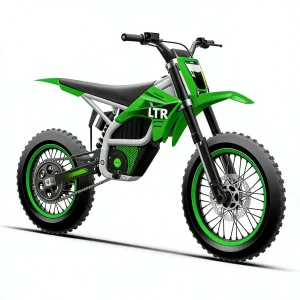
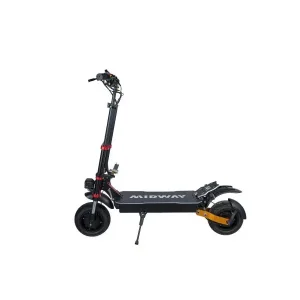
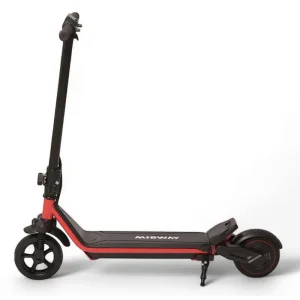
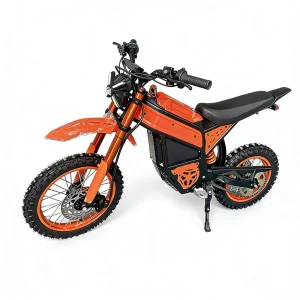
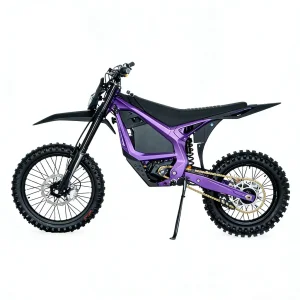
Explore our specialized series spanning urban commuting scooters, off-road dirt bikes, and heavy-duty electric motorcycles manufactured for global export.
Addressing critical technical, logistical, and legal considerations for international B2B purchasers.
Standard factory MOQ for full branding (custom frame colorways, logo laser-etching, customized LCD display boot screen, and branded packaging) typically starts at 100 to 200 units. For standard off-the-shelf factory models using existing tooling, sample orders or small batches starting at 20 to 50 units can be facilitated.
Factories integrate speed-governing firmware within the Field Oriented Control (FOC) electronic speed controller. Speed limits can be locked permanently for regional compliance (e.g., hard-coded 25 Mph / 40 Km/h) or configured via a multi-speed toggle mode (Economy, Normal, Sport) accessible via the handlebar display or mobile Bluetooth application.
Premier manufacturers offer flexible battery configurations. For tier-1 premium lines, international clients specify LG Energy Solution, Samsung SDI, or Panasonic 21700 cells. For cost-optimized high-volume procurement, tier-1 domestic Chinese cell suppliers such as EVE Energy, BAK, or Lishen are utilized, all accompanied by UN 38.3, IEC 62133, and UL cell certifications.
Leading OEMs provide a standard 1% to 2% free spare parts allocation (including controllers, displays, throttles, inner tubes, and brake pads) shipped directly inside each container load. Main structural frames carry 2 to 3-year factory guarantees, while battery packs and BLDC motors carry 12 to 18-month warranty coverage with remote diagnostic replacement part dispatches.
Mass production for a 40ft HQ container (approx. 300-450 scooters depending on wheel size and packaging dimensions) requires 30 to 45 calendar days following deposit confirmation and artwork approval. Raw material sourcing (specifically custom battery pack spot-welding and frame powder coating) accounts for the first 20 days of the production cycle.
Yes. Specialized commercial B2B factories offer IoT integration, hidden internal cable routing, non-folding reinforced stems, solid puncture-proof honeycomb tires, tamper-proof battery compartments, and custom backend API integration for shared mobility software platforms.