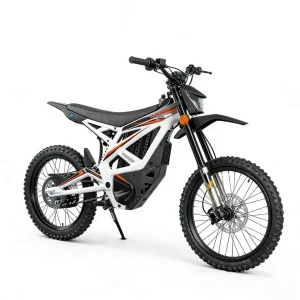
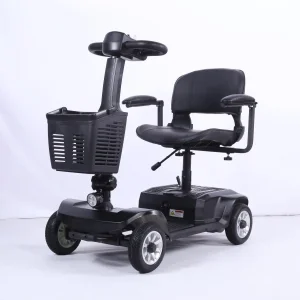
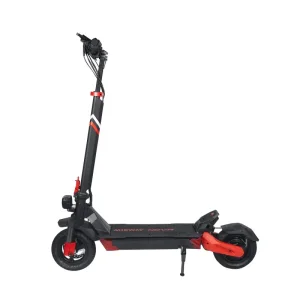
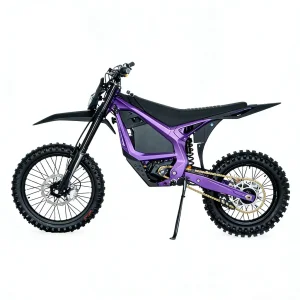
Explore our top-tier commercial and consumer electric mobility platforms engineered directly from our Zhejiang manufacturing base, optimized for worldwide B2B importation and custom fleet integration.
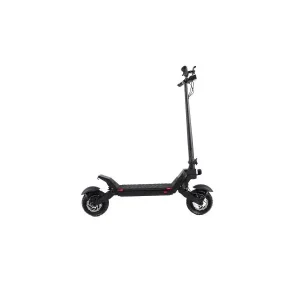
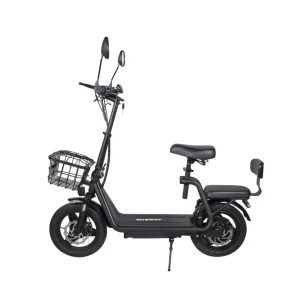
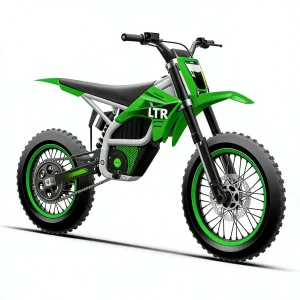
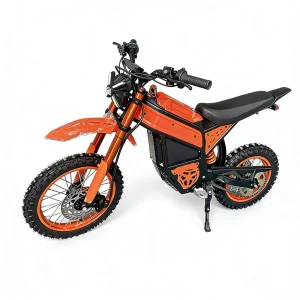
The global micro-mobility market is experiencing a profound structural shift. While traditional two-wheeled electric kick scooters have dominated first-and-last-mile urban transportation over the past decade, enterprise procurement data indicates an exponential acceleration in the demand for 3-wheeled electric scooters, trikes, and specialized multi-track mobility vehicles. Valued at over USD 3.2 Billion in 2024, the global 3-wheel electric scooter market is projected to expand at a compound annual growth rate (CAGR) of 12.4% through 2032.
This surge is driven by three macro-economic and demographic catalysts: an aging global population requiring high-stability personal mobility solutions, the rapid expansion of hyper-local urban last-mile delivery networks, and stringent municipal safety regulations favoring multi-wheeled vehicles with higher lateral roll stability and superior braking performance.
In Europe, North America, and East Asia, demographic aging has created massive demand for medical-grade and personal mobility trikes. Modern 3-wheel electric scooters offer low center-of-gravity (CoG) chassis design, electronic differential steering, and automatic electromagnetic parking brakes that prevent roll-back on inclines.
Quick-commerce (Q-commerce) platforms and courier providers are shifting from 2-wheeled mopeds to heavy-duty 3-wheel electric cargo scooters. The additional wheel architecture allows for cargo payloads exceeding 150kg to 250kg without compromising vehicle equilibrium, significantly lowering driver fatigue and accident liabilities.
Static and dynamic lateral stability coefficients in 3-wheeled platforms are up to 300% higher than standard 2-wheel scooters. By integrating front dual-wishbone or rear differential axles, China’s tier-one OEMs deliver smooth cornering performance even under adverse weather conditions.
China produces over 80% of the world’s light electric vehicles (LEVs). However, for international importers, distributors, and brand owners, navigating manufacturer selection requires deep technical scrutiny beyond surface-level pricing. Industrial hubs located in Zhejiang Province (such as Wuyi and Yongkang) form the epicenter of global micro-mobility manufacturing, offering unparalleled supply chain integration, raw aluminum extrusions, brushless motor fabrication, and advanced battery assembly lines.
When sourcing 3-wheel electric scooters from China, tier-one manufacturers must demonstrate vertically integrated production—specifically in-house frame robotic welding, Automated Optical Inspection (AOI) for wire harnesses, dyno testing for BLDC motors, and environmental IP rating validation chambers. Sourcing from non-integrated trading entities introduces component variance and compliance risks.
Global B2B procurement requires tailored engineering. Our manufacturing setup supports custom frame geometry adjustments, dual-battery enclosure engineering, custom motor winding for specific torque/speed balances, and customized controller firmware profiles (e.g., speed capping for EU EN17128 vs high-power US off-road profiles).
For brand distributors, turn-key private labeling extends beyond laser-etched logos. We provide custom TFT/LCD display boot screens, custom smartphone app pairing (iOS/Android) via Bluetooth/Cellular IoT modules, branded color palettes using UV-resistant electrostatic powder coatings, and customized retail or CKD/SKD export packaging.
Shipping volumetric efficiency is critical for profitability. We offer Completely Knocked Down (CKD) and Semi-Knocked Down (SKD) packaging protocols. SKD packaging maximizes container load quantities (CLQ) by up to 45% compared to Fully Assembled units, drastically reducing per-unit ocean freight costs for international importers.
The engineering underlying modern 3-wheel electric scooters bridges the gap between lightweight personal scooters and full-scale automotive EV systems. Understanding the core technical stack is essential for fleet buyers and commercial importers.
Modern 3-wheeled platforms utilize Permanent Magnet Synchronous Motors (PMSM) or Brushless DC (BLDC) hub motors ranging from 180W (for senior mobility trikes) to dual 1000W/2000W hub configurations. Driven by Field-Oriented Control (FOC) sine-wave vector controllers, these systems yield energy efficiency up to 92%, ultra-quiet operation, and soft-start torque ramp curves ideal for multi-wheeled stability.
Energy storage transitions between Automotive-grade Lithium Nickel Manganese Cobalt (NMC) 18650/21700 cells and Lithium Iron Phosphate (LiFePO4/LFP) cells. Managed by intelligent CAN-Bus Battery Management Systems (BMS), the battery array features real-time thermal monitoring, over-current protection, cell balancing, short-circuit cutoffs, and IP67 waterproof enclosure sealing.
Rear-drive 3-wheel configurations feature mechanical or electronic differential gearboxes that allow inner and outer wheels to rotate at varying angular velocities during turns, eliminating tire scrubbing and vehicle tipping. Front dual-wheel models often utilize patented tilting hydraulic suspension systems, providing motorcycle-like cornering leaning with 3-wheel ground contact safety.
Navigating global import regulations is paramount for micro-mobility importers. Non-compliant vehicles risk severe customs delays, impoundment, or catastrophic recall liabilities. Reliable Chinese manufacturers maintain rigorous compliance portfolios tailored to destination market frameworks:
To maintain a sustained competitive advantage, leading manufacturers are executing against a multi-phase innovation roadmap. Commercial buyers aligning with factory partners can leverage these upcoming technological shifts:
Commercial rollout of Sodium-Ion (Na-ion) battery chemistry for budget mobility trikes. Sodium-ion technology provides superior low-temperature performance (-20°C retention >85%), reduced raw material volatility compared to lithium, and enhanced fire resistance, opening new northern hemisphere markets.
Integration of embedded 4G/5G IoT telematics connected directly to the vehicle BMS and motor controller. Fleet managers can remotely monitor cell voltage degradation, tire pressure anomalies, motor heat stress, and receive automated over-the-air (OTA) firmware updates.
Implementation of micro-gyroscopic active stability control systems in high-speed 3-wheel electric scooters. This automotive-grade technology dynamically adjusts chassis lean angle during high-speed cornering, eliminating roll-over hazards even during panic evasive maneuvers.
Detailed technical and commercial answers tailored for enterprise procurement officers, importers, and brand managers.
For standard stock models with custom logo silk-screening, initial sample trial orders can start at 20 to 50 units. For full OEM customization involving proprietary frame colors, custom tooling, bespoke display screens, and tailored BMS firmware, standard factory MOQ ranges from 100 to 200 units depending on chassis complexity.
Due to dual-wheel traction (either front or rear) and a wider stance, 3-wheel electric scooters distribute mass over a larger footprint. Payload capacities reach 150kg to 250kg compared to 100kg-120kg for standard 2-wheel kick scooters. High-torque differential gearboxes enable incline climbing up to 20°-25° gradients without motor stalling.
For commercial delivery fleets requiring heavy daily cycles and fast turnaround, LiFePO4 (LFP) batteries are recommended due to their extended lifecycle (2,000 to 3,000 full charge cycles). For folding senior mobility scooters where lightweight portability is critical, high-energy-density ternary NMC lithium-ion cells (18650/21700) are optimal.
We supply comprehensive export documentation packages including Commercial Invoice, Packing List, Bill of Lading, Certificate of Origin (Form E/CO), CE Declaration of Conformity, EN17128 test reports, UN38.3 battery transport test certificates, MSDS, and 1.2m drop test documentation for ocean freight compliance.
Factory direct contracts typically include 1% to 2% complimentary wearing spare parts (such as brake pads, inner tubes, throttle assemblies, and controllers) shipped directly in the container. Major components including frames, hub motors, and battery packs are backed by 12-to-24-month limited factory warranties with fast-track replacement component shipping.
Standard production lead times range between 25 and 35 calendar days from deposit confirmation and sample approval. Repeat orders with finalized custom branding can be expedited within 20 to 25 days depending on raw material stock and seasonal factory schedules.
Explore our additional lineup of factory-direct heavy-duty electric motorcycles, mobility scooters, and high-range commute platforms ready for global distribution.