Explore high-performance electric motorcycles, urban commuter kick scooters, and senior mobility vehicles manufactured directly in China’s premier hardware clusters.
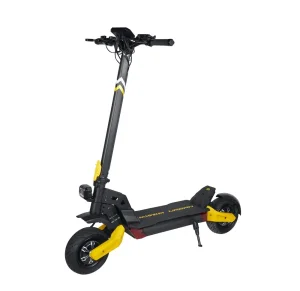
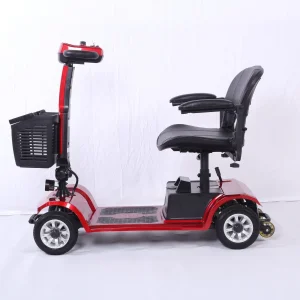
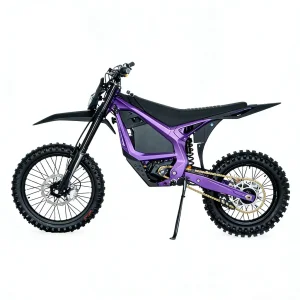
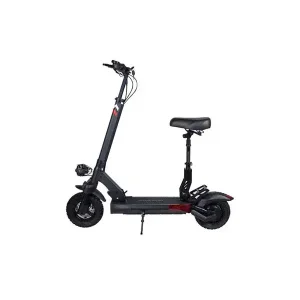
The global transition toward decentralized micro-mobility and electrification has fundamentally redefined modern urban transportation ecosystems. At the epicenter of this industrial evolution lies the manufacturing infrastructure of China—specifically concentrated within specialized industrial clusters across Zhejiang (Wuyi, Yongkang, Taizhou) and Jiangsu. Modern China Bike Electric Scooter Factories have transitioned from low-cost assembly workshops into high-precision, vertically integrated technology hubs capable of producing automotive-grade electric powertrain solutions.
For B2B importers, commercial fleet operators, regional brand distributors, and OEM buyers, navigating the vendor matrix of Chinese manufacturing requires an enterprise-level understanding of engineering capabilities, regulatory compliance frameworks, supply chain resilience, and battery management technologies. This whitepaper systematically evaluates the structural capabilities of Chinese electric scooter and motorcycle factories, outlining the critical technical benchmarks that define market leaders.
With global LEV market size projected to exceed $120 Billion by 2030, procurement strategy is no longer limited to unit price negotiations. Brand equity and operational margin now depend on powertrain thermal efficiency, battery cycle stability under extended C-rates, frame FEA (Finite Element Analysis) fatigue testing, and seamless compliance with international standards such as EN 17128, UL 2272, and CE-MD.
Analyzing regional buyer intent, application specific requirements, and total cost of ownership (TCO) shifts across key international commercial zones.
Demand in the North American market is bifurcated into dual-motor long-range kick scooters (1000W to 5000W) for urban commuting and heavy-duty electric motorcycles (10KW to 35KW) for suburban highway cruising. Key importer focus centers on UL2272 electrical safety certification and robust hydraulic braking performance.
European buyers prioritize regulatory conformity (EN 17128 for e-scooters, EEC L1e/L3e vehicle homologation for electric motorcycles). Fleet operators require CAN-bus telematics for real-time tracking, modular battery swapping mechanisms, and high IPX7 water ingress protection against wet weather environments.
Focus shifts to cost-effective utility and longevity. High-torque hub motors (500W to 4000W) combined with removable high-capacity lithium battery packs (48V/60V/72V) dominate. Senior mobility scooters (180W-250W) are expanding rapidly due to aging demographics in suburban hubs.
The competitive advantage of a premier China Bike Electric Scooter Factory stems from geographical industrial density. In manufacturing hubs such as Wuyi, Zhejiang, over 90% of critical sub-assembly components—ranging from high-tensile steel frame welding, robotic aluminum die-casting, and Surface Mount Technology (SMT) for controller PCBs, to brushless DC motor winding—are located within a 30-kilometer supply chain radius.
Leading manufacturers utilize structural finite element analysis (FEA) to design high-tensile carbon steel and 6061-T6 aircraft-grade aluminum frames. Automated robotic TIG/MIG welding guarantees weld seam structural integrity, preventing frame fatigue fractures under high vibrational load profiles during off-road or commercial delivery operations.
Top-tier factory facilities adhere to ISO 9001:2015 quality control systems executed through a four-stage quality gate:
| Component Segment | Traditional Standard Specs | Advanced Factory OEM Specs | B2B Importer Value Added |
|---|---|---|---|
| Motor Controller | Square-wave MOSFET (6-12 Tube) | Sine-wave FOC Vector Controller (18-36 Tube) | +15% Energy Efficiency, Silent Operation, Smooth Acceleration |
| Battery Architecture | Lead-Acid or Low-grade NMC | Grade-A CATL/EVE LiFePO4 or 21700 Lithium Cells | 2000+ Deep Cycles, Thermal Runaway Prevention |
| Chassis Frame | Standard Steel Tubing | Robot-Welded High-Tensile Aluminum Alloy | Weight Reduction, Higher Payload Capacity (up to 200kg) |
| Braking System | Mechanical Disc / Drum Brakes | CBS / EBS Hydraulic Twin-Piston Disc Brakes | 40% Shorter Stopping Distance, Regenerative Energy Recovery |
A granular deep dive into the electro-mechanical core of modern Chinese electric mobility vehicles.
From ultra-lightweight 150W/250W gearless brushless hub motors designed for senior mobility scooters to 10KW-35KW liquid-cooled IPM (Internal Permanent Magnet) motors for electric super-bikes. Advanced Field Oriented Control (FOC) vector algorithms provide torque smoothness, reducing phase wire thermal degradation by up to 30%.
Modern packs feature active balancing Smart BMS connected via CAN-bus or RS485 communication protocols. Integrated NTC thermal sensors monitor cell temperatures in real-time, enforcing auto-cutoff against over-charge, over-discharge, short-circuit, and cell imbalance, ensuring UN38.3 transport safety compliance.
IoT integration transforms hardware into smart assets. Integrated 4G/GPS Telematics Control Units (TCU) allow remote fleet diagnostics, geofencing, over-the-air (OTA) firmware updates, keyless Bluetooth start, and anti-theft remote motor locking for fleet operators and modern consumers.
A single vehicle architecture cannot address the diverse demands of global markets. Modern China Bike Electric Scooter Factories utilize modular design platforms to customize motor winding, battery chemistry, tire tread profile, and shock absorber damping based on target operational environments:
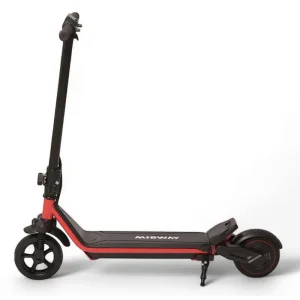
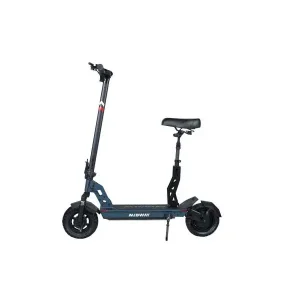
Configured with 24V 150W to 48V 600W hub motors, lightweight quick-folding aluminum frames, and 8-to-10 inch solid or pneumatic tires. Optimized for portably navigating subway systems, office storage, and dense urban traffic corridors with low maintenance overhead.
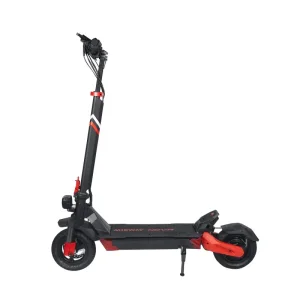
Utilizing 1000W to 5000W heavy-duty chassis equipped with dual-battery swappable trays (60V 20Ah / 72V 40Ah). Outfitted with reinforced front luggage racks, rear cargo box mounts, heavy-duty kickstands, and high-visibility LED illumination systems to withstand 14+ hours of continuous daily operation.
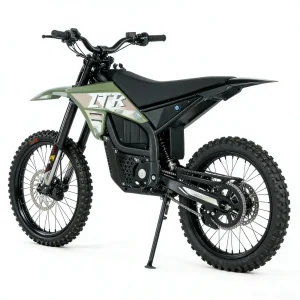
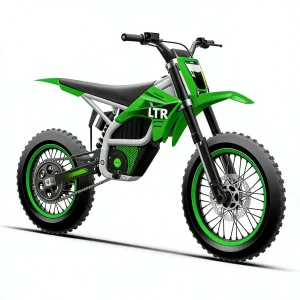
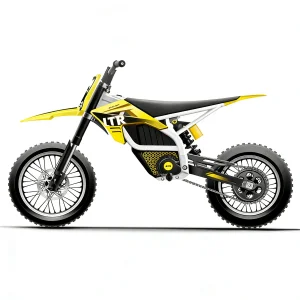
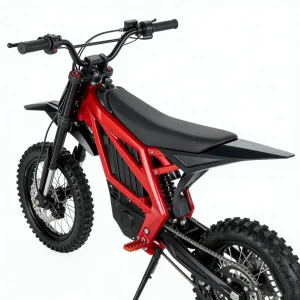
Engineered around high-voltage 72V 40Ah to 96V 60Ah lithium systems delivering 10KW to 35KW peak power output. Features adjustable hydraulic inverted front forks, rear piggyback gas shocks, cross-country knobby tires, and high-discharge C-rate battery cells designed for steep gradient climbing and off-road trail performance.
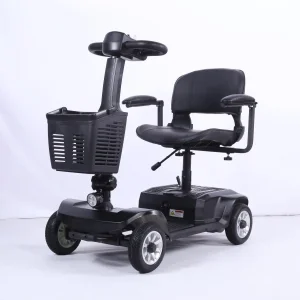
Tailored 180W to 250W low-speed 3-wheel and 4-wheel mobility scooters engineered with electromagnetic automatic braking systems, ergonomic 360-degree swivel seating, high ground clearance, and ultra-stable rollover protection geometry tailored for elderly user independence and rehabilitation centers.
Mitigating buyer import risk through pre-certified vehicle platforms, battery transport documentation, and local market legal compliance.
Full compliance with EN 17128:2020 (Personal light electric vehicles), CE-Machinery Directive (MD), EMC electromagnetic compatibility, and RoHS material safety. EEC/COC vehicle certifications provided for L1e-B and L3e electric motorcycle road licensing.
Electrical system safety verified against UL 2272 (E-Scooters) and UL 2271 (Batteries). Chargers comply with UL 1310 / FCC Part 15 regulations, guaranteeing seamless clearance at US Customs (CBP) and Canadian border controls.
Complete UN38.3, MSDS, and 1.2m Drop Test documentation for Dangerous Goods (DG Class 9) maritime freight. Factory support includes custom wooden pallet packing, sea-worthy container loading, and spare-parts BOM (Bill of Materials) supply.
Partnering with a reliable China Bike Electric Scooter Supplier requires a structured procurement workflow to minimize lead times and ensure product alignment. Top manufacturers offer step-by-step customization workflows:
B2B buyers submit target parameters: motor wattages (150W to 35KW), system voltage (24V-96V), battery energy capacity (Ah/Wh), frame geometry, and branding requirements. Factory R&D engineers generate 3D CAD models, performing virtual FEA stress analysis prior to physical sample tooling.
A physical prototype ("Golden Sample") is produced and subjected to 500 hours of continuous dyno testing, thermal cycling, and vibration load testing. Once the buyer signs off on performance benchmarks, mass production tooling commences.
Initial mass production (MOQ starting from 20-50 units for high-power motorcycles, 100-200 units for folding kick scooters) is executed. Factories supply a standard 2% to 3% fast-wear spare parts package (controllers, brake pads, throttles, tires, wire harnesses) alongside finished vehicles to enable local dealer after-sales support.
Expanded product line including high-power off-road motorcycles, fast-charger accessories, and commercial commuter vehicles.
Clear, authoritative answers addressing technical specifications, order logistics, warranty structures, and OEM branding options.
Standard factory MOQs depend on vehicle classification. For lightweight folding electric scooters (150W - 1000W), MOQ typically ranges from 50 to 100 units for standard colors, and 200 units for full custom OEM frame branding and packaging. For high-power electric motorcycles (5KW - 35KW), MOQ starts as low as 10 to 20 units per order batch due to higher unit values and specialized assembly line setups.
All export-grade lithium battery packs undergo rigorous UN38.3 testing protocols, including thermal shock, altitude simulation, vibration, external short circuit, and impact testing. Packs are shipped at a 30% state of charge (SoC) inside UN-certified Dangerous Goods (Class 9) fire-retardant packaging lined with insulated foam, fully accompanied by MSDS documentation and official sea freight transport certificates.
Brushless Hub Motors (direct-drive or geared) are integrated inside the wheel rim, offering low maintenance, whisper-quiet operation, and lower total manufacturing cost—ideal for urban commuters and senior mobility vehicles. Mid-Drive Motors are mounted centrally in the chassis, transmitting power via a chain or belt. Mid-drive systems leverage multi-speed transmission gearing, yielding significantly higher torque efficiency for steep hill climbing and off-road electric motorcycles.
Standard commercial warranty terms cover core powertrains (Frame, Motor, Brushless Controller, BMS, and Lithium Battery Pack) for 12 to 24 months against manufacturing defects. Wear-and-tear items (tires, brake pads, grip tape, cables) are covered for 3 to 6 months. Premium OEM suppliers also allocate a 2% to 3% FOC (Free of Charge) spare parts allowance shipped directly inside bulk container orders.
Yes. Controller firmware can be customized at the factory level to cap top speeds (e.g., 20 km/h for Germany eKFV, 25 km/h for broader EU EN17128 compliance, or 20 mph for US Class 2 regulations). Dual-mode firmware can also be implemented, allowing operators to switch between a legally compliant "Street Mode" and an unrestricted "Off-Road Mode" via smartphone app or display button sequence.
For standard stock vehicle models, production and container loading take approximately 15 to 20 business days. For customized OEM orders requiring custom silkscreen paint colors, branded cartons, and modified battery configurations, the standard production lead time is 30 to 45 business days following sample sign-off and deposit receipt.
