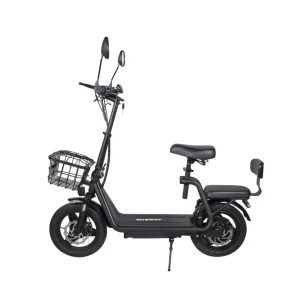
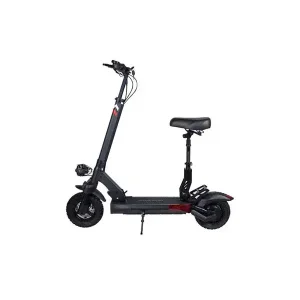
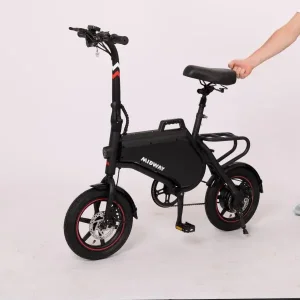
Explore our flagship lineup of electric scooters, mobility vehicles, and high-performance electric drive platforms engineered in our automated Zhejiang facilities.
An authoritative industrial analysis of pediatric biomechanics, safety-first electrical powertrains, and manufacturing standards for B2B global importers.
The global market for children’s personal electric mobility devices has undergone a structural transformation. No longer treated merely as novelty toys, 3-wheel electric scooters designed for children (ages 3–12) have emerged as a distinct category within micro-mobility engineering. Driven by suburbanization, parental demand for active outdoor play, and modern pediatric ergonomic standards, European and North American buyers are demanding unprecedented levels of electrical safety, mechanical durability, and user intuitive control.
As a specialized China Childrens 3 Wheel Electric Scooter Manufacturer & Factory, our enterprise integrates deep manufacturing expertise, multi-stage quality assurance, and direct supply chain scaling. Unlike standard 2-wheel scooters that require fully developed vestibular balance, the 3-wheel platform—configured with dual front wheels and a single rear drive assembly—provides a self-standing low center of gravity. This whitepaper serves as a technical blueprint for international procurement directors, OEM brand managers, and retail distributors seeking to understand the underlying mechanical engineering, regulatory frameworks, technology roadmaps, and factory efficiency advantages of sourcing directly from China's hardware manufacturing hubs.
Utilizes patented gravity-pivot steering axles. Rather than turning handlebars mechanically—which can cause sharp jackknifing—children shift their body weight intuitively, fostering motor coordination and vestibular development.
Low-voltage DC powertrains (12V to 24V architecture) equipped with hardware-level current limiters, progressive throttle ramp curves, and thermal runaway prevention circuits within isolated battery enclosures.
High-tensile aluminum alloy T-bars coupled with glass-fiber reinforced polypropylene (GF-PP) foot decks engineered to withstand dynamic impact tests exceeding 150 kg while maintaining lightweight portability.
Comparative matrix of international product safety standards and global distribution dynamics across key geographic target markets.
Commercial importers face a complex matrix of regulatory compliance when bringing children's electric vehicles into target territories. The table below delineates the strict mechanical, electrical, and chemical benchmarks enforced across North America, the European Union, Australia, and the Middle East. Compliance must be engineered into the production line at the raw material level rather than inspected post-assembly.
| Regulatory Region | Primary Safety Standards | Electrical / Battery Mandates | Chemical & Heavy Metal Limits | Factory QC Requirement |
|---|---|---|---|---|
| European Union (EU) | EN 71-1 (Mechanical), EN 71-2 (Flammability), EN 62115 (Electric Toys) | CE-EMC directive, Battery Directive 2006/66/EC, UN38.3 transport testing | REACH SVHC list, EN 71-3 heavy metal migration, Phthalate restriction | Factory audit ISO 9001, CE Declaration of Conformity (DoC) |
| North America (US/CA) | ASTM F963-17 (Standard Consumer Safety Specification), CPSC, CPSIA | UL 2272 (Personal E-Mobility), FCC Part 15 Class B radiation | CPSIA Lead content (<90ppm), Total Phthalates (<1000ppm) | GCC (General Certificate of Conformity) issued by CPSC-accredited lab |
| Australia / New Zealand | AS/NZS ISO 8124 Part 1-3 (Safety of Toys) | AS/NZS 62115, ERAC EESS electrical equipment safety scheme | Consumer Protection Notice No. 1 (Lead & Soluble elements) | Batch-level laboratory test report matching importer of record |
| Middle East (GCC) | GSO ASTM F963, GSO EN 71 series (G-Mark requirement) | GSO IEC 62115 electrical safety standard compliance | GCC Technical Regulation for Children Toys (BD-131704-01) | Gulf Conformity Tracking Symbol (G-Mark) verified certification |
Many budget manufacturers attempt to repurpose low-cost adult scooter speed controllers or uncertified lithium-ion cells for children’s products. Our factory exclusively implements dual-mode current-limiting BLDC controllers paired with UN38.3 certified lithium iron phosphate (LiFePO4) or sealed lead-acid/smart Li-ion battery packs featuring physical fuse shutoffs. This prevents thermal escalation and ensures 100% compliance during customs inspection and CPSC/EN auditing.
Tailored technical configurations designed to excel across diverse retail, commercial, and educational operational environments worldwide.
Optimized for everyday family recreational use. Built with 120mm shock-absorbing high-rebound Polyurethane (PU) wheels, sealed bearings, and a capped maximum speed threshold of 8 km/h (5 mph). Ideal for direct-to-consumer (DTC) brands and big-box departmental retailers targeting residential consumers.
Custom-engineered heavy-duty variants featuring reinforced alloy frames, non-removable tamper-proof battery compartments, quick-swappable power packs, and heavy-duty rubberized corner bumpers. Designed to withstand 10+ hours of continuous daily abuse in commercial venue environments.
Specialized 3-wheel trike configurations equipped with auxiliary support handles, wide non-slip footboards, and ultra-smooth magnetic braking options. Used by physical therapists to help children recovering from motor deficits rebuild leg muscle strength, core stability, and bilateral coordination.
Equipped with wireless parental override speed throttles and ambient LED deck illumination for nighttime visibility. Used by municipal traffic safety schools to teach young children early road safety awareness, hand signals, and hazard response in controlled closed-track environments.
Unmatched industrial clustering in Wuyi/Yongkang hardware hubs delivering structural cost optimization, rapid prototyping, and vertical quality integration.
Our production facility is strategically located within the world's premier hardware manufacturing cluster in Zhejiang Province. We maintain full vertical control over the production cycle—from raw aluminum ingot extrusion, precision plastic injection molding, and automatic CNC machining to automated surface anodizing and robotic TIG welding. This eliminates intermediary markups and guarantees structural integrity.
Rather than outsourcing core electronic powertrain components, our factory operates dedicated Surface Mount Technology (SMT) lines for PCB motor controller assembly, alongside automated copper-winding machinery for Brushless DC (BLDC) hub motors. This enables rigorous quality control over MOSFET heat dissipation, firmware tuning, and torque optimization tailored to light rider weights.
Every batch of children’s 3-wheel electric scooters undergoes rigorous in-house lab validation prior to packaging: 10,000-cycle handle column fatigue testing, 50kg deck static overload loading, salt spray corrosion exposure (48 hrs), continuous vibration simulation, and 100% full-charge thermal burn-in inspection for all battery packs.
By holding critical sub-assemblies (bearings, molded decks, alloy tubes, standard wiring harnesses) in rolling buffer stocks, our factory achieves lead times of 25 to 35 days for full 40ft High-Cube container orders, with sample production completed within 7 business days. This agility enables global distributors to respond rapidly to seasonal demand spikes without carrying excess warehousing overhead.
Next-generation technological milestones driving smart parental connectivity, sustainable material science, and enhanced mechanical safety.
Integrating Low-Energy Bluetooth (BLE 5.3) controllers enabling parents to configure dynamic speed ceilings (4 km/h to 15 km/h) via iOS/Android smartphone apps, monitor battery state-of-charge, apply electronic motor locks, and establish proximity geofencing boundaries.
Deploying battery-free magnetic induction LED wheels powered directly by axle rotation, paired with miniature regenerative braking logic inside the rear wheel hub that feeds up to 5% charge back into the battery during downhill rolling.
Transitioning footboard and handlebar grips to 100% post-consumer recycled ocean plastics and bio-based thermoplastic elastomers (TPE), allowing OEM brand partners to market zero-carbon, ecologically certified products to eco-conscious Western consumers.
Comprehensive commercial services designed to protect trade buyers from customs delays, tariff misclassifications, and after-sales part bottlenecks.
We provide full private-label manufacturing: custom Pantone color matching, laser-engraved aluminum T-bars, bespoke silk-screen deck graphics, multi-language user manuals, and drop-test certified retail color boxes engineered for e-commerce courier shipping (ISTAL-6A standard).
Our trade compliance team assists buyers in accurately classifying vehicles under global Harmonized System codes (HS Code: 9503.00 for tricycles/wheeled ride-on toys vs HS 8711.60 for adult electric vehicles), ensuring correct duty declaration and preventing costly customs hold-ups.
To support distributor warranties, every bulk shipment includes a dedicated 1–2% free spare parts kit containing high-wear components: replacement PU wheels, bearing sets, throttle assemblies, brake levers, charging ports, and modular controller units for instant localized swap out.
Detailed answers to critical trade inquiries regarding minimum order quantities, safety standards, battery logistics, and custom manufacturing.
For North America, products must comply with ASTM F963-17 (mechanical safety & heavy elements), CPSIA lead/phthalate limits, and UL 2272 for electrical/battery system safety. For the European Union, compliance with EN 71-1/2/3, EN 62115 (electric toys), CE-EMC, RoHS, and UN38.3 (battery transport certification) is legally required. Our factory supplies complete testing documentation issued by accredited 3rd party testing labs (SGS, TUV, Intertek).
A 3-wheel tri-wheel architecture provides dynamic self-standing equilibrium, eliminating the need for complex balance maintenance while stationary or turning. Combined with our Lean-to-Steer (LTS) system, young riders naturally steer by shifting body weight, which dramatically reduces fall incidence rates and prevents sudden handlebar over-rotation jackknifing.
Our standard factory MOQ for custom color coating, custom logo placement, and branded retail packaging starts at 200 units per model variant. For fully customized chassis tooling or proprietary electronic modifications, MOQ typically ranges between 500 to 1,000 units. Trial sample orders (1 to 5 units) are available for verified commercial buyers for testing and market evaluation.
Battery safety is handled at three distinct levels: Cell Selection (using Grade-A lithium cells with built-in explosion-proof valves or stable LiFePO4 chemistries), Hardware BMS (implementing over-charge, over-discharge, short-circuit, and cell-balancing circuitry), and Physical Isolation (enclosing cells within an IPX6 waterproof, flame-retardant V-0 ABS/PC hard shell insulated from frame impacts).
We offer FOB Ningbo/Shanghai, CIF, and full DDP (Delivered Duty Paid) door-to-door logistics services. Because electric scooters contain lithium-ion batteries classified under UN 3481 (Dangerous Goods Class 9), our export department manages all UN38.3, MSDS, and Sea Freight DG declaration documentation to guarantee seamless customs clearance.
Yes. Our motor controllers feature programmable firmware speed locks. Factory presets can be set to 6 km/h (for toddlers aged 3-5), 10 km/h (ages 6-8), or up to 15 km/h (ages 9+). Dual-mode physical switches or app-controlled speed toggles can also be integrated depending on customer specification requirements.
Explore our broader commercial lineup of adult commuting scooters, high-power citycoco fat-tire trikes, and heavy-duty electric transport vehicles.