Empowering Vietnam’s Green Urban Mobility Mandate with High-Efficiency 48V-96V Powertrains, Tropicalized IP67 Waterproofing & Heavy-Duty Fleet Electrification Solutions.
Engineered for heavy-duty commercial deployment, last-mile delivery, and daily commuter transit across Ho Chi Minh City’s dense urban landscape.
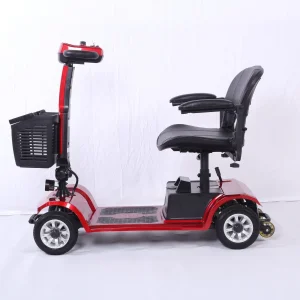
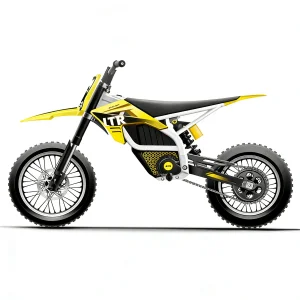
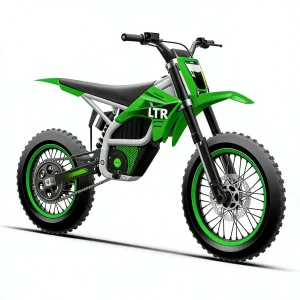
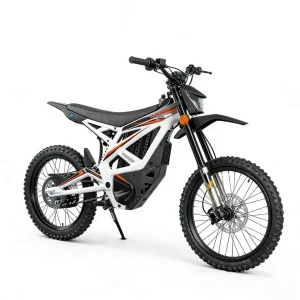
As the economic engine of Vietnam, Ho Chi Minh City (HCMC) represents one of the world's most concentrated two-wheeler mobility ecosystems. With over 7.3 million internal combustion engine (ICE) motorcycles navigating its 24 districts—from the hyper-dense commercial corridors of District 1 and District 3 to the rapidly expanding industrial and logistics nodes of Thu Duc City—the municipal transport infrastructure stands at a historic inflection point.
Under Vietnam’s National Action Program on Green Energy Transition, 100% of urban road vehicles, delivery fleets, and public transport in HCMC are targeted to transition to electric and green energy by 2040, with stringent low-emission zones (LEZs) being introduced in central municipal zones.
Driven by ride-hailing and quick-commerce giants (Grab, ShopeeFood, Be, Lalamove), enterprise demand for heavy-duty, high-range electric motorcycles in HCMC has surged by over 310% year-over-year, demanding robust thermal stability and low TCO.
HCMC's severe tidal surges and monsoon flooding—particularly in flood-prone districts like Binh Thanh and District 7—require electric powertrains equipped with IP67/IP68 ingress protection and anti-corrosive structural coatings.
For international procurement directors, local assembly plants, and regional fleet managers serving southern Vietnam, securing a reliable, tier-1 electric motorcycle OEM supply chain is no longer merely an option—it is a core strategic priority. Our manufacturing facility bridges advanced Chinese electro-mechanical engineering with Vietnam’s precise regulatory landscape, delivering high-performance, tropicalized electric motorcycles engineered specifically for HCMC’s high-duty operational cycles.
Transitioning from ICE to Electric Motorcycles in HCMC reduces fleet operating costs (TCO) by up to 68% over a 3-year operating lifecycle, primarily driven by lower kilowatt-hour charging tariffs compared to volatile fossil fuel costs, combined with minimal drivetrain maintenance (no engine oil, clutch plates, or exhaust system wear).
The global electric two-wheeler market is undergoing a rapid technological evolution, shifting from basic lead-acid commuter vehicles to high-voltage (72V–96V), lithium-iron-phosphate (LiFePO4/LFP) powered intelligence platforms. As China remains the global epicenter of EV component manufacturing—producing over 80% of global electric motor hubs, sine-wave controllers, and battery management systems (BMS)—Vietnam serves as the premier hub for Southeast Asian distribution and localized manufacturing.
Our operational model leverages direct factory integration in Zhejiang's advanced industrial corridor with customized export support tailored for Cat Lai Port and Tan Cang logistics hubs in Ho Chi Minh City. This enables enterprise clients to access competitive factory-direct pricing while maintaining total compliance with Vietnamese import protocols.
| Technical Parameter | Standard City Commuter EV | Enterprise Delivery Fleet EV | High-Performance Heavy Duty EV |
|---|---|---|---|
| Motor Power (Nominal/Peak) | 1000W - 2000W Hub Motor | 3000W - 5000W PMSM Motor | 10KW - 35KW Mid-Drive Motor |
| Battery Chemistry | 48V/60V Lead-Acid or Basic NMC | 60V/72V LFP (LiFePO4) Modular | 72V/96V High-Density Lithium-ion |
| Controller Architecture | Square Wave Controller | Vector FOC Sine-Wave (CAN-Bus) | Liquid-Cooled Smart AI Controller |
| HCMC Flood Water Wading Depth | 200 mm (IP65) | 400 mm - 500 mm (IP67) | 600 mm (IP68 Submersible Hub) |
| Top Speed & Gradeability | 45 km/h | 12° Slope | 75 - 90 km/h | 20° Slope | 110 - 150 km/h | 30° Slope |
B2B importers, local brand owners, and commercial operators in Ho Chi Minh City require scalable customization to differentiate in an increasingly competitive market. Our manufacturing infrastructure supports complete CKD (Completely Knocked Down) and SKD (Semi Knocked Down) supply options, allowing Vietnamese partners to optimize import tariffs under the ASEAN-China Free Trade Area (ACFTA) Form E agreements.
Deploying electric motorcycles in Ho Chi Minh City presents unique environmental challenges. High ambient temperatures (averaging 30°C to 38°C), high relative humidity (up to 85%), and sudden urban flooding during the rainy season (May to November) demand specialized engineering solutions that basic commuter scooters cannot deliver.
Every vehicle destined for the HCMC market undergoes rigorous IP (Ingress Protection) testing. Critical electrical junctions, motor hubs, battery enclosures, and controller units are sealed using aerospace-grade silicone gaskets and waterproof wiring harnesses. Frame tubes receive dual-layer electrophoretic deposition (ED) coating to eliminate internal rusting caused by prolonged exposure to floodwaters and high atmospheric humidity.
Continuous heavy-payload operation under HCMC’s tropical heat can accelerate battery degradation and trigger thermal throttling in motor controllers. Our engineering architecture utilizes heat-dissipating aluminum alloy casing for controllers and phase-change thermal pads within lithium battery packs, keeping core cell temperatures below 45°C even under max-load climbing conditions.
A standard delivery driver in HCMC covers approximately 120 km per day. Operating a 125cc ICE motorcycle costs ~54,000 VND in fuel daily. An equivalent Yuema 5000W electric motorcycle consumes ~3.2 kWh of electricity (costing ~8,000 VND), yielding direct operational savings of over 16,500,000 VND per vehicle annually. Over a 50-vehicle fleet, annual savings exceed 825,000,000 VND.
As battery energy density increases and power electronics become more efficient, the performance gap between ICE motorcycles and electric powertrains has closed entirely. Our R&D division is focused on four core technical pillars shaping the next generation of electric motorcycles for Southeast Asian markets:
Moving from traditional 48V/60V systems to 72V and 96V architectures reduces current draw, drastically lowering thermal dissipation in wiring harnesses and increasing motor power output up to 35KW peak.
Prioritizing LFP chemistry offers superior thermal safety (no thermal runaway risk up to 60°C ambient) and extended cycle life (3,000+ full charge cycles to 80% capacity), lowering long-term replacement costs.
Next-generation controllers incorporate intelligent regenerative braking algorithms that adapt to real-time traffic congestion data in HCMC, extending battery range by 12% to 18% during stop-and-go driving.
Navigating the regulatory requirements for importing electric two-wheelers into Vietnam requires strict adherence to national quality standards enforced by the Vietnam Register (VR) under the Ministry of Transport.
Our export products are manufactured in ISO9001-certified facilities and comply with core global and Vietnamese technical standards:
We provide localized support structures designed to ensure zero operational downtime for HCMC distributors and commercial fleets:
Explore our comprehensive range of electric motorcycles, mobility scooters, and commuter solutions available for OEM/ODM factory-direct orders serving Ho Chi Minh City and broader Southeast Asian markets.
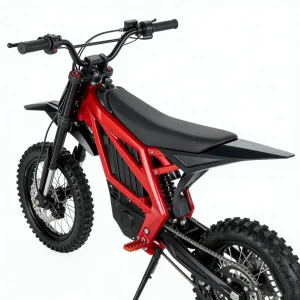
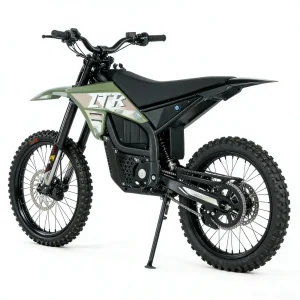
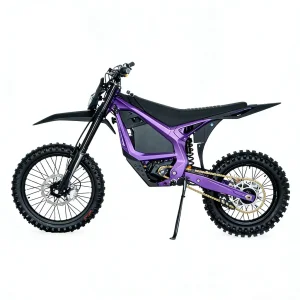
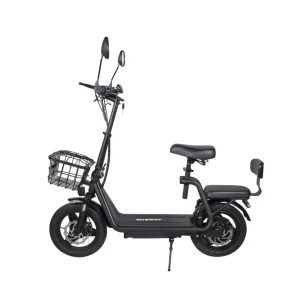
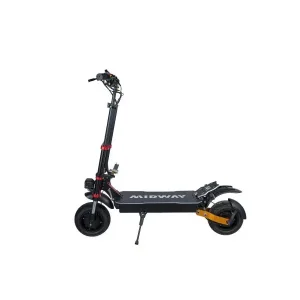
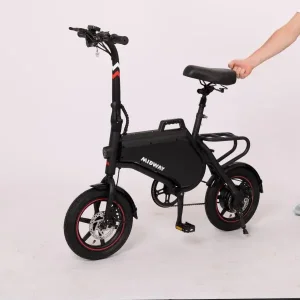
Key technical, regulatory, and commercial considerations when sourcing electric motorcycles for Ho Chi Minh City and the Vietnamese market.
Accelerate your commercial fleet deployment or dealership expansion in Ho Chi Minh City with factory-direct pricing, robust technical backing, and certified quality.
